
Balatro is a solo-developed roguelike deckbuilder (by LocalThunk, published by Playstack) that uses poker hands as its scoring rules. It launched on PC and consoles in February 2024 and on iOS and Android in September 2024, and its Steam user reviews sit at Overwhelmingly Positive. The question for most readers is not whether it is good, but whether it suits them. That is what this review answers first.
Buy, wait or skip
| Your situation | Verdict | Why |
|---|---|---|
| You like deckbuilders or roguelikes (Slay the Spire, Luck be a Landlord) | Buy | The Joker system and Stake ladder give long value, and the runs are shorter than most of the genre |
| You enjoy maths, spreadsheets or making numbers go up | Buy | Every decision is a visible change to Chips × Mult; the late game is pure optimisation |
| You want something for short sessions on a phone | Buy (mobile) | Touch controls work well and an unfinished run is saved when you quit |
| You are waiting for version 1.1 | Do not wait | 1.1 has no release window and will be a free update |
| You are price-sensitive but curious | Wait for a sale | Steam discounts happen; the game is the same at any price |
| You hate losing a run you played well because of what the shop offered | Skip | Variance is part of the design and does not go away at higher skill |
| You want story, characters, combat or spectacle | Skip | There is no narrative and the whole game is a card table |
| Casino imagery is a problem in your household | Skip or check first | There is no real-money gambling, but the theme is poker chips, blinds and cards that pay out by chance |
Short version: if you liked any other roguelike deckbuilder, Balatro is close to a safe purchase. The people who regret it are mostly those who dislike randomness, not those who find it too hard.
What kind of game it is
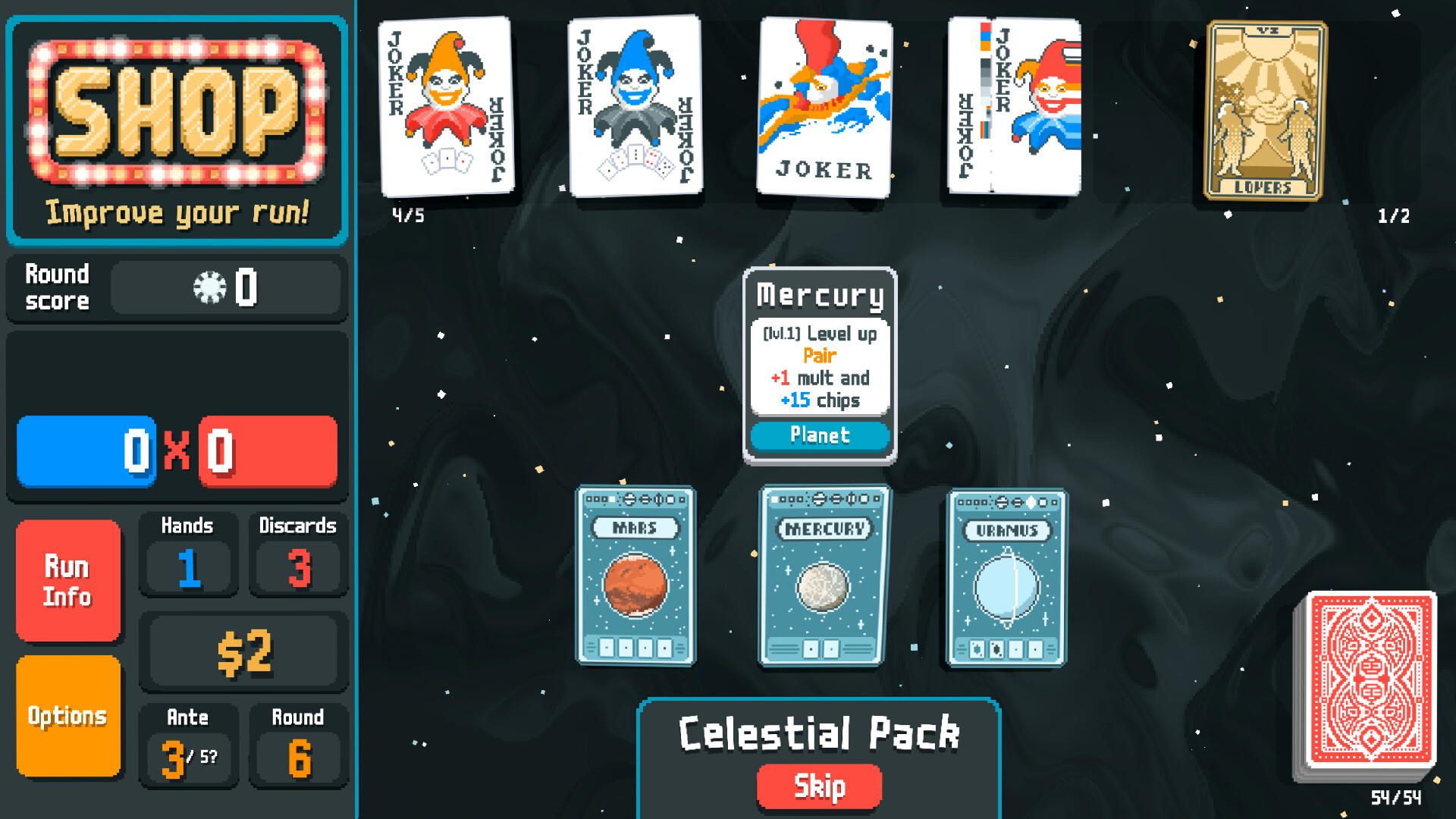
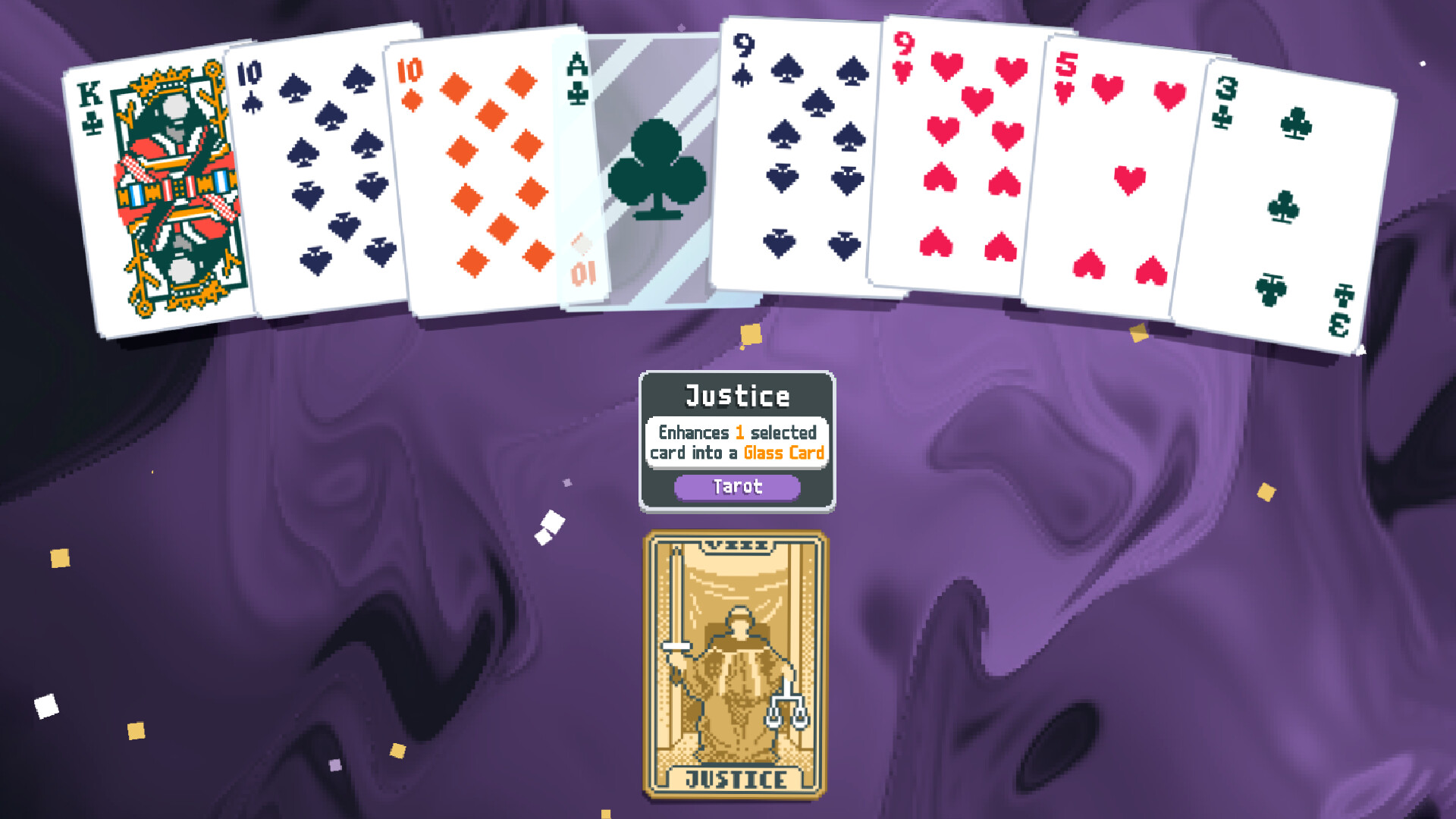
You play poker hands against a score target, not against opponents. A run has 8 Antes, each with a Small Blind, a Big Blind and a Boss Blind; each round you get 4 hands and 3 discards to reach the target. Every hand scores Chips × Mult: the poker hand sets the base, the cards that form it add Chips, and Jokers add Chips, add Mult or multiply Mult. Between rounds you visit a shop to buy Jokers (up to 5 slots), Planet cards that level up a hand, Tarot cards that change your playing cards, and permanent Vouchers.
The tension comes from the targets. At White Stake the Ante 1 Boss needs 600 chips and the Ante 8 Boss needs 100,000. A Pair of Kings with no Jokers scores 60. Closing that gap with Jokers you did not choose, from a shop you did not stock, is the whole game. The Beginner Guide walks through the scoring maths and a first-win plan.
Current state: what you get today
| Item | Status |
|---|---|
| Release | Full release (not Early Access), February 2024 on PC and consoles |
| Platforms | Windows and macOS (Steam), PlayStation 4/5, Xbox One/Series X|S, Nintendo Switch and Switch 2, iOS, Android, Apple Arcade (Balatro+) |
| Current version | 1.0.1 (latest patch 1.0.1o) |
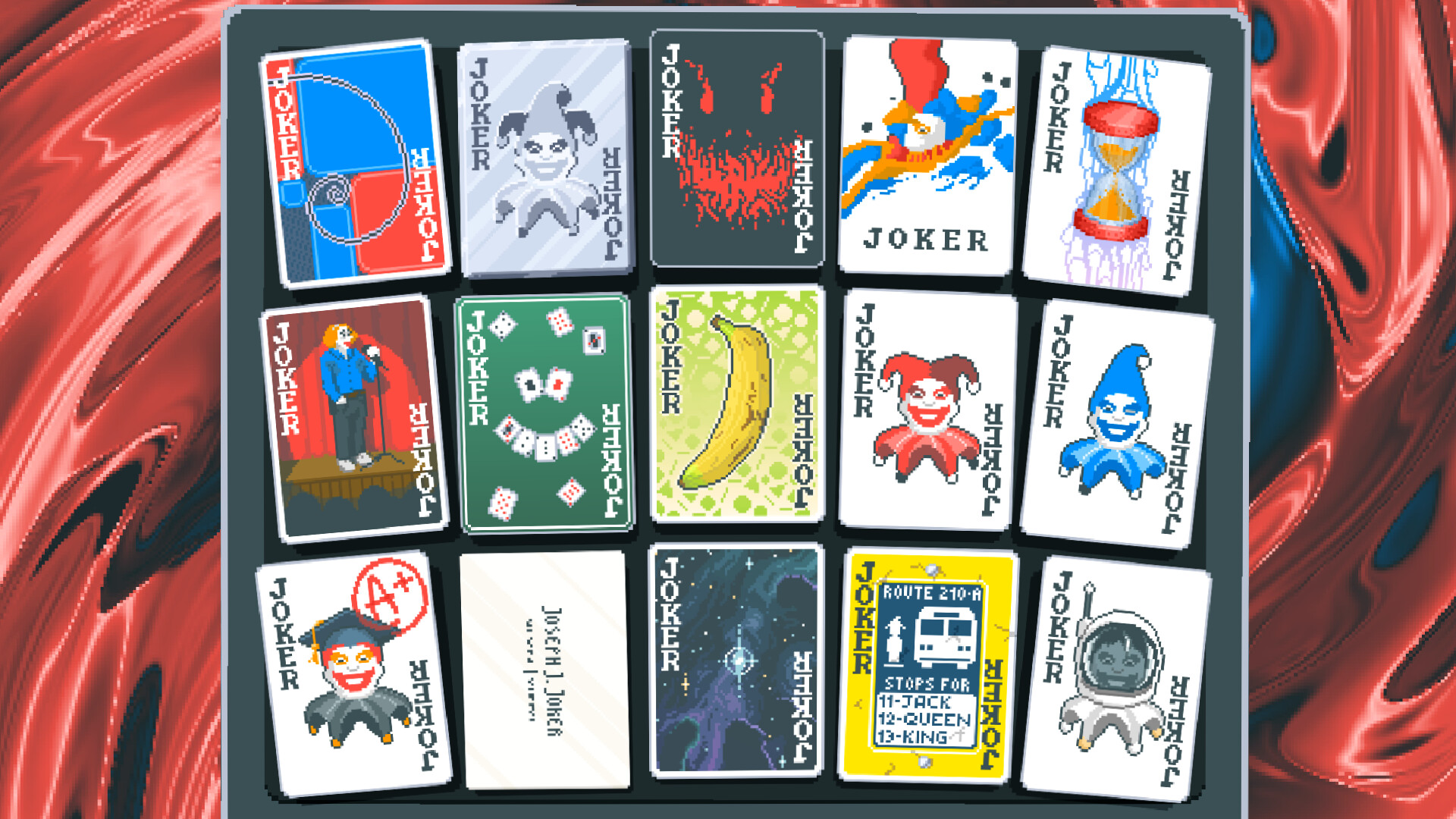
| Content | 150 Jokers, 15 decks, 8 Stakes, 20 Challenge decks, seeded runs and Endless Mode |
| Free updates | 1.0.1 rebalance; Friends of Jimbo packs 1 to 4 (24 cosmetic face-card crossovers) |
| Coming | Version 1.1 in development: new Jokers, a new Voucher (Lunker), Voucher system changes, a Blue Stake rework. No release window |
| Monetisation | One-time purchase; no microtransactions, no paid DLC |
| Multiplayer | None; single-player only |
| Interface languages | 12 full (including Japanese, Chinese, German, French, Spanish, Portuguese-BR, Italian) plus Korean, Russian and Indonesian in beta |
Version 1.0.1 was the first big balance patch. It reworked several cards (Vampire became Rare, Mad and Clever Joker now trigger on Two Pair) and added a Reduced Motion toggle that removes the swirling background.
Friends of Jimbo is a series of four free packs that let you replace the Jack, Queen and King of each suit with characters from other games, such as The Witcher 3, Slay the Spire, Stardew Valley, Vampire Survivors and Cult of the Lamb. They are purely cosmetic, and high-contrast suit colours come with them.
Version 1.1 is the update fans are waiting for. The developer has confirmed it is still in progress and will arrive when it is done; a separate Steam branch with the current version is planned for players who rely on older mods. It is not a reason to wait: the base game is complete, and 1.1 will patch in for free.
What it does well
The scoring curve is the hook
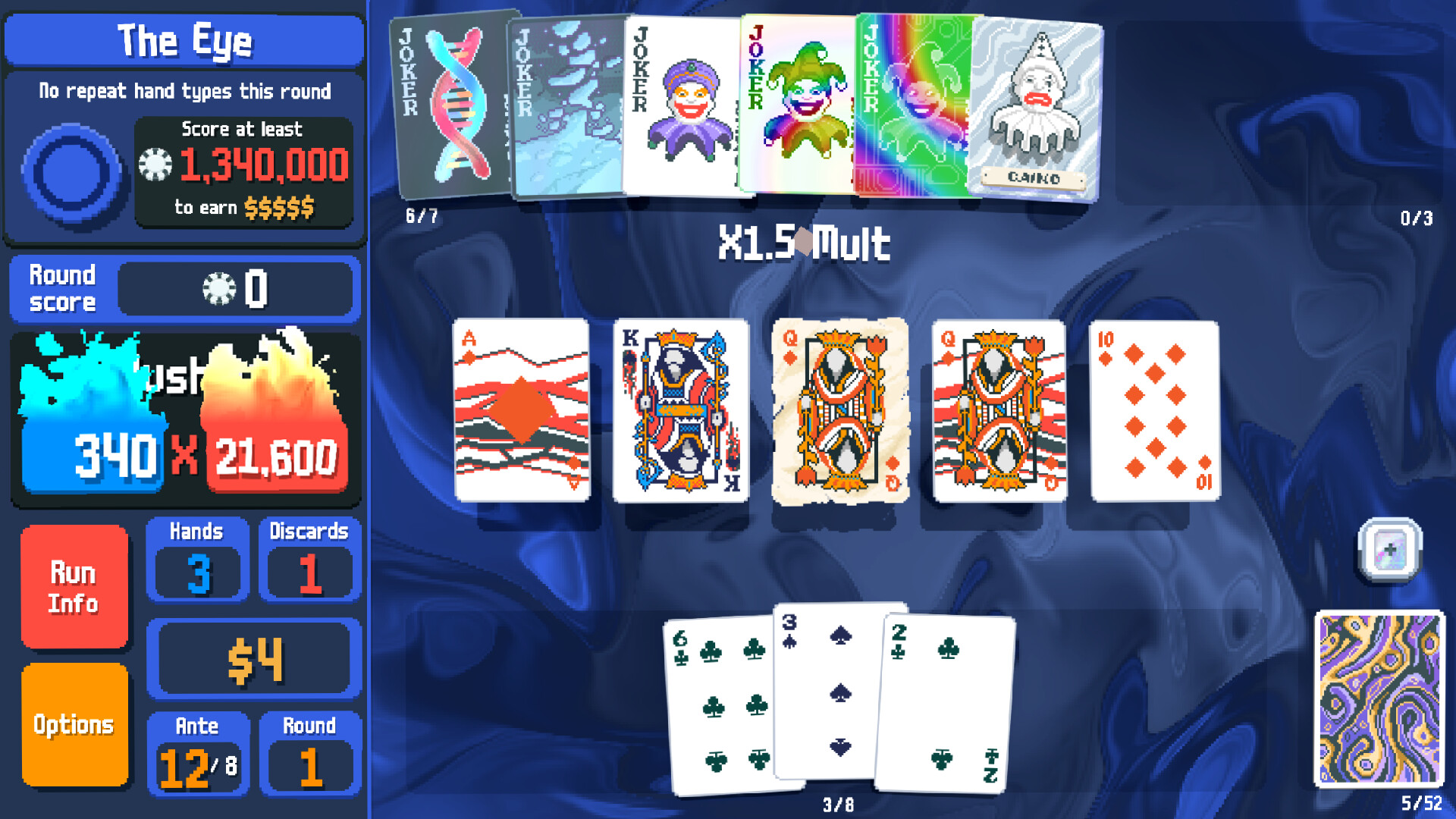
The best thing in Balatro is how readable its numbers are. Each card and Joker shows its contribution as the hand resolves, so you learn the system by watching it. A Pair of Kings scores 60. Add a Joker (+4 Mult) and a Jolly Joker (+8 Mult on a Pair) and it becomes 420. Level the hand, add an XMult Joker such as The Duo, and copy it with Blueprint, and you are in the tens of thousands. The moment an XMult Joker doubles a total for the first time is when most players get hooked.
Real decisions, not just luck
Under the surface there is a lot to manage. Holding $25 earns the maximum $5 interest each round; Jokers fire left to right, so +Mult placed before XMult scores more; committing to one poker hand by Ante 3 matters more than any single card. None of this is visible at first, which is why skill shows up so clearly in results. The Joker Tier List explains slot order and which Jokers carry a run, and the Deck Build Guide covers shaping your deck around one hand.
Long tail after the first win
Each deck has 8 Stakes that unlock one at a time and stack their rules (Green Stake doubles the Ante 8 target, Black Stake adds Eternal Jokers). Challenge Mode opens after winning with five different decks, and the last achievements ask for a Gold Stake win with every deck and a Gold Sticker on all 150 Jokers. Few players finish that, but the ladder is there.
Where it falls short
Variance you cannot play around
Some runs never show an XMult Joker before Ante 5, or the shop keeps offering Planets for hands you are not playing. Good economy and rerolls reduce this but do not remove it. On higher Stakes, where the targets grow faster, a bad shop sequence ends more runs. If losing a long, well-played run to randomness ruins your evening, this is the most important point in this review.
The game does not teach its economy
Interest, reroll prices (starting at $5 and rising by $1 per reroll) and sell values are all in the game, but nothing tells you that holding $25 in Ante 1 beats buying a mediocre Joker. Most early losses come from a broke mid-game, not a bad hand. The rules can be learned in an evening with a guide, but you will need one or several failed runs.
Plain presentation
The pixel-art card table, CRT filter and synthwave soundtrack have a strong identity, but there is no story, no characters beyond Jimbo and no world. Visual excitement comes entirely from numbers.
Common complaints, and how true they are
| Complaint | Is it true? | What helps |
|---|---|---|
| It is just a luck game | Partly. Shops and draws are random, and some runs are unwinnable | Keep $25 for interest, commit to one hand by Ante 3, get XMult by Ante 5 |
| It is gambling | No. No real money, no purchasable currency, no loot boxes | PEGI lowered its 18 rating to 12 on appeal; the poker theme is cosmetic |
| It gets repetitive | After many hours, yes; runs follow the same 8-Ante structure | Switch decks, try Challenges, or play Endless for very high scores |
| The late game is too hard | Ante 6 to 8 targets grow faster than +Mult can keep up with | Replace flat +Mult Jokers with XMult; read each Boss before the Ante |
| Boss Blinds feel unfair | Some bosses debuff your whole build for one round | The Boss is shown before you play the Ante, so you can buy around it |
The gambling question deserves a clear answer because it affects some buyers. Balatro uses casino language, but there is no way to spend real money inside it. PEGI originally rated it 18 for prominent gambling imagery; after an appeal, it was lowered to PEGI 12 in February 2025, with PEGI noting the game teaches no transferable gambling skills. Before that, it was briefly pulled from one storefront in limited regions over the same concern. Whether the theme suits a younger player is a household decision, but the game contains no gambling.
Boss Blinds and how to counter each one are covered in the Boss Blind Guide.
Balatro compared with similar games
| Game | Core loop | Run length and pace | How Balatro differs |
|---|---|---|---|
| Slay the Spire | Card battles against enemies across a branching map | Longer runs with combat, routing and relics | No combat or map; all decisions feed one score number, and runs are shorter |
| Luck be a Landlord | Slot machine whose symbols you draft to pay rent | Short, score-based runs | Named as an inspiration; Balatro gives more control through deck editing and Joker order |
If you already own Slay the Spire, Balatro is the better choice when you want shorter sessions and pure optimisation, and the worse one when you want tactical fights and the variety of enemies and events. Players who love Luck be a Landlord usually like Balatro's scoring loop and appreciate the extra control.
Related guides
New to the game: Beginner Guide. Which Jokers to buy and keep: Joker Tier List. Decks, Stakes and build archetypes: Deck Build Guide. Every Boss Blind and its counter: Boss Blind Guide.
★Honest Take — the best value in the genre, if you accept its randomness
Balatro earns its 9.3 because almost every minute is spent on a decision that visibly changes a number, and because it asks so little to start and gives so much to master. The price, the lack of any monetisation and the free updates make it one of the easiest recommendations in the genre. The reservations are honest ones: it does not teach its economy, it has nothing to offer outside the scoring loop, and some runs are lost before they begin. Version 1.1 will add more, but the game you can buy today is already complete. If randomness does not bother you, buy it; if it does, this is the one game in the genre where it will bother you most, because the score never lies about what you were missing.