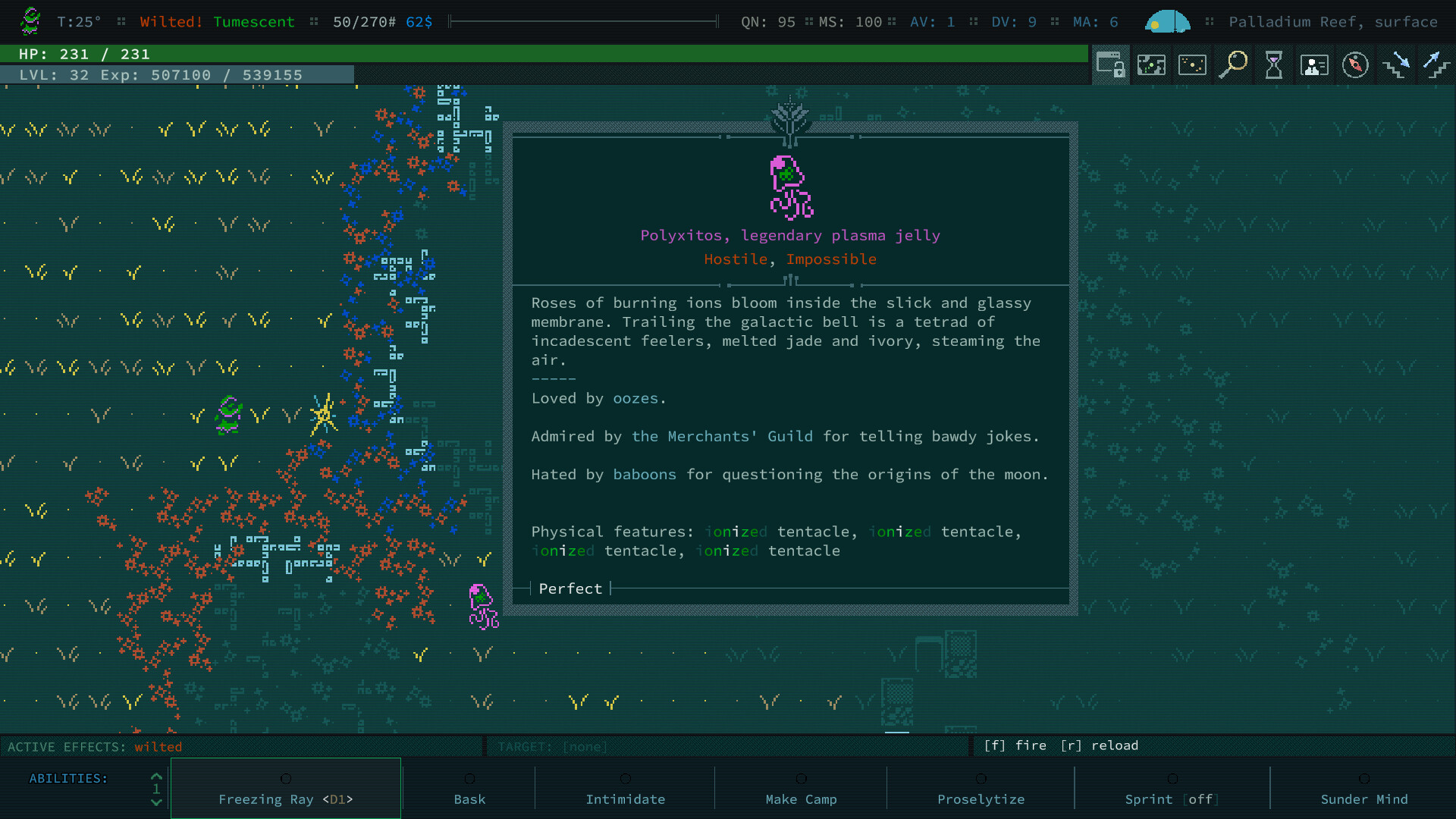
Caves of Qud is a survival game, not just an RPG
It is easy to think of Caves of Qud purely as a deep character builder, but that undersells half of what keeps you alive. Layered over the build systems is a survival game: water doubles as currency and hydration, faction reputation decides who tries to kill you, and tinkering and cooking turn the world's salvage into sustainment. These systems are also where unprepared players come undone, running dry of water far from a refill or blundering into a faction that wants them dead. Understanding how survival works, and planning around it, is what turns a string of sudden deaths into long, rewarding expeditions.
The unifying idea is preparation. Qud is indifferent and lethal, and almost every avoidable death traces back to setting out without enough water, healing, or awareness of the dangers ahead. Play with those costs in mind and the harsh world becomes navigable.
Caves of Qud simulates its world deeply, so survival is systemic rather than scripted. Liquids, temperature, reputation and resources all interact, which means the same preparation habits — water, healing, escape options, awareness — pay off across wildly different situations.
Water: currency and life
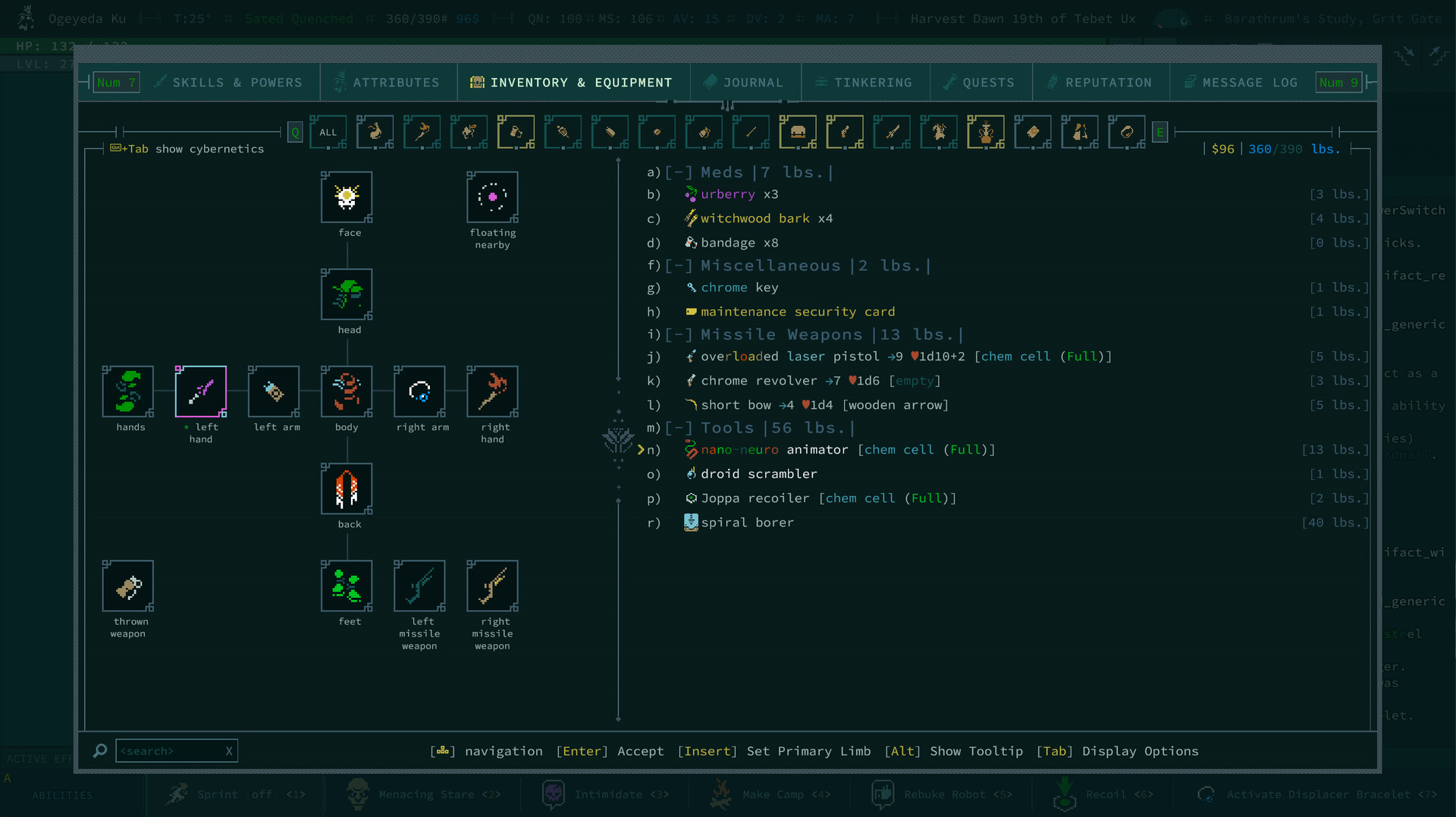
The most important survival system to internalise is water. Fresh water, measured in drams, is simultaneously the game's currency and a resource you must drink to survive. That dual role is the heart of Qud's economy: every dram you spend on goods is a dram you are not keeping for hydration, so purchases and survival are in constant tension. The practical habits are simple but vital — keep a healthy reserve at all times, refill whenever you find a source, and never spend your last water on a non-essential trade. A character stranded without water in the wastes is a character about to die, no matter how strong their build.
Treat water with the same care you would ammunition in a survival horror game: precious, finite, and worth planning around. Manage it well and you stay both solvent and alive; neglect it and the desert does the rest.
Never set out on a long expedition low on water. Running dry far from a refill is one of the most avoidable deaths in the game. Top up before you travel, and turn back early if your reserve runs thin rather than gambling on finding a source in time.
Faction reputation: who wants you dead
Caves of Qud tracks your reputation with dozens of factions, and that standing quietly governs how dangerous the world is. Members of factions you stand well with may leave you be or even help; those you have angered will attack on sight, and poor standing with a powerful faction can turn whole regions hostile. Your actions, quest choices and certain mutations or abilities shift these relationships, so reputation is a resource to manage rather than a passive stat. Cultivating good standing opens trade, allies and safe passage; squandering it surrounds you with enemies.
The practical takeaway is to be aware of the consequences of your actions, especially early when you are fragile. Avoiding needless hostility, and understanding which factions your choices please or anger, keeps the world survivable while your character grows strong enough to make enemies on purpose.
| System | What it governs | How to manage it |
|---|---|---|
| Water | Currency and hydration | Keep a reserve, refill often, never spend your last |
| Reputation | Who is hostile or friendly | Watch consequences; avoid needless enemies early |
| Tinkering | Gear from salvage, repairs | Invest to turn junk into power and upgrades |
| Cooking | Buffs and sustainment | Gather ingredients; cook before expeditions |
Tinkering, cooking and sustainment
Two systems turn the world's raw materials into staying power. Tinkering lets you build and modify items from salvaged bits and identify or repair artifacts, effectively converting the junk you accumulate into useful gear and upgrades — a strong sustainment and progression engine that many builds value even when crafting is not their focus. Cooking lets you gather ingredients and prepare meals that grant buffs and sustainment, a low-cost habit that pays off steadily, especially on longer trips. Together they reduce your dependence on lucky finds and shops, letting you sustain yourself from the world itself.
Lean into both as ongoing habits rather than afterthoughts. A character who tinkers their gear and cooks before expeditions is far more resilient than one who relies purely on what they happen to loot.
Planning expeditions
The throughline of survival in Qud is the expedition mindset: before you travel, prepare. Carry enough water for the round trip, pack healing, secure an escape option (mobility or a teleport effect is invaluable), and have a rough sense of where you are going and what lives there. In the field, avoid creatures you cannot read, manage your hydration actively, use cooking buffs ahead of danger, and retreat early when a fight or a region turns against you. Pushing forward on a thinning reserve, hoping to find what you need in time, is how careful runs end abruptly.
The mindset is the same as the rest of Caves of Qud: deliberate, prepared and respectful of a world that will kill you the moment you stop paying attention.
The cheapest survival tool is preparation — water, healing and an escape plan cost little and save runs. For the character choices that make survival easier, see our builds guide and mutations tier list; and if you are just starting out, the beginner guide ties the fundamentals together.