The three builds worth copying — ranked
If you read one section, read this one. Caves of Qud's character creator is deep enough that most new characters die to the question rather than to the game, and attribute points spent on a plan you abandon do not come back. These are the three builds that reliably work, in the order a new player should reach for them.
| Rank | Build | Genotype | What to put points into | Why it ranks here | The catch |
|---|---|---|---|---|---|
| 1 | Sturdy Melee | Mutant | Toughness first, then Strength and Agility. One melee weapon line plus survival skills. | The most forgiving build in the game. Regeneration answers the attrition that kills most early characters, and Multiple Arms turns a single weapon line into real output without a second investment. Mutations give you tangible tools immediately rather than after a shopping trip. | You are committing to melee range in a game where a bad corner is lethal. Toughness is not optional here, it is the build. |
| 2 | Cybernetic True Kin Specialist | True Kin | A caste, a strong weapon skill, and the supporting trees. Attributes start higher, so spread is affordable. | Starts sturdier and more attribute-rich than any Mutant, and grows through implants and gear rather than levels — which suits players who enjoy itemisation and want a steadier climb. | **Gear-dependent.** Until you find implants worth installing, you are a slightly tougher human with no innate tricks. It rewards knowing where things are. |
| 3 | Ego Psychic | Mutant | Ego and Willpower for mutation power, plus enough Toughness to survive being wrong. | The highest ceiling on this list. Ego-scaled mental mutations end fights before they start once the build comes online. | **Fragile exactly when it is weakest.** The early hours are the most dangerous in the game and this build has the least margin for error in them. Not a first character. |
If you are not sure, take the sturdy melee Mutant. It is the only one of the three that forgives a mistake, and Toughness — the attribute it leans on hardest — is the one every other build wants anyway. Everything below explains the machinery behind that ranking: what the genotype choice actually changes, what each attribute does, and how the classless skill system rewards focus.
Why a build plan matters
Caves of Qud hands you one of the deepest character creators in any RPG, and that freedom is a double-edged sword. With so many options and so little guidance, it is easy to build something that looks exciting but falls apart against the game's punishing early hours. The single most valuable habit is to decide a clear identity before you start spending — a sturdy melee fighter, an Ego-driven psychic, a cybernetic gear specialist — and then make every choice serve it. A focused character that survives and scales beats a clever one that dies before its plan comes together.
That identity rests on three pillars: your genotype (True Kin or Mutant), your attributes, and your skills. Get those aligned toward a single vision and the build largely takes care of itself. Spread them across competing ideas and you will feel the weakness from the first dangerous encounter.
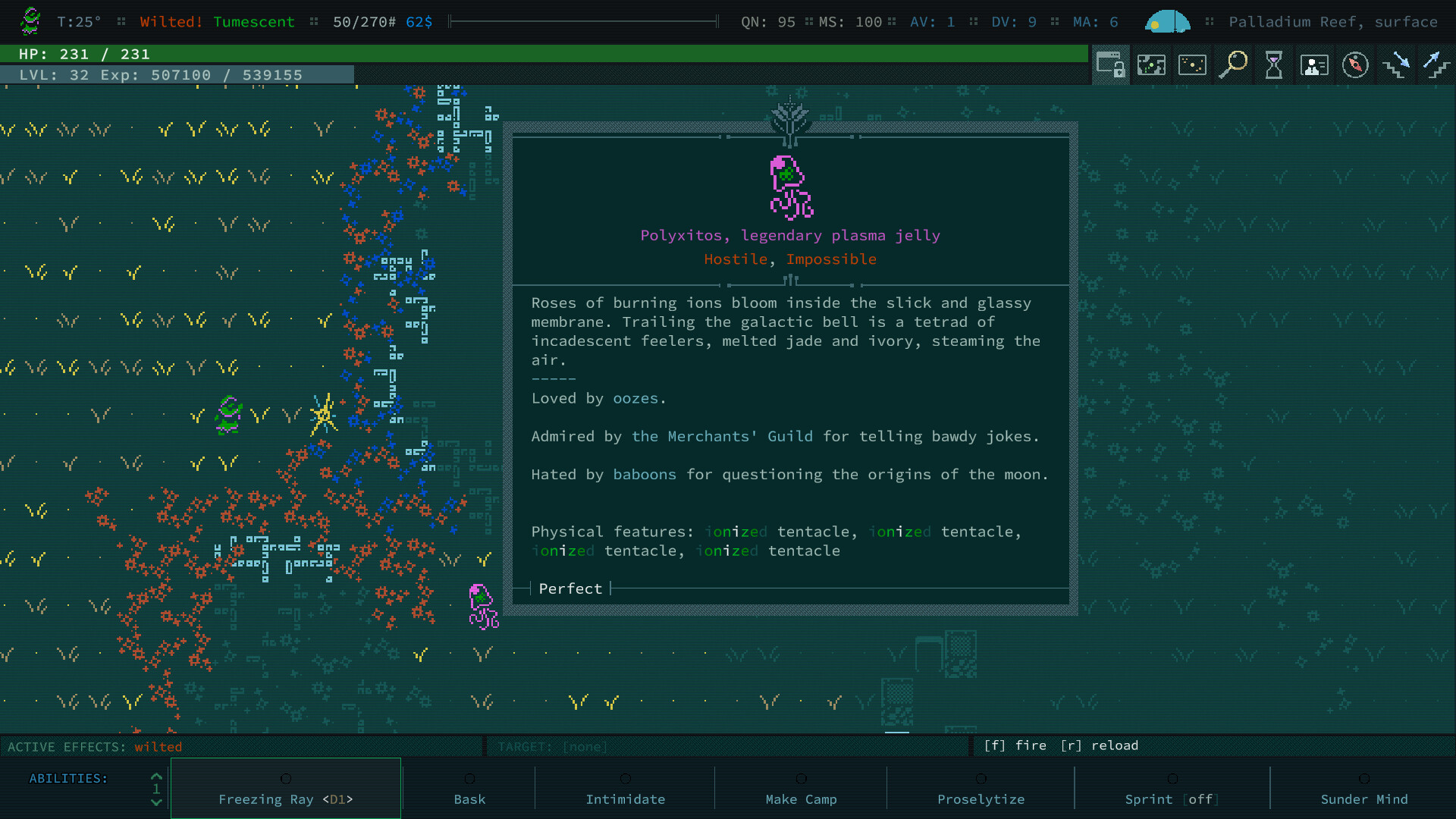
Do not build a fragile experimental character for your first runs. Caves of Qud punishes glass cannons hard early, and the most common new-player mistake is chasing a powerful idea without the survivability to keep it alive. Durability first, spectacle later.
Genotype: True Kin versus Mutant
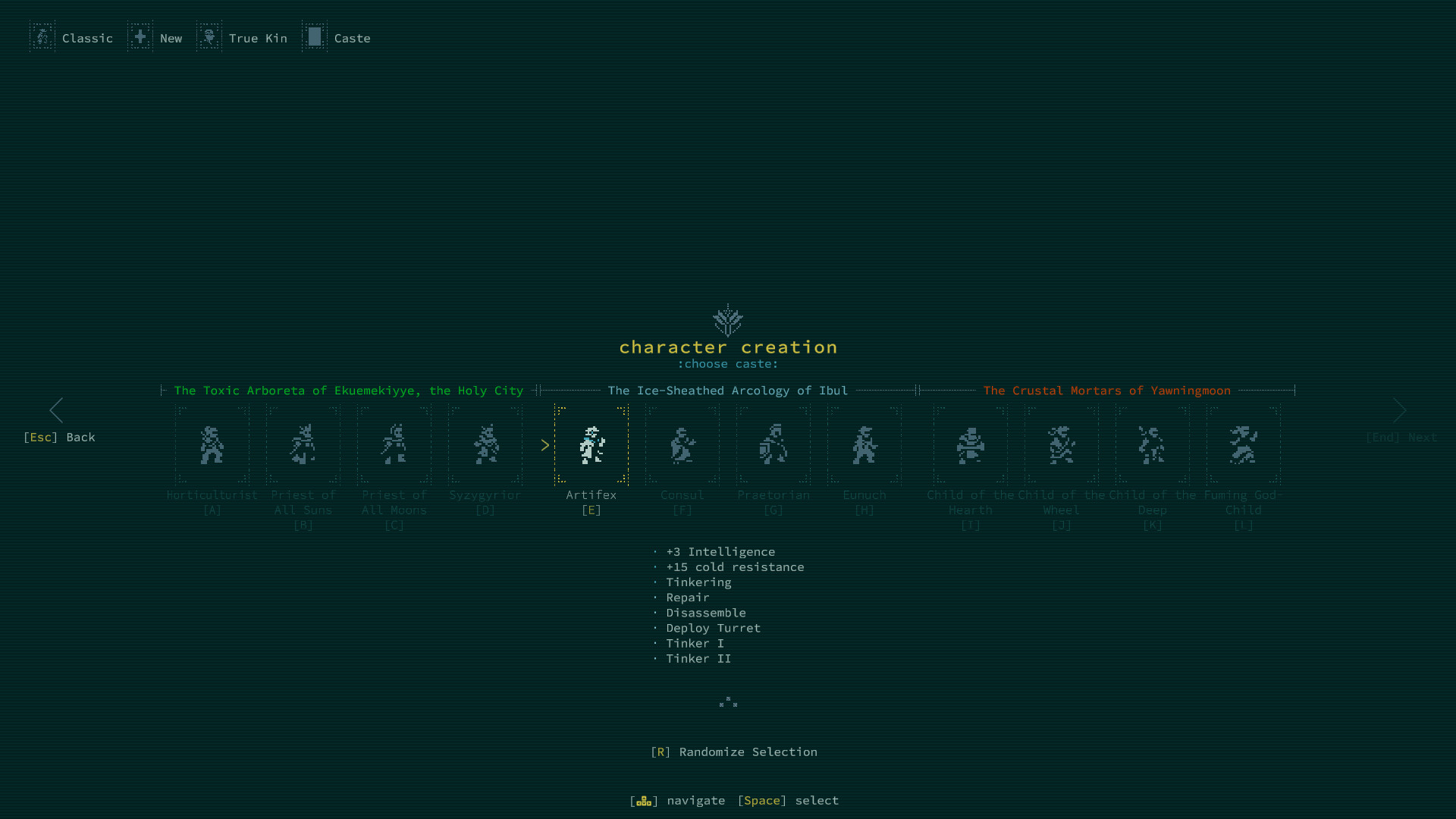
Your first major choice is genotype, and it fundamentally shapes the build. Mutants are mutated humans who choose from a long list of physical and mental mutations and gain more as they level. They tend to be flexible, powerful and beginner-friendly, because mutations give immediate, tangible tools — and many of the strongest survival picks, like Regeneration, are mutations. True Kin are pure-strain humans who cannot mutate; instead they select a caste and lean on cybernetic implants and equipment for power. They start sturdier and more attribute-rich but are more gear-dependent, rewarding players who enjoy building power through items and implants rather than innate abilities.
Neither is strictly better — they are different games. Mutants suit experimentation and emergent power; True Kin suit a steadier, equipment-driven climb. For a first character, a Mutant with strong physical mutations is often the easier path, but a sturdy True Kin melee build is equally viable.
| Genotype | Power source | Feel | Best for |
|---|---|---|---|
| Mutant | Physical and mental mutations | Flexible, innate, experimental | Beginners and build experimenters |
| True Kin | Caste plus cybernetic implants and gear | Sturdy, equipment-driven | Players who build power through items |
The six attributes
Caves of Qud has six attributes, and your build decides which to prioritise. Strength drives melee damage and carry capacity; Agility improves accuracy and underpins many weapons; Toughness governs hitpoints and resilience and is valuable in nearly every build for raw survival; Intelligence affects skill points and tinkering; Willpower influences cooldowns and resilience; and Ego scales mental-mutation power and social and companion options. A melee build leans on Strength, Agility and Toughness; a psychic build prioritises Ego and Willpower while keeping enough Toughness to survive; a tinkering-heavy or skill-broad character values Intelligence. The key is to back your identity rather than spreading points evenly.
Toughness deserves special mention because it benefits everyone. The extra hitpoints and resilience widen your margin for error in a game where mistakes are lethal, so even non-melee builds usually want a healthy investment early.
The classless skill system
On top of genotype and attributes, Caves of Qud uses a classless skill system: you spend skill points to buy abilities across many trees — weapon styles (axes, cudgels, long blades, short blades, pistols, rifles, heavy weapons), plus tinkering, cooking and gathering, survival, persuasion, wayfaring, self-discipline and more. Intelligence influences how many skill points you accrue. Because you buy exactly what you want, you can tailor any character precisely, but the same freedom rewards focus: a melee character wants its weapon line and supporting survival skills, not a scattering of half-invested trees. Tinkering and cooking are broadly valuable utility investments that pay for themselves over a run.
The mindset is the same as the rest of the game: deliberate and identity-driven. Buy the skills that make your chosen role work, add a couple of high-value utility skills, and resist dabbling until your core is solid.
Building each one, in detail
Sturdy melee Mutant. Put your opening points into Toughness, then Strength and Agility. Buy one melee weapon line — pick it and stay in it rather than sampling axes and long blades both — and add the survival skills that keep you upright. Take Regeneration as early as it is offered; it is the difference between a wound costing you a turn and a wound costing you the run. Multiple Arms is the output mutation that lets a single weapon line carry the whole character.
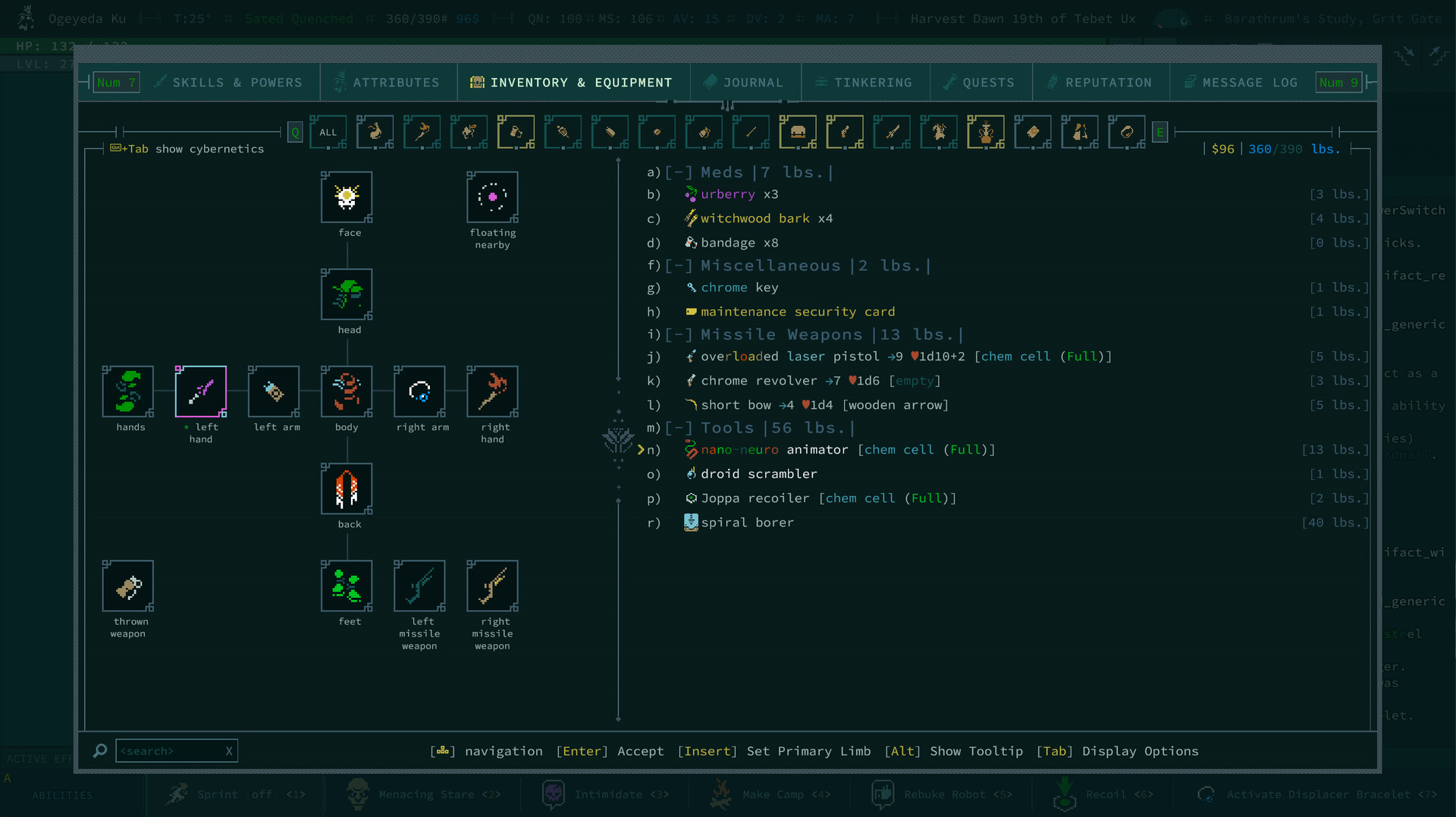
Cybernetic True Kin specialist. Pick a caste, invest in one strong weapon skill and its supporting trees, and treat the early game as a shopping trip: your power arrives as implants and equipment, not as level-ups. Because True Kin start attribute-rich, you can afford a little breadth here that a Mutant cannot. Keep Intelligence high enough to make tinkering worth having.
Ego psychic Mutant. Pour into Ego and Willpower, because both scale mental-mutation power, but do not let Toughness fall to the floor — the hours before your mutations come online are the ones that kill this build. Play it cautiously and at range until the ceiling arrives, and it arrives high.
Whichever you choose, the rules hold: pick an identity, invest attributes and skills toward it, and never sacrifice the survivability that keeps the build alive. For which mutations to prioritise, see our Caves of Qud mutations tier list; to keep any build alive, the survival guide; and if you are new, the beginner guide covers your crucial first hours.
Toughness is the attribute almost every build wants early. In a game where a single mistake can be fatal, the extra hitpoints and resilience are rarely wasted, so when in doubt, shore up survival before chasing raw power.