Why Caves of Qud feels impossible at first
If your first Caves of Qud character died in minutes to something you did not understand, you are not doing it wrong — that is the normal beginning. Caves of Qud is a deep traditional roguelike that explains very little, combines punishing RNG with intricate systems, and trusts you to learn by failing. The early skill is not winning hard fights; it is surviving long enough to understand the rules, and choosing a character and a mode that forgive the mistakes you are certain to make.
Treat your first runs as learning runs. You will die, probably often, and that is expected. Your job is to absorb how the world works — water, combat, mutations, factions — and to lean on tools (a forgiving mode, a sturdy build, the wiki) that let that learning stick instead of resetting you to zero every time.
Do not start in Classic permadeath mode and do not wander far early. The fastest way to bounce off Caves of Qud is to die repeatedly with no recovery while you are still learning what kills you. Roleplay mode exists precisely so you can learn.
Your first steps, the right way
There is a sensible way through the opening that turns frustration into progress. Build these habits and you will reach your first stable, capable character instead of restarting endlessly.
-
1
Choose Roleplay mode
Its checkpoint-based saving lets you recover from death, so a mistake costs minutes rather than your whole run while you learn.
-
2
Build a sturdy starter
Favour Toughness and a reliable melee weapon skill. A durable, simple character survives the learning curve far better than a fragile one.
-
3
Follow the early quest slowly
Take the opening main-quest steps near the starting village, and do not stray into unknown territory before you are equipped.
-
4
Manage water from the start
Water is your money and your hydration. Keep a reserve, refill when you can, and never spend your last drams carelessly.
-
5
Keep the wiki open
Caves of Qud does not explain itself. Looking things up is normal and expected — it is how nearly everyone learns the systems.
Building a survivable first character
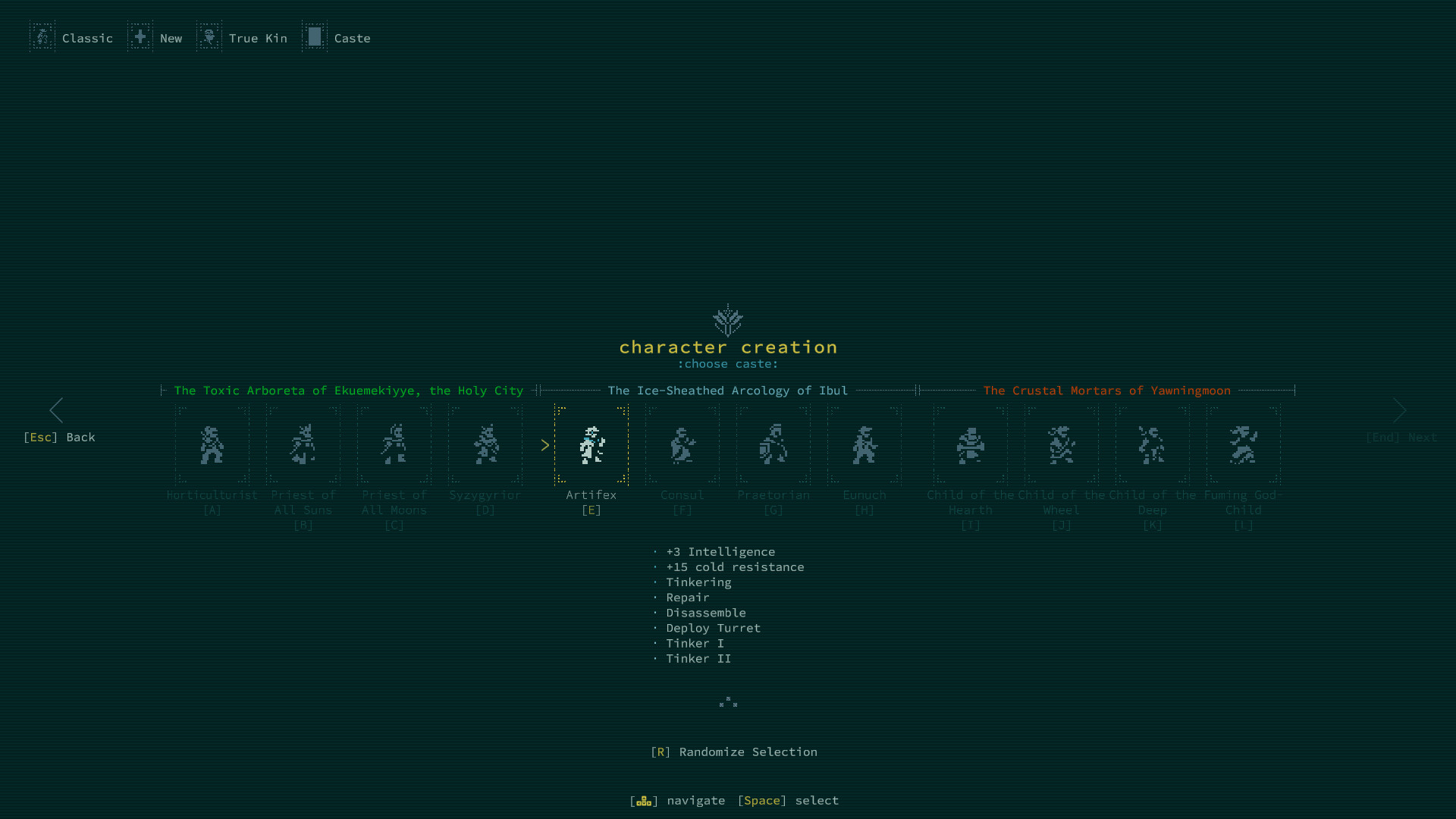
Character creation in Caves of Qud is vast, and that freedom is a trap for beginners who build something powerful but fragile. For your first runs, prioritise durability over flash. High Toughness gives you the hitpoints to survive surprises, a single reliable weapon skill (a melee line is the most forgiving) lets you actually win the fights you take, and defensive choices keep you standing while you learn. Whether you play a Mutant (gaining flexible physical and mental mutations) or True Kin (sturdier, gear-and-cybernetics driven), the principle is the same: a clear, durable plan beats a clever, brittle one.
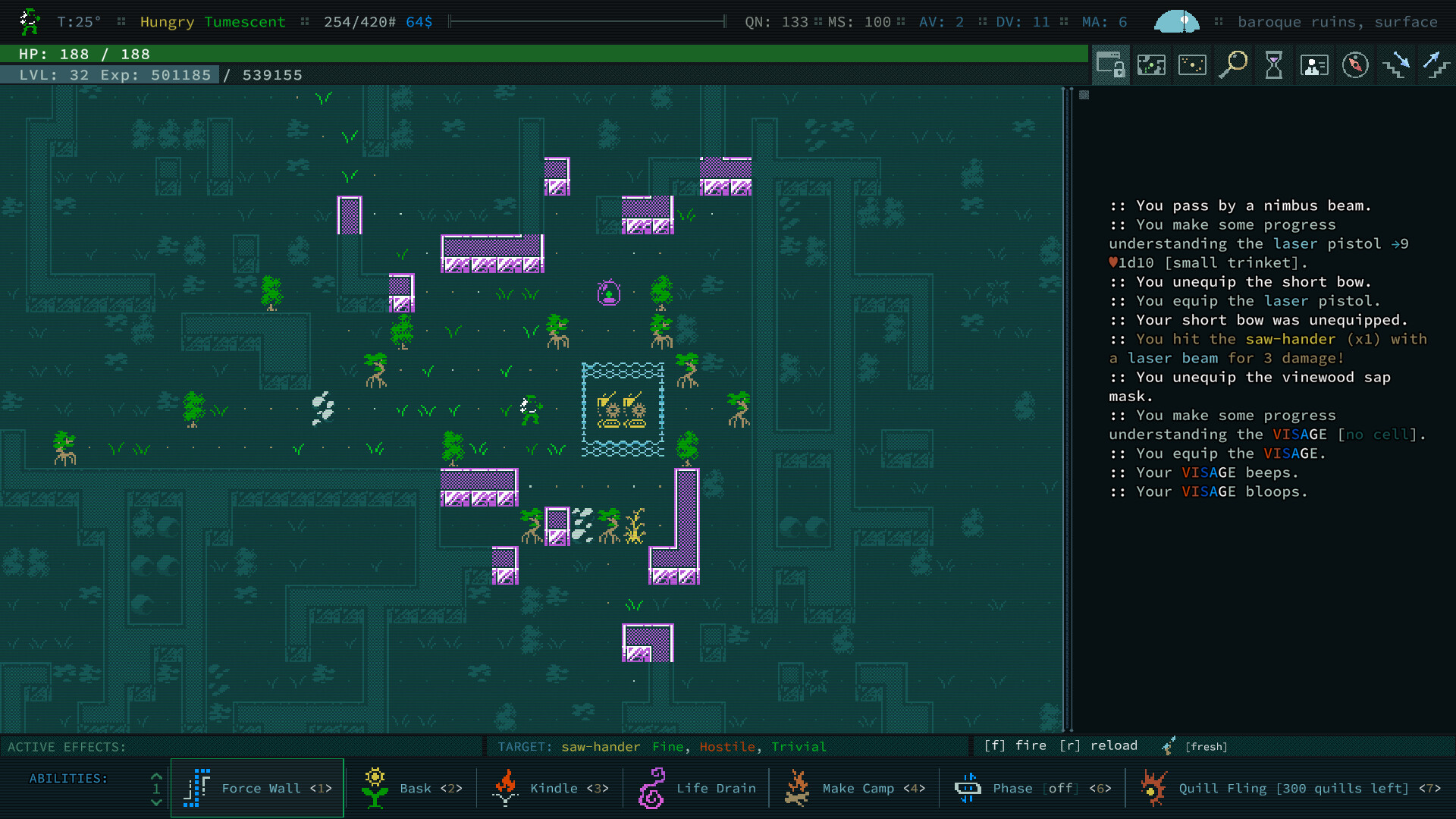
Resist the urge to spread yourself thin across exotic mutations and skills you do not yet understand. A focused melee mutant with regeneration and good Toughness, or a sturdy True Kin with a strong weapon, will teach you the game far better than a glass-cannon psychic that dies before its power comes online. Our Caves of Qud mutations tier list and builds guide cover stronger first picks in detail.
| Priority | What to favour | Why |
|---|---|---|
| Toughness | High | Hitpoints to survive surprises and mistakes |
| One weapon skill | Reliable melee line | Win the fights you take instead of flailing |
| Durability | Defensive mutations/gear | Stay standing long enough to learn |
| Focus | A few strong picks | Beats spreading thin across exotic options |
Water, exploration and survival
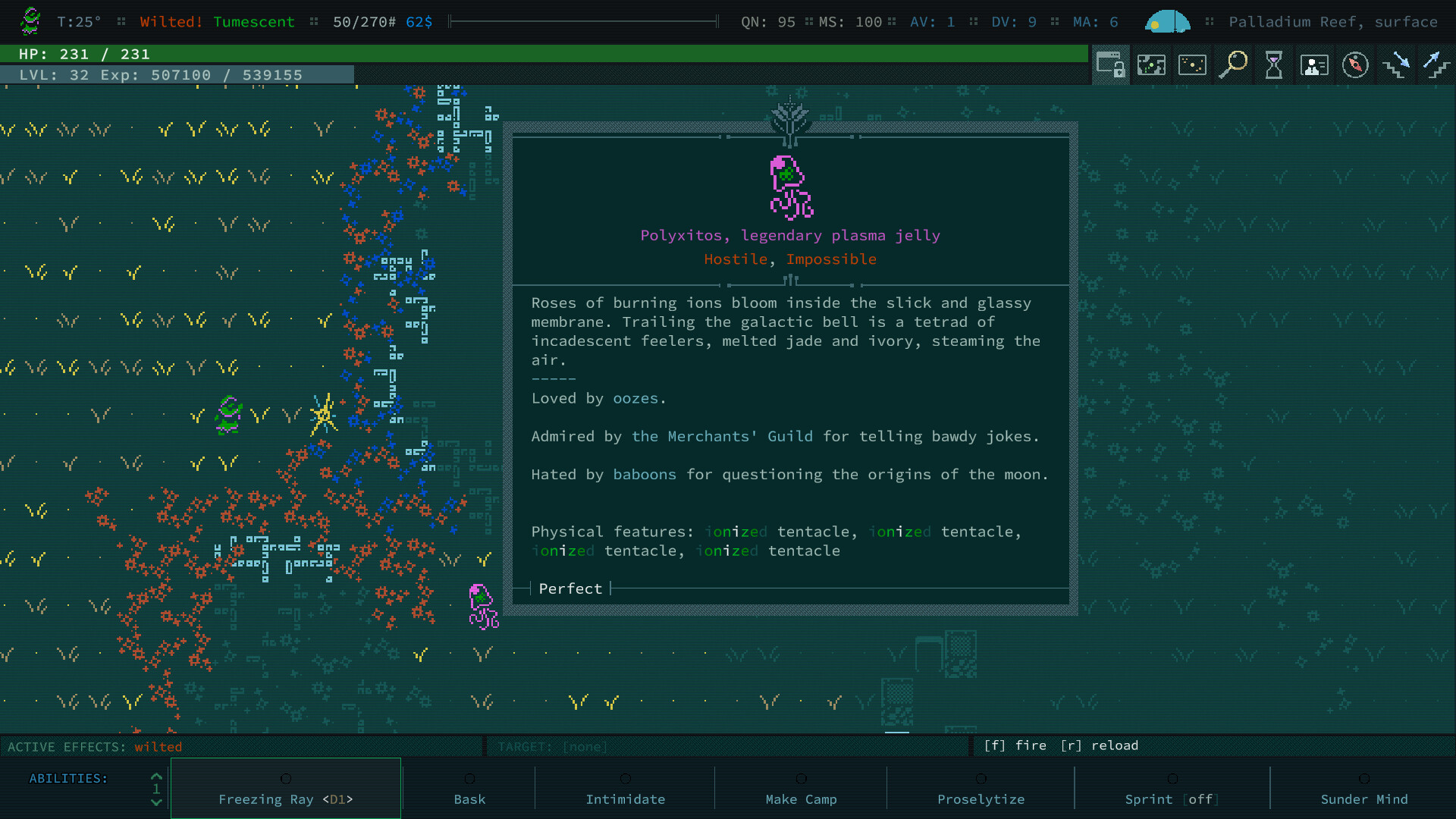
Two things define early survival: water and restraint. Water is both the currency and a hydration resource, so treat it as precious — keep a reserve, refill at pools and from creatures where you can, and never trade away your last drams on a whim. On exploration, the world is open but indifferent, and wandering far before you are equipped is a classic beginner death. Stick near the starting areas, follow the early quest, and expand your range only as your character and gear grow. When you meet a creature you cannot read, assume it is dangerous and be ready to flee.
The throughline is patience. Caves of Qud rewards the careful, curious player who learns the systems and respects the danger, and punishes the one who charges ahead. Lean into that and the world opens up into one of the most rewarding sandboxes in the genre.
When in doubt, retreat and regroup — fleeing costs nothing compared to a dead character. Once you are comfortable with the basics, our Caves of Qud survival guide goes deeper on water economy, factions and staying alive on longer expeditions.