
The verdict up front
Warsim: The Realm of Aslona is one of the deepest and most quietly astonishing strategy games you can buy, provided you can see past the fact that it has, essentially, no graphics at all. Made single-handedly by developer Huw Millward over many years, it is a text-based kingdom management simulation rendered entirely in ASCII, in which you rule the realm of Aslona however you see fit: grow its economy, raise and march its armies, sit in judgement in your throne room, broker deals with dozens of strange factions, run a brutal gladiatorial arena, and explore a world that is largely built by procedural generation. What makes it special is the sheer scale and freedom of that simulation. There are millions of possible races, an astronomical number of unique faces, and thousands of generated monsters, all wrapped in a clean, menu-driven loop that hides enormous depth. It holds an Overwhelmingly Positive rating on Steam, and it earns it.
So is it worth buying? If you love management sims, procedural variety, and the freedom to make your own story, absolutely — it is staggeringly deep, endlessly replayable, and astonishingly cheap for what it offers. The honest caveats are real: there are no real graphics, the menus are dense and largely unexplained, and it is English only with a great deal of text. But none of that stops Warsim from being a uniquely rich and characterful game.
Warsim: The Realm of Aslona is a deep, text-based kingdom management sim from solo developer Huw Millward. You rule the realm of Aslona through its economy, armies, throne room, diplomacy and arena, in a procedurally generated world rendered entirely in ASCII. It is turn-based, single-player, very cheap, and English only.
What you actually do
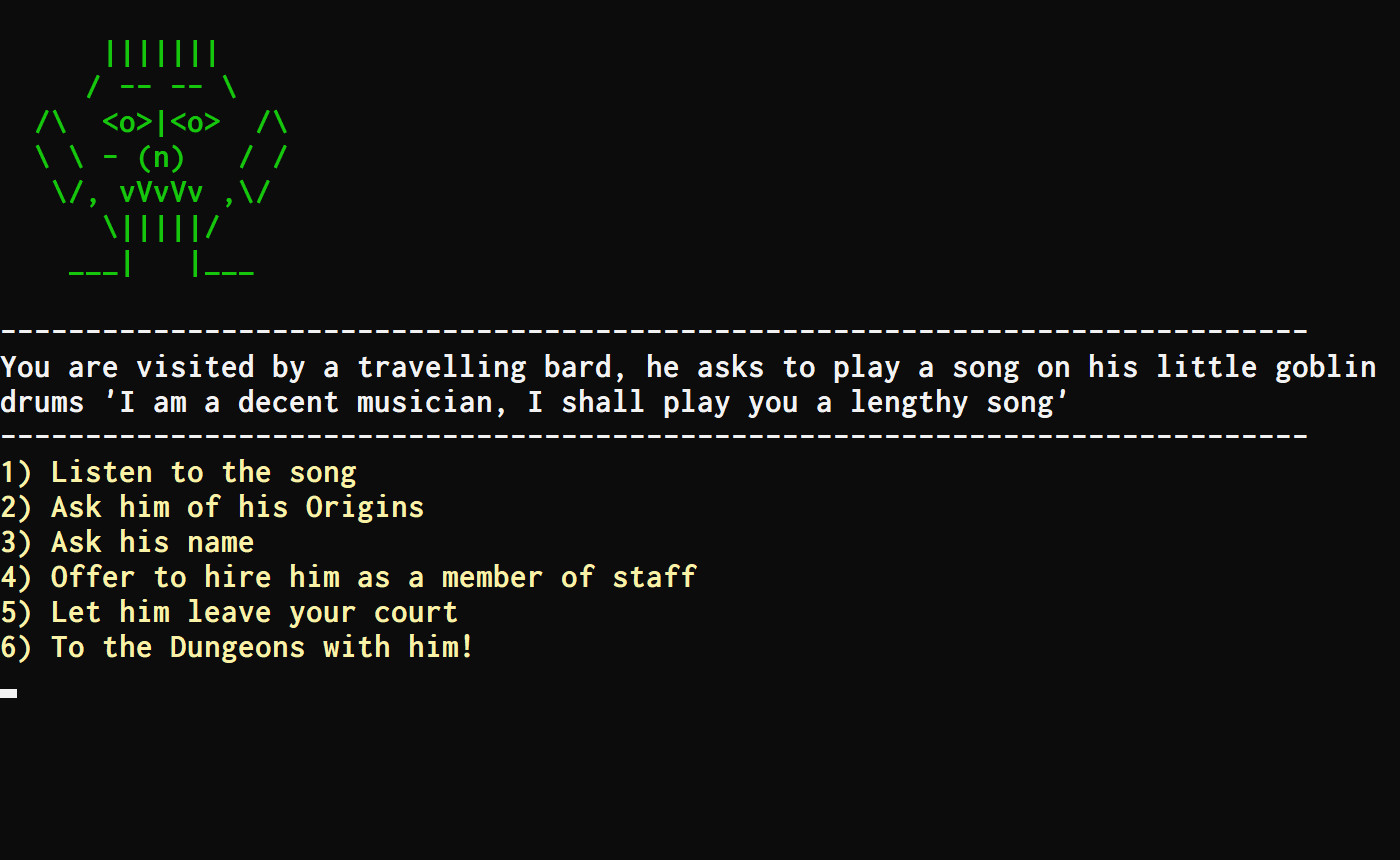
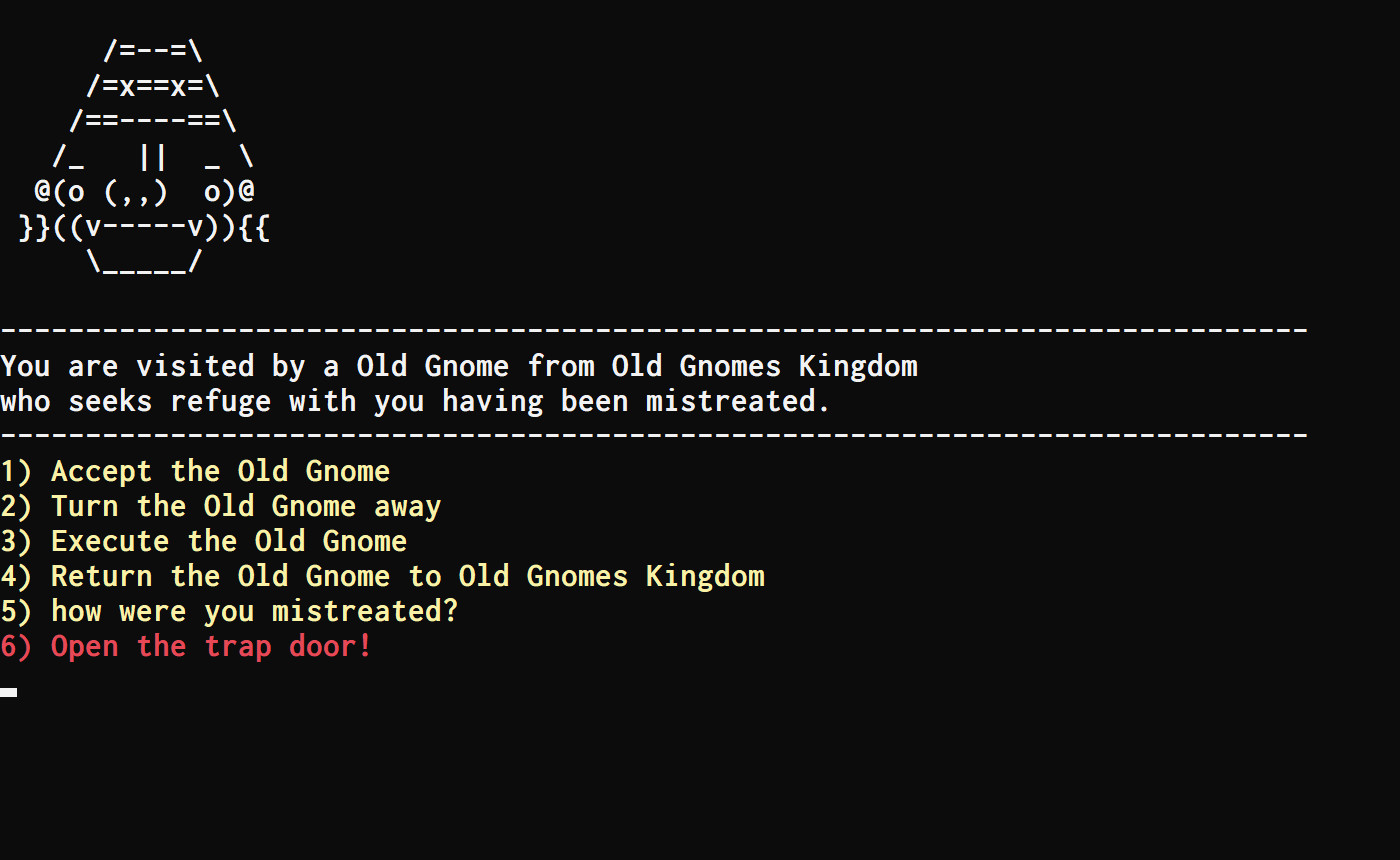
A game of Warsim casts you as the monarch of Aslona, and from your first turn the realm's survival is in your hands. Through a set of nested menus you manage everything a ruler must: your gold and economy, where peasants and slaves work fields, mines and clay pits to fill the treasury; your military, where you recruit soldiers, hire mercenary companies and field champions to fend off bandits and rival factions; the stability and happiness of your people, who will rebel if pushed too far; and your diplomacy with the many factions, races and rulers that share the world. The signature feature is the throne room, where a constant stream of petitioners, mercenaries, bards, beggars and strange events come before you, each with branching choices that ripple out into your realm. Around all this sit further systems — a gladiatorial arena, world exploration, taverns, festivals and more — that you can dip into as deeply as you like.
The result is a sandbox of remarkable breadth. There is no single scripted path; you set your own goals, whether that is building a prosperous, beloved kingdom or a feared tyranny, conquering your neighbours or simply seeing what the world generates next. It is strategy and roleplaying woven together, where the story emerges from your decisions rather than a script.
New to Warsim? Your first priority is income: recruit peasants to work your fields and mines, hire a few soldiers to deter bandits, and keep taxes moderate so people stay content. Our Warsim beginner guide walks you through your crucial first turns.
Why the procedural depth carries it
The reason Warsim is so beloved is the staggering scale of its procedural generation and the freedom it gives you. This is a game built around generating content on a scale few titles attempt: there are millions of possible races, each with their own birth rates, civility, unique units, laws and attitudes towards outsiders; an astronomical number of unique character faces, so that essentially every NPC you meet is one of a kind; and thousands of procedurally generated monsters you can fight, capture and train for war or the arena. Lands, factions, rulers, blackmarkets, hidden cities and events are generated too, which means no two realms of Aslona are ever the same and there is a near-bottomless supply of new things to stumble across.
Underpinning all of it is genuine systemic depth. The economy, military, stability, diplomacy and arena are not isolated minigames; they interlock, so that over-taxing to fund an army can trigger a rebellion, hoarding slaves without enough soldiers invites an uprising, and a thriving arena can both entertain your people and fund your wars. That combination — vast procedural variety over deep, interlocking systems — is what gives Warsim its near-endless replayability and its cult following. Our strategy tier list and economy guide go deeper.
Pros
- +Astonishing depth and freedom in how you rule the realm.
- +Staggering procedural generation makes every game unique.
- +Huge replayability and constant solo-developer updates.
- +Very cheap for the sheer amount of content on offer.
Cons
- −Pure ASCII presentation with no real graphics.
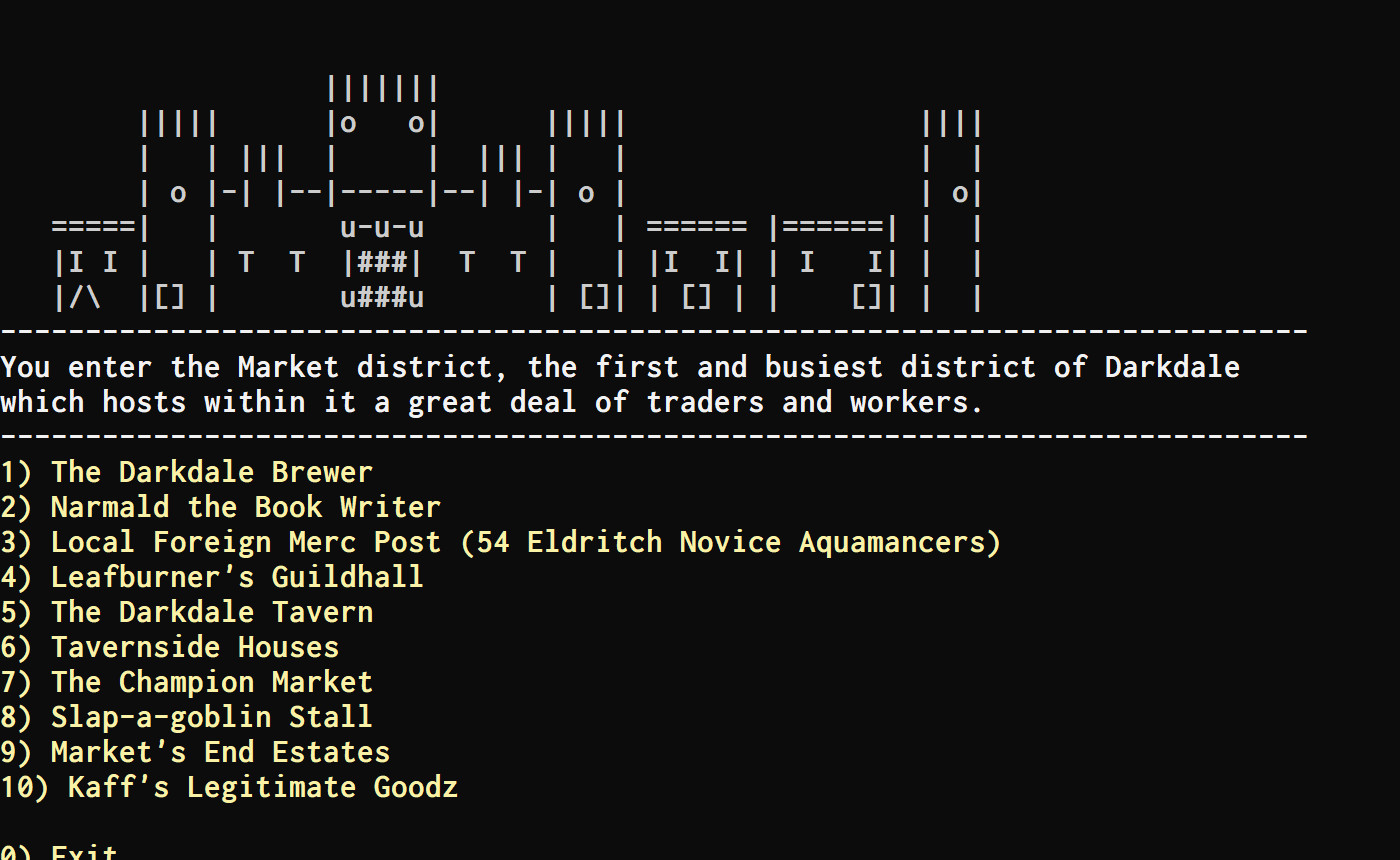
- −Dense, menu-heavy interface that overwhelms at first.
- −Systems are deep but largely unexplained.
- −English only and extremely text-heavy.
Freedom, character and replayability
One of Warsim's greatest strengths is how much room it gives you to play your own way. You can be a just and generous monarch who builds a happy, prosperous realm through fair taxes and good governance, or a cruel tyrant who rules through slaves, fear and the executioner's trapdoor beneath the throne. You can focus on trade and diplomacy, on conquest and war, on the spectacle of the arena, or on exploring the world's hidden corners. The game rarely tells you what to do; instead it hands you a deep toolbox and a generated world and lets you set your own ambitions. That openness, paired with a dry, dark sense of humour and the constant surprises of the generation, gives Warsim enormous character despite its minimal presentation.
That freedom is also why it has such staying power. Because so much is generated and so little is scripted, there is always another realm to rule, another strategy to try, another strange faction or monster to discover. Add the fact that its solo developer has supported and expanded it for years, and you have a game that rewards both a curious first playthrough and hundreds of hours of tinkering.
The honest weaknesses
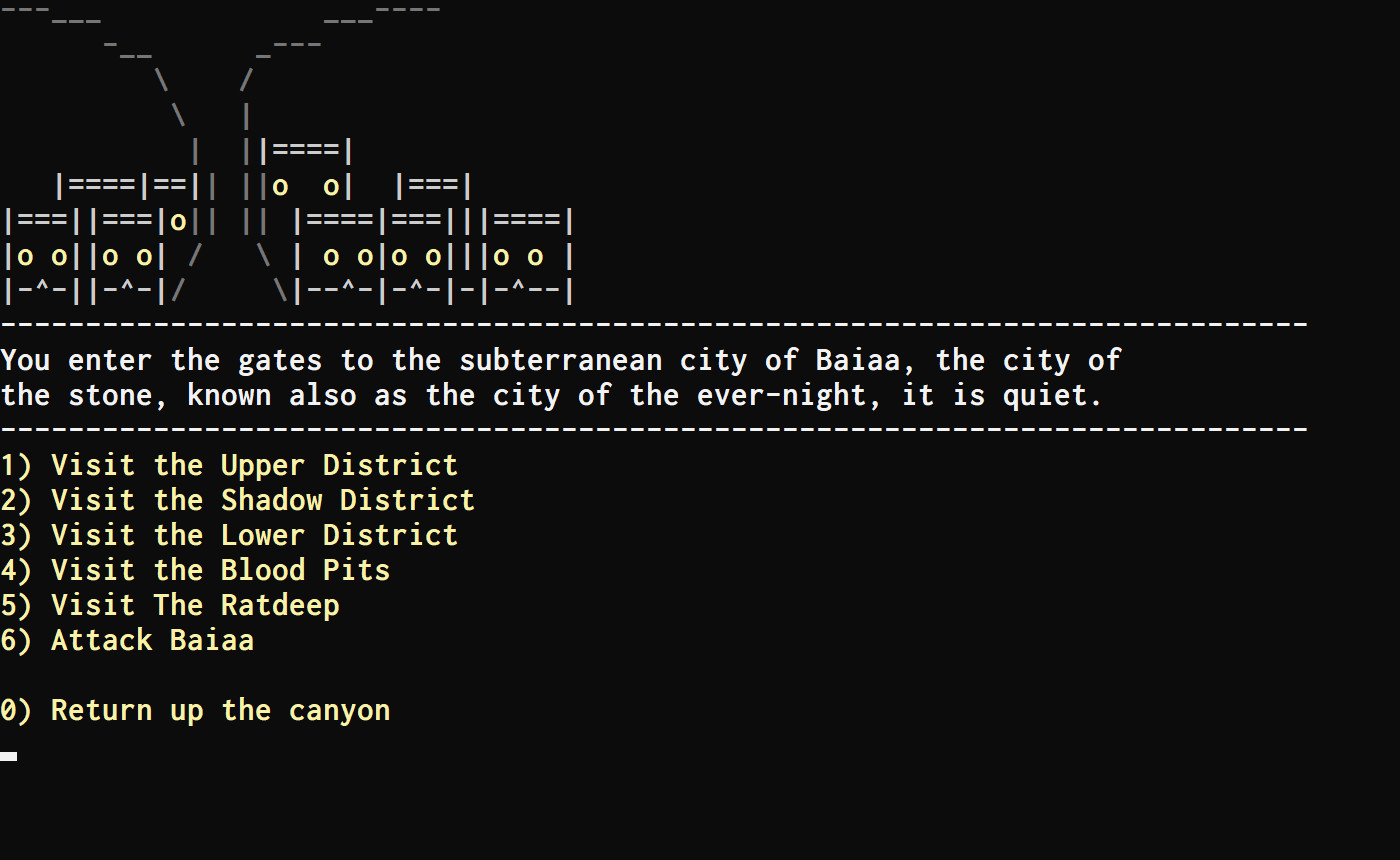
Now the caveats, which are significant but, for the right player, forgivable. The most obvious is the presentation: Warsim is rendered entirely in ASCII, with no real graphics to speak of. Character portraits and scenes are drawn in text characters, and if you cannot enjoy a game that looks like a terminal, this is a hard wall rather than a hurdle. The second is the interface and learning curve. The systems are deep but largely unexplained, delivered through dense, nested menus that can be genuinely overwhelming at first; you learn Warsim by experimenting, reading carefully and slowly building a mental map of how everything connects. Finally, it is English only and extremely text-heavy — reading is essentially the entire game — which makes it a tough proposition for non-English players. There is also no single overarching goal; this is a sandbox, and players who need a clear win condition or a guided story may find it aimless.
It is fair to say Warsim asks you to value depth and imagination over polish and presentation. It rewards players who delight in systems, procedural surprises and self-directed roleplay, and it will bounce off anyone who needs visuals, hand-holding or a clear finish line. Be honest with yourself about which you are.
Buy Warsim for its depth, freedom and procedural variety, not for graphics or guidance. If you need real visuals, a guided experience, or a clear win condition, weigh that carefully. If a staggeringly deep, text-based sandbox kingdom appeals, few games offer more for the money.
Who should buy it
If you love deep management sims, procedural generation and the freedom to write your own story, Warsim: The Realm of Aslona is an easy recommendation — a game of remarkable breadth and character that costs a fraction of what its depth would suggest, and one that will reward hundreds of hours of curious play. Management and strategy fans who enjoy learning systems by experimenting, who relish the surprises of generated worlds, and who can happily look past the lack of graphics will get extraordinary value here. To get started, read our beginner guide, then dig into the strategy tier list, economy guide and throne room guide.
Who should pass? Anyone who needs graphics, a guided experience, a clear win condition, or who dislikes dense menus and reading a great deal of text. Be honest about that, because the ASCII presentation and unexplained depth are its real barriers. For the players it suits — those who prize depth, freedom and procedural variety over looks — Warsim is a uniquely rich game, with the honest asterisks that it is pure ASCII, menu-dense, and English only.