Your ship is your life
In Approaching Infinity, your ship is everything: your home, your weapon, your means of exploration, and the thing standing between your crew and the void. Losing it ends your run, so learning to fly and fight it well is the most important skill in the game. The good news is that ship handling rewards thought over reflexes — it is turn-based and tactical, so the captain who understands sensors, positioning and their vessel's strengths will outperform one who simply charges in. This guide covers how sector travel and warp work, why sensors decide combat, how your weapons, shields and devices shape your fights, and how to upgrade toward the role you want. Master your ship and the galaxy opens up; neglect it and the deep sectors will end you.
The mindset to hold onto is that information and preparation beat firepower. In a turn-based fight, seeing the enemy first and choosing your engagement matters more than having the biggest guns, which is why the smartest captains invest in awareness and play every encounter deliberately.
Ship play in Approaching Infinity is turn-based, so there is no time pressure. You can study the map, weigh your options, and plan each jump and each shot. Use that freedom — the captains who pause to think survive far longer than those who rush.
Travel, sectors and warp
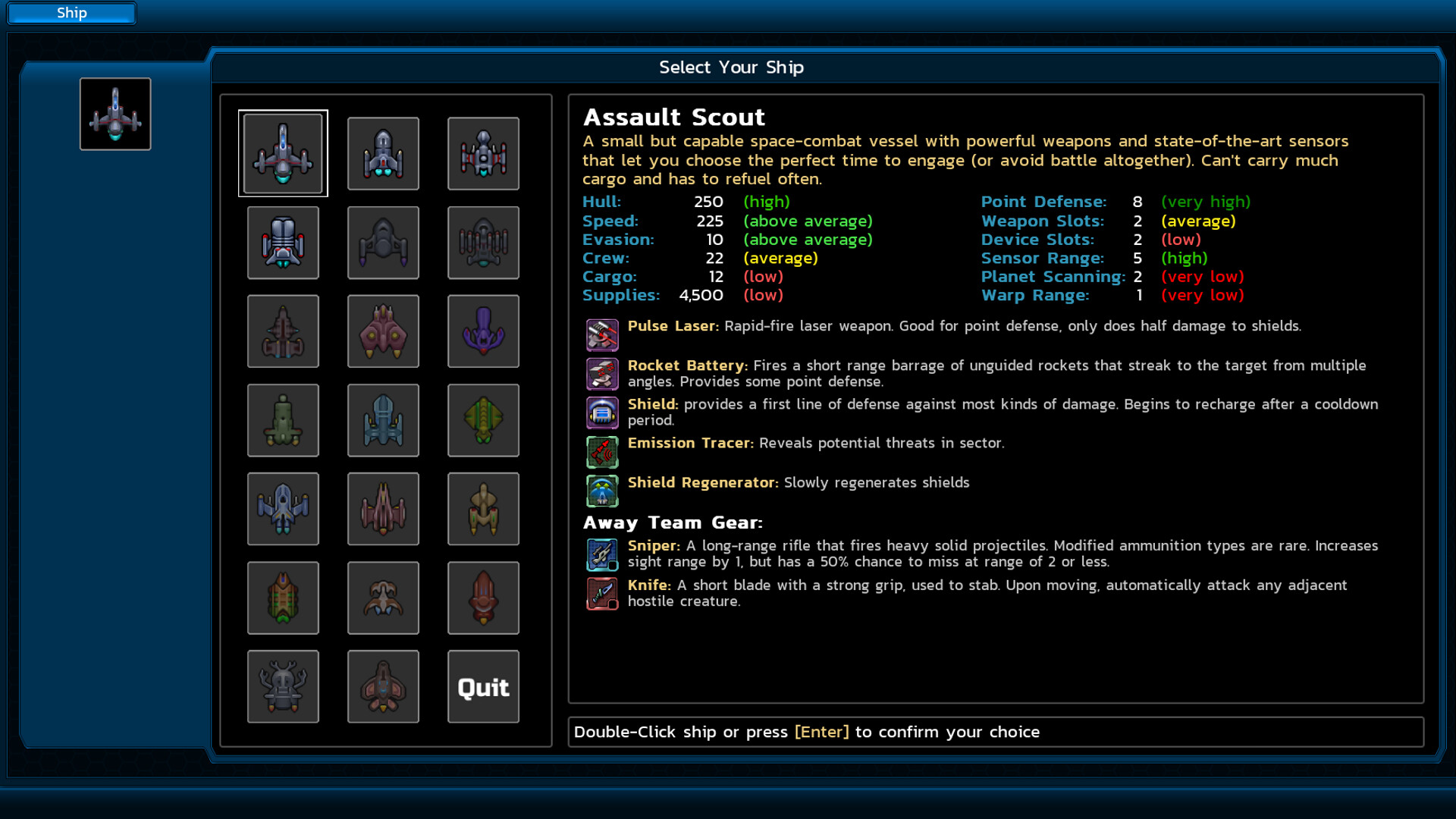
Approaching Infinity's galaxy is a vast, procedurally generated expanse divided into sectors full of stars and planets, and you move through it one turn at a time. Distance and time are abstracted, so travelling the star map feels much like exploring any other screen — each action costs a turn, whether you are crossing a sector or walking a derelict's corridor. The key constraint on your movement is your warp drive, which determines how far you can jump between sectors. Early ships, including the starting Assault Scout, often have limited warp range, so part of the early game is planning your route around what your drive can reach, and prioritising upgrades or ships that extend it when you want to roam farther.
As you travel, survey and scan constantly. The galaxy is full of planets to explore, opportunities to seize and dangers to avoid, and the captain who scouts before committing is the one who finds the treasure and dodges the ambush. Treat each sector as a place to read before you act: see what is there, weigh the risks and rewards, and decide where to point your ship next rather than blundering forward blindly.
Prioritise warp range when you feel boxed in. If a limited warp drive is keeping you from reaching better systems or escaping dangerous ones, upgrading your drive or moving to a ship with greater range can transform your run, opening up routes and escape options you did not have before.
Sensors, weapons and winning fights
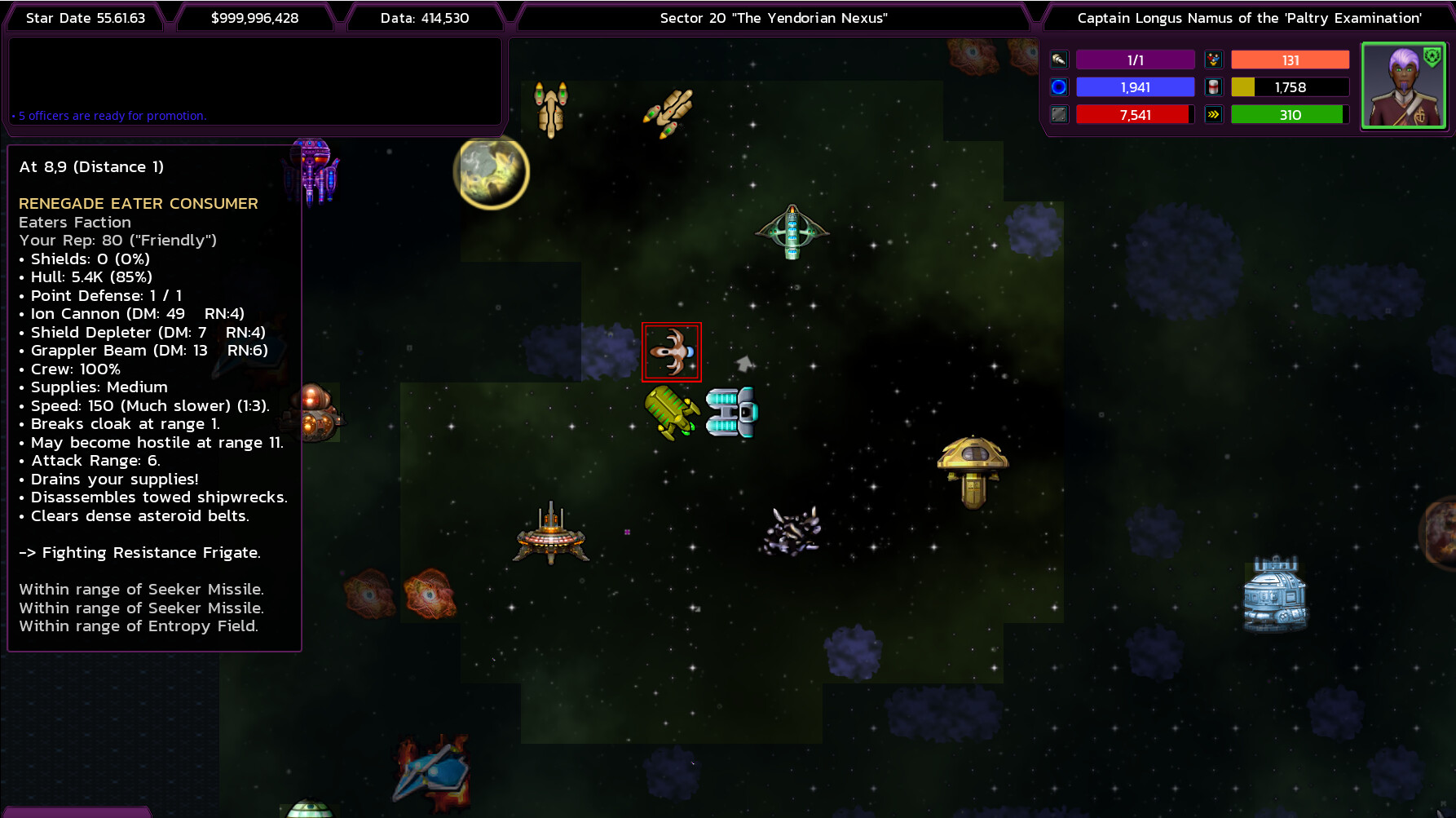
Ship combat in Approaching Infinity is turn-based and tactical, and the single most important factor is seeing distance. The earlier you detect a hostile ship, the more time you have to react — to reposition, ready your weapons, strike first, or disengage entirely. That is why sensors are so valuable: extending your detection range turns potential ambushes into encounters you control. Many experienced captains treat sensor and vision upgrades as a top priority precisely because reaction time and information win turn-based fights more reliably than raw firepower does. Make spotting the enemy first a habit, and you will fight on your terms far more often than not.
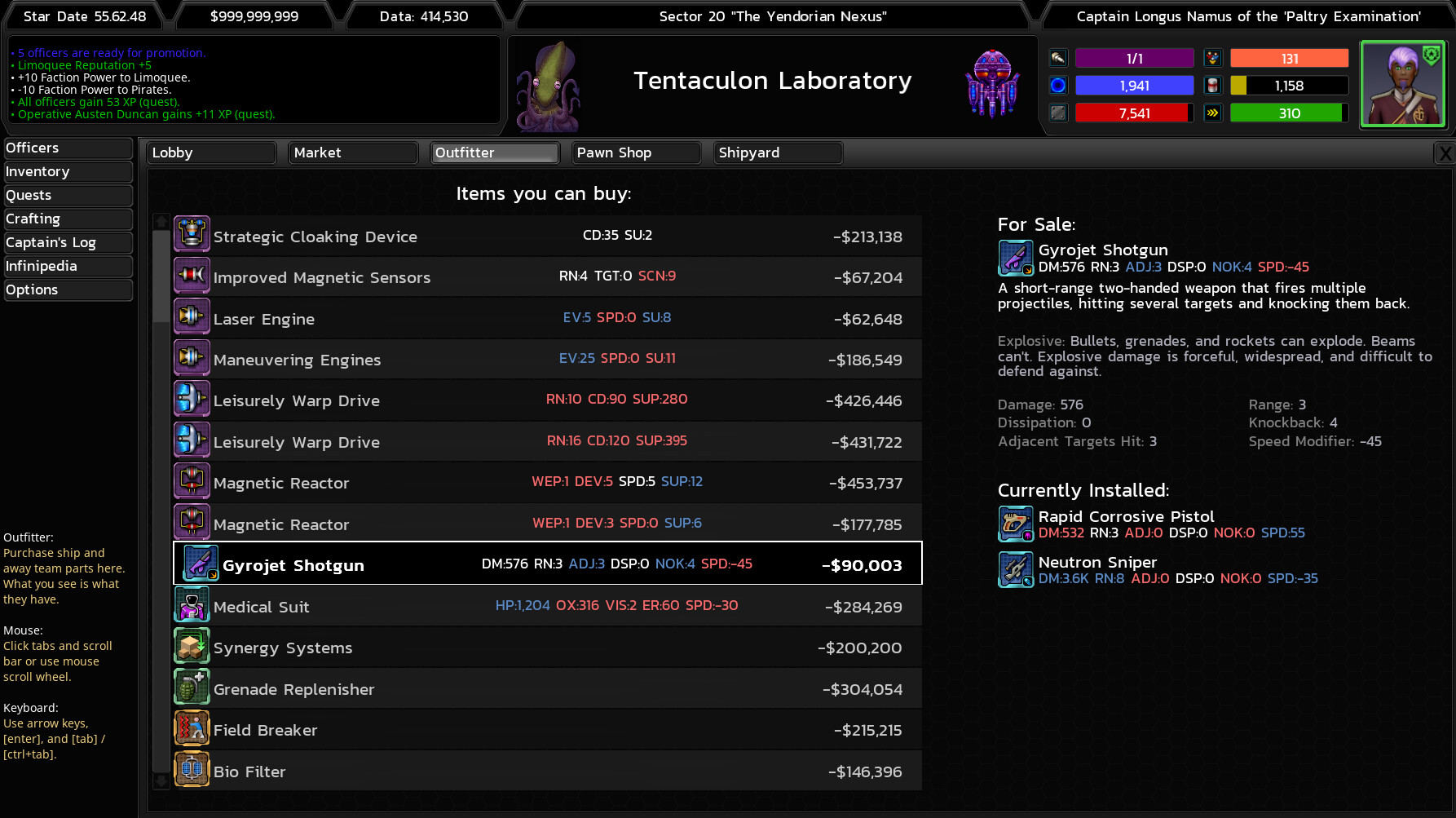
Your offensive and defensive tools matter too, of course. Weapons determine how you deal damage, shields absorb incoming fire and regenerate over time, and each ship's built-in devices grant special functions — the Assault Scout, for instance, comes with tools that highlight offscreen hostiles and boost shield regeneration. The art is to know your ship's strengths and play to them: a light scout survives by spotting threats early and fighting selectively, while a heavier warship can stand and trade blows. Trying to fly a fragile ship like a juggernaut, or vice versa, is a quick way to lose it. Learn what your vessel does well, build on it, and let your loadout shape how you pick and fight your battles.
| System | What it does | How to use it |
|---|---|---|
| Sensors | Reveal hostiles at distance | Upgrade early — seeing first wins fights |
| Warp drive | Limits how far you jump | Extend it to roam and escape freely |
| Weapons | Deal damage in combat | Match your fighting style and ship role |
| Shields & devices | Absorb fire, special functions | Play to your ship's built-in strengths |
Upgrading and surviving
A ship is only as good as how you grow it, and in Approaching Infinity upgrading with purpose is what carries you into the deep sectors. Rather than improving everything evenly, build your vessel toward the role you want to play: a combat captain invests in weapons, shields and sensors; an explorer prioritises sensors, warp range and survivability; a trader values cargo, mobility and enough defence to operate safely. Because the galaxy is endless and progression effectively unlimited, there is always a better ship, a stronger loadout and a deeper sector ahead, so steady, directed investment beats scattering your resources thinly.
Above all, remember that survival is the real goal. A roguelike rewards living to fight another day, and your sensors and mobility give you the means to avoid or escape fights you cannot win. Disengage when you are outgunned, when your shields are low, or when you are deep in hostile territory without support; there is no shame in fleeing, and a surviving ship can always rebuild and return stronger. The captain who flies smart — scouting, choosing engagements, and upgrading toward a clear role — is the one who reaches the parts of the galaxy that reckless captains never see. For who should be flying the ship, see our classes tier list; for what happens when you beam down, our away team guide; and if you are just starting out, the beginner guide.
Never charge in blind. Your ship is your run, and a single bad fight you could have avoided can end everything. Scout with your sensors, choose your engagements, and keep an escape route in mind. Flying carefully is not cowardice in a roguelike — it is how you survive to grow stronger.