Where the galaxy is won and lost
If your ship is your life in Approaching Infinity, your away team is how you reach out and touch the galaxy. Beaming down to a planet surface, a drifting derelict or a station is where you find much of the game's treasure, complete its quests, and face some of its sharpest dangers. These ground missions are optional — you are never forced to leave the ship — but they are also where the richest rewards and the most memorable moments live, so learning to run them well is a core skill. This guide covers how away missions work, how your crew and officers fight on foot, how the game's simulated hazards like spreading fire and decompression behave, and how to bring your team back alive with the loot. Master away missions and you unlock the galaxy's best rewards; mishandle them and they will cost you your hardest-to-replace crew.
The mindset to carry down with you is caution rewarded. Away missions are dangerous by design, but they are also generous to the prepared. The captain who equips the team, reads the environment and fights deliberately comes back rich; the one who rushes in loses people.
Away missions are turn-based, just like ship play, so there is no time pressure on the ground. You can survey each room, weigh hazards and enemies, and plan every step. Use that freedom to explore carefully rather than charging through unknown corridors.
Running an away mission
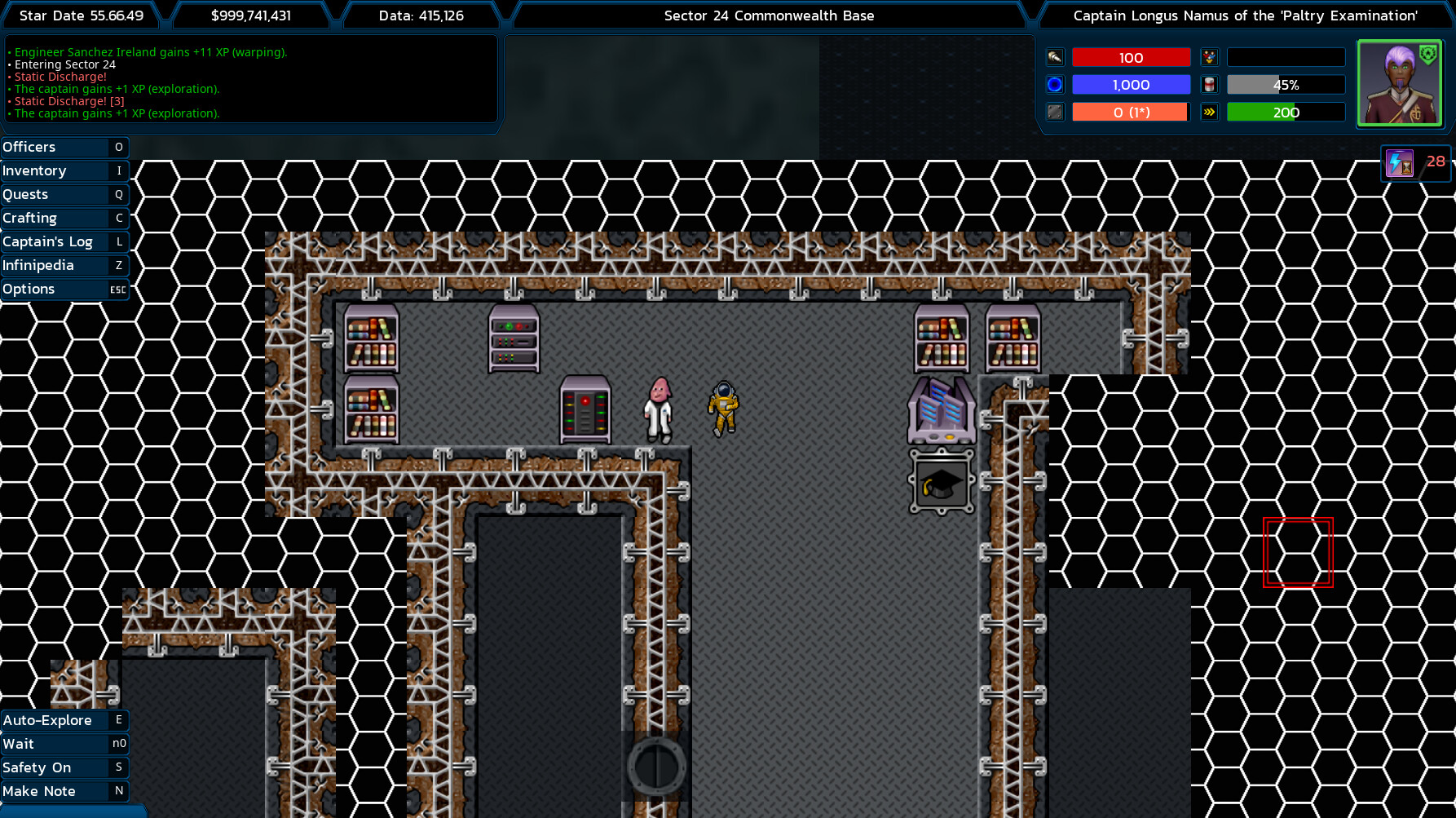
When you spot a planet, derelict or station worth investigating, you beam an away team down to explore it on foot. Each location is procedurally generated, with its own layout, hazards, enemies and rewards, and you make your way through it turn by turn, much like navigating the ship map. Your goals are usually some mix of gathering loot and resources, completing objectives or quests, and uncovering whatever the place holds — before returning safely to your ship. Because these environments are generated fresh each time, every away mission is a small unknown, which is a large part of their appeal: you never quite know what is behind the next door, for good or ill.
The smart approach is to explore deliberately. Move carefully, scout ahead where you can, and read each new area before pushing into it. Decide whether a room's rewards are worth its risks, and do not feel you must clear every location to the last corner — sometimes grabbing what you can and leaving is the wise call. Away missions reward curiosity tempered with caution, and the captains who explore thoughtfully come back with the best hauls and the most crew still standing.
Don't over-extend on a single mission. It is tempting to push deeper for more loot, but each step takes you further from your ship and safety. Know when you have what you came for, and pull out before a rich mission turns into a deadly one. Greed gets crews killed.
Crew, officers and ground combat
Your away team is made up of your crew, and building a good one is central to thriving in Approaching Infinity. You start with a modest team, but over a run you can recruit up to five additional officers from different divisions to serve alongside your captain, and each brings their own abilities, able to equip two ship and two away-team skills at once. A well-chosen crew — fighters to hold the line, specialists to handle specific threats, support to keep everyone going — can cover far more situations than any single class, so think about how your officers complement each other as you recruit. These officers are valuable and hard to replace, which makes protecting them one of your most important jobs on the ground.
Ground combat itself is turn-based and tactical, and like ship combat it rewards seeing the enemy first. Use your team's vision to spot threats before they close, soften enemies with ranged attackers, position your people to protect the vulnerable, and take advantage of the time a turn-based fight gives you to plan each move. Charging your whole team into an unscouted room is how good crews die; advancing carefully, fighting on your terms, and keeping your key officers safe is how they grow into a formidable away team over a run.
Hazards, retreat and reward
What makes Approaching Infinity's away missions special — and genuinely dangerous — is that they simulate real hazards rather than just placing enemies. Fire can spread, and crucially how it spreads depends on the atmosphere of the area, so a small blaze in the wrong environment can erupt into a deadly inferno. Hull breaches cause decompression that affects movement and can be lethal if you are caught in it. These systems mean the environment itself is a threat you must read and respect: avoid igniting dangers you cannot control, treat breaches and fires as serious as any enemy, and let the hazards shape how you move through a location. Surviving the place is as much a part of the mission as surviving its inhabitants.
All of which comes back to a simple principle: know when to push and when to retreat. Away missions hold the galaxy's best rewards, but no haul is worth your crew. If a mission turns against you — overwhelming enemies, a spreading fire, a breach you cannot escape — pull back to your ship. A retreat costs you some loot; losing officers costs you far more, because crew is much harder to replace than gear. Play your away missions with that balance of boldness and caution, and they become the richest, most rewarding part of the game. For who to bring along, see our classes tier list; for the vessel that carries them, our ship guide; and if you are new, start with the beginner guide. To decide whether the game is for you, read our review.
Your crew is your most precious resource. Gear can be bought, crafted and replaced; a lost officer is a lasting blow. Watch hazards as closely as enemies, never send your team somewhere you cannot pull them out of, and retreat the moment a mission stops being worth the risk.