Why the early floors feel brutal
If your first Cogmind runs end quickly with your robot torn apart, you are not doing it wrong — that is the normal beginning of a hardcore roguelike. Cogmind hands you a weak starting frame and a hostile Complex, and the instinct to fight everything is exactly what gets new players killed. Combat here costs you parts, draws more enemies, and rarely pays off early. The first skill to learn is not how to win fights; it is how to avoid them, salvage what you need, and keep climbing toward the exit.
Treat your early runs as learning runs. You will die, often, and that is expected in a permadeath game. Your job is to absorb how salvage, movement and threats interact, and to build the survival habits — evade, salvage, ascend — that let you reach the later floors where the game truly opens up.
Do not try to clear floors or win every battle. Cogmind is not about killing everything; it is about escaping upward. The players who struggle most are the ones who treat it like a combat game instead of a survival-and-evasion puzzle.
The survival mindset: evade, salvage, ascend
Cogmind rewards a specific rhythm, and internalising it early changes everything.
-
1
Evade first
Avoid fights you do not need. Use speed and sensors to slip past patrols and head for the exits rather than engaging.
-
2
Salvage what breaks
Your parts get destroyed in combat, so grab fresh components off downed robots and swap them in constantly to stay equipped.
-
3
Build for mobility and awareness
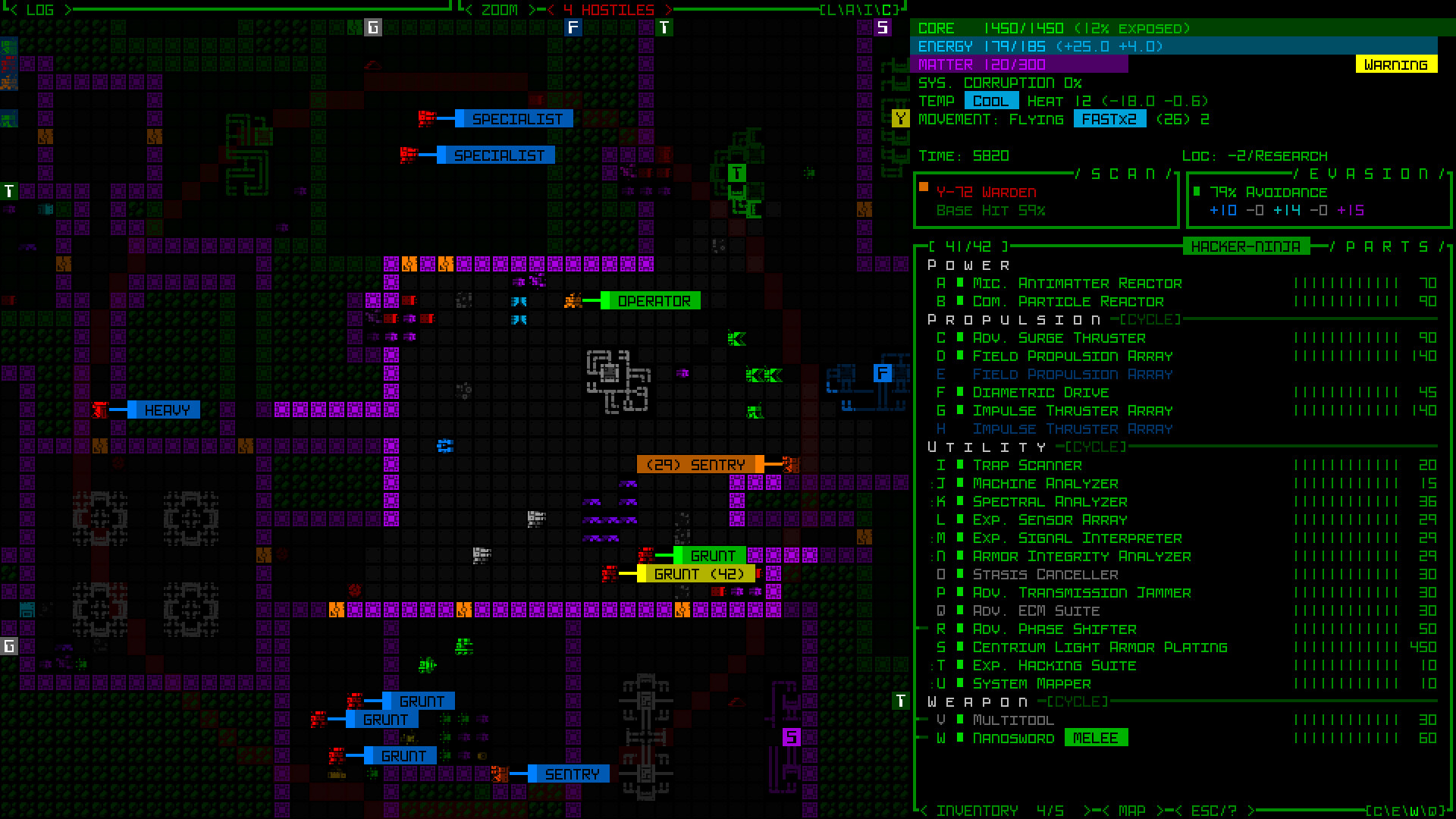
Prioritise fast propulsion and sensors early so you can see threats, avoid them, and escape when a situation turns bad.
-
4
Keep ascending
Your goal is up and out. Push toward the next floor rather than lingering to loot or fight; movement is safety.
-
5
Pick your battles
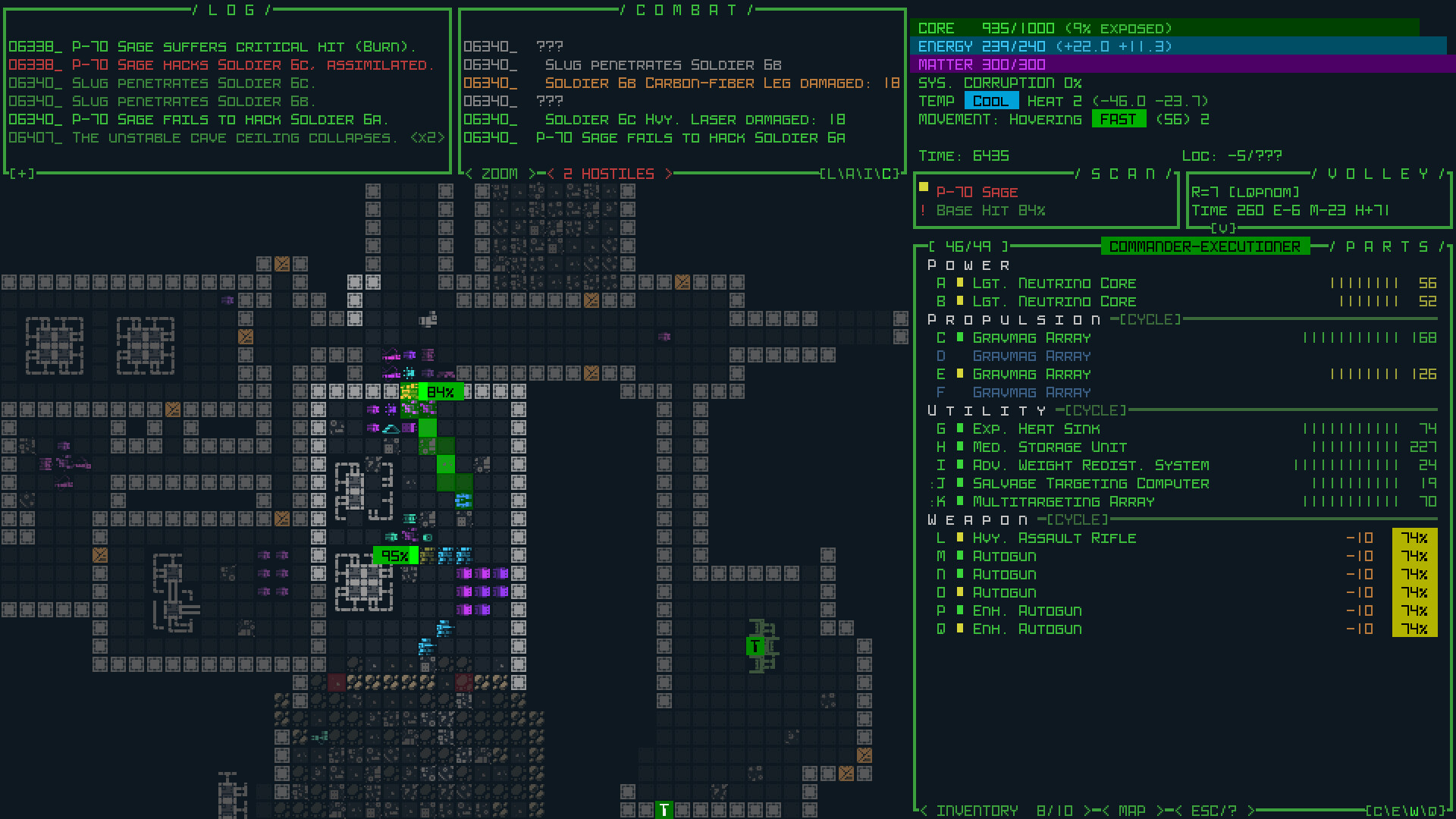
Fight only with a clear advantage or for parts you really need, ideally isolating single targets rather than facing groups.
Understanding parts and salvage
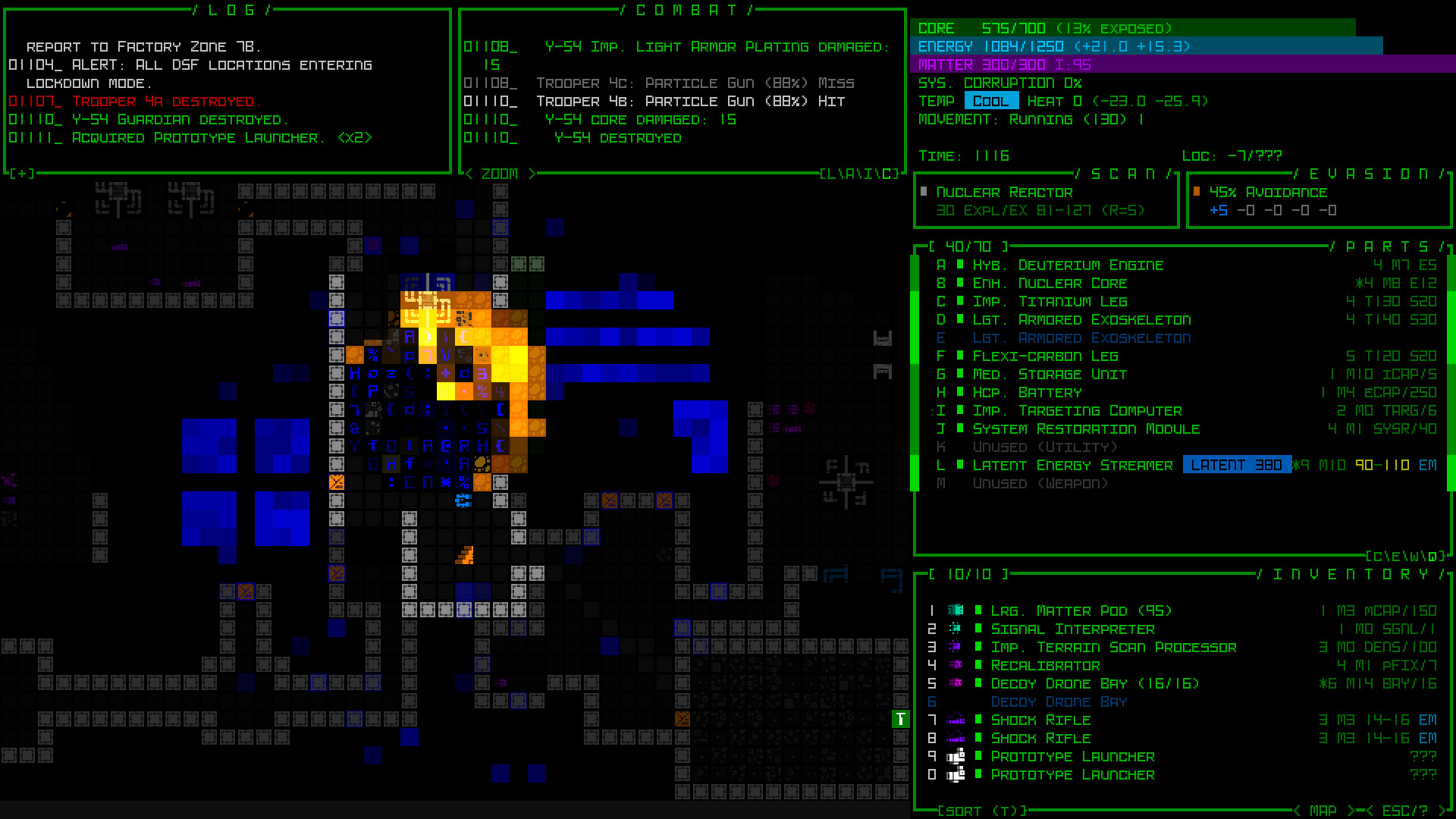
The heart of Cogmind is that you are your parts, and your parts are temporary. Your frame has slots for power, propulsion, utilities and weapons, and you fill them with components salvaged from destroyed robots. The crucial mental shift for new players is to stop treating parts as precious permanent gear. They will break — that is normal — and the world is full of replacements. So the loop is simple: use what you have, grab fresh salvage as parts are shot off, and keep your loadout functional rather than perfect. A constantly-refreshed mobile loadout beats a hoarded fragile one.
Because everything is disposable, you can also experiment freely. Try a flight build to evade, a sensor-heavy build to scout, or a few weapons to fight when you must — and change your mind whenever the salvage around you suggests a better option. This flexibility is a strength once you embrace it.
| Priority | What to favour | Why |
|---|---|---|
| Survival | Evasion over combat | Fights cost parts and draw enemies |
| Mobility | Fast propulsion (flight/hover) | Lets you avoid threats and escape |
| Awareness | Sensors | See threats early and pick safe routes |
| Progress | Ascend, don't clear | Moving up is safer than lingering |
Choosing your approach early
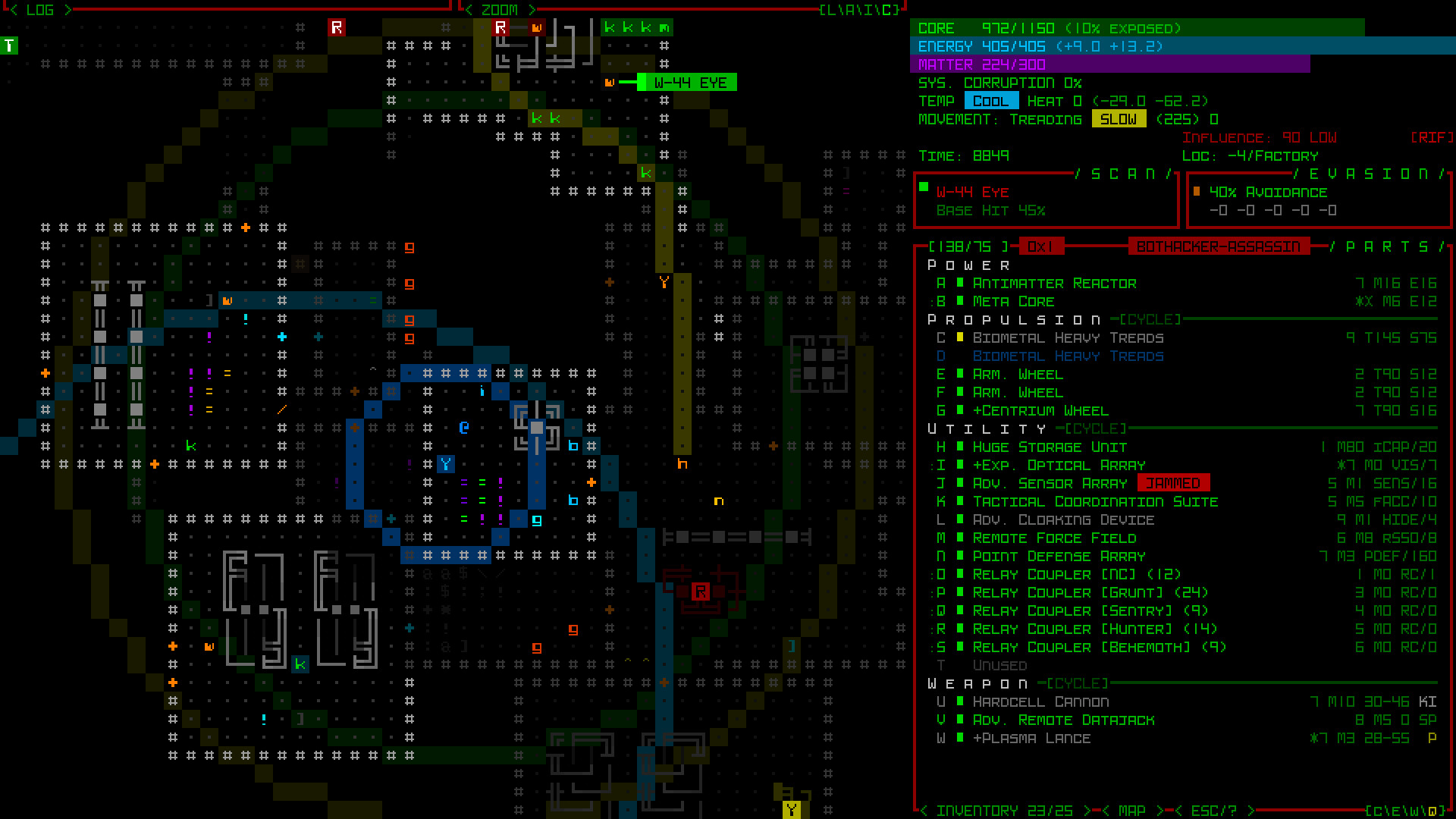
Cogmind offers three broad paths — combat, stealth-evasion and hacking — and for beginners, leaning evasive is the most forgiving. A fast, sensor-equipped build lets you avoid the fights that kill new robots and gives you room to learn the systems safely. As you grow comfortable, you can experiment with heavier combat loadouts or with hacking the Complex's terminals and machines for intel, allies and safer routes. There is no single right answer, and the freedom to pivot mid-run as your salvage changes is part of the appeal — but starting mobile and cautious is how most players survive long enough to learn the rest.
The throughline is patience and adaptability. Cogmind rewards the player who reads each situation, avoids unnecessary risk, and keeps moving upward, and it punishes the one who fights recklessly. Lean into evasion and salvage, and the Complex slowly opens up.
When in doubt, run for the exit — escaping upward is almost always safer than standing and fighting. Once you have the survival basics down, our Cogmind combat guide covers fighting effectively, the builds tier list ranks playstyles, and the hacking guide opens up the Complex's most distinctive path.