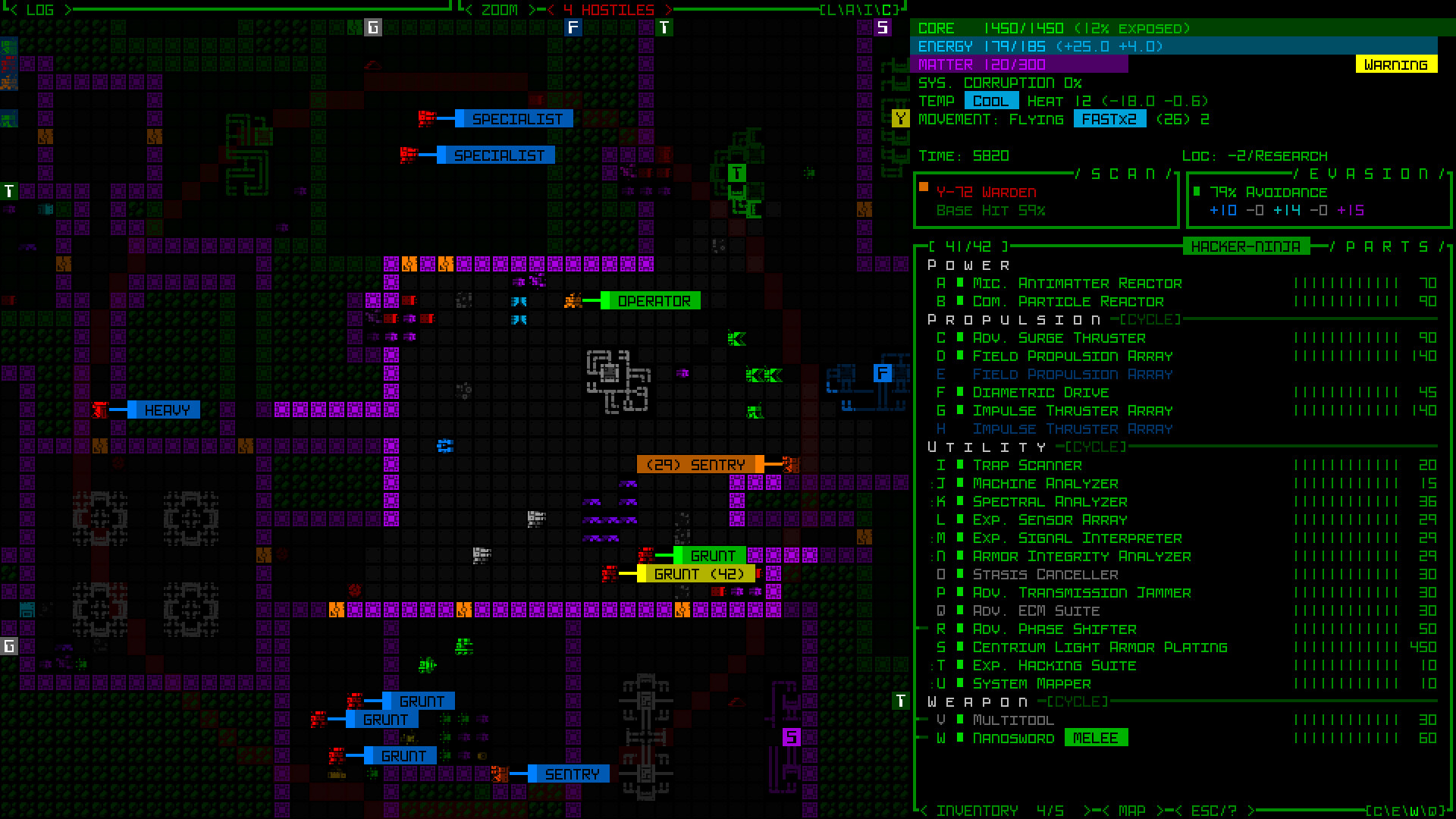
How to think about builds in Cogmind
Cogmind is unusual because your build is never truly fixed. You are made of salvaged parts that break and get replaced constantly, so a "build" is really a playstyle you lean into with whatever components you can keep on your frame. Broadly there are three: flight-evasion (speed and avoidance), hacking (manipulating the Complex), and combat (fighting your way up), plus the hybrids most real runs become. This tier list ranks those archetypes by survivability, ceiling and how forgiving they are for newer players — while stressing that the best players treat them as fluid options, not rigid commitments.
The practical lesson is to lean into a style that fits your current salvage and the threats ahead, and to pivot freely when the situation changes. Judge an archetype by how well it keeps you alive and moving upward, not by raw firepower alone.
Because parts are disposable, you can blend and switch archetypes mid-run. A fast evasive core can pick up weapons for a fight or hackware for a terminal, then drop them. Treat this tier list as guidance for what to prioritise, not a locked-in class choice.
The builds tier list
This ranking weighs survivability, the skill ceiling, and how forgiving an archetype is for newer players. It assumes you can pivot as salvage allows; a "lower" archetype can shine in the right hands or situation.
S tier — flight and evasion
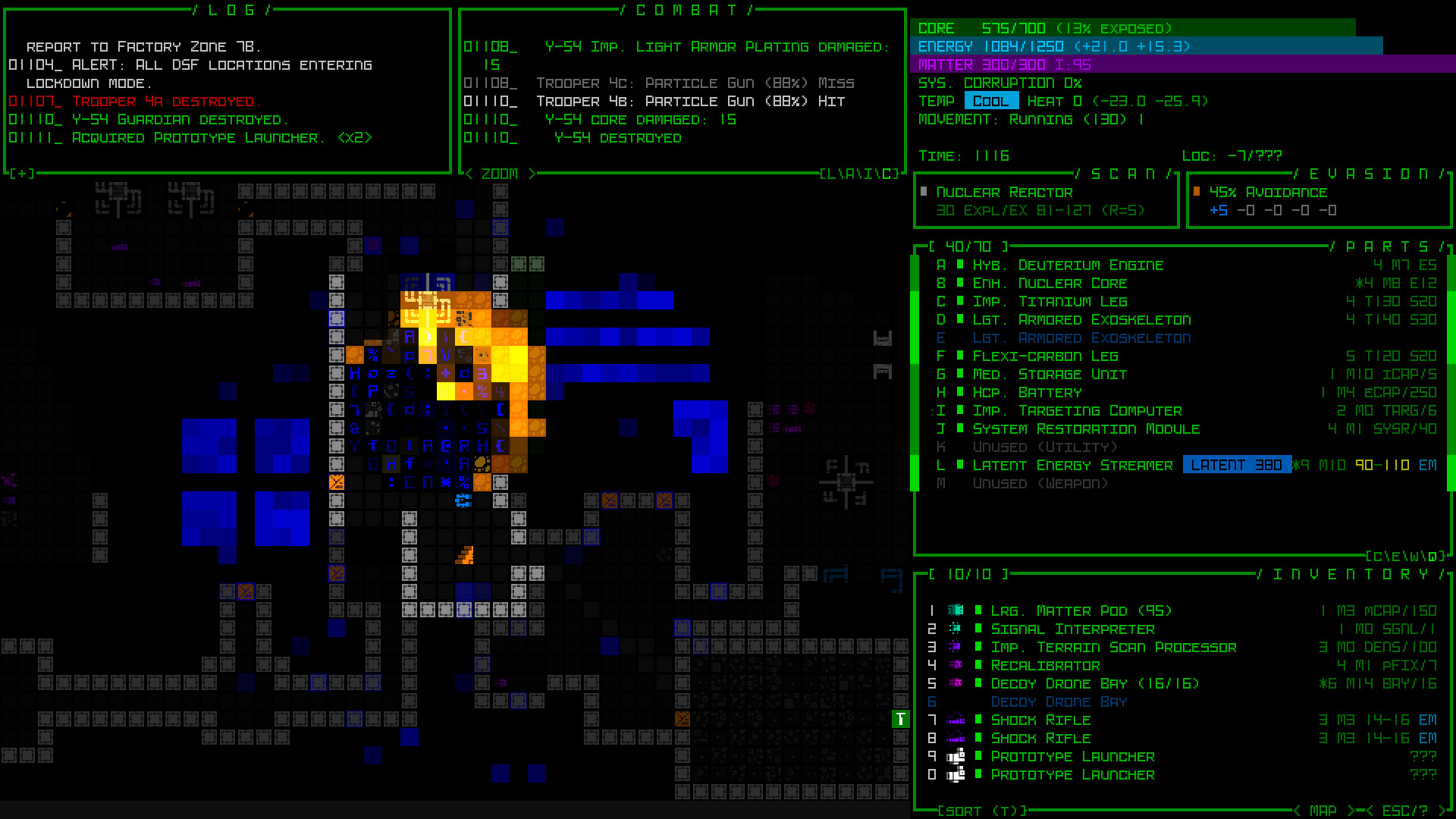
Flight-evasion is the closest thing Cogmind has to a reliable survival template, and it earns the top spot for most players, especially newcomers. By prioritising fast propulsion and good sensors, you can see threats coming and simply avoid the fights that destroy slower robots. Since combat is attritional and draws reinforcements, the ability to slip past danger and escape upward is the single most valuable skill in the game, and an evasion build is built around exactly that. It is not the flashiest approach, but it keeps you alive, lets you choose your battles, and gives you the breathing room to learn everything else.
A tier — hacking and combat
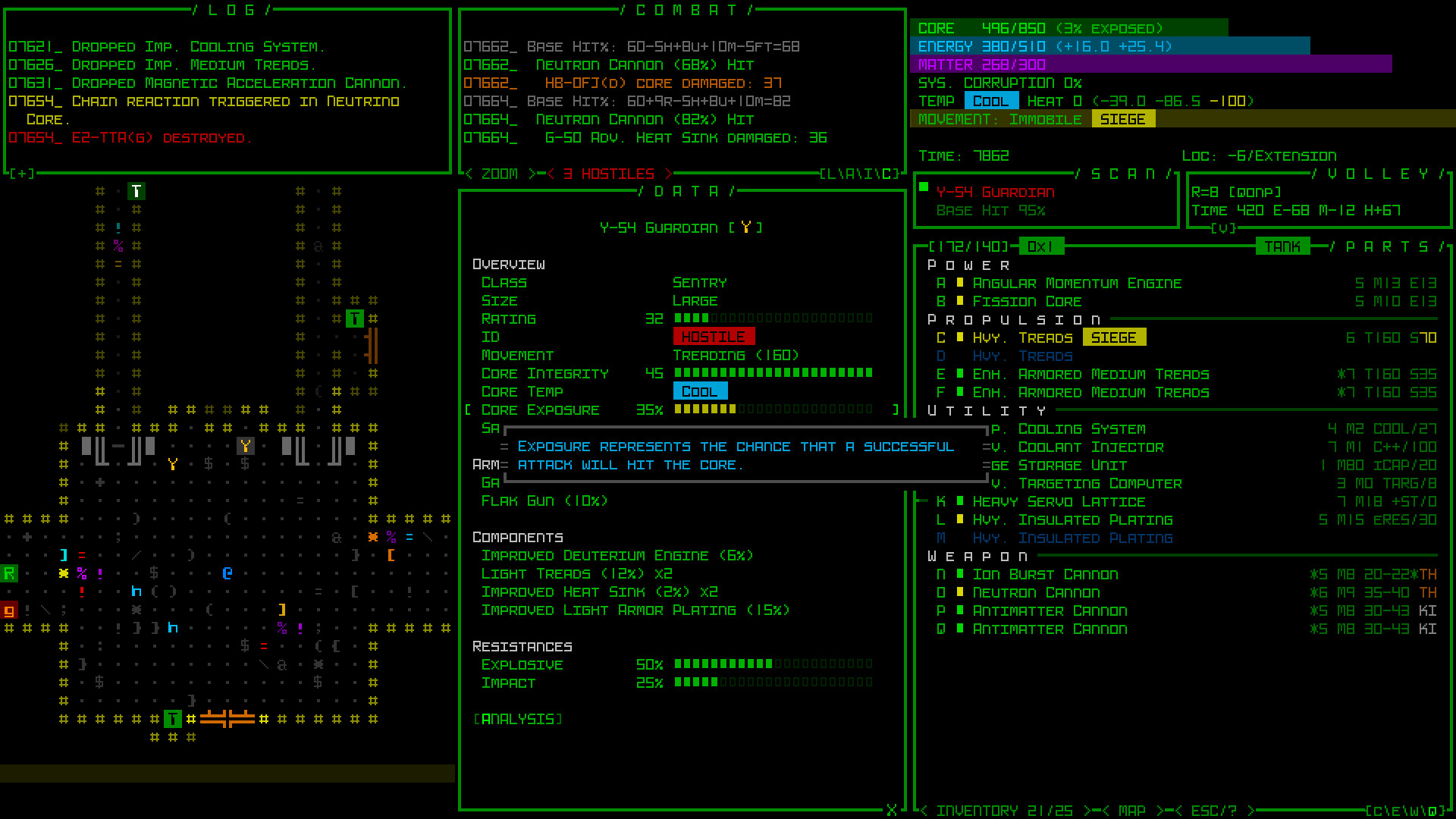
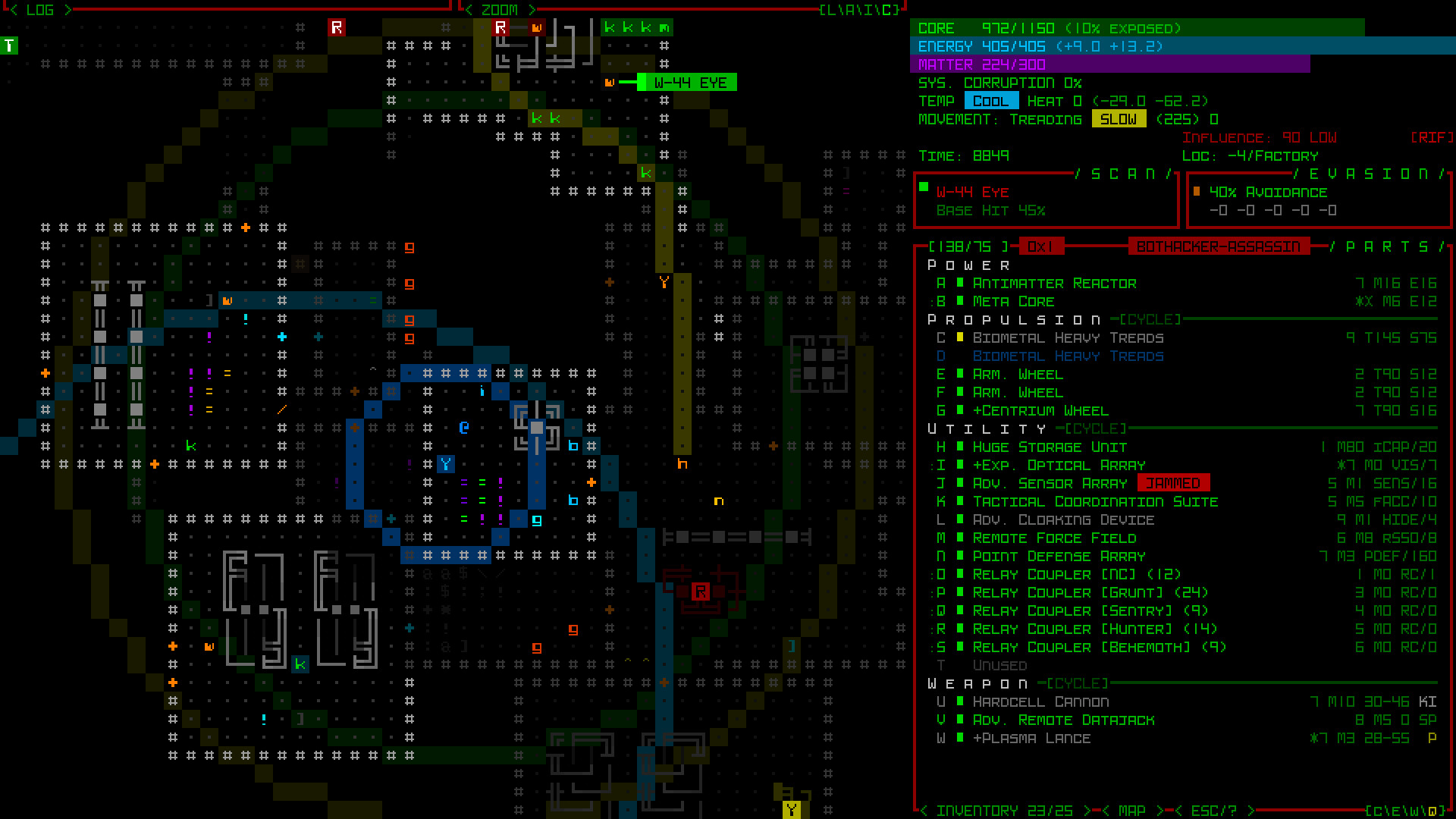
These two are not weaker so much as more demanding or more situational. Hacking has arguably the highest ceiling in the game: by investing in hackware and manipulating the Complex's terminals, machines and robots, you can gather intelligence, open safer routes, acquire schematics, and recruit or seize allies, exerting a kind of control no other style offers. The cost is knowledge and setup — it rewards players who understand the systems, which is why it sits below evasion for beginners. Combat, meanwhile, is powerful and direct: stack weapons and durable propulsion, manage heat, and you can simply win fights. But it is attritional — every battle risks your parts — so it demands careful management and good salvage to sustain. In the right run, both are excellent; they just ask more of the player than evasion does.
| Archetype | Strength | Weakness | Best for |
|---|---|---|---|
| Flight / Evasion | Avoids fights, escapes danger | Limited firepower | Survival and new players |
| Hacking | Control, intel, allies, high ceiling | Needs knowledge and setup | Experienced players |
| Combat | Wins fights, straightforward | Attritional, costs parts | Players with strong salvage |
| Hybrid | Flexible, salvage-adaptive | Less focused | Most real runs |
B tier — the hybrid reality
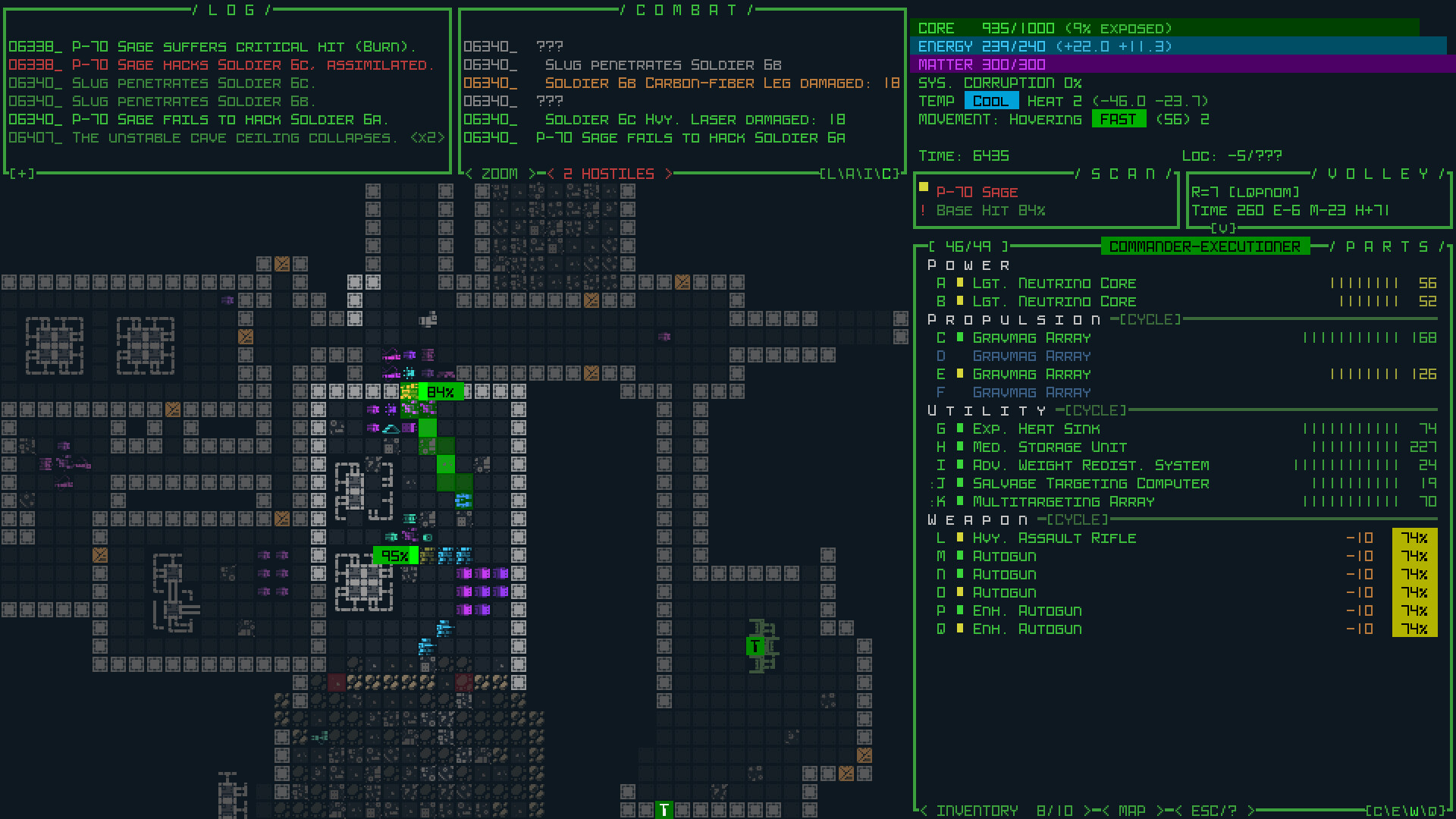
The hybrid archetype is less a deliberate choice than what nearly every successful run actually becomes. Because parts are disposable and salvage is everywhere, you rarely stay a pure anything — you run a fast evasive core, pick up a couple of weapons when a fight is unavoidable, grab hackware when you reach a useful terminal, and adapt as your loadout shifts. This flexibility is genuinely strong and resilient, and it sits in B tier only because it is slightly less focused than a committed archetype, not because it is weak. Embracing the hybrid reality — leaning evasive but staying ready to fight or hack — is how experienced players keep runs alive.
Putting it together
For a first strong run, lean flight-evasion: prioritise speed and sensors, avoid unnecessary fights, and escape upward. As you learn the Complex, fold in combat when your salvage supports it and hacking when you want control and allies, until you are pivoting fluidly between all three as the situation demands. The key insight is that Cogmind builds are dynamic — your archetype should follow your salvage and threats, not the other way around. To make whichever path you choose more effective, see our Cogmind combat guide and hacking guide; if you are new, start with the beginner guide.
Do not marry one archetype early. The strongest Cogmind players lean evasive for safety but stay ready to fight or hack when the salvage and situation favour it — flexibility, not commitment, is the real meta.