The verdict up front
Cogmind is a quietly revered game among roguelike devotees, and the reverence is earned. Made by the solo developer Josh Ge under the Grid Sage Games banner, it is a turn-based sci-fi roguelike with a singular hook: you play a robot that rebuilds itself entirely from parts salvaged off the machines you destroy. There are no experience levels and no fixed character — you are, quite literally, whatever you have bolted onto yourself at any given moment, and because parts break constantly under fire, your loadout is in a state of fluid, tactical flux as you fight, sneak or hack your way up through a procedurally generated underground Complex. It holds an Overwhelmingly Positive rating on Steam, and that score reflects a game of rare depth and polish.
So is it worth buying? For tactical and roguelike fans, very much so. The build system is brilliant, the freedom to approach the Complex through combat, stealth or hacking is real, and the polish on display from one developer is remarkable. The honest caveats are reach: it is hardcore and unforgiving, its terminal-style aesthetic divides players, it is English only, and it remains in Early Access on Steam (albeit a mature, content-rich one). If those do not deter you, few roguelikes go this deep.
Cogmind is a single-player roguelike from solo developer Josh Ge (Grid Sage Games). It has a slick terminal aesthetic with both ASCII and tile display modes, no microtransactions, and remains in active Early Access on Steam after years of development — unusually mature and polished for that label.
What you actually do
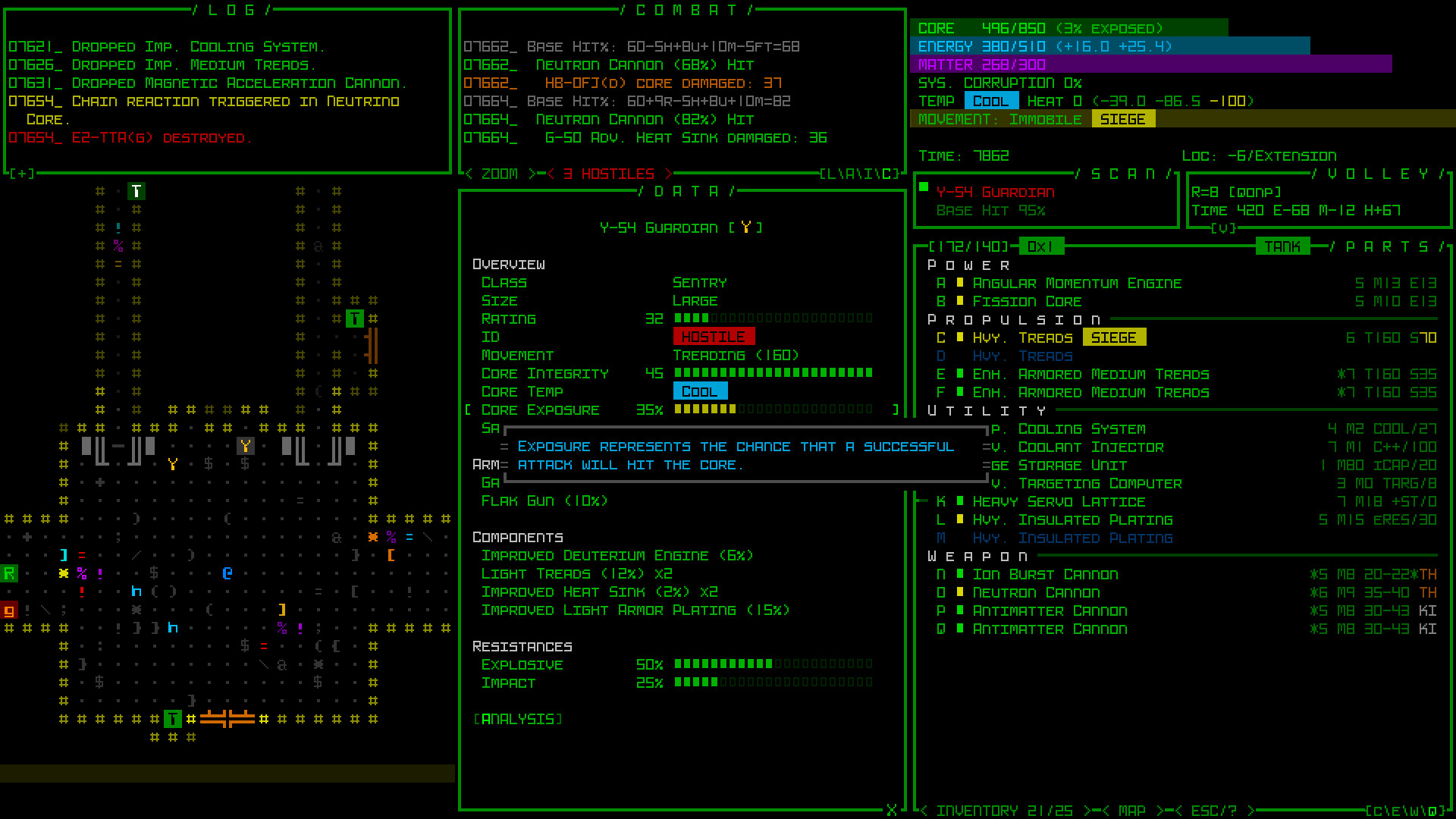
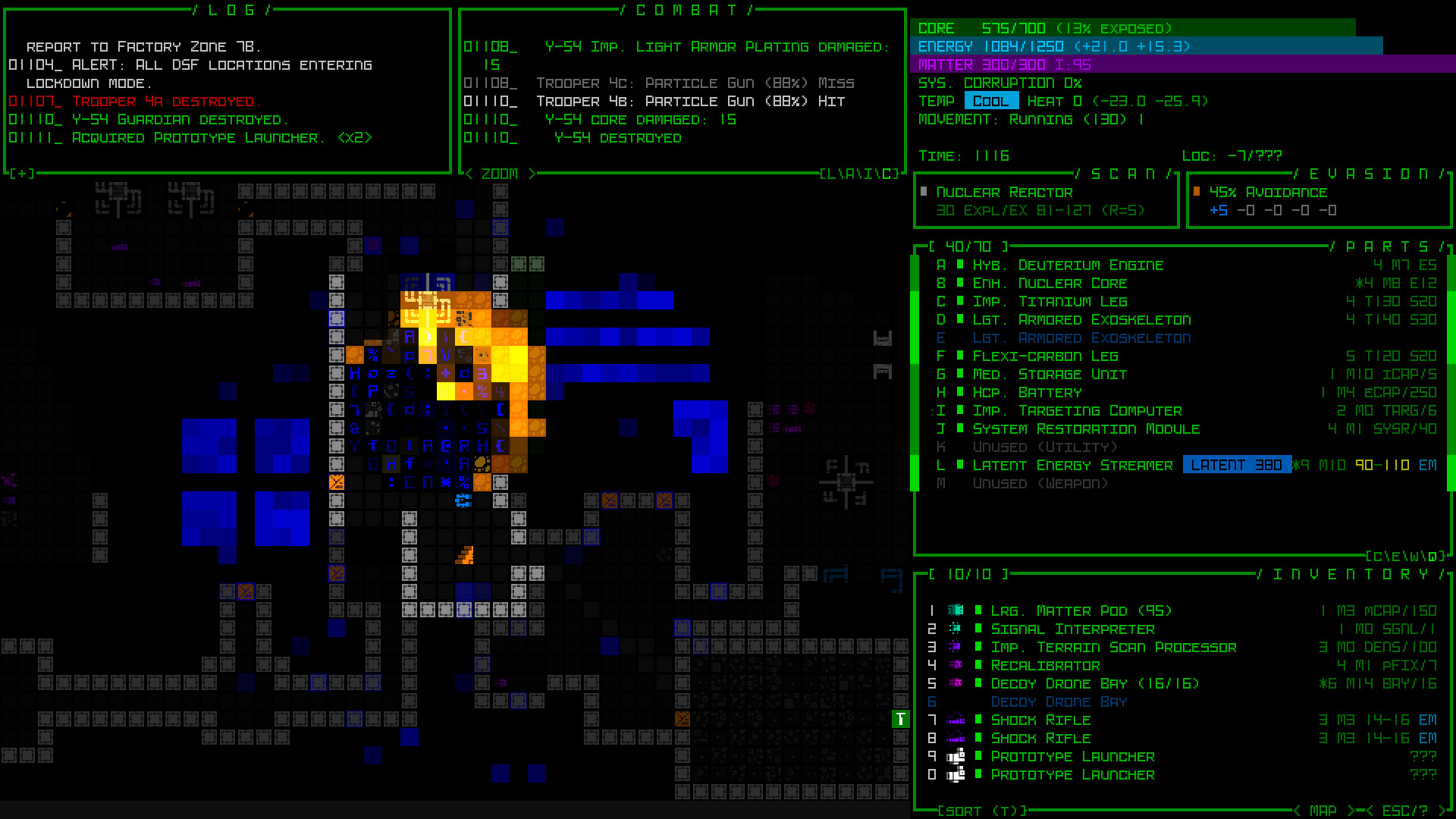
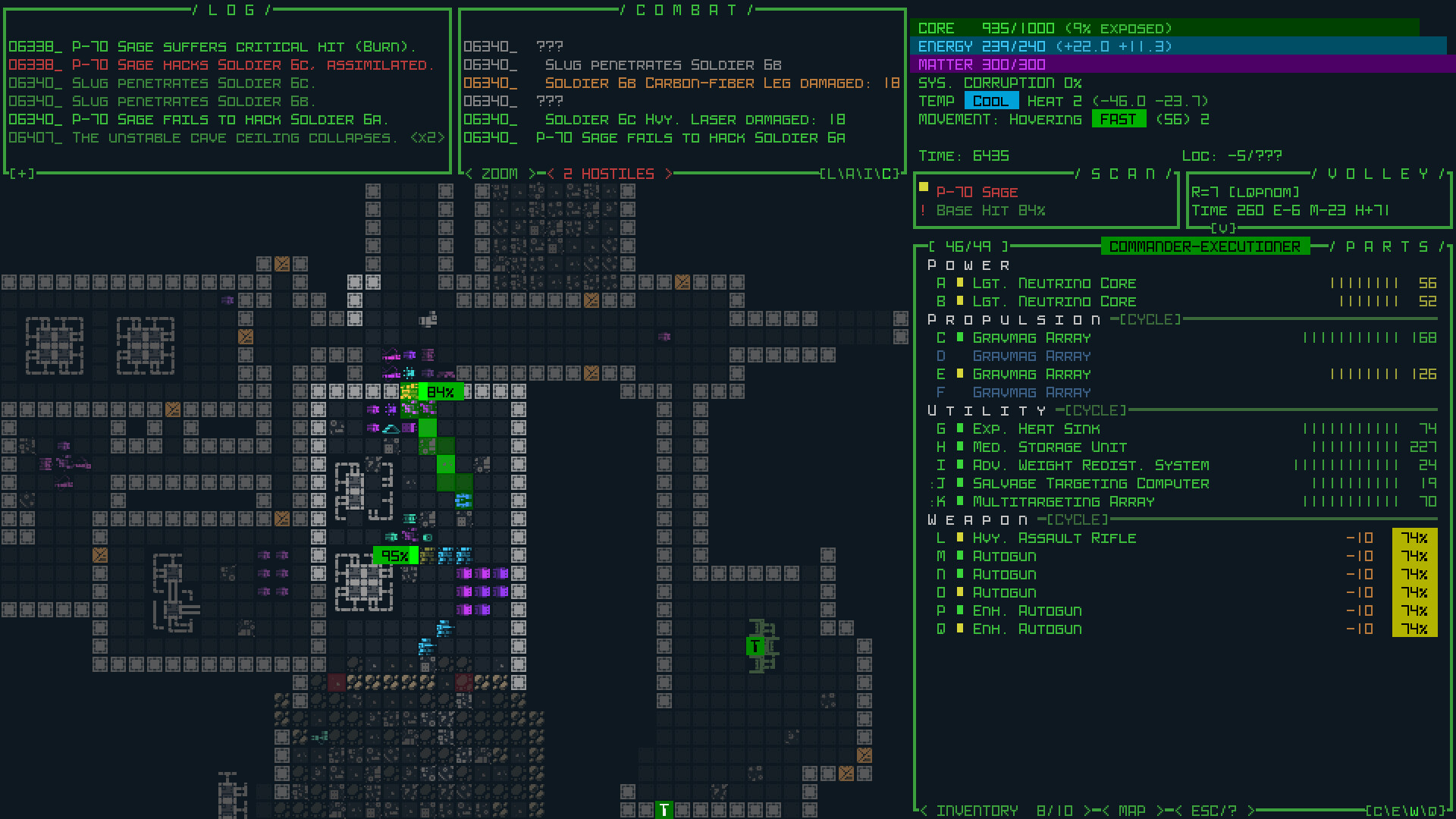
Cogmind drops you into the depths of a hostile robotic Complex with one goal: ascend and escape. You start as a basic core with a handful of slots, and everything you become you build from salvage. Destroy a robot and you can attach its parts to yourself — power sources to run your systems, propulsion (legs, wheels, treads, hover, flight) to move, utilities (sensors, hackware, storage, defenses) to support you, and weapons to fight. The catch, and the genius, is that parts are consumable. They take damage and get destroyed in combat, so you are constantly swapping in fresh salvage, reinventing yourself on the fly. There is no precious permanent gear to hoard; there is only the next part you bolt on.
That loop makes every encounter a tactical and logistical decision. Do you fight this patrol for its parts and risk losing your own, sneak past it to preserve what you have, or hack a terminal to find a safer route? Cogmind genuinely supports all three, and the procedural Complex, branching maps and permadeath mean each run is a fresh puzzle of risk, salvage and survival.
New players almost always fight too much. Cogmind rewards speed and evasion early — moving fast, using sensors, and escaping upward keeps you alive far longer than trying to win every battle. Our Cogmind beginner guide covers the survival mindset that turns the brutal opening around.
Why the part system carries everything
It is worth being specific about why Cogmind feels so fresh, because plenty of games have loot. The difference is that here, your loot IS your character, and it is impermanent. In most RPGs you find an upgrade and keep it; in Cogmind you find a part, use it until it is shot off your frame, and grab another. This turns build-crafting from a one-time decision into a continuous, reactive process — you are always reading your current loadout, the salvage around you, and the threats ahead, and adapting. It is closer to managing a living, breaking machine than equipping a hero, and it is unlike almost anything else in the genre.
This system is also what makes the three playstyles meaningful. A flight build evades and outruns; a treaded combat build soaks damage and trades fire; a hacking build manipulates the Complex itself. Because parts define you and parts are everywhere, you can pivot mid-run as your salvage and situation dictate. That depth and flexibility, delivered with genuine polish, is the heart of Cogmind's appeal.
Pros
- +The part-salvage build system is deep, fluid and unlike anything else in the genre.
- +Combat, stealth-evasion and hacking are all genuinely viable approaches.
- +Outstanding polish, readable terminal aesthetic and emergent tactical depth.
- +Great replayability and value, with no microtransactions.
Cons
- −Hardcore difficulty and permadeath that filter new players.
- −The ASCII-style look will not appeal to everyone.
- −English only and text-heavy.
- −Still in Early Access on Steam; a niche, demanding design.
The three paths: combat, stealth, hacking
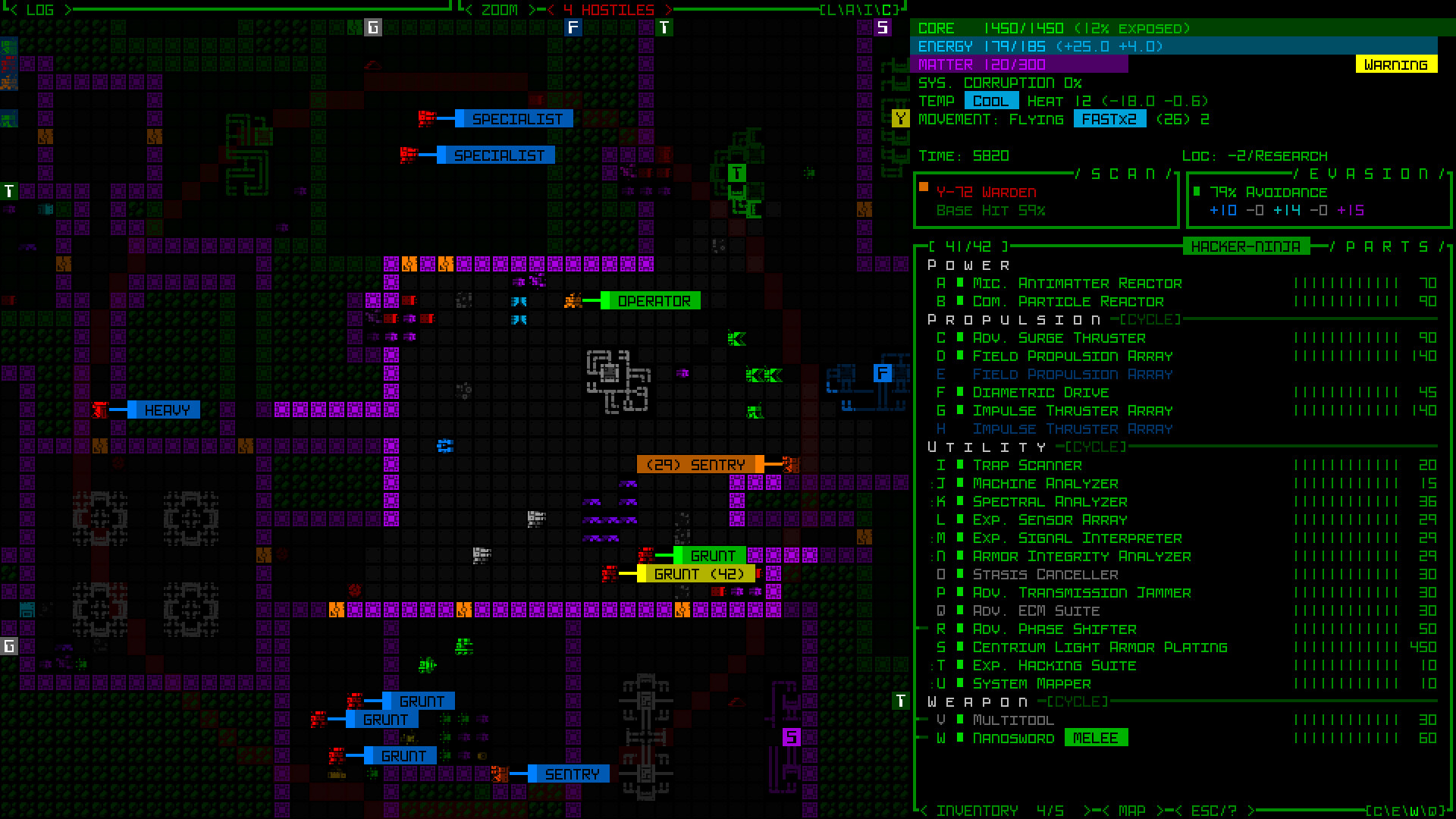
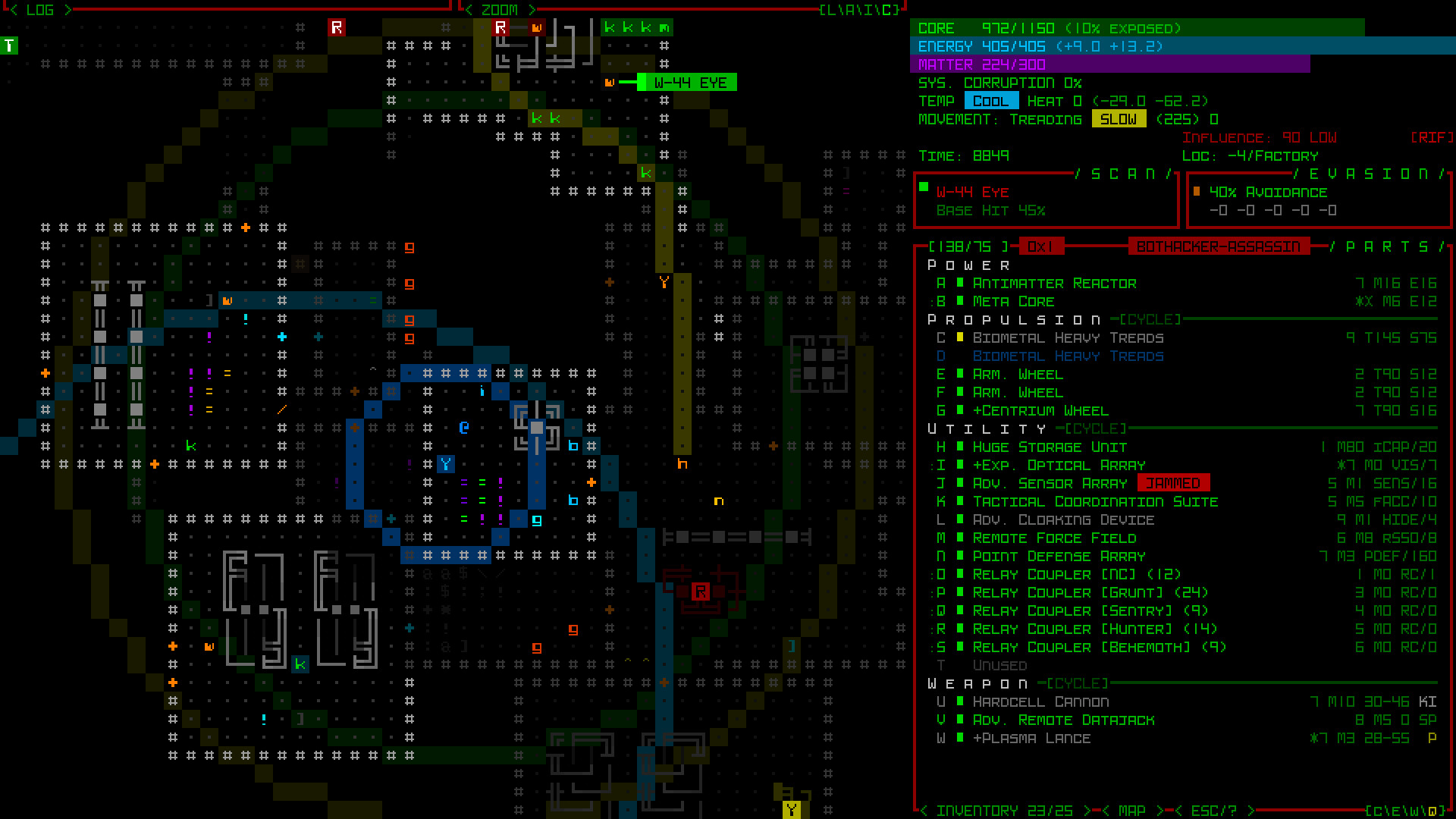
Most roguelikes nudge you toward one optimal style; Cogmind genuinely opens three. The combat path is the straightforward one — stack weapons and durable propulsion, manage heat, and fight your way up — but it is also the most attritional, since every fight risks your parts. The stealth and evasion path leans on speed, sensors and avoidance: a fast flight or hover build can slip past most of the Complex, escaping upward before threats converge. The hacking path is the most distinctive, letting you manipulate terminals and machines to gather intel, unlock routes, acquire allies and even seize control of parts of the Complex. Most successful runs blend these, and the freedom to choose and pivot is a big part of why the game stays fresh. Our Cogmind builds tier list ranks these archetypes for new players.
The flip side of all this freedom is that it asks a lot of you. Cogmind does not hold your hand about which path fits your current salvage, and learning to read a situation — fight, flee or hack — is the real skill curve, and a steep one.
The honest weaknesses
Now the part a store page underplays. Cogmind is hardcore, and there is no softening it. Permadeath is unforgiving, the systems are intricate and largely self-taught, and early runs will end fast and often while you learn how the Complex, salvage and threats interact. For players who relish that kind of mastery curve it is a feature, but for anyone wanting an approachable or forgiving experience it is a wall, and it is fair to know that going in.
The presentation is the other dividing line. Cogmind's terminal aesthetic is slick, animated and far more readable than "ASCII" implies, and it has real atmosphere — but it is still an abstract, text-and-tile look that some players simply will not warm to, and there are no modern 3D visuals here. Add that the game is English only and fairly text-heavy, and remains in Early Access on Steam, and you have a brilliant but pointedly niche game. None of this undermines its quality; it just defines who it is for.
Buy Cogmind for its depth and freedom, not for accessibility or visuals. If you need a gentle learning curve, modern 3D graphics, or your own language, this is not the roguelike for you. If hardcore tactical depth excites you, few games reward mastery this richly.
Who should buy it
If you love deep, systems-rich roguelikes and the joy of build experimentation, Cogmind is a standout. Players from traditional roguelikes will recognise the permadeath and depth but find the part-salvage system genuinely novel; tactics fans will appreciate how much every encounter is a real decision; and anyone who enjoys choosing between combat, stealth and hacking will find rare freedom here. At its price, with deep replayability and no monetization nonsense, the value is strong for the right player. To survive your first runs, start with our beginner guide and combat guide, and to explore its most distinctive path, the hacking guide.
Who should pass? Anyone who needs modern visuals, a gentle on-ramp, or their own language, and anyone who bounces off hardcore permadeath. For everyone else, Cogmind is a deep, polished, one-of-a-kind robot roguelike that earns its devoted following — with the honest asterisk that it is demanding, niche, and proudly built for players who want exactly this.