The verdict up front
Crab Champions is one of those rare games where the joke premise — you are a crab, with guns, on floating islands — hides something genuinely well-built underneath. It is a fast third-person roguelite shooter with a looter spine and co-op support, and its real achievement is movement. The dash, the double-jump, the flip, all decoupled from where you are aiming, turn every wave-clear into a flow-state of skating around enemies while pouring fire into them. That single design decision is what separates it from the crowd, and it is why the game has earned an Overwhelmingly Positive rating on Steam (around 98% of roughly 30,000 reviews).
So is it worth buying? For most action-roguelite fans, yes. At roughly 17 USD with no microtransactions and no lootboxes, the value is excellent, and the polish on display is hard to believe from a solo developer. But it is still in Early Access, and that label is honest rather than cosmetic — there are content gaps, the balance is uneven, and the long-term loop leans on grind. None of those flaws are dealbreakers at this price, but you should buy it for what it is now, not for a promise of what it might become.
Crab Champions is developed by Noisestorm — the Irish music producer Eoin O'Broin, best known for the viral track "Crab Rave." He is widely reported as a solo developer and composed the game's soundtrack himself. It launched into Early Access on 1 April 2023, the Crab Rave anniversary, and remains in Early Access. It is not connected to Crab Game, Muck, or Dani — a common mix-up worth correcting.
What you actually do
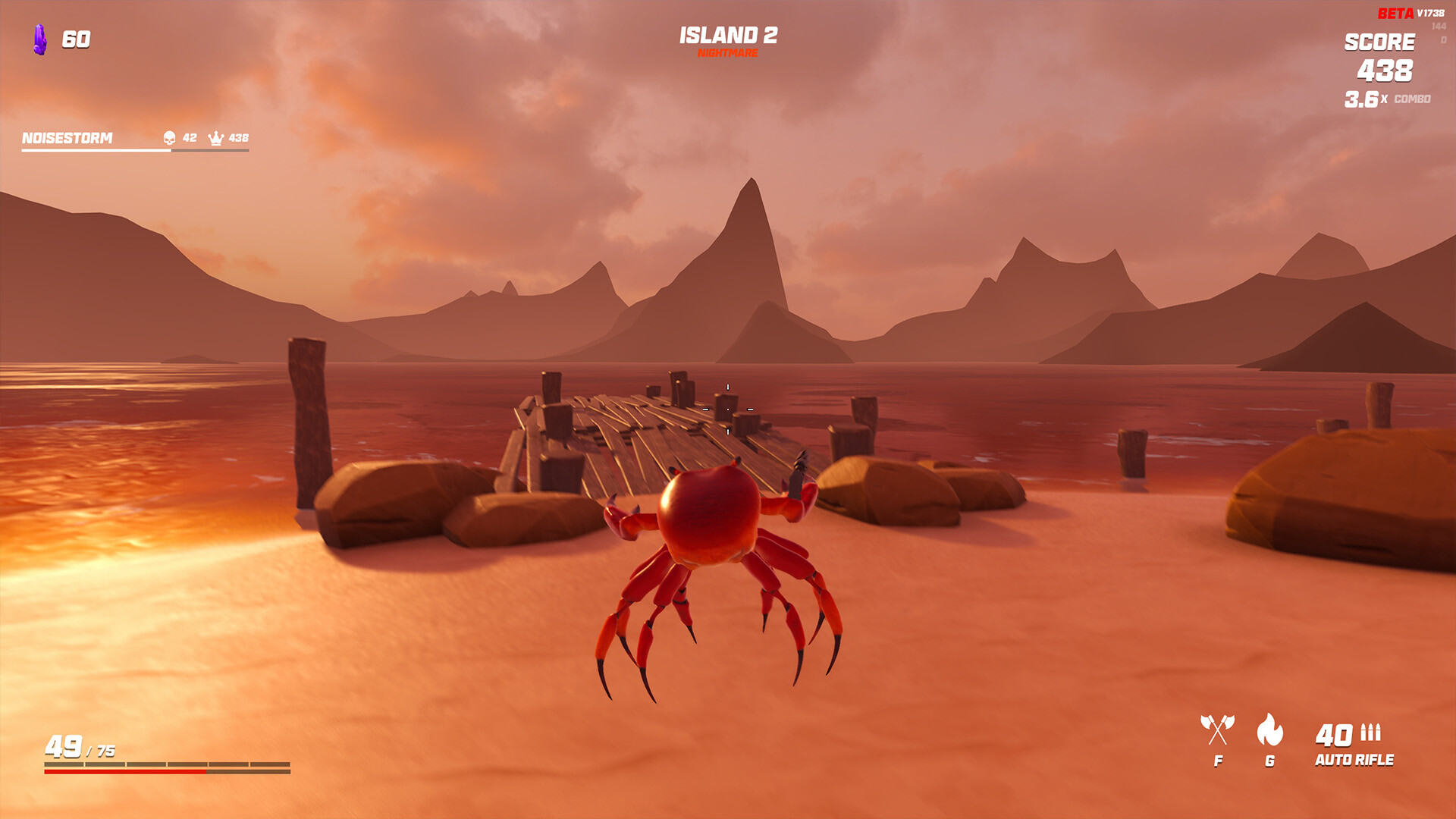
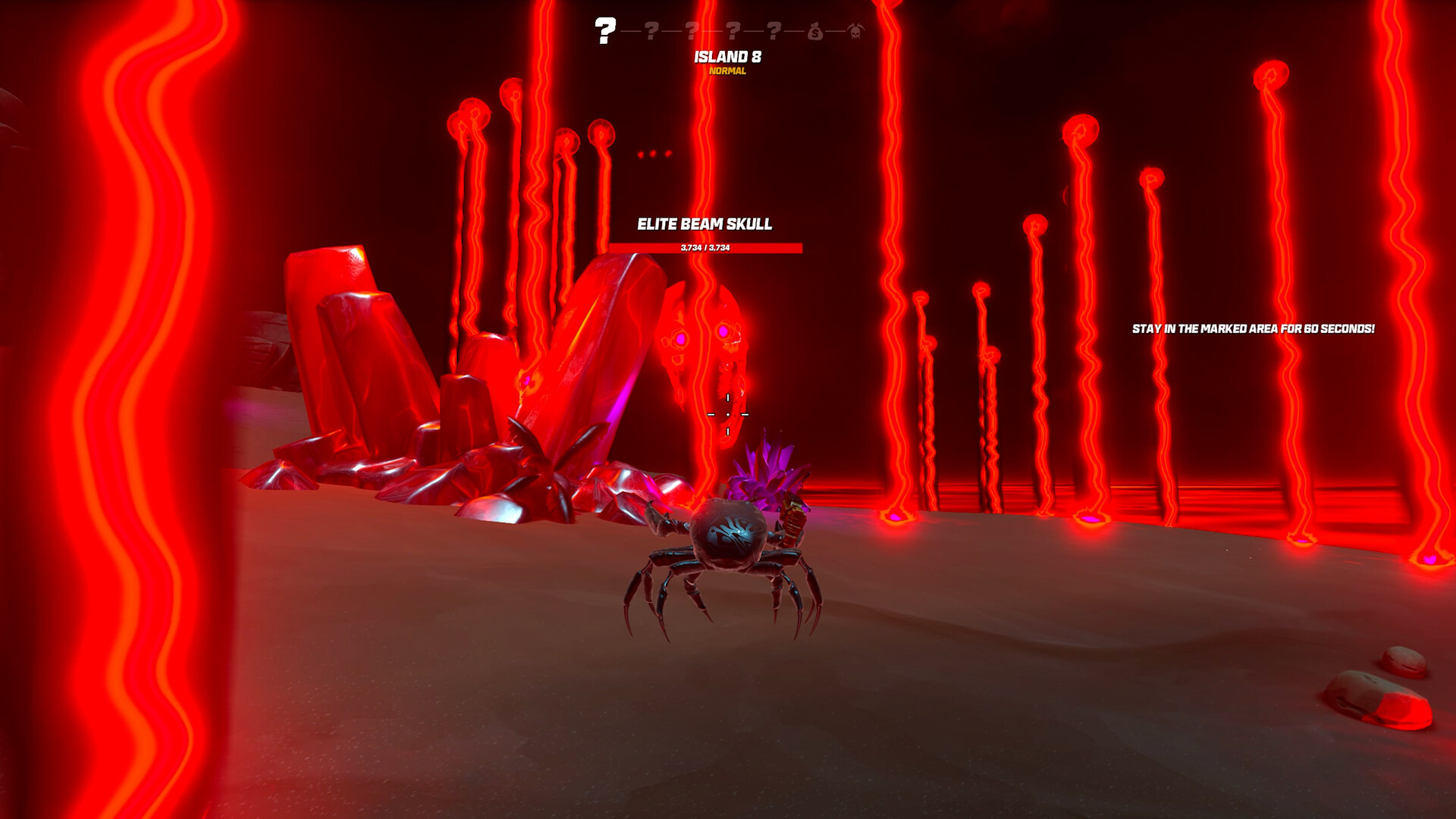
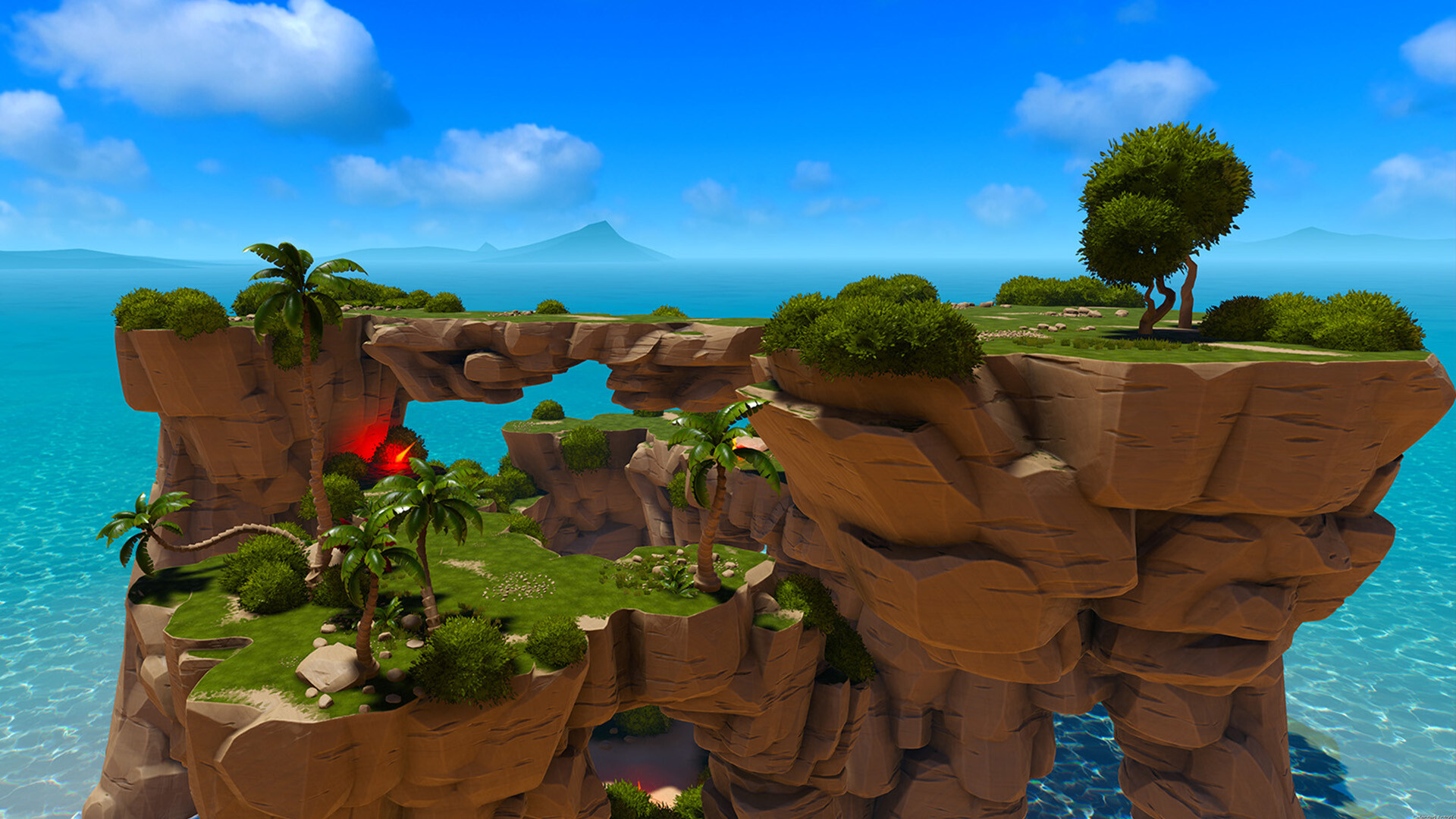
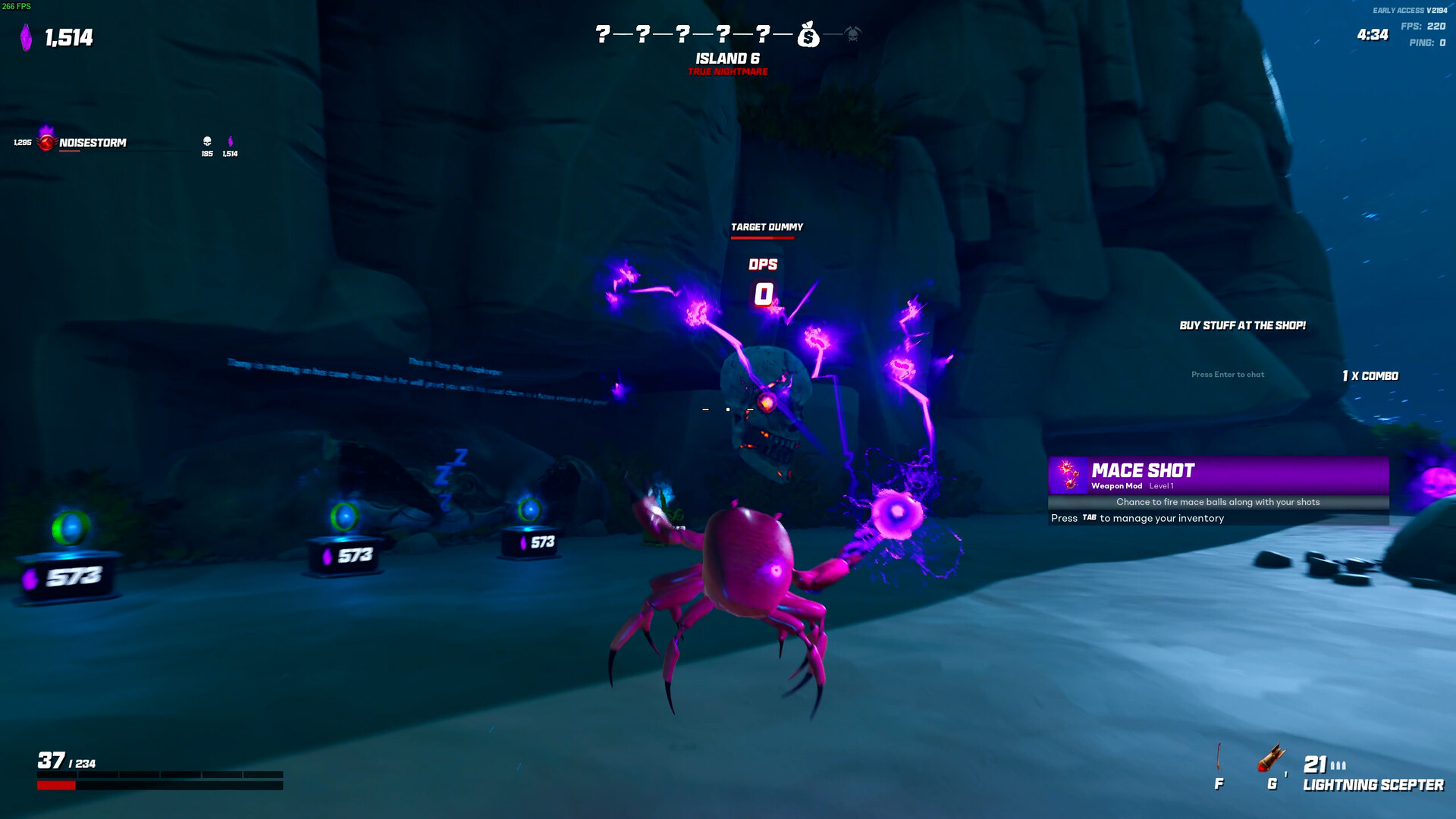
A run is structured around biomes. You travel across themed floating islands — Tropical, Arctic, Desert, Volcanic — clearing waves of enemies, looting weapons, perks and upgrades along the way, and stopping at shop islands and elite or boss islands between fights. Each biome ends with a biome boss. Clear four biomes and you have technically "completed" a run, but the more interesting truth is that you can loop indefinitely, with difficulty ramping each time. Serious players push past island 60. A typical run lands somewhere between 20 and 45 minutes, which is a good length — long enough to build something, short enough to restart without resentment.
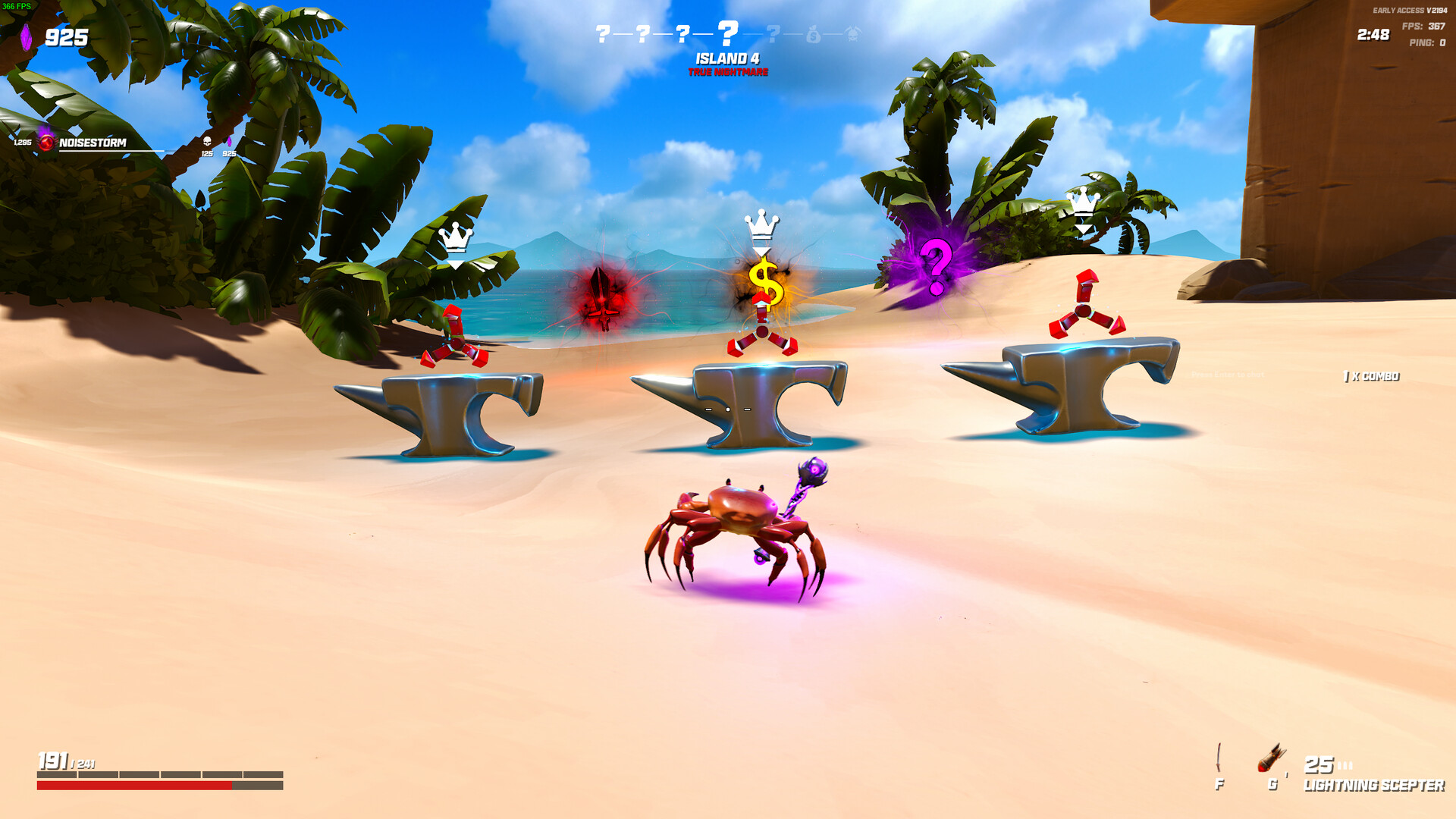
Before each run you lock in a loadout — a Weapon, an Ability, and a Melee — and you cannot swap those mid-run. That up-front commitment matters, because the perk and upgrade system is where the game opens up. There are five upgrade types: Perks, Weapon Mods, Melee Mods, Ability Mods, and Relics. Perks come in Common, Epic, Legendary, and Greed rarities, and the crucial mechanic is duplication — picking the same perk again stacks and upgrades it. That is the engine of build escalation. By the late islands you are not playing the same crab you started with; you are something that deletes entire waves in a heartbeat because eight stacked perks have compounded into a single absurd effect.
If you are new, do not spread your perk picks thin. The fastest way to feel the "game-breaking build" power fantasy is to commit early and keep stacking duplicates of whatever your run is feeding you. Our Crab Champions beginner guide walks through loadout choices and early perk priorities in detail.
Why the movement carries everything
It is worth being specific about why this game feels good, because "good movement" is a vague compliment. The point is that aim and movement are separate skills here. You can be flipping through the air, air-dashing sideways to dodge a projectile, and still keep your reticle locked on a target. That decoupling is the skill ceiling. A new player will stand still and shoot and have an okay time. An experienced player turns into a hovering blur, never touching the ground during a fight, and the difference in both survivability and style is enormous.
This is the lens through which everything else should be judged. The gunplay is punchy and the weapons feel distinct — there are 19 of them, with 89 weapon mods to reshape how they behave — but the guns are good partly because the movement gives you the space to use them aggressively. The per-weapon medal system, which climbs all the way to Diamond (earned at island 60-plus on Challenge Level 50), exists to keep mastery-focused players chasing that ceiling long after they have "beaten" the game in any normal sense.
Pros
- +Movement decoupled from aim creates a genuinely high, rewarding skill ceiling.
- +Stacking duplicate perks into game-breaking synergies is consistently thrilling.
- +Strong value — no MTX, no lootboxes, lots of content for around 17 USD.
- +Impressive polish, feel and charm for a single-developer project.
Cons
- −Early Access content gaps — the game is not yet complete.
- −Uneven balance, with clear standout and underwhelming weapons and perks.
- −Long looping sessions can become repetitive and grindy.
- −Thin between-run meta-progression and spaced-out update cadence.
Difficulty, modes and replay
There is real depth in how hard you want to make things. Difficulty tiers run Easy, Normal, and Nightmare, with a secret extreme tier — Ultra Chaos — for players who want to be punished. On top of that, optional difficulty modifiers raise your Challenge Level, which is what gates the highest medals. This is a smart structure because it lets the game be approachable for newcomers while leaving a brutal endgame for the people who want it.
The mode list is broader than you might expect for a solo project. Survival is the core, playable solo or in online co-op for up to four players. Racing adds speedrunning with daily seeds, which gives competitive players a reason to log in repeatedly. Duels offer online PvP from 1v1 up to 4v4. The one caveat to flag clearly — everything multiplayer is online only. There is no local or split-screen co-op, so if you were hoping to share a couch, that option does not exist.
The honest weaknesses
Now the part a sales page will not tell you. Early Access is not a marketing flourish here; it is the accurate state of the game. There are content gaps and an unfinished feel in spots, and if you go in expecting a polished, content-complete experience, you will notice the seams. The balance is uneven — some weapons and perks are plainly stronger than others, and the optimal builds tend to converge once you learn the game, which dulls some of the variety the system promises.
Repetition is the other honest issue. The minute-to-minute is so good that it carries you a long way, but when you start looping for medals or grinding higher Challenge Levels, the structure shows its limits. The between-run meta-progression is comparatively thin — you carry less persistent power forward than in something like Gunfire Reborn — so the motivation to keep going has to come mostly from your own skill curve and self-set goals rather than from unlock dopamine. Finally, the update cadence is spaced out. Major patches like Elemental, Anvil, and the Island updates have landed with notable content-gap stretches between them, so if you burn through the current content you may be waiting a while for more.
Buy Crab Champions for what it is today, not for a roadmap. It is in Early Access, it is English only on Steam, and meaningful new content arrives in spaced-out drops. If you need a finished game or deep persistent progression, wait — or pick something else.
Who should buy it
If you love movement-tech shooters and the specific joy of assembling a roguelite build that breaks the game over your knee, this is an easy recommendation. The skill ceiling rewards investment, the price is fair, and the absence of monetization nonsense is refreshing in a genre full of it. Players coming from Risk of Rain 2 will find this more movement-focused and less item-soup; those from Roboquest will find it faster and looser; and those from Gunfire Reborn will notice the leaner persistent unlocks. If you want a deep comparison of which guns are actually worth your loadout slot, our Crab Champions weapons guide breaks the roster down.
Who should pass? Anyone wanting a finished, content-complete package, anyone who needs strong between-run progression to stay motivated, and anyone hoping for couch co-op. For everyone else, this is a charming, mechanically excellent roguelite that earns its overwhelming praise — with the asterisk that "Early Access" means exactly what it says.