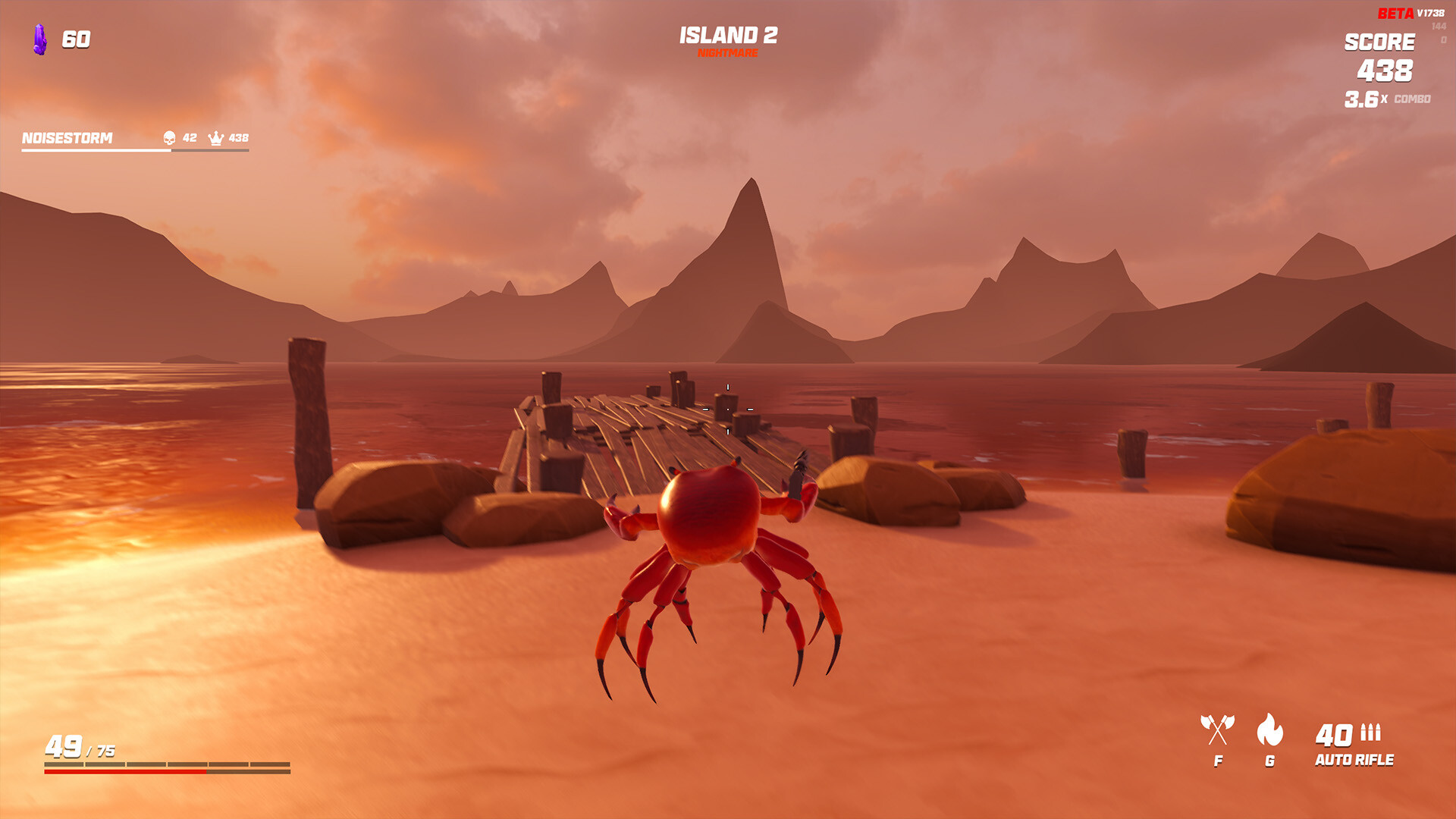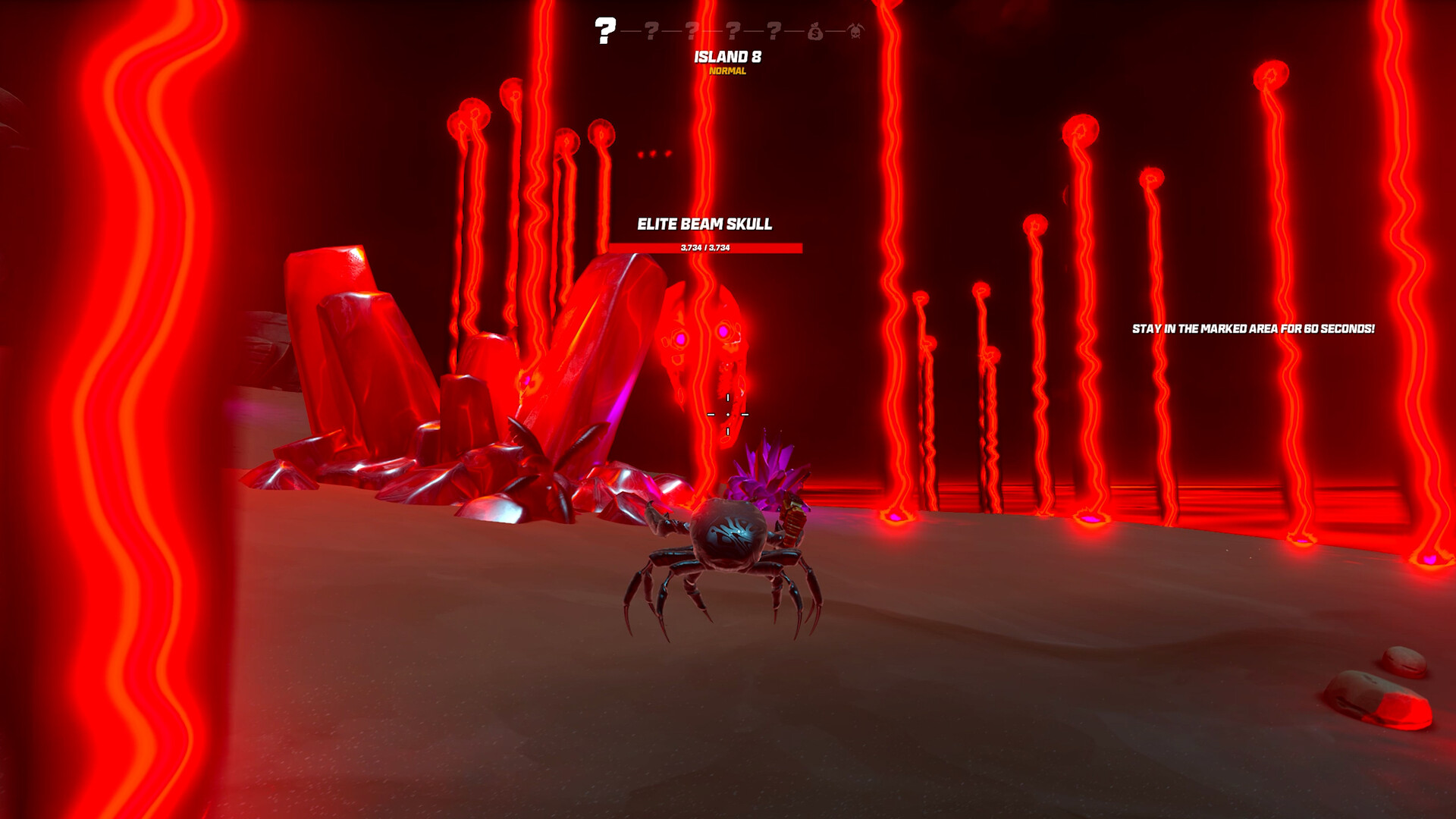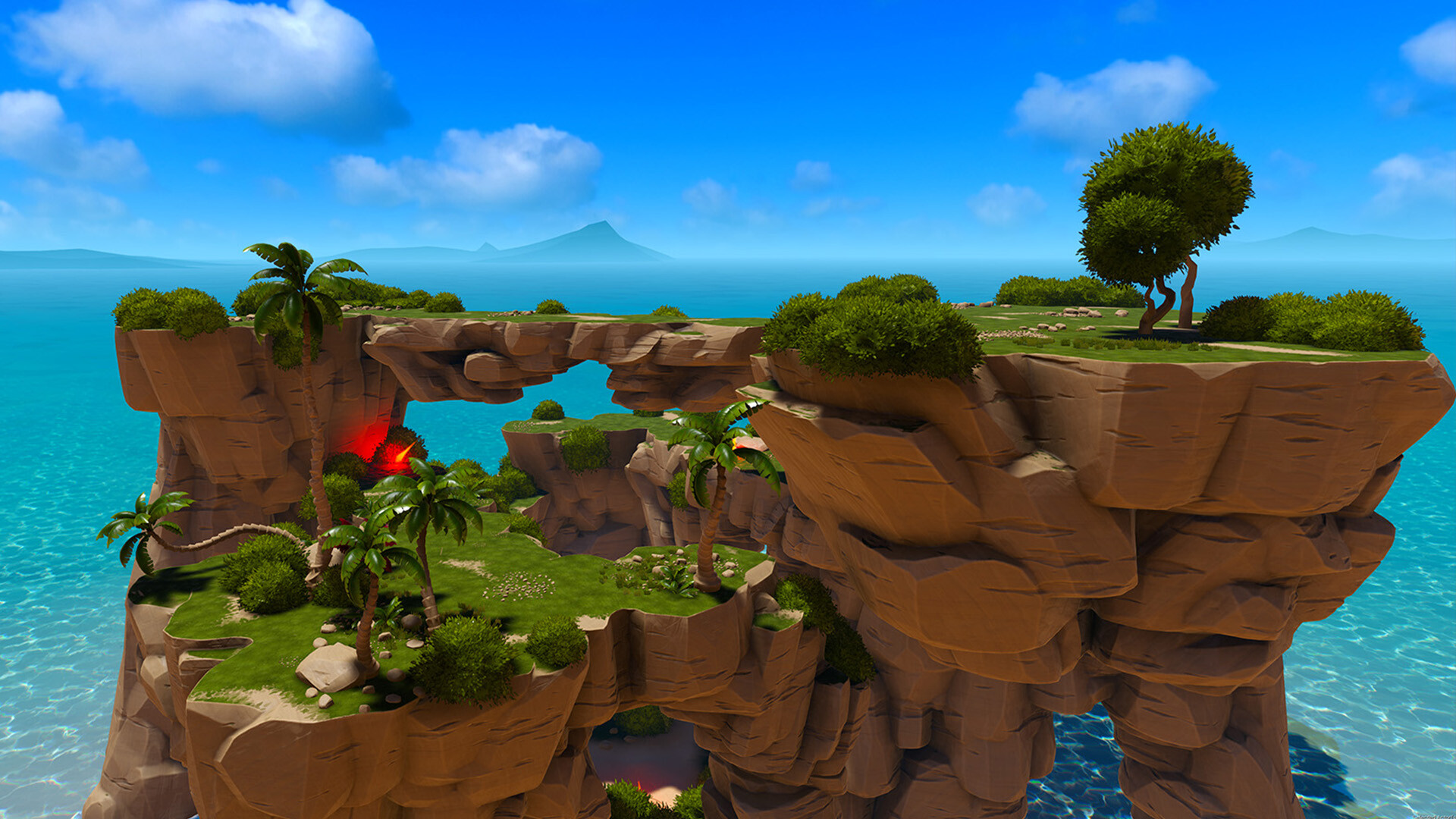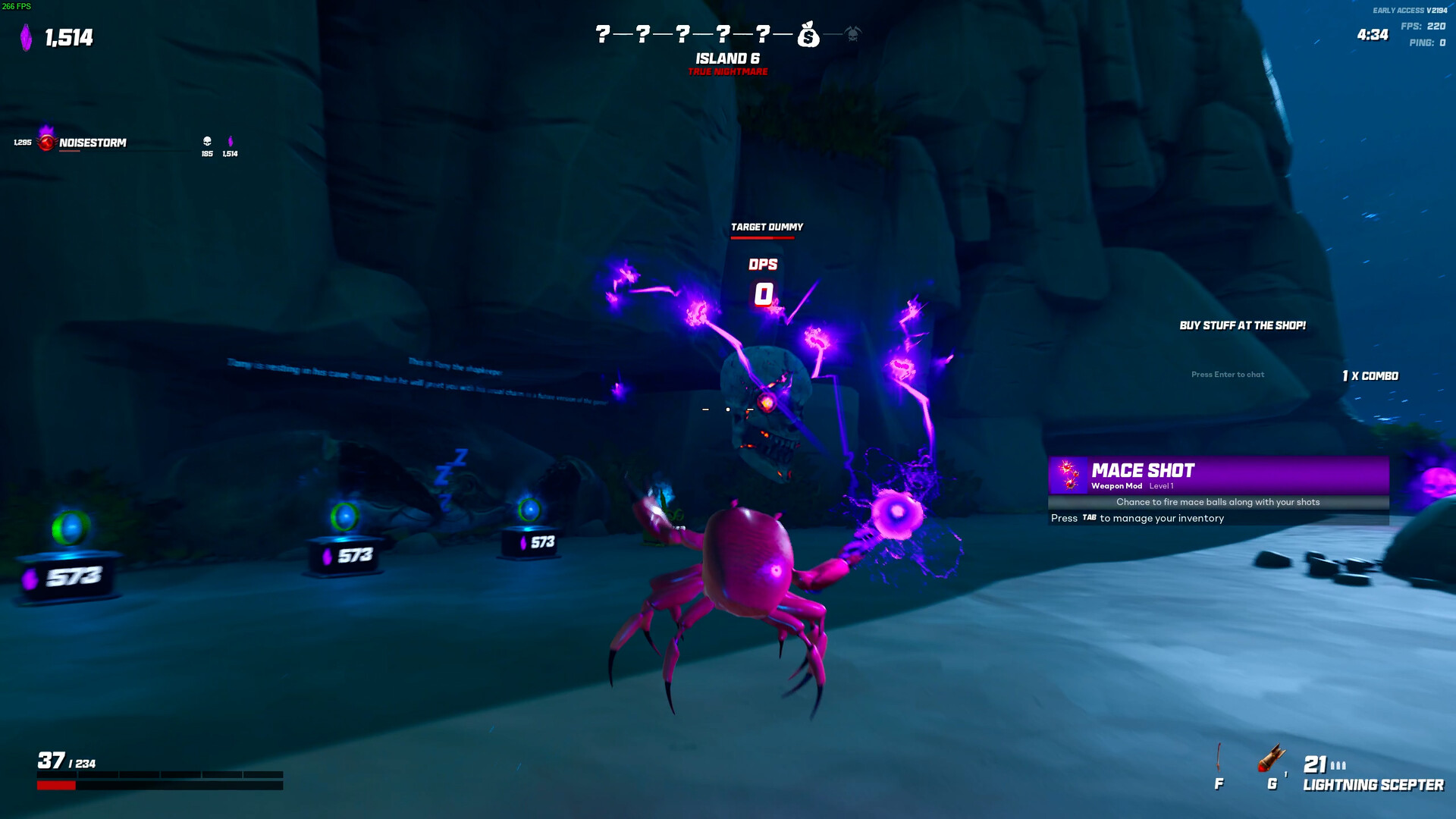
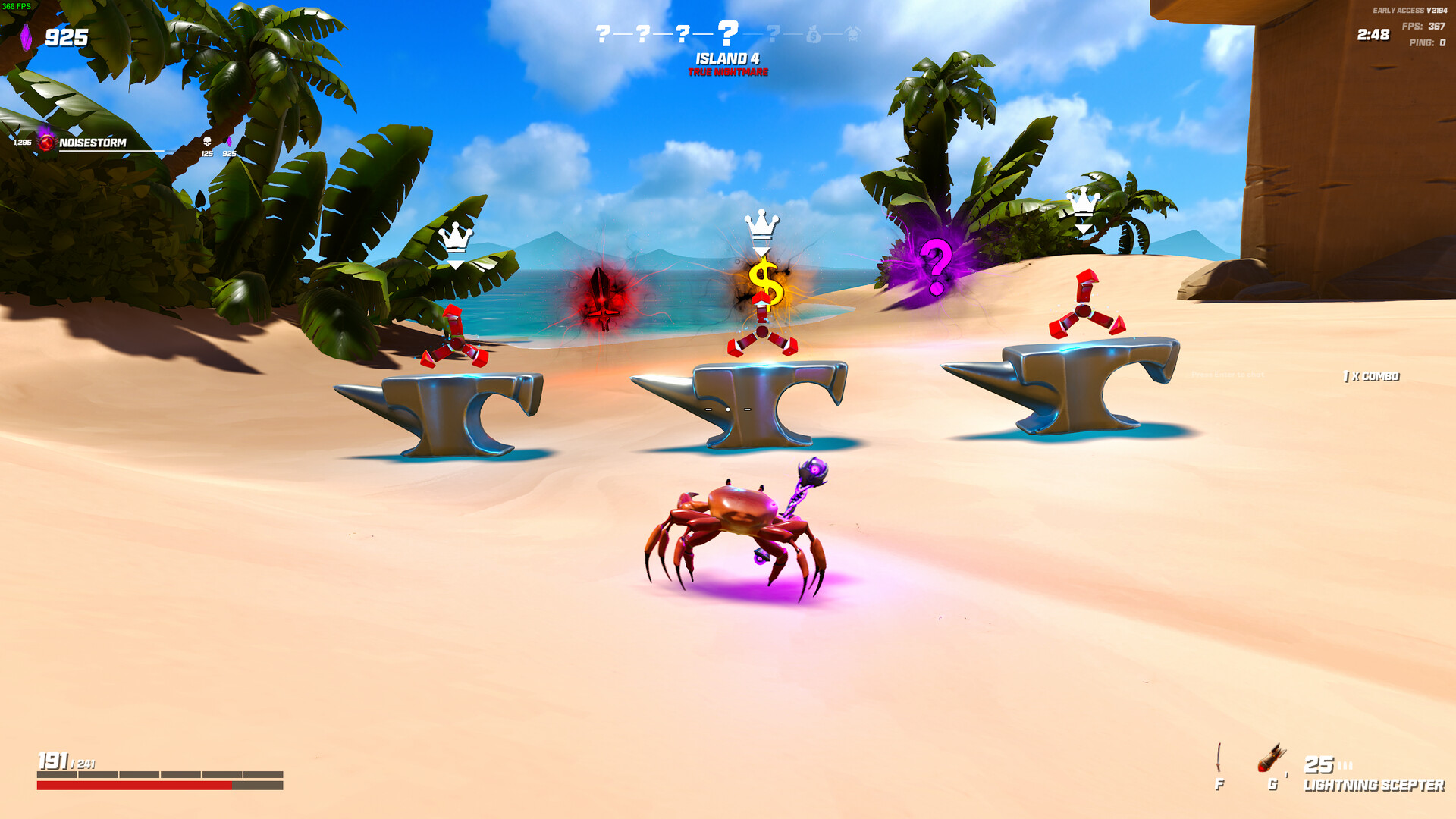
Crab Champions is a roguelite shooter from Noisestorm, and the thing that confuses most new players is not the shooting — it is the shape of a run. Where do you go next, when does difficulty actually go up, and what are all those medals for? This guide walks through how runs are built island by island, how the difficulty tiers and modifiers fit together, and how the long climb to a Diamond medal actually works.
Crab Champions is in Early Access, so specific numbers and menu wording can shift between updates. The structure described here is stable, but treat exact values as a snapshot rather than a permanent rulebook.
How a run is structured: islands, biomes and portals
A run is a chain of islands grouped into themed biomes — Tropical, Arctic, Desert and Volcanic. You drop onto an island, clear out the enemies, and a portal spawns to carry you onward. Each island is a self-contained arena, so a run is really a sequence of short fights stitched together by portals.
Within a single biome's set of islands, two are special. One is a Shop island, where you spend the currency you have banked, and one is an Elite or boss island, which caps the biome with a tougher fight. The rest are standard combat islands that build your loadout and your crystal stash along the way.
Because each island is numbered, your "depth" is measured in islands cleared rather than levels or stages. That island counter is the single most important number for progression — medals, looping and the Diamond requirement are all expressed in terms of how deep you got.
Think of a biome as a mini-act. You will pass through several normal islands, hit a Shop island to spend, and finish on an Elite or boss island. The island number keeps climbing across biomes, so island 30 might be deep into your second biome or further depending on how the run was generated.
Choosing your next biome after a boss
When you clear a biome boss, the run does not just funnel you forward — it gives you a choice. Boats spawn, and each boat heads to a different biome. You decide where to go next: back into a biome type you are comfortable with, or into one whose hazards and enemy mix you would rather avoid.
This matters more than it first appears. Different biomes pressure you in different ways, and pairing biome choice with your current build is part of playing well. If your build leans on close-range burst, an open biome that keeps enemies at distance is a harder ask; if you are mobile and ranged, you can lean into more aggressive picks.
There is no single correct order. The point is that you are steering the run, not just surviving it. Use the boat choice to play to your loadout's strengths, especially once difficulty starts to bite.
Crystals and the shop
Currency in Crab Champions is crystals, and the loop is simple but easy to fumble. You clear an island, then you loot it for crystals before leaving. Take the portal too quickly and you leave money on the table. Those crystals are spent at the next Shop island on upgrades and gear that shape your build.
The discipline here is to always sweep an island after the fight ends. The crystals are not handed to you for winning — they are loot you collect, and that small habit of fully clearing each island before portaling out compounds across a long run.
Treat looting as part of the fight, not an afterthought. Finish the enemies, then do a full pass for crystals before you touch the portal. Over 30 plus islands, the players who loot thoroughly arrive at each Shop island with meaningfully more to spend.
The four difficulty tiers
The base difficulty is set by a tier you choose before the run. There are four, including one that is hidden.
| Tier | Vibe | Who it is for |
|---|---|---|
| Easy | A calming walk on the beach | New players, build experiments, learning the biomes |
| Normal | The standard challenge | Most players once movement and aim feel comfortable |
| Nightmare | A sprint through lava | Experienced players who want real pressure and contributes a Challenge Level baseline |
| Ultra Chaos | Secret extreme tier | Veterans chasing the hardest official setting |
Easy and Normal are where you learn. Nightmare is a serious step up and also feeds into the Challenge Level system, which is the bridge to medals. Ultra Chaos is the secret top tier — the official extreme — and is not something to reach for until your fundamentals are solid.
Difficulty modifiers and Challenge Level
On top of the tier, you can switch on optional difficulty modifiers. These work like an ascension system: each modifier you enable adds points to your Challenge Level, and Nightmare contributes a baseline on its own.
| Modifier | Challenge Level value | What it does |
|---|---|---|
| Random Islands | plus 2 | Randomizes the island layout you face |
| Buffed Enemies | plus 3 | Strengthens enemies across the board |
| Evolved Enemies | plus 4 | Adds tougher, evolved enemy behaviour |
| Limited Heals | plus 5 | Restricts how much you can recover |
Stacking modifiers is the real mechanism for pushing past the base tiers. Want a harder run than plain Nightmare? Turn on more modifiers and your Challenge Level climbs. This is also where a common piece of community shorthand comes from: "True Nightmare" means Nightmare with every modifier enabled. It is worth being clear that this is not an official menu tier — the official extreme tier is Ultra Chaos. True Nightmare is just how players describe a fully loaded Nightmare run.
Challenge Level is not just bragging rights — it gates your best medals. Adding modifiers makes runs harder and shorter, so add them deliberately. Turning on Limited Heals when your build cannot sustain itself will end runs fast without teaching you much.
Looping and infinite scaling
Clearing four biomes is what "completes" a run, and doing so opens an endgame space. But you do not have to stop. You can keep looping, and when you do you retain all of your weapons and perks while the difficulty ramps. This is the source of the game's infinite scaling — there is no hard ceiling, just enemies that keep getting tougher as your island counter climbs.
This is why serious players talk about island 60 and beyond. The early biomes are a warm-up; the real test is how deep your build holds up once you are looping and the scaling has had time to work. A loadout that feels overpowered at island 20 can be barely keeping pace at island 50, which is exactly the point — the game scales to expose whether your build, your movement and your decision-making actually hold together over a long haul.
If you are still assembling loadouts that survive that scaling, the Crab Champions builds guide is the companion piece to this one.
Medals and the road to Diamond
Medals are how progression is recognized, and they are awarded per weapon for victories at island 30 or higher. That per-weapon detail matters: medals reward you for proving a specific weapon can carry deep, so chasing them naturally pushes you to get comfortable with a range of guns rather than leaning on one favourite forever.
The pinnacle is the Diamond medal. It is not just about going deep or just about high difficulty — it is both at once. Diamond requires an island 60 plus victory at Challenge Level 50. That means stacking enough modifiers to reach Challenge Level 50 and then surviving all the way to island 60 with the run intact. It is a genuine endgame goal, not something you stumble into.
-
1
Get comfortable on Normal
Learn the four biomes, the portal and shop loop, and how your build comes together. Win runs cleanly before worrying about medals.
-
2
Push your island depth
Aim for island 30 plus wins so medals start unlocking per weapon. Use looping to practise playing through the scaling.
-
3
Add modifiers one at a time
Raise Challenge Level gradually — start with cheaper modifiers and add the harsher ones like Limited Heals only once your build sustains itself.
-
4
Reach Challenge Level 50 and island 60
Combine a high Challenge Level with a deep loop. A Diamond run needs both at once, so it rewards a build and a playstyle that hold up under sustained pressure.
How to ramp up safely
The mistake most players make is treating difficulty as a switch to flip rather than a dial to turn. Start on Easy or Normal, get the run structure into muscle memory, and only add modifiers as your builds and movement genuinely improve. Each modifier you add should feel like a slight stretch, not a wall.
A sensible path looks like this: win consistently on Normal, then take on Nightmare, then begin layering modifiers from the cheaper Challenge Level values upward. Chase higher islands and higher Challenge Levels in step with each other rather than maxing one and ignoring the other. Medals will follow naturally as your depth and Challenge Level climb together.
If you are at the very start of this curve, the Crab Champions beginner guide covers the fundamentals this guide assumes.
A last note on modes for context: most of this applies to Survival, which you can play solo or in online co-op for up to four players. Racing adds speedrunning with daily seeds, and Duels is online PvP. They are different pursuits, but the run structure and difficulty thinking here are rooted in Survival, which is where the medal climb lives.