The verdict up front
Dwarf Fortress is a legend, and for once the legend undersells it. Developed over two decades by brothers Tarn and Zach Adams at Bay 12 Games, and brought to Steam with Kitfox Games, it is a construction-and-management simulation of almost unfathomable depth: you guide a band of dwarves to dig out and run a fortress in a procedurally generated world that has its own history, civilizations and legends. What makes it special is not any single feature but the sheer density of its simulation — every dwarf has skills, relationships, preferences and a mood; every rock, drink and wound is modelled — and the way all of that detail collides to produce emergent stories you could never script. A flooded mine, a goblin siege, an artist driven mad, a single unhappy dwarf who tips the whole fortress into chaos: these are the moments Dwarf Fortress is famous for. It holds a Very Positive rating on Steam, and it earns it.
So is it worth buying? For anyone drawn to deep simulation and emergent storytelling, absolutely — there is nothing else like it, and the Steam version finally makes it approachable. The honest caveats are real: the learning curve is legendary, the interface is still dense even after its overhaul, performance slows in the late game, and it is English only. But if those do not scare you off, Dwarf Fortress offers a depth no other game comes close to.
Dwarf Fortress is a single-player simulation from Bay 12 Games, published on Steam by Kitfox Games. The original version is free with ASCII graphics; the Steam version is a one-time purchase that adds a graphical tileset, mouse support, a reworked interface and music. Its motto is "losing is fun."
What you actually do
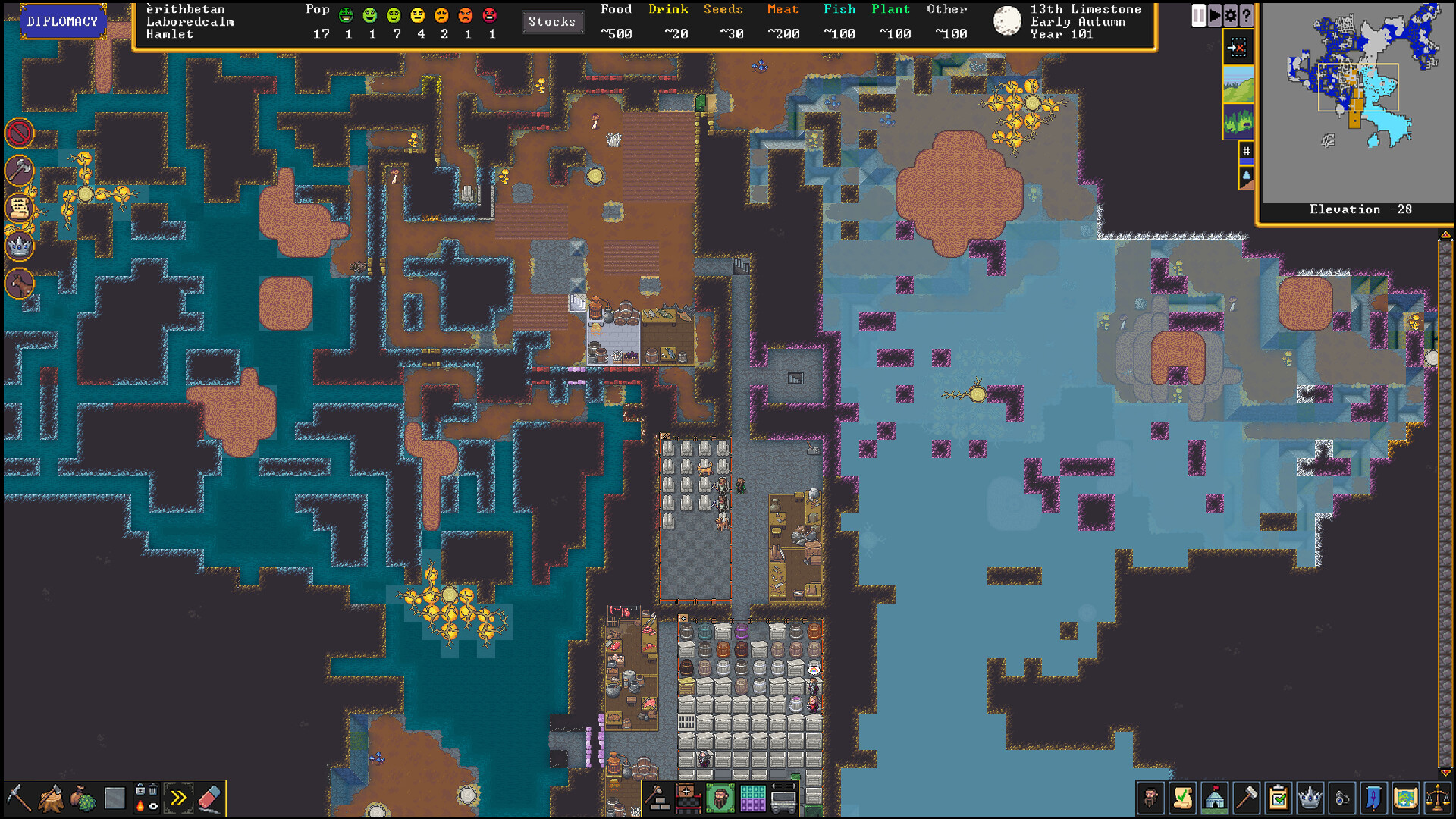
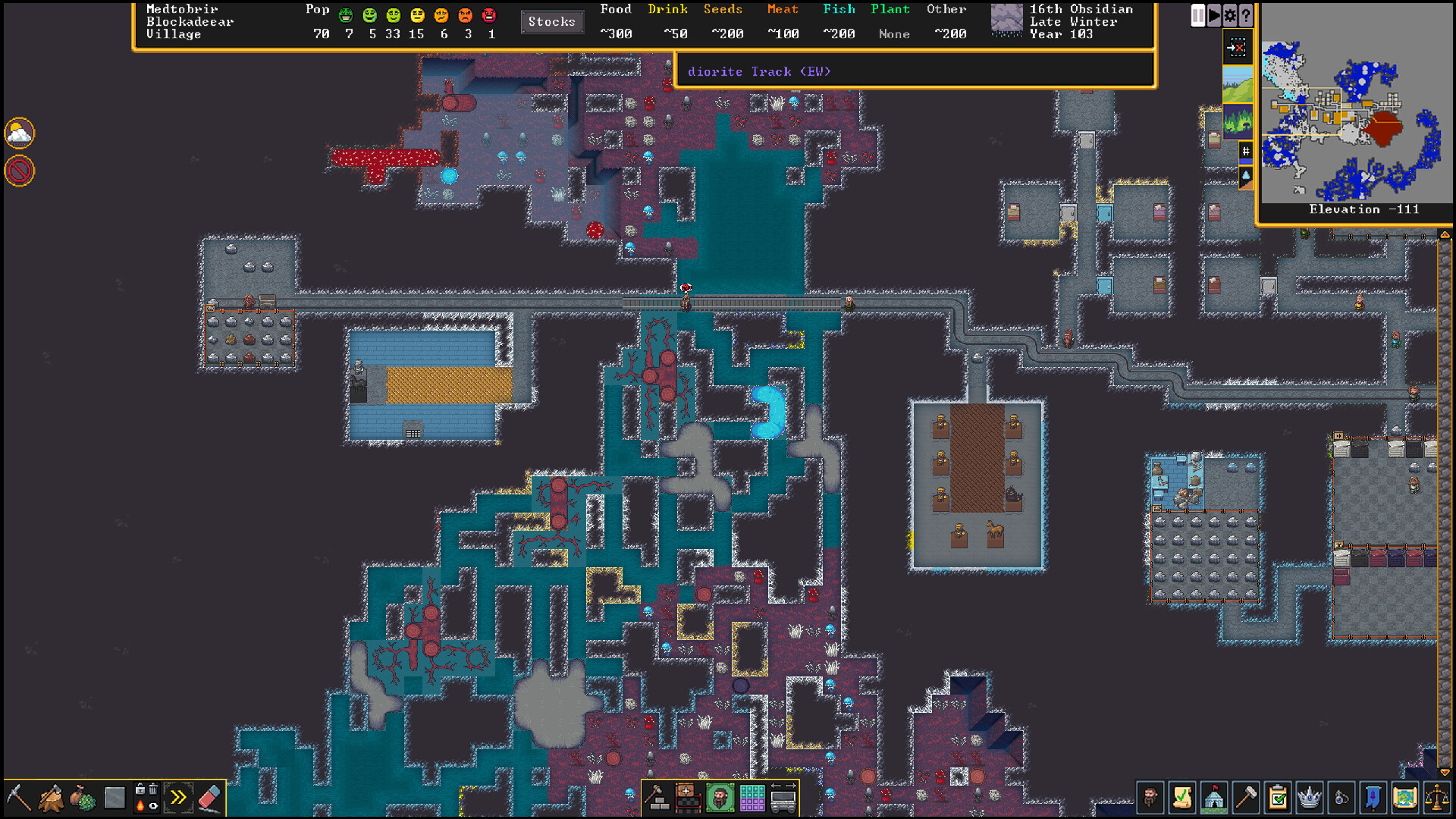
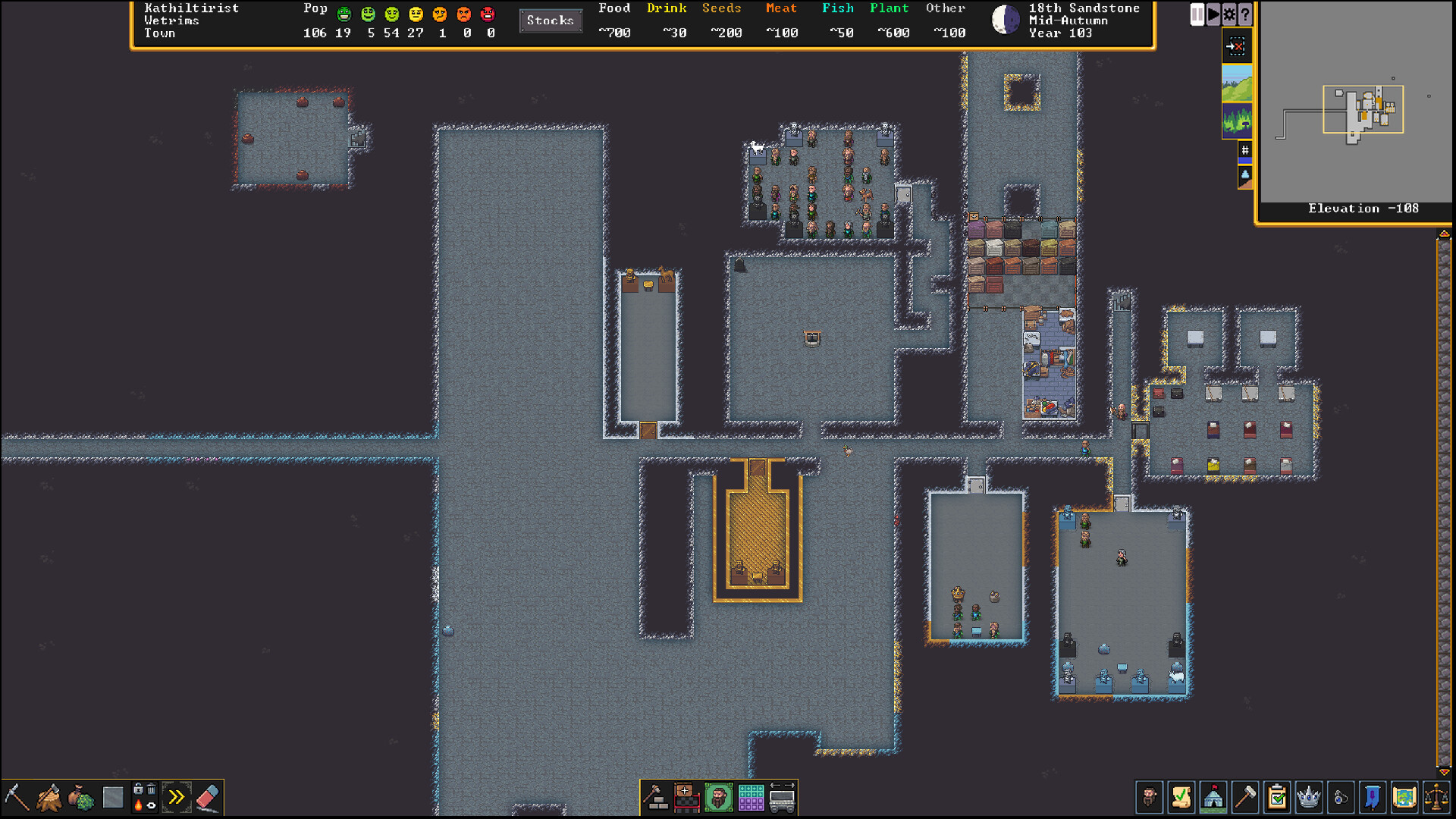
In its main Fortress mode, you lead a small group of dwarves to a chosen site and build a thriving fortress, mostly by digging into the earth. Crucially, you do not control the dwarves directly. Instead, you designate work — areas to dig, workshops to build, crops to farm, items to make, defences to raise — and your dwarves take on jobs that match their labours, going about them on their own. Your role is part architect, part manager: lay out your fortress across its vertical z-levels, keep food and drink flowing, assign your dwarves' work, and respond to the endless events the world throws at you. Migrants arrive, seasons turn, traders visit, and threats from goblins to titanic forgotten beasts come knocking.
The result is a colony that feels genuinely alive, with its own economy, society and momentum. And because the simulation is so deep, things go wrong in fascinating ways — a tantruming dwarf, a breached aquifer, a siege at the worst possible moment — and those failures are where the famous stories come from.
New players almost always overreach and collapse. Start small: secure food and especially drink, dig a compact fortress, and stay in the upper levels your first year. Our Dwarf Fortress beginner guide covers the first fortress step by step.
Why the simulation and "losing is fun" carry everything
It is worth being specific about why Dwarf Fortress is so revered, because plenty of games have systems. The difference is depth and consequence. The simulation models an astonishing amount — individual body parts in combat, the temperature of magma, the personality and grudges of every dwarf, the flow of water across z-levels — and all of it interacts. That density is what makes the game generate stories rather than just tasks: when a beloved dwarf dies and their friend spirals into grief that drags others down with them, no designer wrote that; the simulation did. Few games produce moments you genuinely could not have predicted, and Dwarf Fortress does it constantly.
The other half is the philosophy: "losing is fun." Fortresses are meant to fall, and their collapses — the more spectacular the better — are the point, not a failure. This frees you to take risks, to dig too greedily and too deep, and to treat every disaster as a story rather than a setback. Together, the depth and the embrace of failure are why Dwarf Fortress has inspired a whole genre and kept players for years. Our fortress guide and happiness guide help you keep a fortress alive longer — and make its eventual fall a better story.
Pros
- +The deepest simulation in gaming, producing endless emergent stories.
- +The Steam version's graphics, mouse and music make it far more accessible.
- +Huge replayability from procedural worlds and 'losing is fun' design.
- +Exceptional value and ongoing support from a legendary team.
Cons
- −A legendary, punishing learning curve.
- −A dense, information-heavy interface even after its overhaul.
- −Late-game performance slowdown as fortresses grow.
- −English only and extremely text-heavy.
The Steam version: finally approachable
For most of its life, Dwarf Fortress was a free game rendered in ASCII characters behind an interface so opaque it became a meme — brilliant, but locked behind a wall of keyboard commands and imagination. The Steam version, built with Kitfox Games, is the great unlocking. It adds a proper graphical tileset so you can actually see your dwarves and fortress, full mouse support, a thoroughly reworked interface and menus, a lovely soundtrack, and Steam Workshop support for mods. None of this changes the underlying simulation — it is the same staggeringly deep game — but it removes the biggest barrier to entry, and it is the version to buy if you want to learn Dwarf Fortress without first learning a second language of keystrokes.
This matters because the depth was never the problem; the access was. With graphics and a mouse, the legendary game is finally one a curious newcomer can reasonably approach, which is exactly why it found a huge new audience on Steam.
The honest weaknesses
Now the part that keeps Dwarf Fortress from being for everyone. Even with the Steam overhaul, the learning curve is enormous — this is still one of the hardest games to learn ever made, with countless interlocking systems and little in the way of a guiding tutorial, so expect to lean on guides and to lose several fortresses before things click. The interface, though hugely improved, remains dense and information-heavy; there is a lot to read and manage, and it can overwhelm. Performance is the other well-known issue: as a fortress grows large and its population and simulation balloon, the game slows down, sometimes severely, in what players call "FPS death." And it is English only, with text everywhere, which is a real barrier for non-English players.
None of this undermines the brilliance beneath, but it is honest to say Dwarf Fortress asks a lot of you. It rewards patience and curiosity enormously, and frustrates anyone wanting a smooth, quick or guided experience.
Buy Dwarf Fortress for its depth, stories and the joy of beautiful disaster, not for accessibility or polish. If you need a gentle tutorial, a clean interface, steady late-game performance, or your own language, weigh that carefully. If the deepest simulation ever made excites you, nothing else comes close.
Who should buy it
If you love deep simulation, management and emergent storytelling, Dwarf Fortress is essential — a one-of-a-kind game that has earned its legendary status, now finally accessible thanks to the Steam version. Colony-sim and systems fans will find more depth here than anywhere else, and anyone who delights in a game generating its own unscripted dramas will be endlessly rewarded. At its price, with effectively limitless replayability and decades of devoted development behind it, the value is exceptional. To get past the brutal start, read our beginner guide and fortress guide, then dig into the military and happiness guides.
Who should pass? Anyone who needs a gentle on-ramp, a clean modern interface, reliable performance, fast results, or their own language. Be honest about that, because Dwarf Fortress is demanding. For the players it suits, it is the deepest and most rewarding simulation ever made — with the honest asterisk that it is hard, dense, and proudly built on the idea that losing is fun.