Start with the right mindset
The biggest reason new players bounce off Dwarf Fortress is that they treat their first fortress as something that must succeed, and then panic when it falls apart. The truth is liberating: it is supposed to fall apart. "Losing is fun" is the game's motto, and your first few fortresses are practice runs that will teach you the systems while making good stories. So before any specific tip, adopt that mindset — your goal in a first fortress is not to build a perfect dwarven city, but to keep a handful of dwarves alive long enough to learn how the game works, one disaster at a time. With the pressure off, the overwhelming opening becomes a fascinating experiment.
With that said, there are a few fundamentals that keep a first fortress alive long enough to actually learn from, and they all come down to securing the basics before reaching for anything ambitious.
The Steam version of Dwarf Fortress adds graphics and mouse support, which makes learning far easier than the old ASCII version. Lean on that, and on guides like this one — the game has little built-in tutorial for its depth.
Pick a safe embark
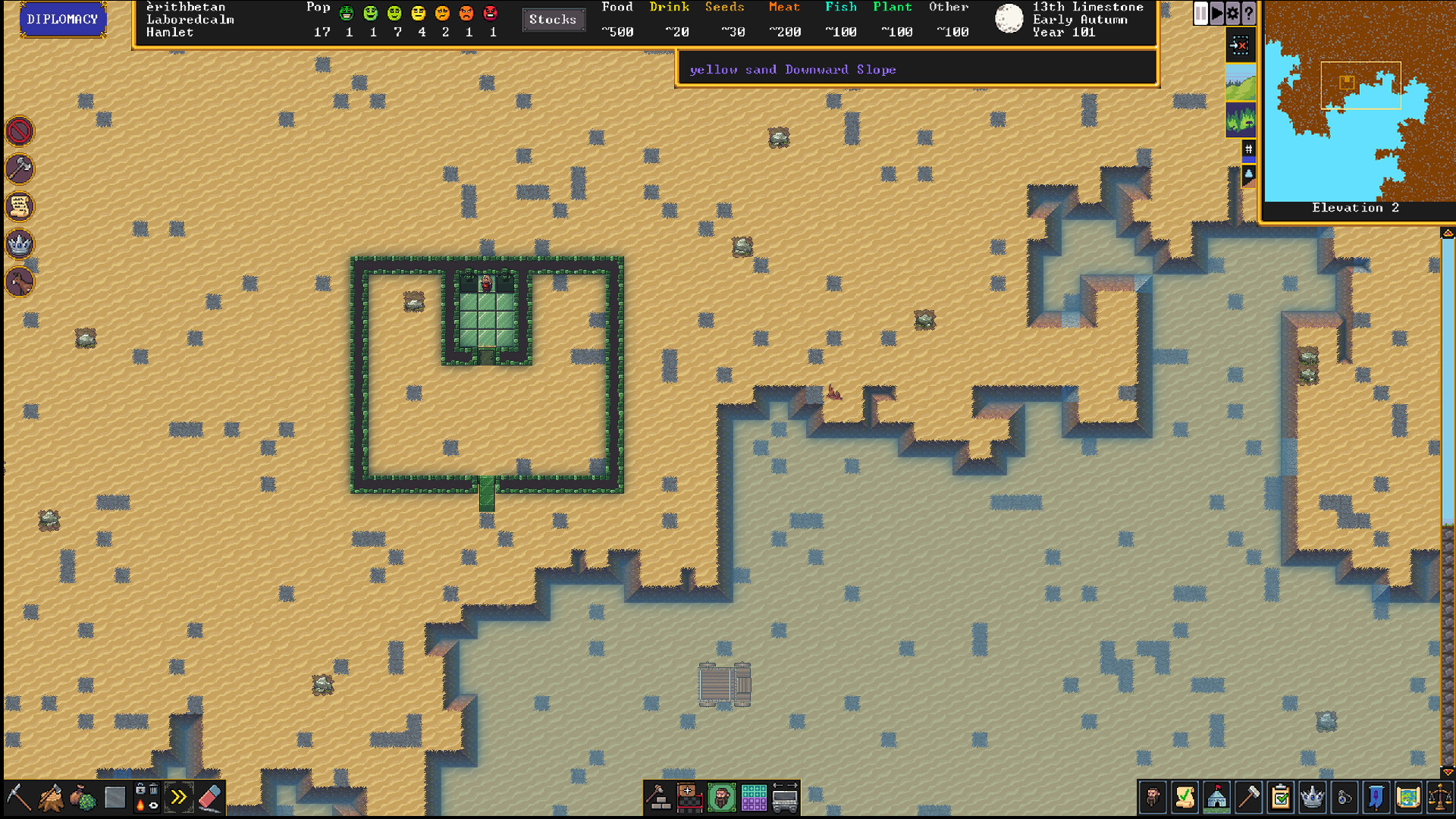
Your fortress's chances start before you dig anything, with where you embark. For a first fortress, choose somewhere forgiving: avoid aquifers, which flood your digging and complicate everything for a beginner, and steer clear of evil or savage biomes, which throw dangerous creatures at you early. Aim instead for a calm or serene, forested site with trees for wood and gentle surroundings. Make sure your starting supplies include the essentials — picks for digging, an axe for chopping wood, food, drink, and seeds to start farming — so you can get a fortress going immediately on arrival.
A friendly embark removes a huge amount of early difficulty and lets you focus on learning the core loop rather than fighting the environment. You can tackle aquifers, deserts and evil biomes once you know what you are doing; your first time, make it easy on yourself.
When you arrive, pause the game immediately and take stock before doing anything. Dwarf Fortress lets you plan at your own pace while paused, and a moment of planning — where to dig, where the workshops go — prevents the frantic, doomed scramble that sinks many first fortresses.
Secure drink, food and shelter first
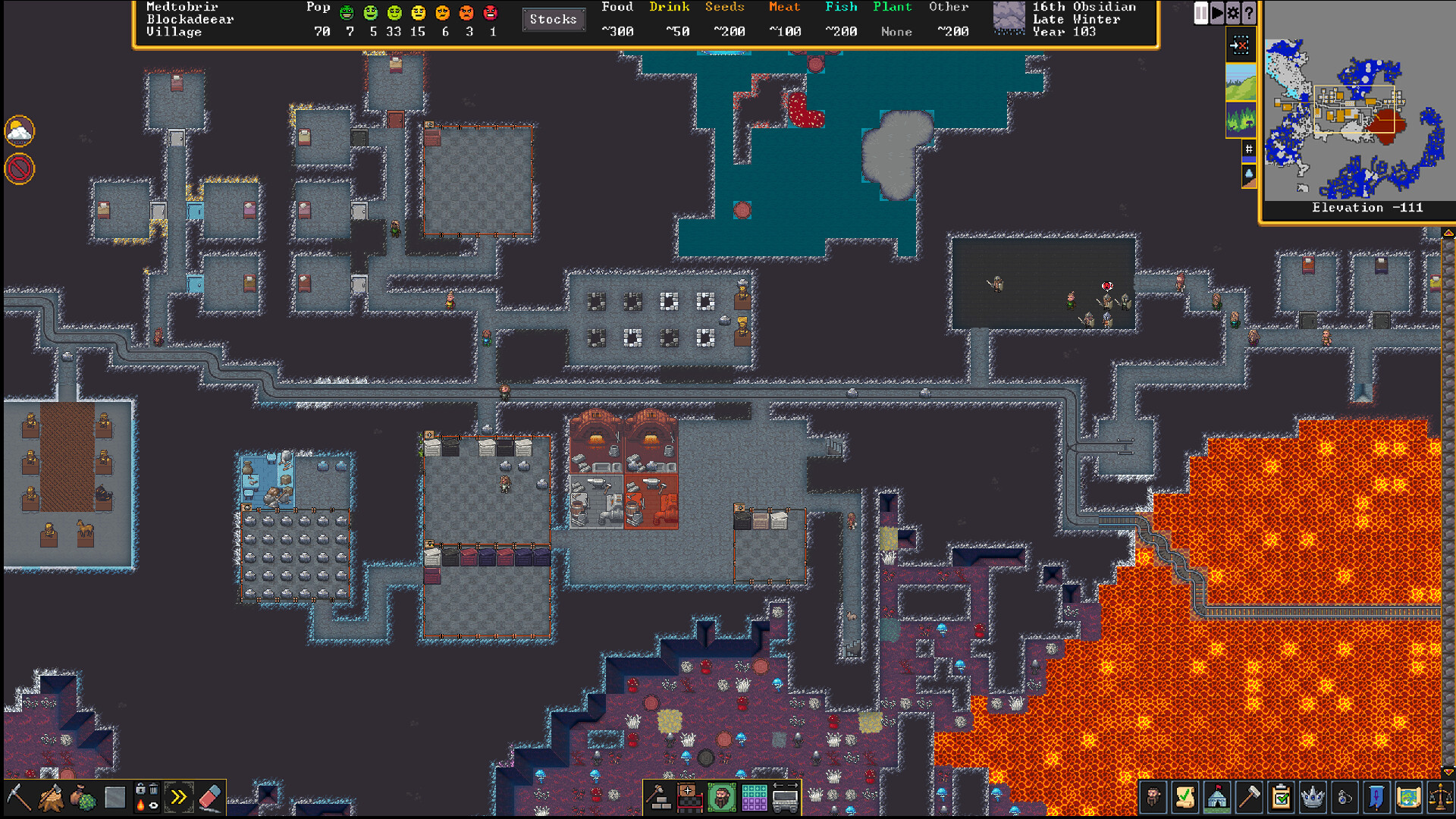
Once you are settled, your first priority is survival, and in Dwarf Fortress that means drink above almost everything. Dwarves need to drink — usually alcohol — and dehydration will kill them in just a few days, far faster than hunger, so building a still and brewing a steady supply of booze is your single most important early task. Right behind it come food and shelter. Dig an entrance and a main hall, build a carpenter's workshop to make beds and furniture, a still for drinks and a kitchen for cooking, and set up food and drink stockpiles near them. Start a farm for a reliable food source, and add bedrooms or at least a dormitory so your dwarves have somewhere to sleep.
Get these basics in place in your first season and your fortress has a foundation. Neglect them — especially drink — and your dwarves will start dropping before you have even worked out what went wrong. Always keep an eye on your drink stockpile, and if it runs low, drop everything and brew.
| Priority | Do this | Why it matters |
|---|---|---|
| 1. Drink | Build a still and brew constantly | Dehydration kills dwarves in days |
| 2. Food | Farm, fish or hunt, and cook | Starvation follows close behind thirst |
| 3. Shelter | Dig rooms and provide beds | Migrants without beds get unhappy |
| 4. Safety | Stay shallow your first year | Deep digging unleashes dangers |
Manage labours, migrants and your first year
With the basics secured, the day-to-day of Dwarf Fortress is managing work, and the key thing to understand is that you do not control your dwarves directly. You designate tasks — dig here, build this, plant that — and you set which labours each dwarf is allowed to perform, and they pick up jobs that match on their own. So managing your fortress is really managing tasks and assignments: make sure the right dwarves are doing the right work, that important jobs are getting done, and that you are not asking for more than your colony can handle. As migrants arrive over your first year — and they will, often in waves — give them beds and work, because dwarves left without shelter sleep outside and grow unhappy, which is how trouble starts.
The overarching rule for a first fortress is restraint. Keep it small and compact, stay in the safe upper levels rather than digging greedily into the deep, and grow only as fast as you can keep everyone fed, watered, housed and content. Survive a year or two this way and you will understand the core loop. From there, our fortress guide goes deeper on workshops, stockpiles and layout, the military guide prepares you for sieges, and the happiness guide helps you avoid the tantrum spirals that end fortresses. And when your fortress does fall — it will — enjoy the story, and start a better one.