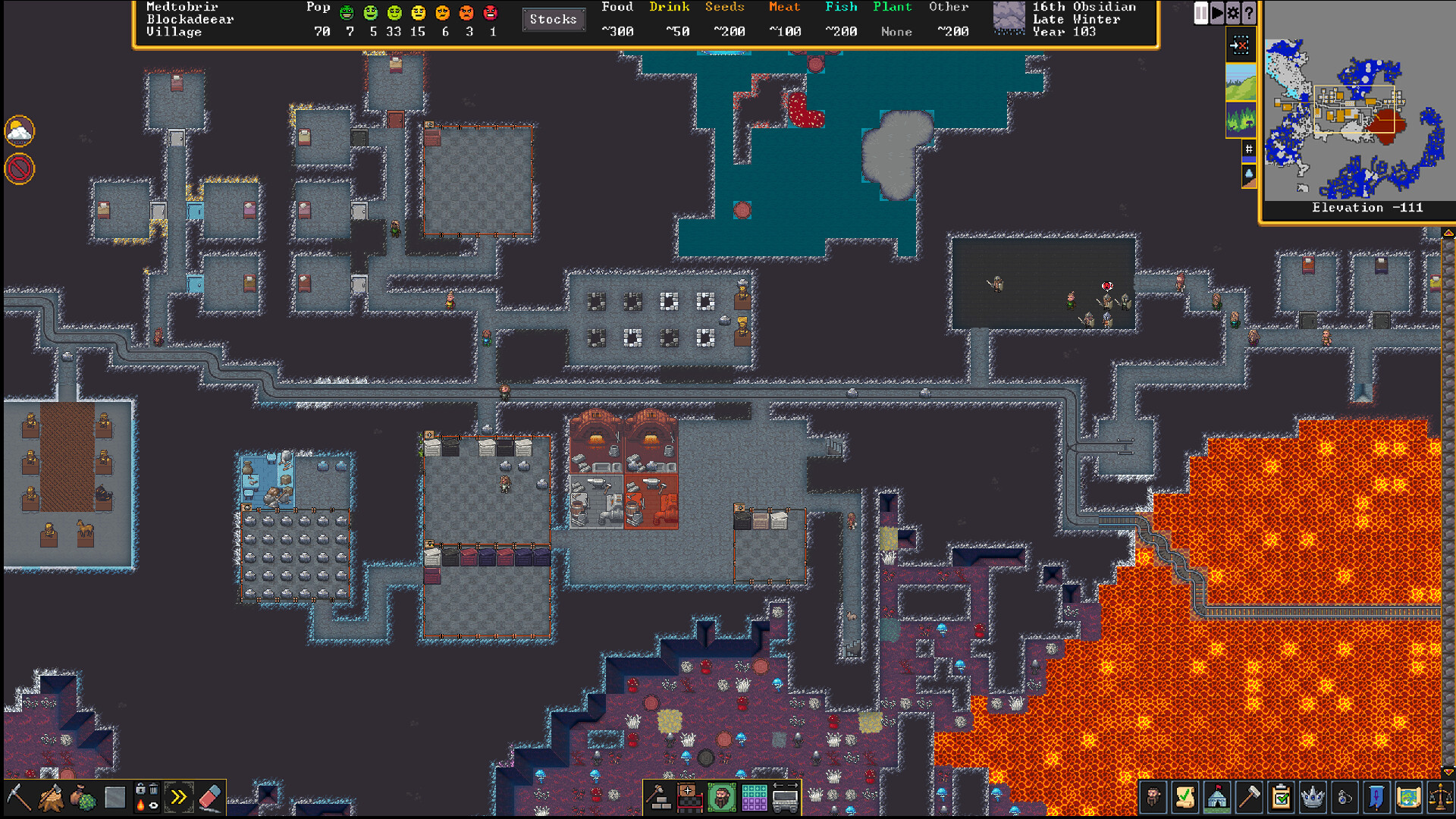

Something is always coming
A peaceful Dwarf Fortress is only ever temporary. Goblin sieges, ambushes, forgotten beasts from the deep, titanic megabeasts and more will eventually come for your dwarves, and a fortress with no military and poor defences falls quickly and bloodily. Building a capable military is therefore not optional but a core part of fortress survival, and the cruel lesson many new players learn is that the time to build one is long before you need it. Training takes time, good equipment takes an industry, and good defences take planning, so a fortress that waits until a siege is at the gate to think about its army is usually already doomed. This guide covers how to prepare — squads and training, steel equipment, fortified defences and the careful use of war animals — so that when the threat arrives, you survive it.
The mindset is preparation over reaction. Every season of peace is a chance to train, equip and fortify, and the fortresses that endure are the ones that used that time.
Your military and your defences work together. A trained, steel-clad squad fighting from behind a lockable gate and traps is vastly stronger than the same squad caught in the open. Build both, and build them before the enemy appears.
Squads, training and steel
Your military is built from squads — groups of dwarves you assign to soldier duty, equip, and have train at a barracks. Training is essential and worthwhile: it steadily raises their weapon and armour skills and their physical attributes, turning ordinary dwarves into capable fighters, and as a bonus most dwarves enjoy training together, gaining happy thoughts from it. So forming squads and drilling them regularly in peacetime is how you build strength you can rely on when it matters.
Equipment is just as important as training, and here the key fact is that steel matters. Iron equipment will see off wildlife and minor threats, but it is not enough against a serious enemy — goblin siege squads equipped in steel will cut down iron-clad dwarves. To survive real sieges, you need your soldiers in steel armour and wielding steel weapons, which means developing the metal industry to produce it. A fully equipped, steel-clad, trained squad is worth many times a larger force of untrained dwarves in iron, so invest in both the training and the gear before you face anything dangerous.
Get your metal industry working toward steel early, and equip your squads fully — armour and weapon both. A half-equipped soldier is a casualty waiting to happen, and the gap between iron and steel is the gap between holding a siege and losing your fortress.
Defence: gates, traps and fighting smart
A military is far more effective behind good defences, and fortifying your fortress lets a small force defend against a much larger one. The foundation is control of your entrance: a lockable gate or a drawbridge lets you seal the fortress entirely when danger comes, denying the enemy easy access and buying you time. Around and beyond it, traps and choke points let you channel and thin an attacking force, so that even a large siege has to come at you on your terms. A well-designed entrance is often worth more than extra soldiers, because it multiplies the strength of the ones you have.
How you fight matters too. When an attack comes, keep your squad pulled back until every dwarf is fully armed and armoured, then send them out together as a coordinated unit rather than letting them dribble out one at a time to be picked off. A unified, prepared squad emerging from a defensible position is a very different prospect from scattered dwarves caught half-equipped. Combine a fortified entrance with a trained, steel-clad squad fighting as a unit, and you can weather sieges that would obliterate an unprepared fortress.
| Defence | How to use it | Why it matters |
|---|---|---|
| Squads and training | Form and drill squads in peacetime | Skilled soldiers, built before you need them |
| Steel equipment | Equip armour and weapons in steel | Iron loses to steel-clad sieges |
| Gates and traps | Seal the entrance, channel attackers | A small force holds a large one |
| War animals | A few, spread out | Helpful, but losses risk tantrums |
War animals and putting it together
War animals are a useful supplement to your defence — trained dogs in particular can guard your entrance or accompany key dwarves and help fend off attackers. But they come with a hidden cost. Dwarves form attachments to assigned animals, and the death of one causes unhappiness, so do not pile many animals onto a single dwarf; losing several at once can contribute to a tantrum spiral that hurts you more than the enemy did. Used in moderation — a few war dogs at your gate or with your soldiers — they add strength without the risk.
Put it all together and a defended fortress looks like this: trained squads drilled in peacetime, equipped in steel, fighting as a unit from behind a lockable gate backed by traps, with a few war animals in support. Prepare all of this before the first siege rather than after, and your fortress can survive the threats that will inevitably come for it. To keep the dwarves behind those walls content and avoid the tantrum spirals that undo so many fortresses, see our happiness guide; to build the economy that funds your military, the fortress guide; and if you are just starting out, the beginner guide.
Do not wait for a siege to build your army. Training and steel both take time, and a fortress that starts arming only when the enemy arrives will be overrun before it is ready. Prepare in peace, so you are never caught defenceless in war.