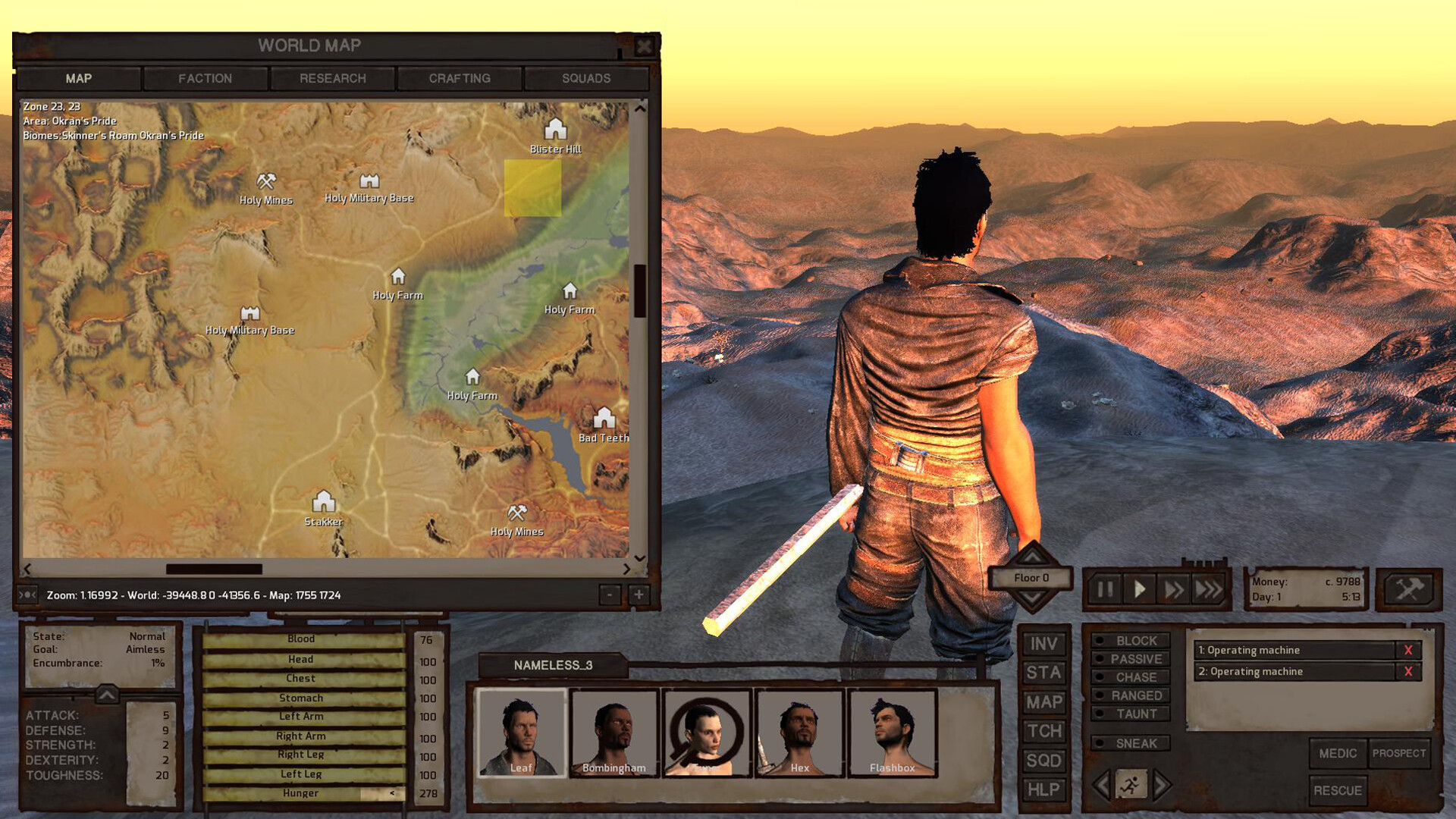
Which weapon class to use — ranked
Kenshi has six melee weapon classes, and most guides describe them without saying which to pick. The ranking below is for a general-purpose squad, judged against what the world actually throws at you: armoured humans, Skeleton robots, and very large animals. Note the bottom entry carefully — it is last for general use and first for one specific job.
| Rank | Class | What it does well | What it costs you | Standout weapon |
|---|---|---|---|---|
| 1 | Heavy weapons | The highest damage in the game, delivered in a **wide arc** that hits several enemies at once, and it goes through armour. | Large Strength requirement and heavy encumbrance. Genuinely bad on a fresh character — this is a class you grow into, not start with. | Falling Sun |
| 2 | Hackers | Balanced cutting and stun with **impressive armour penetration** and bonus damage against Robots. The class with no bad matchup. | A lower ceiling than heavy weapons. You will never delete a crowd in one swing. | Long Cleaver |
| 3 | Polearms | Long reach and **very light**, with bonus damage against animals. The low weight matters more than it sounds because encumbrance is what gets early squads killed. | Weaker against armoured humans, which is most of the late game. | Heavy Polearm |
| 4 | Katanas | The best raw cutting damage, bonus damage against humans, and a **double attack animation** that wins one-on-one duels. | **Weak against armour and robots** — precisely the two things the late game is made of. Strong early, awkward later. | Topper |
| 5 | Sabres | A genuine all-rounder with no glaring weakness. | Also never the best answer to a specific problem. Fine as a default, rarely the reason a fight was won. | Foreign Sabre |
| 6 | Blunt weapons | **First choice for a specific job:** blunt deals stun damage, and stun recovery does not need a first aid kit. That makes it the class for capturing people alive, for safe training, and for squads you cannot afford to keep patched up. | It is genuinely poor at killing things. Ranked last for general use, not because it is weak. | Heavy Jitte |
If you want one answer: put polearms or hackers in your squad's hands early, and move your strongest, toughest characters onto heavy weapons once their Strength can carry them. Keep one blunt weapon around for taking prisoners. Everything below explains why that works — how skill-by-use training actually progresses, why toughness is the stat that decides survival, and how defeat, limbs and medical recovery work.
The unusual shape of Kenshi combat
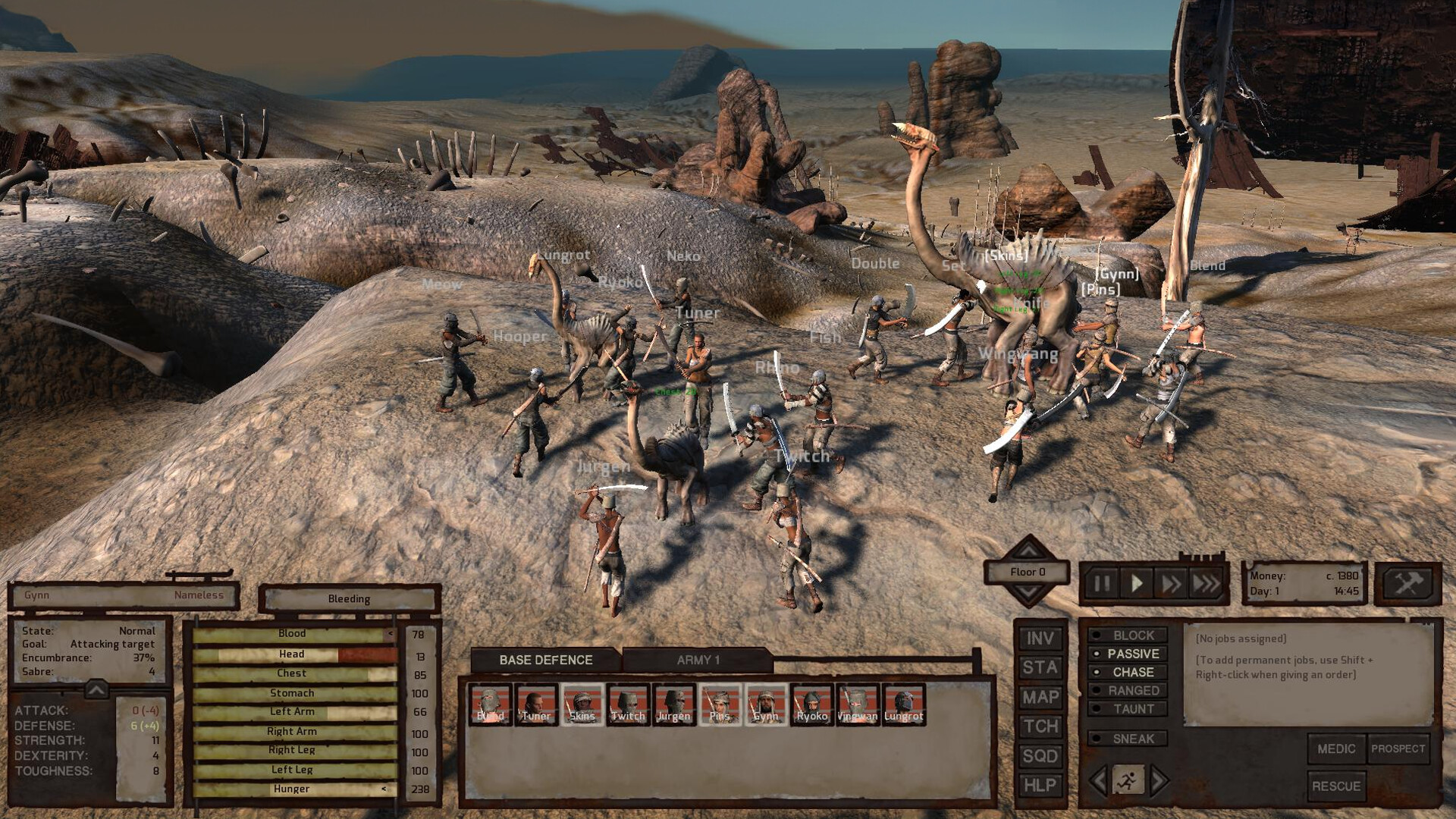
Kenshi combat works unlike almost any other RPG, and understanding that difference is the key to winning. There are no levels and no experience points — every skill rises only through use, the way the Elder Scrolls games handle progression. Your characters become deadly not because you spent points, but because they did the relevant thing over and over: swung a weapon, took hits and survived, ran long distances. The second unusual truth is that losing a fight rarely means death. Defeated characters are typically knocked out, and from there they can recover, escape, be rescued or be rebuilt. Combat mastery in Kenshi is therefore less about any single battle and more about engineering training and managing recovery so your squad grows steadily stronger.
This guide treats the core systems in turn — training through use, stats and weapons, defeat and recovery, and squad tactics — then ties them together. The throughline is deliberate growth: you build a fighting force through patient, survivable practice and good medical support, not through a level-up screen.
Because skills rise only through use, "grinding" in Kenshi means doing the activity, not killing for XP. Athletics climbs as you run, toughness climbs as you survive hits, and weapon skills climb as you fight — so set up situations where your squad does those things safely.
Training through use
Since there are no levels, you train by engineering safe repetition. Athletics rises whenever your characters run, so keeping your squad moving across the map passively builds speed. Toughness — one of Kenshi's most important survival stats — rises when a character takes hits and survives, so controlled fights you can recover from actually make your people more durable over time. Weapon and defense skills grow by fighting, so the classic safe approach is to spar weaker enemies near town guards, where a losing fight ends in a rescue rather than a disaster. The art is creating fights that are dangerous enough to teach but safe enough to survive, and rotating which characters take the lead so your whole squad develops rather than one hero.
The mindset is patience. A squad that trains deliberately — running everywhere, surviving controlled fights, sparring near safety — becomes formidable over time, while one that rushes into real battles unprepared simply dies. Build the skills first, then pick the fights.
Stats, weapons and builds
Beyond skills, your fighters are shaped by core stats — strength, dexterity and toughness chief among them — and by the weapons they wield. Strength powers heavy weapons and carrying capacity, dexterity favours faster, lighter weapons, and toughness governs how much punishment a character can take before going down. Weapon types each suit different builds and situations: fast blades like katanas and sabres reward dexterity, heavy weapons demand strength but hit hard, polearms offer reach, and martial arts let you fight unarmed. Matching a character's weapon to their stats and intended role — a strong, tough frontliner with a heavy weapon, a dexterous duelist with a fast blade — is how you turn raw skills into an effective fighter.
| Element | What it governs | How to build it |
|---|---|---|
| Skill-by-use | All progression | Engineer safe, repeatable training |
| Toughness | Surviving hits | Take hits and survive controlled fights |
| Strength / Dexterity | Weapon suitability and power | Match heavy or fast weapons to the stat |
| Weapon type | Damage, speed, reach | Fit the weapon to the character's role |
Defeat, medical recovery and limbs
One of Kenshi's defining features is that defeat is rarely the end. A character who loses a fight is usually knocked unconscious rather than killed, and what happens next depends on your preparation. Untreated wounds can bleed out, so medics and first aid kits are essential; a character with medical skill can stabilise and heal the squad, and splint kits treat broken limbs. Even maiming is recoverable — lost limbs can be replaced with robotic prosthetics, some of which outperform the originals. The practical takeaway is to always carry medical supplies, keep at least one capable medic, and ensure someone can drag the wounded to safety. With that support, most defeats become temporary setbacks and even compelling stories rather than failures.
This recoverability is also what makes toughness training viable: because surviving a beating builds toughness and you can heal afterward, controlled losses are part of getting stronger. Embrace the cycle of fight, recover, return stronger.
-
1
Prepare before fighting
Train skills safely, equip weapons that fit your stats, and stock first aid and splint kits with an assigned medic.
-
2
Fight with numbers and terrain
Engage with a squad, use chokepoints, town guards and animal companions, and avoid being surrounded.
-
3
Recover the downed
After a fight, stabilise the unconscious, treat bleeding and broken limbs, and drag anyone in danger to safety.
-
4
Return stronger
Heal up, fit robotic limbs if needed, and let the toughness and skills you gained carry into the next fight.
Squad tactics and the long game
Solo bravery loses in Kenshi; numbers and tactics win. Fighting with a squad lets you focus targets, surround enemies, and absorb losses that one character never could. Lure dangerous foes toward town guards to even the odds, use chokepoints and terrain so you are not surrounded, and bring animal companions like bonedogs to add bodies and damage. As your fighters' skills climb through deliberate training and survived battles, the same squad that fled bandits early can take on entire patrols, then factions. The progression is entirely self-built — which is exactly why a prepared, well-trained, well-supplied squad in Kenshi feels so earned.
Never commit your whole squad to a fight with no escape plan and no medic. The worst Kenshi disasters come from an unprepared group getting surrounded with no one left to heal or rescue. Always keep a way to recover, and a defeat becomes a story instead of a wipe. To put your trained squad to work, see our Kenshi base building guide; to pick a race that fits your combat plans, the races tier list; and if you are new, the beginner guide.