Start with the right mindset
Shadow Empire opens by handing you a planet and a hundred interlocking systems with very little guidance, and the most common first-game experience is being overwhelmed and then collapsing — usually from expanding too far, breaking your supply, or running out of political power to govern. The fix is not to learn everything at once. It is to focus on a short list of foundations and grow slowly. Your only real goals in a first game are to set up a functioning government, keep your economy and supply working, and not overreach. Master those, and the mountain of systems becomes a series of manageable steps rather than a cliff.
Internalise that and the game changes from bewildering to absorbing. The priorities below are the ones that keep an early game alive long enough for everything else to start making sense.
Shadow Empire is a deep simulation, not a race. Surviving and consolidating come first; conquest comes later. A small, stable nation with working logistics and politics is a far stronger position than a sprawling one teetering on collapse.
Build your councils and appoint leaders
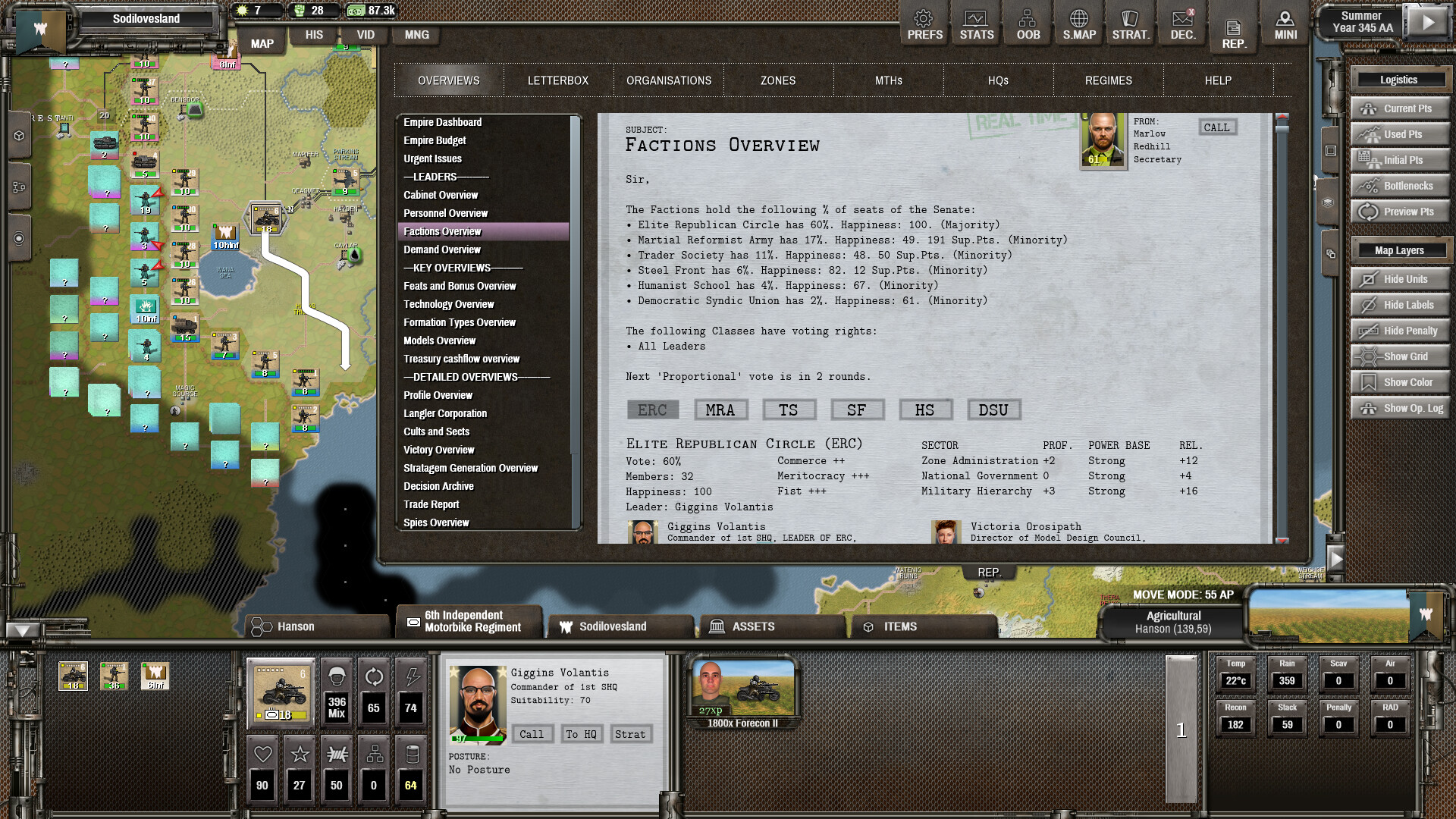
Your nation runs through its councils, so setting them up well is the first real task. Early on, create the Interior Affairs Council — it handles things like taxation and recruiting new leaders — and a military research council to begin advancing your technology. Each council is run by a director, and the leaders you appoint matter: a capable director makes a council effective, while a poor one wastes its potential. Use your Interior director to hire more leaders so you have good people to staff the councils you open, and create councils that fit the talents of the leaders you actually have rather than opening more than you can staff well.
This human layer is the backbone of your empire. Getting competent leaders into the right roles early pays dividends across your whole game, because everything from your economy to your wars runs better with good directors behind it.
Don't open every council at once. Create the ones you can staff with capable leaders, starting with Interior Affairs and military research, and expand your government as you recruit more talent. A few well-run councils beat many neglected ones.
Generate political power and set taxes
Two early levers keep your nation responsive: political power and taxes. Political power is what you spend to do almost anything involving your leaders — appointing directors, responding to events, creating posts and playing stratagems — so generating a healthy amount of it early is vital. A common opening move is to direct much of your Supreme Command Council's budget toward producing political power, accelerating your ability to govern and react. Starve yourself of political power and your nation becomes paralysed; keep it flowing and you stay in control.
Taxes fund everything else. A sensible starting point is income tax around 30% and sales tax around 50%, which gives you a working budget without immediately sparking revolt. You can experiment with higher rates for more income, but keep an eye on unrest and be ready to ease off if discontent rises. Balancing revenue against stability is a constant early-game judgement call.
| Priority | Do this | Why it matters |
|---|---|---|
| 1. Government | Build councils, appoint good directors | Your whole nation runs through them |
| 2. Political power | Direct early budget toward generating it | Needed to manage leaders and play stratagems |
| 3. Economy | Set income tax ~30%, sales tax ~50% | Funds your nation without sparking revolt |
| 4. Supply | One truck stop per city, use roads | Keeps your territory and armies fed |
Expand tightly and keep supply flowing
If there is one mistake that sinks new players, it is expanding too far, too fast. Sprawling territory strains your logistics, your administration and your political power all at once, and a nation stretched thin tends to collapse from the inside. So expand tightly: stay within a handful of hexes of your capital early, consolidate each gain, and only push outward once your economy and supply can support it. A compact, well-run nation is far stronger than a large, broken one.
Supply is the other half of this. Build a truck stop in each city to move resources and keep your territory fed, use roads and rail to extend your reach, and remember that armies pull supply only from nearby — in the wilderness, that range is short. An offensive that outruns its supply will stall no matter how strong it is, so always check that your forces stay within your logistics network. Our logistics guide explains the whole system, the military guide covers building and using armies, and the stratagems and governance guide goes deeper on leaders and politics. Get these foundations right and Shadow Empire's overwhelming opening becomes a winnable, fascinating climb.