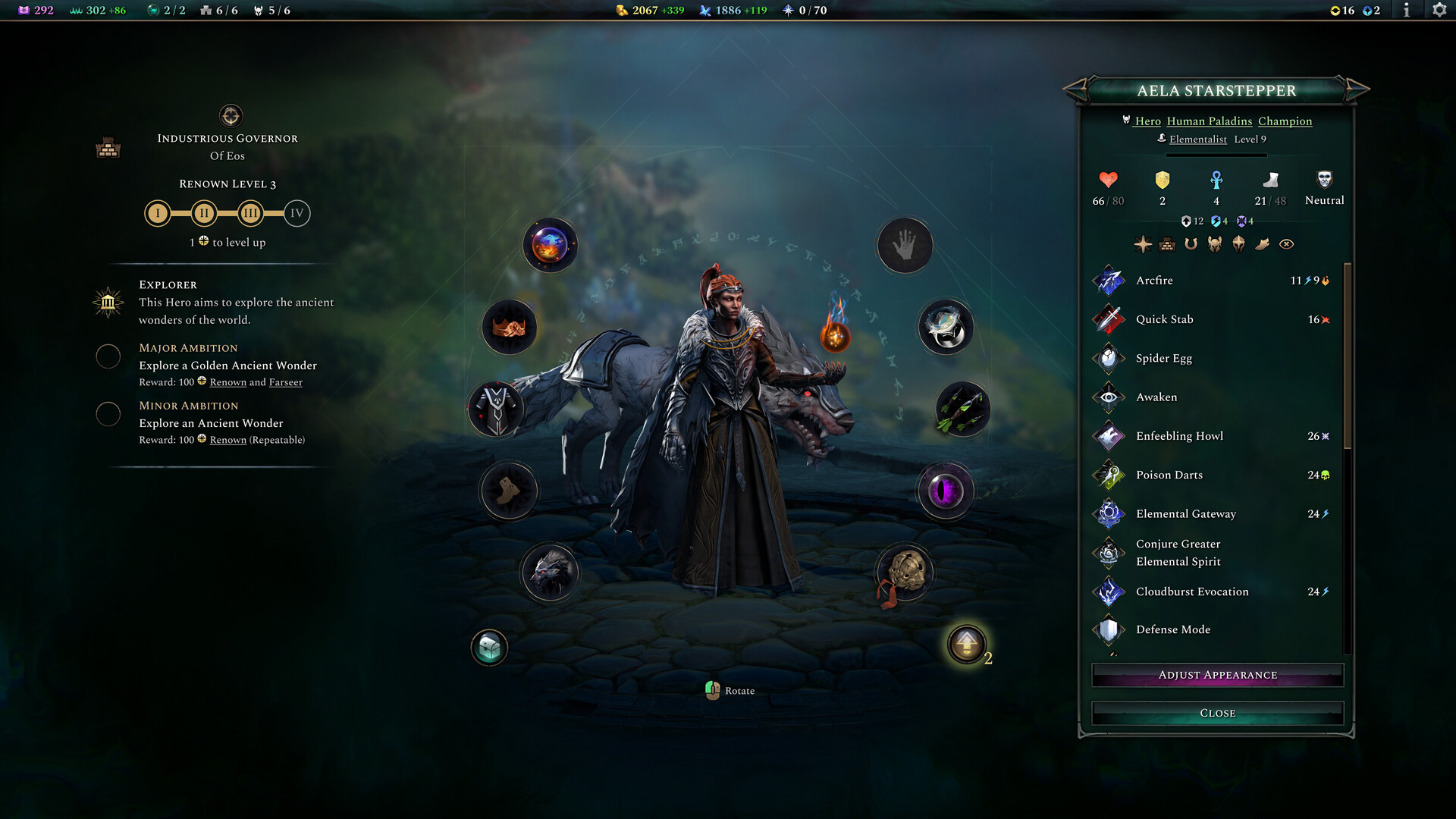
Most 4X games hand you a faction and ask what you will do with it. Age of Wonders 4 asks you to build the faction, and then makes the building interesting enough that it is the reason to play.
You choose a physical form, a culture, two society traits and — over the course of the game — a line of tomes that is effectively a school of magic. Those four things combine into empires that genuinely do not play alike. A High culture empire stacking Awakened Spirit damage and an Astral summoner drowning the map in conjured units are not the same game with different art.
What the design buys
The creator is not a costume box. Culture decides your six units, a province improvement, three buildings, your heroes' skills and, for seven of the eleven cultures, a sub-culture choice on top — two Dark cults, three Mystic schools, seven Primal totem animals, three Oathsworn oaths. Society traits carry the largest swings: Empire of the Cosmos rewrites how tome research works, Chosen Destroyers removes your ability to hold captured cities at all.
Underneath, the tome system is the best thing in the game. Six affinities, each with its own damage channel and its own five tiers of tomes, and only one tier V tome per game. That single constraint turns research from a shopping list into a commitment, and it is what makes two empires of the same culture diverge.
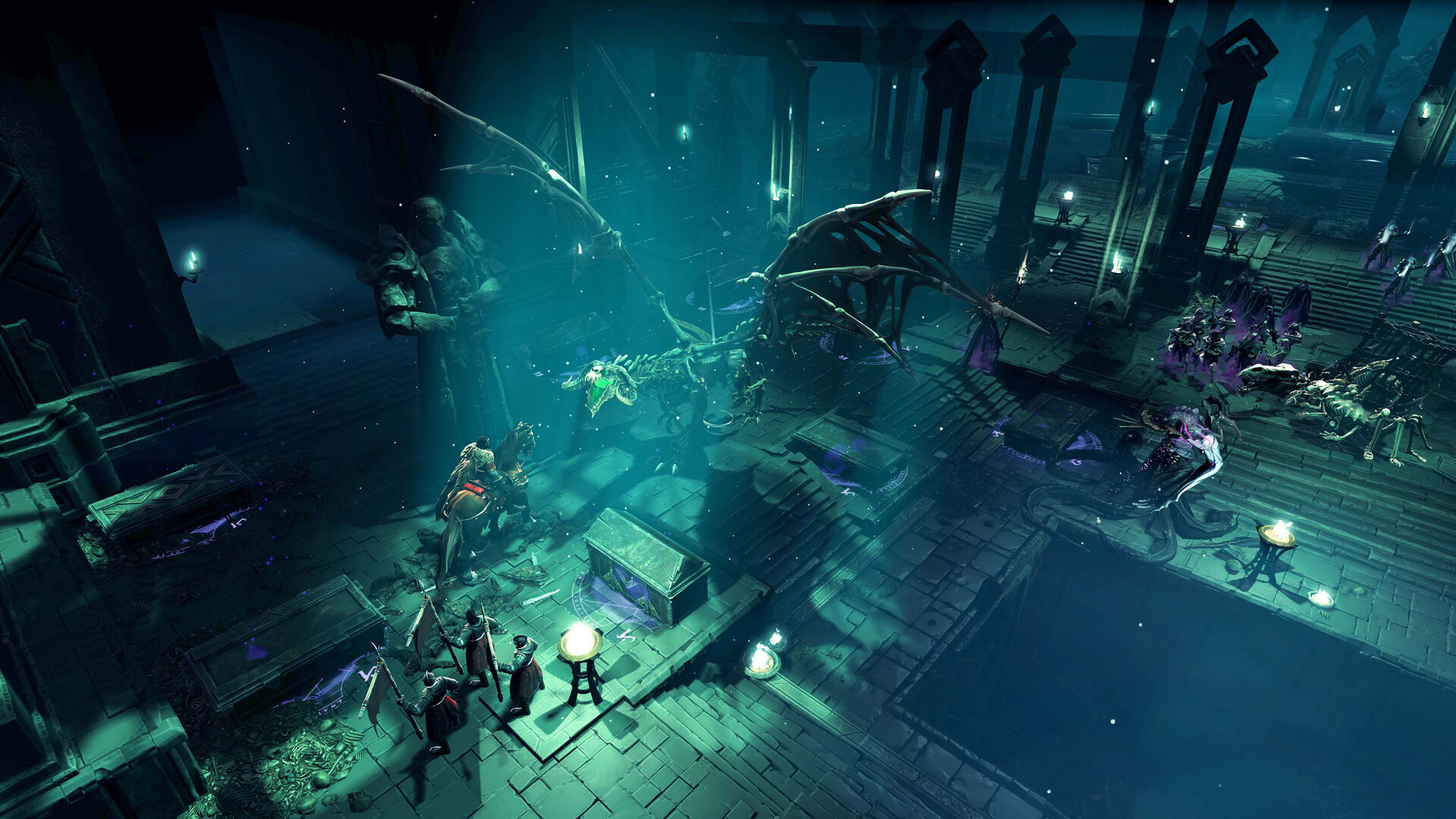
Combat is a full tactical hex battle rather than an auto-resolve comparison, which means the 4X layer and the battle layer are two real games stacked. That is the series' identity and it survives intact here — the battles are worth fighting rather than something to click past.
The realm generation deserves a mention too. Each game is a new world with its own traits, and those traits can invert your plans — the Unbound Tomes realm trait removes affinity requirements entirely, which turns the game's central constraint off and makes for an interesting, different match.
Where it falls down
The criticism is legibility, and it is specific.
The rules that decide whether your faction works are not shown where you build it. Tier III tomes require 3 points in their affinity, tier IV requires 6, tier V requires 8. Your six starting affinity points come from your culture (1 or 2) and your two society traits (2 each). So a player who picks a culture for its units, one society trait for its economy and another for its flavour will scatter those points across three affinities and be locked out of tier III in all of them — and nothing in the creator warns them.
That player will have a perfectly pleasant forty turns and then notice the AI fielding things they cannot research. It reads as difficulty. It is actually a build error made an hour earlier with no information.
The second issue is the DLC line, and it is a Paradox problem more than a Triumph one. The base game's six cultures are coherent and sufficient. But five more cultures have arrived since, and Architect — the only culture whose affinity points go wherever you choose — is among them. Putting the most mechanically flexible option behind a purchase is not a great look in a game whose headline feature is build freedom.
A smaller complaint: the game is generous with systems and thin on telling you which ones are load-bearing. Alignment, Devotion, Imperium, stability, Knowledge, Mana, casting points and affinity are all tracked simultaneously, and only a couple of them will decide your game.
Where it stands
| Aspect | Where it is |
|---|---|
| Release | 2 May 2023 |
| Developer and publisher | Triumph Studios, published by Paradox Interactive |
| Steam reception | Around 81 percent positive from roughly 23,000 reviews |
| Content | 11 cultures (6 in the base game), 6 affinities, five tiers of tomes, tactical hex combat, generated realms |
| Localisation | Interface in Japanese, Russian, Simplified Chinese, Korean, French, German, Spanish and Polish. Full audio in English only |
How it compares
| Against | Age of Wonders 4 is | Which suits you if |
|---|---|---|
| Civilization | Asymmetric by your design rather than the designer's, and it actually plays out its battles | You want the faction to be yours, and you like tactical combat |
| Heroes of Might and Magic | Larger in scope, with a real empire layer above the armies | You liked the battles and wanted a strategic game around them |
| Endless Legend | Warmer and more customisable, less strange. Endless Legend's factions are more distinctive; yours here are more yours | You would rather build a faction than inhabit one |
| Songs of Conquest | Much bigger and slower. Songs of Conquest is the tighter, more focused game | You want a full campaign-length 4X rather than a sharp several-hour match |
Who should buy it
| Buy it if | Skip it if |
|---|---|
| You want to design the faction, not just play one | You want a curated, hand-balanced roster of leaders |
| You enjoy tactical battles and do not want to auto-resolve them | You find tactical layers a chore on top of a 4X |
| You are happy to read a guide to understand the affinity gates | You expect the build screen to tell you what makes a build good |
| You play in Japanese, Russian, Chinese or Korean and can do without voice acting | You need full localisation including audio |
Verdict
Age of Wonders 4 is the best fantasy 4X available and a slightly frustrating teacher. The faction creator delivers on a promise the genre has been making for twenty years, the tome system gives it real depth, and the tactical battles mean the strategy layer resolves into something you actually play.
What holds it back is not the design but the explanation of it. The affinity gates are an elegant constraint — one tier V per game is a genuinely good rule — and they are invisible at the exact moment you are committing to them. Combined with a DLC line that has put the most flexible culture behind a purchase, the game asks more goodwill of a new player than it needs to.
Buy it for the creator. Read the affinity rules before you build your first faction, and the first game will go considerably better than it otherwise would.
Start with the beginner guide for faction creation in the right order, the culture tier list for which culture spends its points best, the tome guide for the gates and the research cost curve, and the build guide for three complete factions you can copy.
For the same fantasy strategy space answered differently: the Dominions 6 review covers the game that goes far deeper into nations and magic and asks far more of you to get there, and the Songs of Conquest review covers the lighter, faster answer with a tactical layer of its own.