The verdict up front
Dominions 6 is the deepest fantasy strategy game ever made, and it wears its ugliness like a badge of honour. Developed by the two-person studio Illwinter Game Design, it casts you as a Pretender God — a would-be deity competing against other aspiring gods to ascend and become the new Pantokrator, ruler of the world. What makes it extraordinary is the sheer scope of what it simulates: dozens of mythologically inspired nations spread across three distinct ages, each with its own units, priests, mages and sacred troops, all powered by a magic system of staggering breadth, with hundreds upon hundreds of spells, summons and forgeable items. You design your god, spread your religion across the map, research magic, raise and summon armies, and wage war in battles you plan in advance. It holds a Very Positive rating on Steam, and among deep strategy games it stands almost alone.
So is it worth buying? If you love deep strategy, mythology and magic, and especially if you will play against other humans, absolutely — there is nothing else with this much depth, variety and emergent possibility. The honest caveats are severe and unmissable: the presentation is genuinely, famously ugly, the learning curve is brutal, the single-player AI is weak, and it is English only with a mountain of text. But push past all of that, and Dominions 6 offers a strategic playground no other game comes close to matching.
Dominions 6: Rise of the Pantokrator is a turn-based fantasy strategy game from Illwinter Game Design. You play a Pretender God competing to ascend, designing your god and commanding one of dozens of mythological nations across three ages, with a vast magic system and pre-scripted battles. It supports single-player against the AI and asynchronous multiplayer.
What you actually do
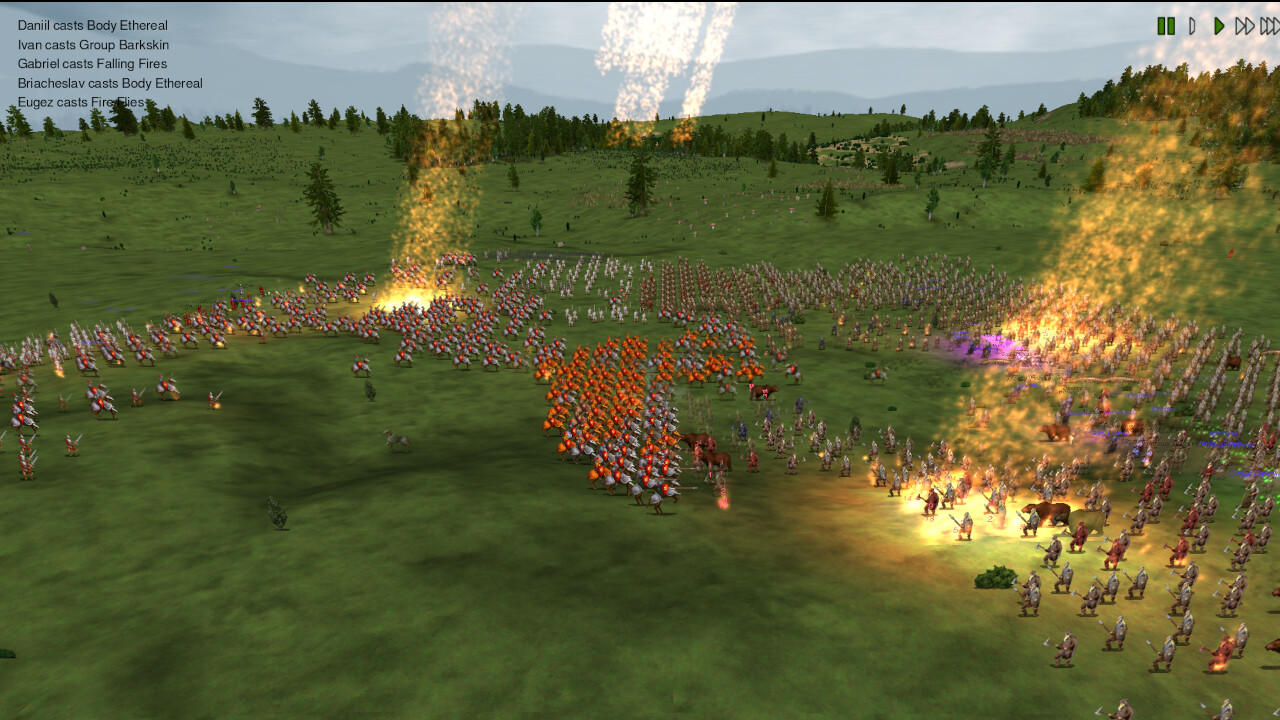
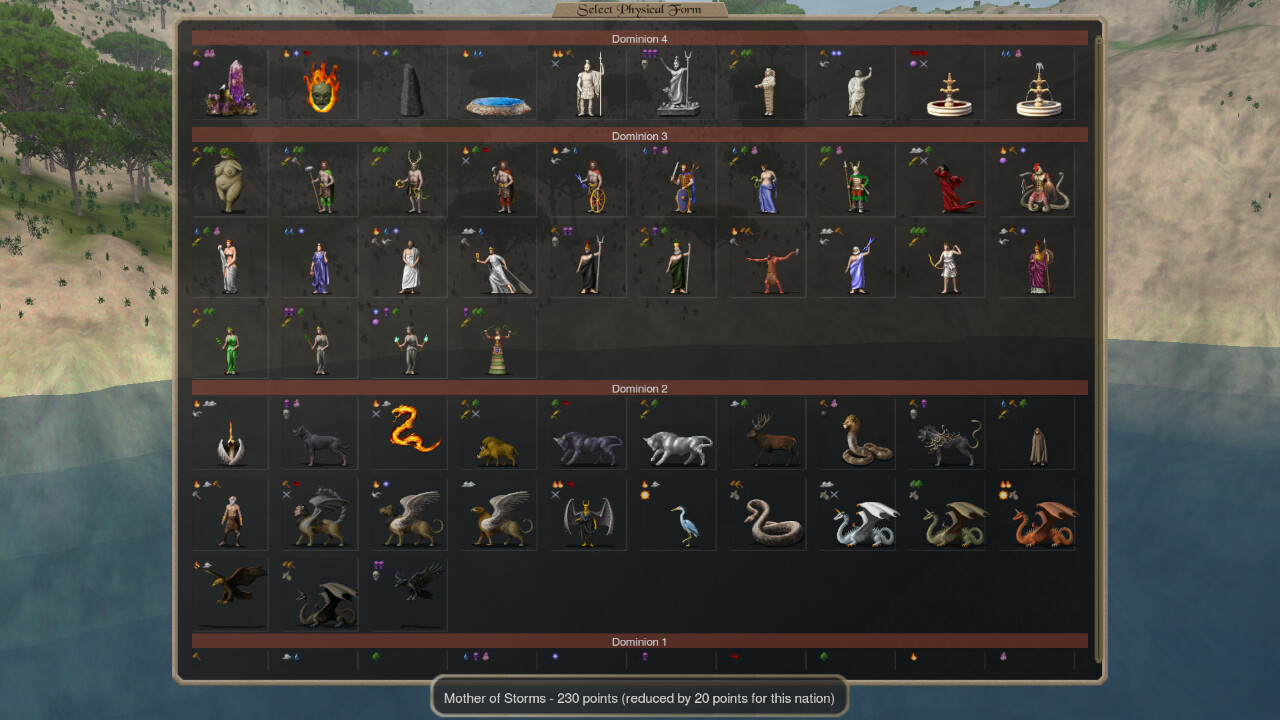
A game of Dominions 6 begins before the map even loads, with the design of your Pretender God — a choice that shapes everything to follow. From there, you guide one of the game's many nations through a turn-based campaign of expansion, magic and war. You send your armies to conquer independent provinces and rival gods' lands, build temples to spread your dominion (your god's religious influence, which radiates across the map and underpins your power), raise forts and laboratories, recruit and summon troops, and set your mages researching the deep wells of magic. When armies meet, you do not fight in real time; instead you script your units and mages in advance — formations, targets, the spells each caster will attempt — and watch the battle resolve from those plans. Victory typically comes from claiming magical Thrones of Ascension scattered across the world, accumulating the ascension points that crown you the new Pantokrator.
The result is a game of immense strategic breadth, where your god, your nation, your magic and your scripting all interlock into a campaign unlike any other. Few games give you this many tools or this much freedom to combine them.
New to the game? Start with a beginner-friendly nation and a simple, awake Pretender built to help you expand early, and lean on the manual and community guides. Our Dominions 6 beginner guide walks you through your first game step by step.
Why the depth and variety carry it
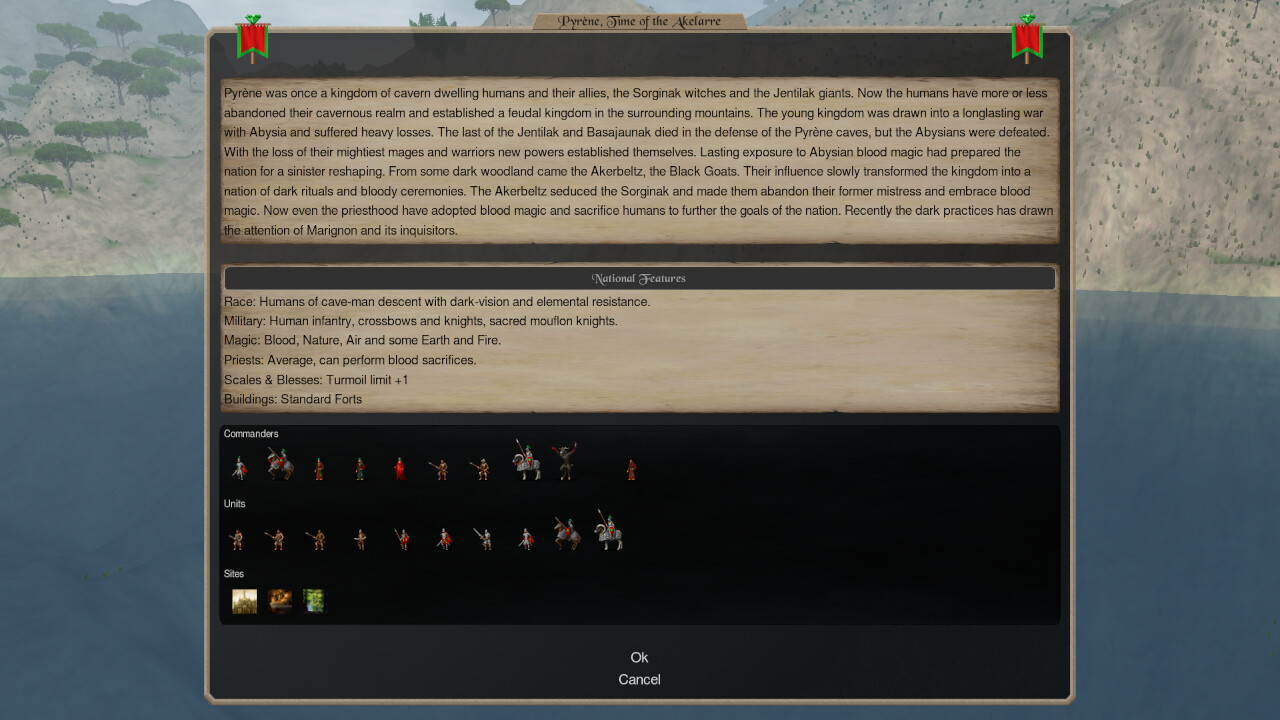
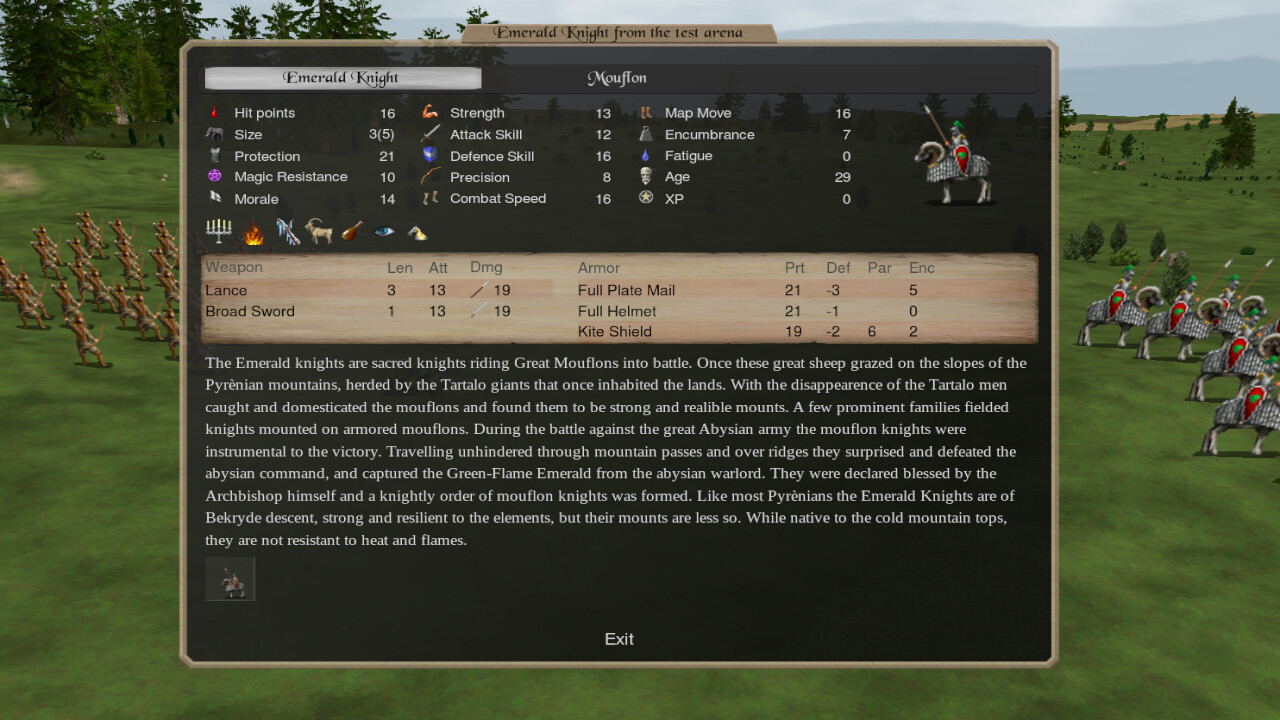
Plenty of strategy games offer factions and tech trees; what sets Dominions 6 apart is the sheer scale and interlocking depth of its systems. Start with the nations: there are dozens of them, drawn from world mythologies and spread across an Early, Middle and Late Age, each with distinct units, sacreds, priests and mages, so the variety of ways to play is enormous before you even touch the magic. Then there is the magic itself — nine arcane paths plus Holy, a vast library of research spells, battlefield magic, strategic rituals, summons that call forth everything from elementals to demons, and craftable magic items — which gives the game a depth of options that borders on the absurd in the best way. And tying it together is the Pretender God system, which lets you shape your nation's blessings, magic and dominion from the very first turn. Our pretender guide and magic guide go deep on both.
The payoff of all this depth is emergent strategy. Because there are so many nations, spells, units and combinations, no two games play the same, and the strategic space is effectively bottomless — there is always a new nation to learn, a new magic combination to try, a new way to build your god. This is why the game inspires such devotion despite its rough edges: for the player willing to learn it, the depth is simply unmatched. Our strategies tier list maps out the main ways to win.
Pros
- +Unmatched depth, with dozens of nations and a vast magic and unit library.
- +The Pretender God system gives huge strategic freedom from turn one.
- +Outstanding, endlessly replayable multiplayer against human opponents.
- +Exceptional value and depth for a niche, dedicated strategy game.
Cons
- −Famously ugly, dated presentation and a dense, unintuitive interface.
- −A brutal learning curve with an enormous number of systems.
- −Weak single-player AI that pushes serious play toward multiplayer.
- −English only and extremely text-heavy.
Multiplayer is its true home
It is worth being clear about where Dominions 6 truly shines: against other people. The single-player game is a fine place to learn and experiment, but the AI is weak — it does not design clever gods, script battles well, or pose a real strategic threat to an experienced player — so the game's depth is wasted on it. Its real home is multiplayer, played asynchronously through the long-running community tools where you submit your turn and the game resolves once everyone has, letting big games of many players unfold over days and weeks. Against human opponents, the whole game comes alive: the bluffing over dominion, the arms races in magic, the alliances and betrayals, the carefully prepared battle scripts meeting an enemy's, all become a deep and thrilling contest. The community is small but dedicated, and it is where the game has lived for decades across its many versions.
So if you are drawn to Dominions 6, know that buying it with the intention of eventually playing other humans is how you unlock its full value. Solo play teaches you the systems; multiplayer is where they sing.
The honest weaknesses
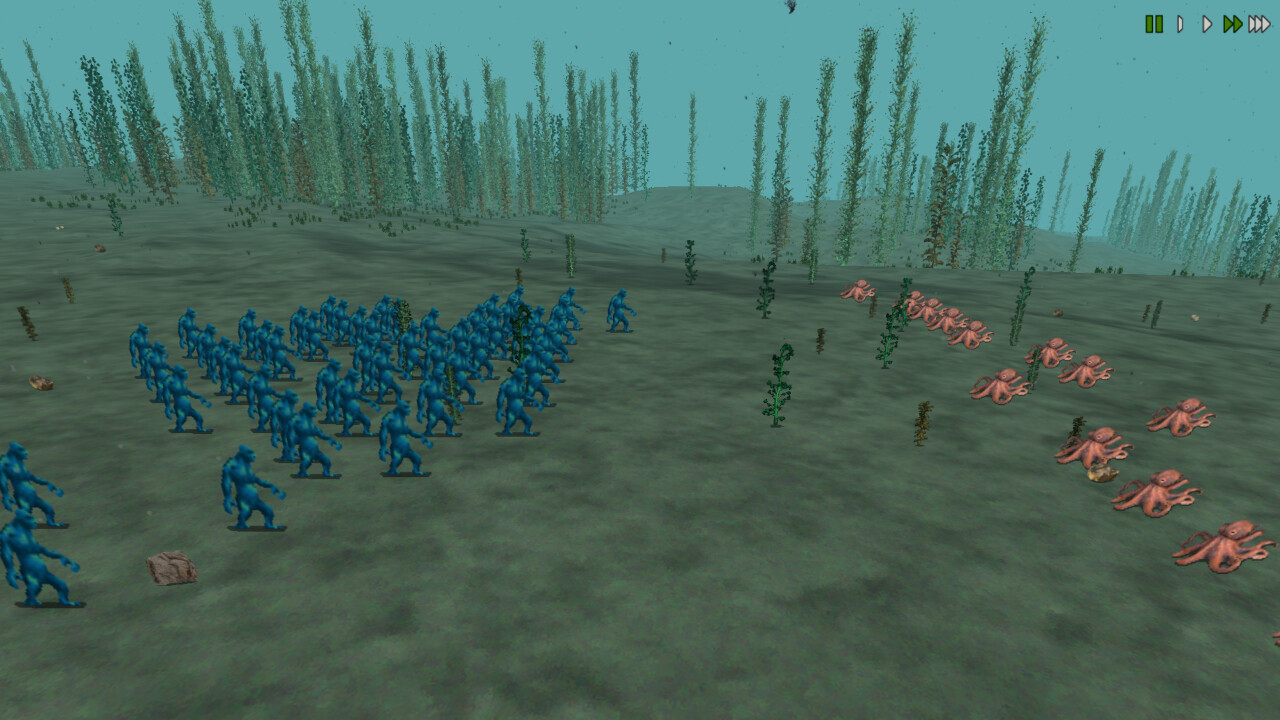
Now the part you cannot ignore. Dominions 6 is, by any normal standard, ugly — its 2D sprite graphics and spartan interface look like a relic from decades past, and there is no disguising it, so anyone who needs a game to look good will bounce off immediately. The interface is not just dated but dense and unintuitive, piling complexity on top of complexity. The learning curve is genuinely brutal: the number of nations, spells, units, items and systems is overwhelming, and there is little hand-holding, so expect to invest serious time and read a lot before you are competent. The single-player AI is weak, as noted, which is a real limitation if you have no interest in multiplayer. And it is English only and extraordinarily text-heavy, a significant barrier for non-English players.
None of this undermines the brilliance of the design, but it is honest to say Dominions 6 asks an enormous amount of you and gives nothing away for free. It rewards patience, curiosity and a love of systems more richly than almost any game, and frustrates anyone wanting polish, ease or a strong solo opponent.
Buy Dominions 6 for its depth, variety and multiplayer, not for graphics, accessibility or a clever solo AI. If you need a game that looks good, teaches you gently, or challenges you alone, weigh that carefully. If the deepest fantasy strategy game ever made excites you — and you will eventually play other humans — nothing else comes close.
Who should buy it
If you love deep strategy, mythology and magic, and you are willing to look past graphics for unrivalled depth, Dominions 6 is essential — a one-of-a-kind game with more nations, spells and strategic possibility than anything else, and a multiplayer scene that has kept players hooked for decades. Hardcore strategy and systems fans, especially those who relish playing against other humans, will find more to sink into here than almost anywhere, and at its price, with effectively limitless replayability, the value is exceptional. To get past the brutal start, read our beginner guide and pretender guide, then study the magic guide and strategies tier list.
Who should pass? Anyone who needs polish, a gentle on-ramp, a strong single-player AI, or a visually appealing game, and anyone with no interest in eventually playing other humans. Be honest about that, because Dominions 6 is uncompromising. For the players it suits — deep-strategy devotees who love magic and mythology — it is the richest fantasy strategy game ever made, with the loud, honest asterisks that it is ugly, brutally complex, weak against the AI, and English only.
If the depth appeals but the wall does not, the Age of Wonders 4 review covers the fantasy 4X that also lets you design your own faction, at a fraction of the complexity and with a tactical battle layer you actually play.
Same developer, far smaller doorway: Conquest of Elysium 5 is Illwinter's other game, a roguelike-flavoured fantasy strategy that finishes in an evening instead of a month. It shares the same appetite for strange magic and obscure units and asks almost none of the commitment, which makes it the honest first step if Dominions looks like too much.