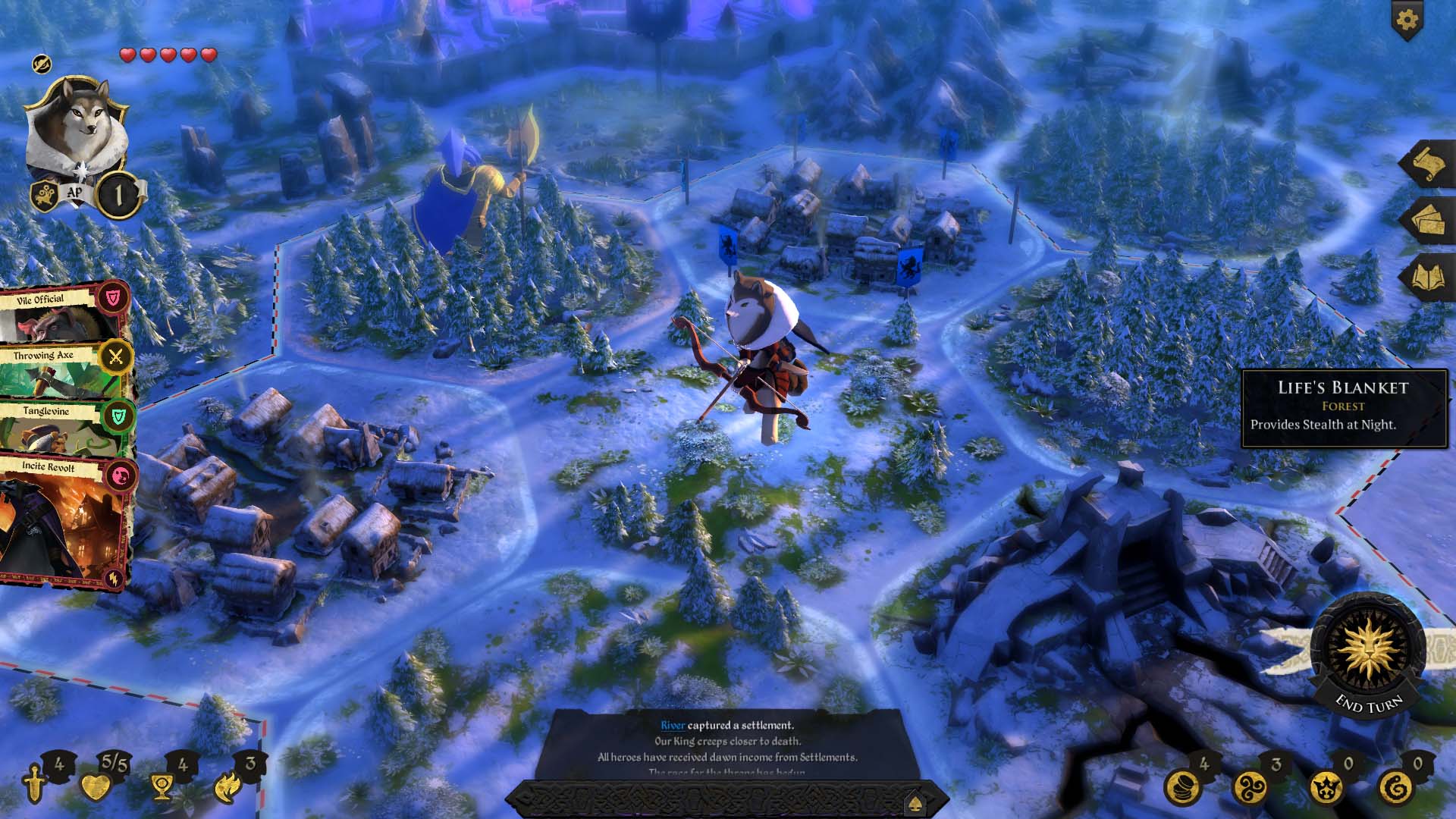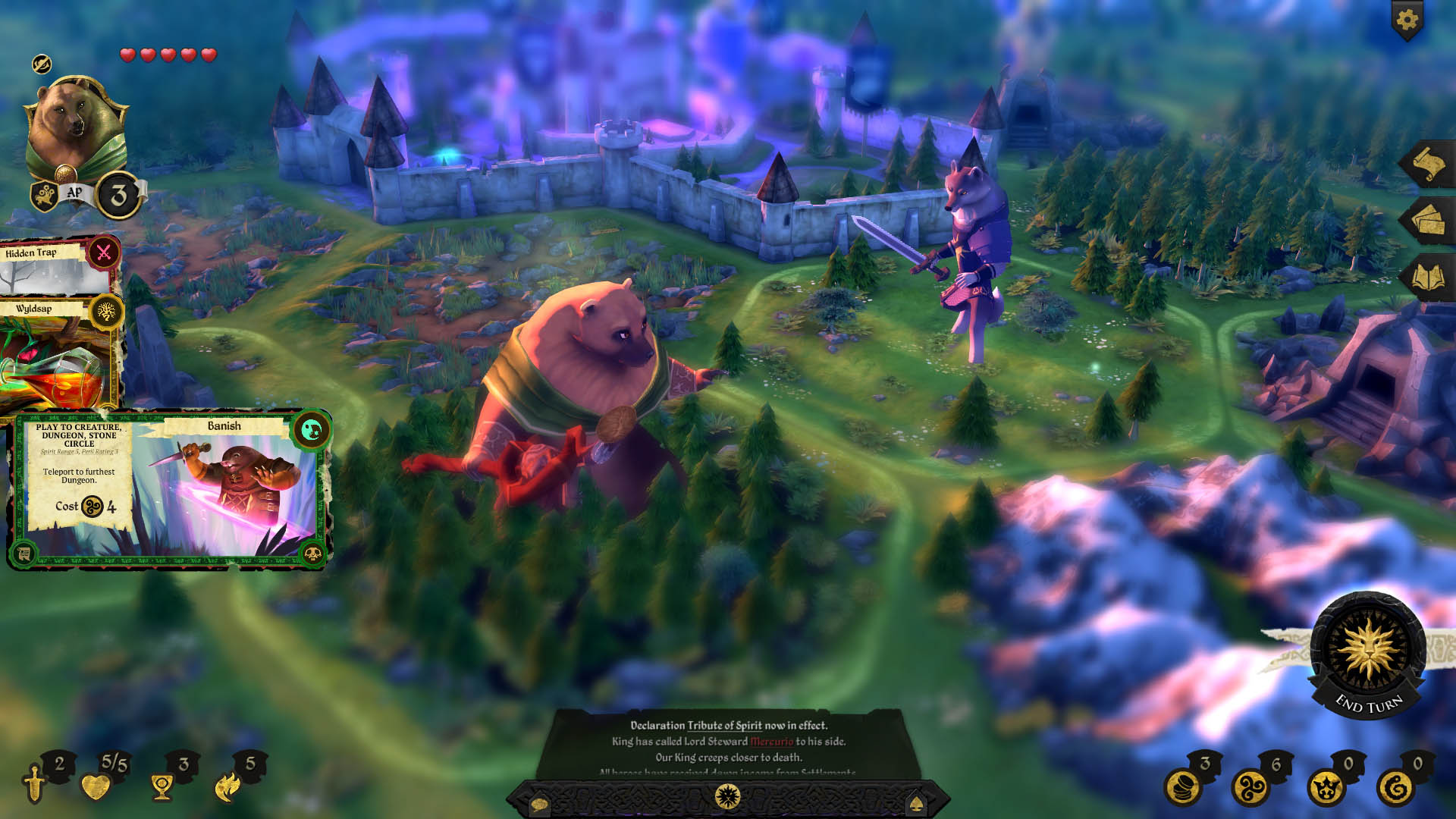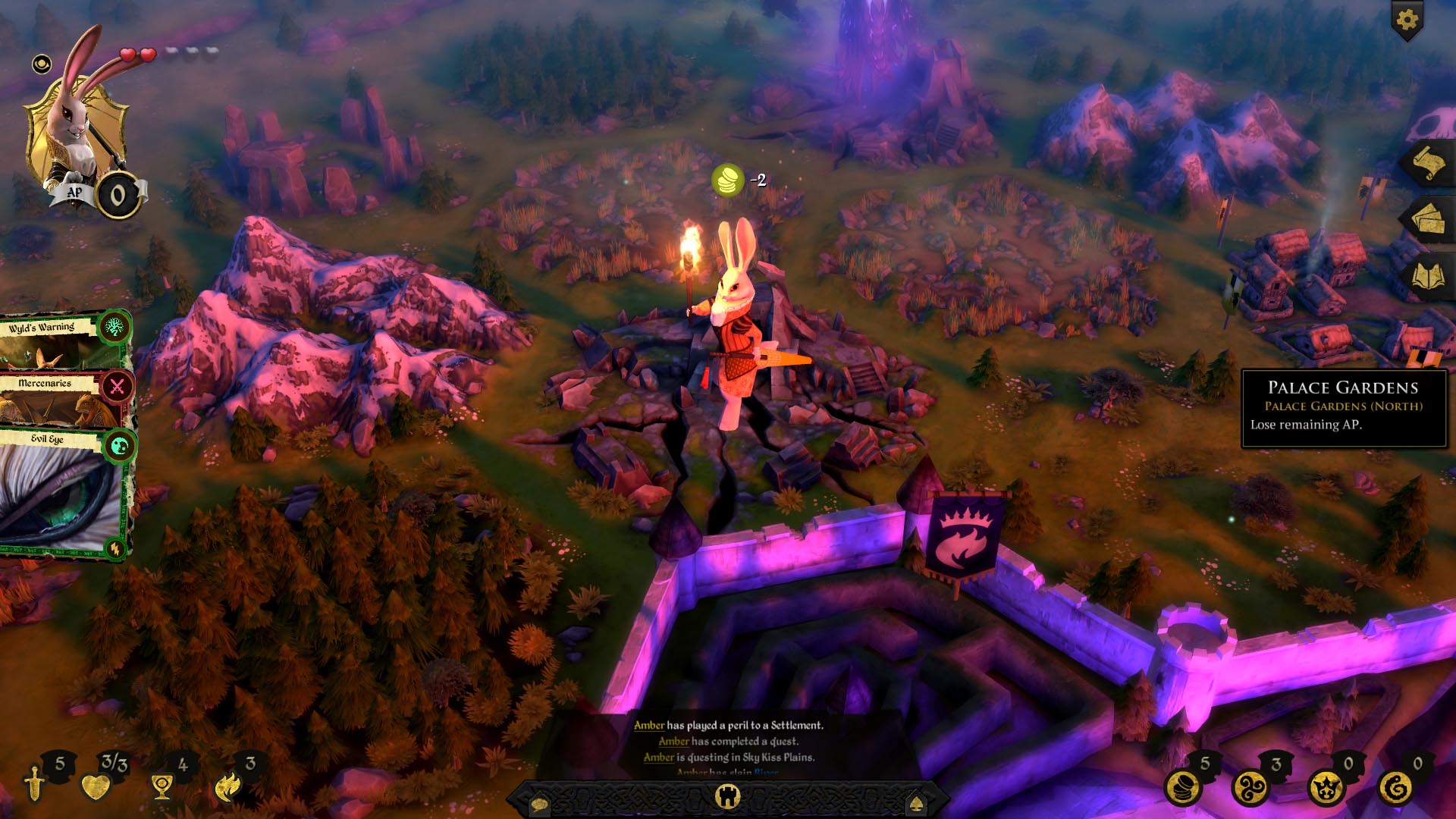
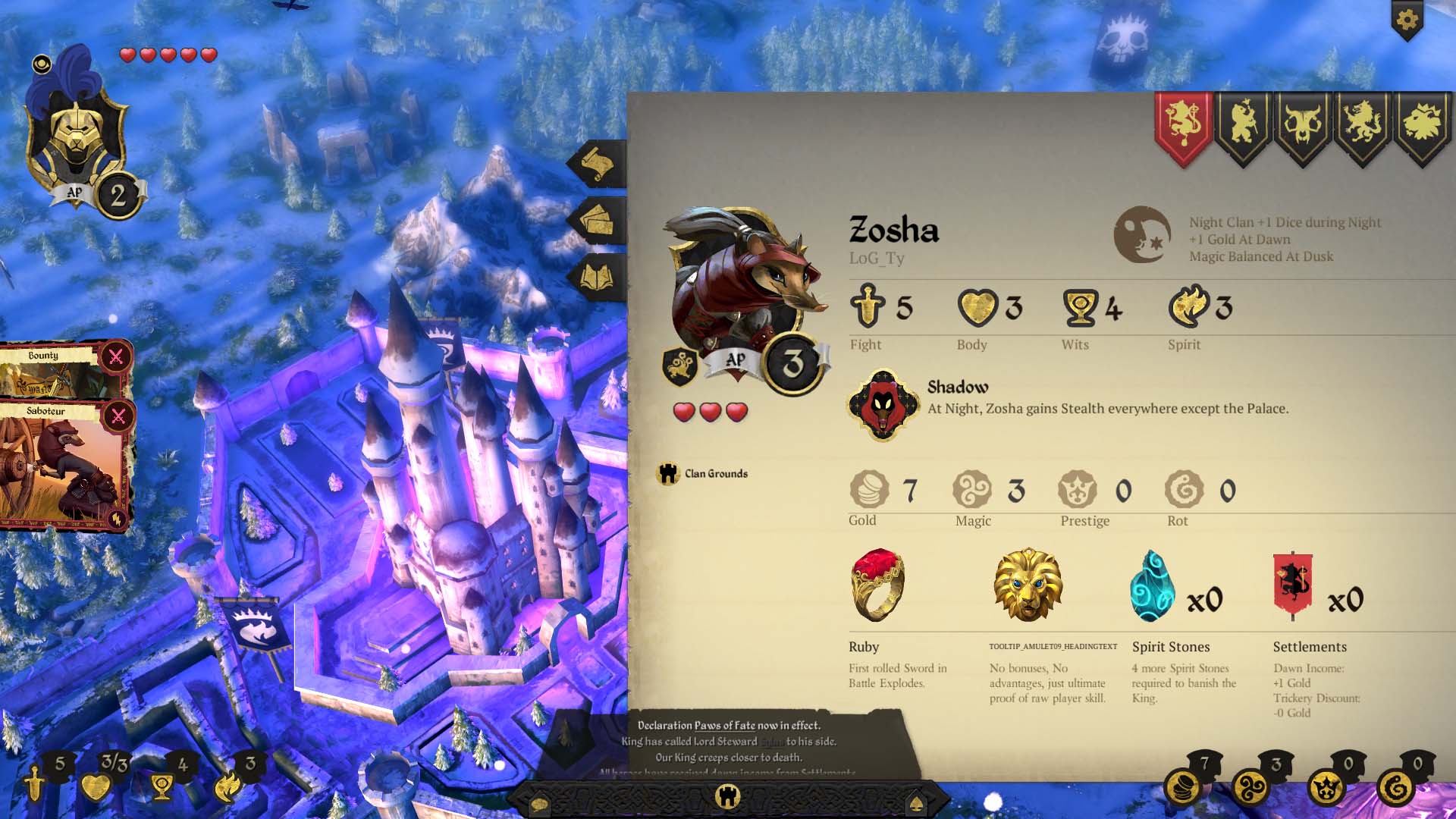
Armello puts four victory conditions on the table and presents them as four equal routes. Kingslayer, Prestige, Spirit Stone, Rot. Pick one, build toward it, race the other three players.
That framing is wrong, and the game has a rule that says so.
Three of the four require you to reach the King and do something. Prestige requires you to be ahead when somebody else fails.
What each one actually asks
| Victory | What it requires | What it costs | When it fires |
|---|---|---|---|
| **Kingslayer** | Kill the King in battle **and survive** | Attacking the King strips almost all your Prestige | The moment you win that fight |
| **Prestige** | Be the Prestige leader | Nothing. It is a standing position | When the King dies of the Rot, **or** when a rival kills him and dies too |
| **Spirit Stone** | Collect 4 Spirit Stones, reach the palace | No battle at all — the King is banished | The moment you arrive holding four |
| **Rot** | Slay the King in battle with **your Rot higher than his** | Corruption, which inverts your dice and paints a target on you | The moment you win that fight |
Read the Prestige row again. It has no cost and two triggers, and neither trigger requires you to go anywhere.
The rule everything hangs on
Attacking the King strips almost all of your Prestige.
That single line converts Armello from a race into a game of nerve. Before it, going for the King looks like the aggressive-but-valid option. After it, committing to Kingslayer means cashing in your claim on the Prestige ending in exchange for one battle.
And the payoff is not even clean. If you kill the King and die in the same fight, you do not win — the Prestige leader does. You spent your Prestige, you reached the palace, you won the fight, and you handed the game to the player who never left the forest.
This is why the board lies. The hero visibly closing on the palace looks like the threat, and the hero quietly farming quests looks passive. In practice the second one has a claim on two of the four endings and the first one has spent theirs.
Four stones is the strongest and most fragile position
A Spirit Stone victory skips combat entirely: arrive at the palace with four stones and the King is banished. No dice, no Prestige cost, no chance of mutual death.
The counter is not a better fight, it is Rot.
-
1
Corrupt the holder
A Rot card like Plague applied to a hero carrying four Spirit Stones forces the stones to be spent cleansing the corruption. The hero dies and loses all Rot. Four turns of collecting are removed by one card.
-
2
Or simply deny the palace
Killing them works, and so does displacement — a card like Banish moves them off their approach without a fight.
-
3
Which means stones are a race, not a plan
The moment your fourth stone is visible you are the table's shared problem, and the cheapest answer to you costs one card. Collect fast and arrive fast, or collect three and wait.
Rot changes the dice, not just the risk
A Rot victory needs your Rot above the King's and a won battle, which makes it the narrowest of the four. What people miss is that corruption is not only a liability.
For a corrupted character, Worm and Wyld symbols invert. Normally Worm always misses and Wyld always explodes into a hit plus a bonus die. Corrupted, Worm explodes and Wyld misses. Your dice do not get worse — they get different, and every card and item that assumed the normal reading now reads backwards.
That is why Rot is a commitment rather than a tactic. Halfway corrupted is the worst place to be.
How to actually play the four
| Situation | Play for | Reasoning |
|---|---|---|
| Early game, no clear leader | **Prestige** | It costs nothing to hold and it keeps both passive endings live while you learn the table |
| You are Prestige leader and the King is failing | **Prestige** | Do nothing dramatic. The King dying of the Rot is a win you already own |
| A rival is one turn from the palace | **Disrupt, do not race** | One Rot card on a four-stone hero kills them. Cheaper than beating them there |
| You are far behind on Prestige | **Kingslayer or Rot** | You have no claim to protect, so the Prestige cost of attacking is not a cost for you |
| You drew stones early and cheaply | **Spirit Stone** | It skips the battle entirely, which removes the mutual-death outcome that hands the win to someone else |
The clearest read on any table: who loses the least by attacking the King? That player is the real Kingslayer threat, regardless of who is physically closest to the palace. The Prestige leader almost never is.
Common mistakes
- Treating the four as equals. One is passive and collects on the others' failure.
- Charging the King while leading Prestige. You are spending the claim you already had.
- Racing a stone collector to the palace. Corrupt them instead. One card beats four turns.
- Half-corrupting. Rot inverts your dice; being partway there gets the drawbacks of both readings.
- Forgetting mutual death. Kill the King and fall, and the quiet player wins.
Who is best at each of these routes is in the hero tier list, and why the fights themselves are decided by your hand rather than your dice is in the combat guide. New players should start with the beginner guide, and the honest review covers whether the whole thing holds together.