
Building an empire that lasts
Once you understand that Field of Glory: Empires is won on legacy rather than conquest, the game becomes a question of how to build a civilization that leaves a lasting mark — and that comes down to managing its core systems well. Four things matter most: developing your regions with the right buildings, growing an economy and culture that feed your legacy, and managing the decadence that growth inevitably brings. These systems interlock: regions and buildings drive your economy and culture, economy and culture feed your legacy, and decadence pushes back against unchecked growth, giving the whole game its rise-and-fall character. Master this loop and your empire flourishes and accumulates legacy; neglect it and you get a sprawling, decadent realm that declines before it achieves much. This guide goes deep on building an empire that lasts — and on accepting that even its eventual decline can be part of a winning story.
The mindset to hold is that you are authoring the history of a civilization, not just expanding a blob on the map. Every building, every region developed, every point of decadence managed is part of the legacy you are building across the centuries.
Legacy is banked permanently. Because the legacy you earn stays even if your empire later declines, your aim is to maximise the legacy you accumulate over your whole history — through a strong rise and a flourishing golden age — rather than to be the largest empire at the final turn.
Regions, buildings and your economy
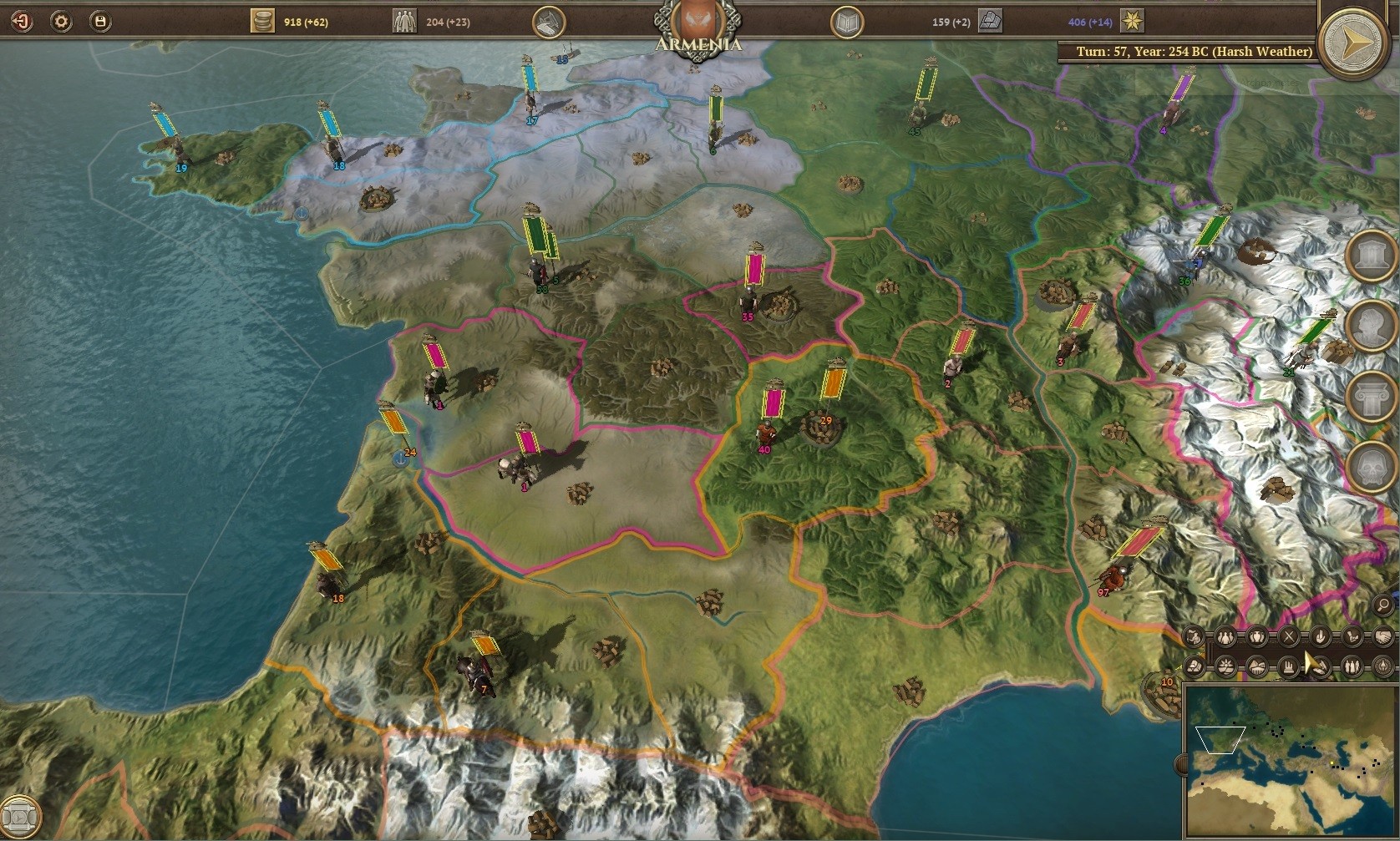
The foundation of your empire is its regions and how you develop them. Your civilization is made of regions, and each one you improve by constructing buildings that grow its output — money, food, population, culture, military capacity and more. This regional development is the heart of the game: you decide which buildings to build in each region to shape what it produces, gradually turning raw territory into a productive, cultured part of your empire. The crucial principle is that well-developed regions are worth far more than a large number of neglected ones, so a compact, thoroughly built-up empire generates more economy, culture and legacy than a sprawl you have not invested in. Focus on developing what you hold before reaching for more.
Your economy flows directly from this. The resources your regions and buildings produce — money, food, manpower and other outputs — fund everything you do: more buildings, armies, growth and culture. A strong economy therefore comes from steadily developing productive regions and keeping them stable and prosperous, which lets you build more and grow your legacy in turn. The economic loop rewards patience and sound management: invest in your regions, keep them healthy, and the resources to keep growing follow. Over-extend into territory you cannot develop or stabilise, and your economy strains while your decadence climbs.
Prioritise the buildings that match your strategy and your region's strengths. A region rich in agriculture wants food and economic buildings; a cultured city wants buildings that boost culture and legacy. Tailoring each region's development to its strengths builds a far more efficient and prosperous empire than building the same thing everywhere.
Culture, legacy and decadence
On top of the economy sit the two systems that define the game: culture-and-legacy on one side, and decadence on the other. Culture is a major driver of both a strong empire and a winning legacy, advanced through cultural and civic buildings and the development of your regions. Raising your civilization's culture feeds your legacy directly and strengthens your empire beyond mere wealth or armies, so a focus on culture — alongside economy and infrastructure — is central to building a high-legacy civilization. Legacy itself, the score that wins the game, accumulates from all of this: your buildings, your prosperity, your cultural achievements and your great deeds, banked permanently as the lasting impact of your people. The art of the game is turning a well-run economy and developed regions into a steadily growing legacy.
Decadence is the counterweight that keeps it all honest. As your empire grows large and rich, decadence rises, representing the historical tendency of great empires to decline into instability and decay. Left unmanaged, it brings unrest and weakens your empire, so a core part of building a lasting civilization is managing decadence — not over-expanding faster than you can stabilise, and using the buildings, decisions and policies that help offset it. You cannot always eliminate decadence, but keeping it in check lets your empire stay stable and prosperous longer, banking more legacy before any decline sets in. This is the system that gives Empires its distinctive soul, and managing it well is what separates a flourishing, long-lived civilization from one that collapses under its own weight.
| System | What it does | How to manage it |
|---|---|---|
| Regions & buildings | Produce your economy and culture | Develop deeply, tailor to strengths |
| Economy | Funds buildings, armies and growth | Steady, sustainable development |
| Culture & legacy | Build the score that wins | Invest in culture and great deeds |
| Decadence | Pushes empires toward decline | Grow sustainably, offset with buildings |
Embracing the rise and fall
The final piece of building an empire in Field of Glory: Empires is a shift in mindset: plan for the whole arc of a civilization, not just its peak. Because decadence makes decline a real and even natural part of the game, and because the legacy you bank is kept permanently, the winning approach is to maximise the legacy you accumulate across your entire history — a strong rise, a flourishing golden age, and a managed decline — rather than to cling to an ever-expanding empire that will eventually destabilise. This is liberating: you do not have to "win" by being the biggest power forever; you win by building a civilization whose legacy endures. A well-managed empire that rises gloriously, achieves a great deal, and then gracefully declines can out-score a reckless conqueror who over-expands and collapses early.
Put it all together and building an empire becomes a coherent craft: develop your regions with the right buildings, grow a steady economy, invest in culture to feed your legacy, manage decadence so your growth stays sustainable, and think across the whole life of your civilization. Do that, and you build the kind of lasting, high-legacy empire the game is designed to reward. To handle the wars that punctuate your empire's history, see our war guide; to choose a nation that suits your style, the nations tier list; and if you are just starting, the beginner guide covers the basics.
Do not chase endless expansion. The classic mistake is to keep conquering and growing without developing your regions or managing decadence, which produces a large, unstable empire that declines before it banks much legacy. Grow sustainably, develop what you hold, and keep decadence in check — a well-managed empire builds more lasting legacy than a sprawling, decadent one.