
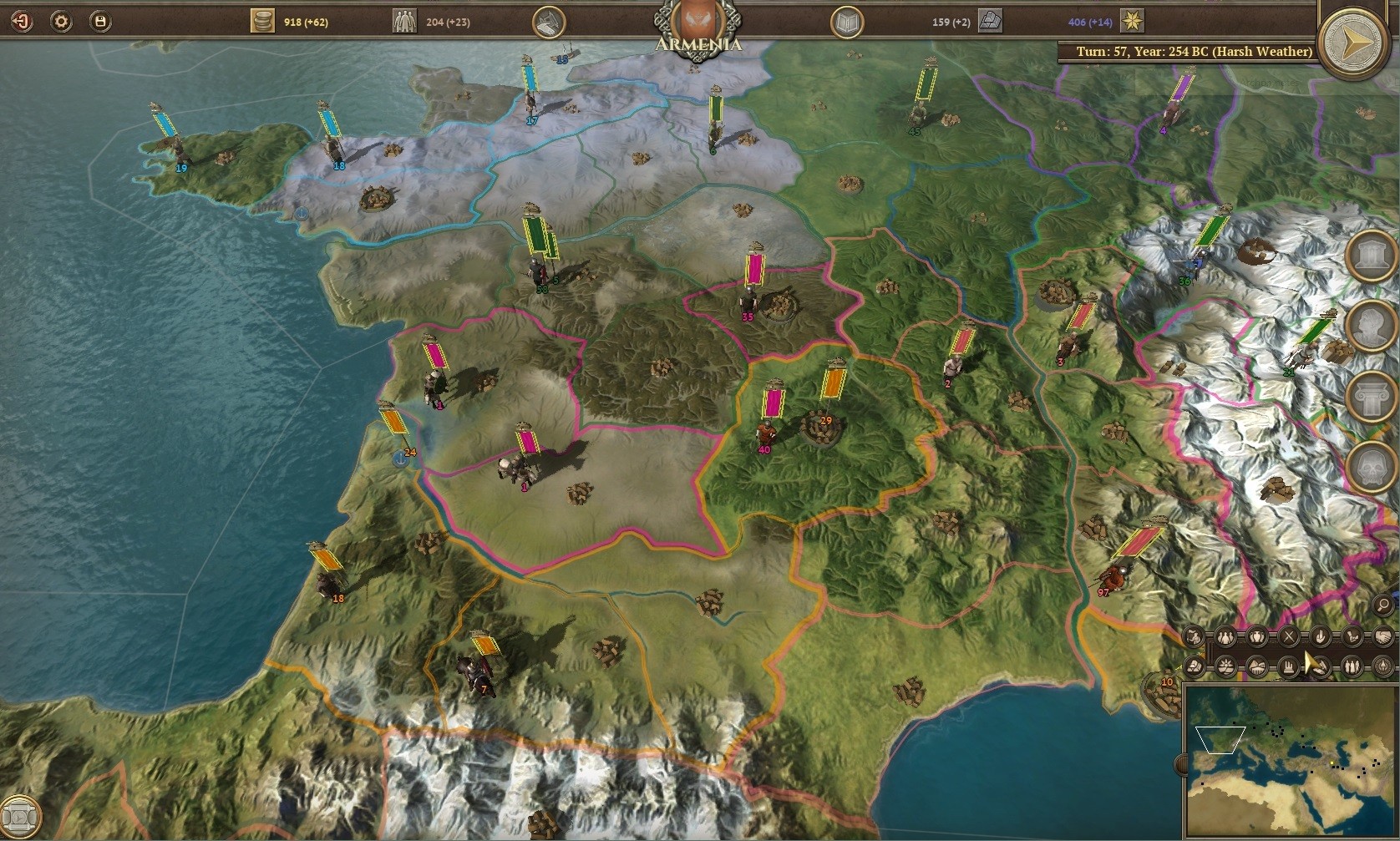
War serves the empire
War in Field of Glory: Empires is a means, not an end. Because you win on legacy and because expansion raises decadence, fighting for its own sake is a trap — every conquest adds instability and pushes your empire toward decline, so war is best waged with clear purpose: to gain valuable regions, secure your position, remove a threat, or build legacy in ways that outweigh its cost. This is the mindset that separates a successful general in Empires from a reckless one. You raise armies from your empire's manpower and resources, give them leaders, and move them across the strategic map to attack, defend or besiege, fighting battles along the way. But the campaign map is only half of it; the other half is judgement — knowing which wars are worth fighting, and managing the resources, supply and decadence that war consumes. This guide covers both: how to wage war effectively, and how to weigh whether a war is worth it at all.
The thread running through it is purpose. A war that wins you a key region or secures your borders and adds to your legacy is worth its cost; a war of endless, aimless conquest simply piles up decadence and instability for little lasting gain. Fight with intention.
Expansion through war raises decadence. Conquering more territory grows your empire but also feeds the decadence that drags great empires toward decline, so factor that long-term cost into every war. A few well-chosen conquests build a lasting empire; relentless expansion builds a fragile, decadent one.
Armies, leaders and supply
Waging war well starts with your armies and how you handle them. You raise forces from your empire's manpower and economy, so a strong, well-developed empire can field and sustain better armies — another reason the economy underpins everything. Give your armies capable leaders, who improve their effectiveness in battle and on campaign, and keep your forces strong enough for the task without bleeding your empire dry to maintain them. A well-led, appropriately sized army achieves more than a sprawling host you cannot support.
The factor that undoes more campaigns than enemy action is supply and attrition. Moving large armies through hostile, barren or distant territory wears them down steadily, and a force that outruns its supply can wither away before it ever fights a battle. So plan your campaigns with supply in mind: keep your armies within reach of support, avoid stranding them in inhospitable regions, and never assume a large army is safe simply because of its size. Many a promising invasion has collapsed not to the enemy but to hunger and exhaustion. Respecting supply and attrition — advancing at a sustainable pace, securing your lines, and not overreaching — is often the real difference between a successful campaign and a costly disaster.
Do not let an army outrun its supply. An advance deep into enemy or barren territory can melt your army through attrition before a single battle, so secure your supply, advance deliberately, and pull back armies that are wasting away rather than feeding them into a region that is destroying them.
Battles and Field of Glory II integration
When your armies meet the enemy, Field of Glory: Empires gives you two ways to fight. The built-in battle resolver handles engagements abstractly, weighing your forces, leaders and circumstances to produce a result, and it lets you play the entire game without anything else — quick, serviceable, and perfectly adequate for a grand strategy focus. The standout alternative, for owners of the tactical Field of Glory II, is integration: you can export a land battle from Empires to Field of Glory II, fight it as a full tactical engagement with all the depth that game offers, and then return to Empires with the outcome. For players who own both, this transforms the abstract clashes of the campaign into hand-fought tactical battles, a genuinely compelling marriage of strategy and tactics. The integration has limits — naval battles, assaults and multiplayer are not exported, and some strategic factors such as frontage are not carried across — and it is entirely optional, but it is a clever bridge that few strategy series offer.
Which you use depends on what you want. If the grand strategy is your focus, the built-in resolver keeps things moving; if you relish hands-on tactical command, exporting key battles to Field of Glory II turns your most important fights into deep tactical contests. Many players use the resolver for minor clashes and save the export for the battles that matter, getting the best of both.
| Aspect | How to handle it | Why it matters |
|---|---|---|
| Armies & leaders | Raise solid forces, use good leaders | Effectiveness in battle and campaign |
| Supply & attrition | Advance within reach of supply | Outrunning supply ruins armies |
| Built-in battles | Resolve quickly in Empires | Keeps grand strategy flowing |
| Field of Glory II | Export key land battles | Full tactical depth for big fights |
Judging when to fight
The most important war skill in Field of Glory: Empires is not tactics but judgement — knowing when a war is worth fighting at all. Because conquest raises decadence and consumes resources, every war carries a long-term cost beyond the immediate fighting, so the question is always whether the gains outweigh the price. A war that wins you a valuable region, secures a vulnerable border, removes a dangerous rival, or adds meaningfully to your legacy can be well worth its cost in resources and decadence. A war of endless, aimless conquest, by contrast, piles up decadence and instability for territory you may not even be able to develop, weakening your empire's long-term legacy for short-term map-painting. So before you march, ask what the war actually achieves for your civilization's lasting story, and whether that is worth what it will cost.
Bring it together and waging war in Empires becomes a disciplined craft: raise well-led armies your economy can support, respect supply and attrition, fight your battles with the resolver or export the important ones to Field of Glory II, and above all choose your wars for their lasting value rather than their immediate conquest. Wage war this way and it strengthens your empire and your legacy; wage it carelessly and it accelerates your decline. To build the empire that funds and justifies your wars, see our empire guide; to pick a nation suited to your style of play, the nations tier list; and if you are new, start with the beginner guide. For the full tactical experience, the battles can be fought in Field of Glory II.
Do not wage war for its own sake. Endless conquest raises decadence and instability faster than it builds lasting legacy, and an over-expanded empire declines before it achieves much. Fight wars that genuinely serve your empire — key regions, secure borders, real legacy — and make peace when a war's cost outweighs its gains.


