Start here: survival, not speed
HighFleet is famous for punishing newcomers, and the single most useful mindset shift is this: your early goal is not to win quickly, but to survive and learn. The game explains little and forgives less, so your first campaign is really a school. If you focus on a handful of survival habits — guarding your fuel, staying hidden, protecting your flagship, and only fighting on favourable terms — you will last long enough for the deeper systems to make sense. Rush, overextend, or gamble your best ship, and the run can end with brutal suddenness. Patience is not just a virtue here; it is the core skill.
Everything below is aimed at keeping you alive through those crucial first hours. None of it is complicated, but all of it is easy to forget in the tension of the moment, which is exactly when it matters most.
Your first campaign is a learning run. Expect to lose, expect to be confused, and treat every failure as a lesson. Prioritise surviving and understanding the systems over racing to the objective.
Guard your fuel and money
Fuel is the resource that ends more campaigns than enemy fire. It is scarce, it is expensive, and running out strands your fleet with no way to move — a silent, total defeat. So make fuel your first thought before every jump. Open the strategic map, use the ruler tool to measure the distance to your destination, and make sure you can reach a city where you can refuel before you commit. When you find fuel cheap, buy plenty, because prices vary from city to city and you cannot count on the next stop being generous. And remember that big ships are gluttons: the larger your fleet, the faster your fuel drains, so a leaner group travels further on the same tank.
Money matters for the same reason — it buys fuel, repairs, parts and ships. Raiding lightly defended cities and selling captured resources keeps you solvent, but weigh every fight against the fuel and repair costs it incurs. A "victory" that leaves you low on fuel and money, far from a friendly city, can be worse than avoiding the fight entirely.
Before every jump, ask two questions: can I reach a refuel point, and is this route likely to expose me? Use the map's ruler and compass tools to plan distances and mark danger zones. A minute of planning saves a lost campaign.
Stay hidden — the golden rule
If enemies keep finding you, it is almost certainly because you are revealing yourself. The enemy fields ELINT that passively detects any ship broadcasting with active radar, which means leaving your radar on is like waving a flag: within a day or two, a strike group will be hunting you. So keep your radar off by default, and only pulse it briefly when you genuinely need to see what is nearby. Transmitting by radio and lingering too long in or near a city also give away your position, so move deliberately and do not overstay your welcome — a common rule of thumb is to never sit in one place for more than a day or so.
The flip side is that you can turn detection to your advantage. By intercepting and decoding the enemy's own radio chatter, you can locate their forces without exposing yourself, letting you plan routes around their strike groups and pick your moments. Staying dark while reading their signals is the heart of HighFleet's strategic game, and mastering it is what separates a doomed run from a successful hunt.
Protect your flagship at all costs
Your flagship is the enormous cruiser at the heart of your fleet, and it is effectively your life bar for the entire campaign: if it is destroyed, the run is over. That single fact should shape how you use it. Do not treat it as a frontline warship to be thrown into every battle; treat it as a mobile base and command centre. It is immensely powerful, but it is also slow and takes a very long time to repair, so every hit it takes is expensive and every fight it enters is a risk to the whole run. Keep it back, keep it safe, and let it project power from a distance rather than wading into the thick of combat.
The corollary is that your fighting should be done by other, more expendable ships. Which brings us to the last habit.
Never gamble your flagship. Losing it ends the campaign instantly, and it repairs slowly, so damage lingers. Use it as a protected base and let cheaper ships take the risks.
Fight cheap, and only on your terms
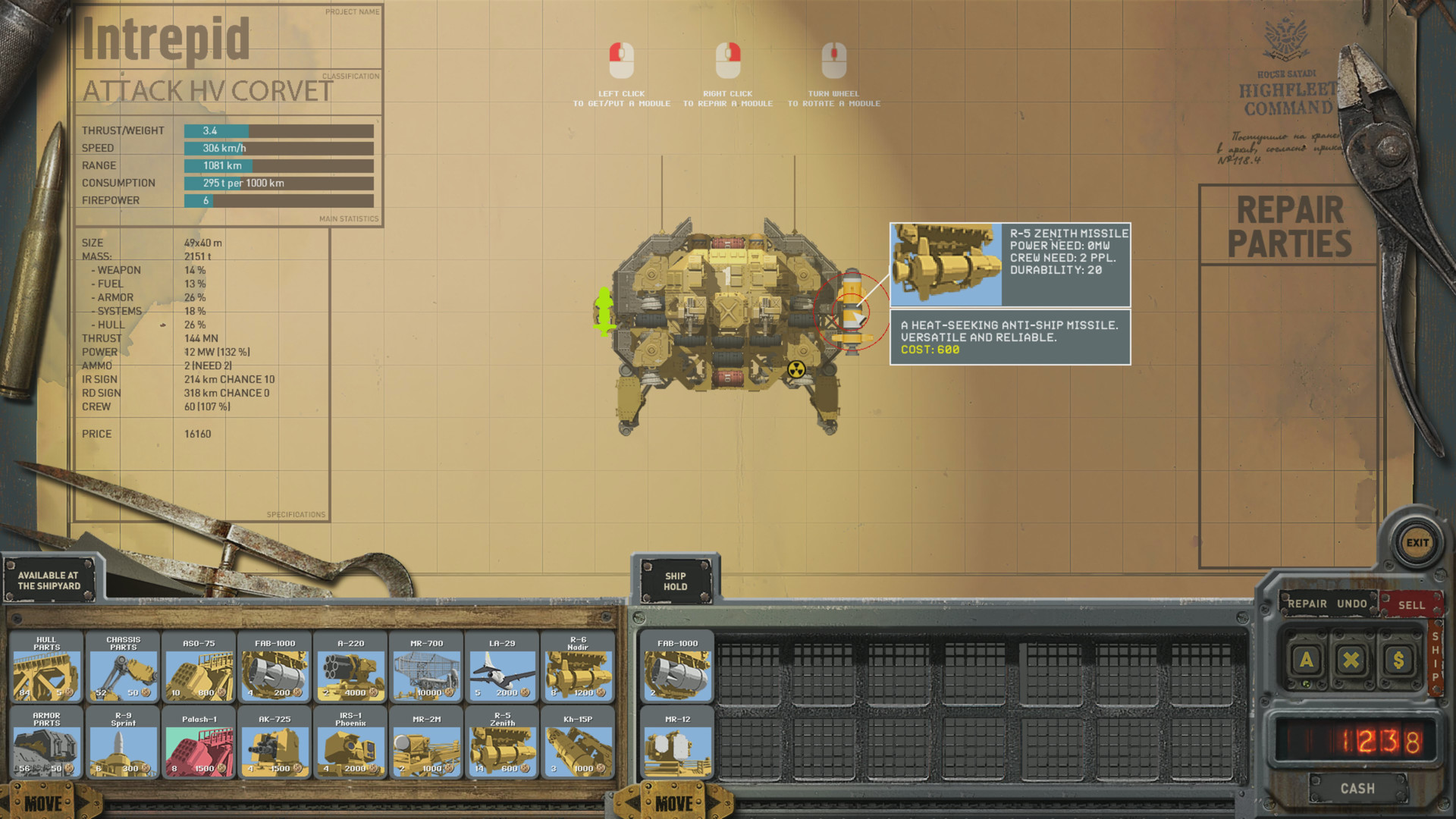
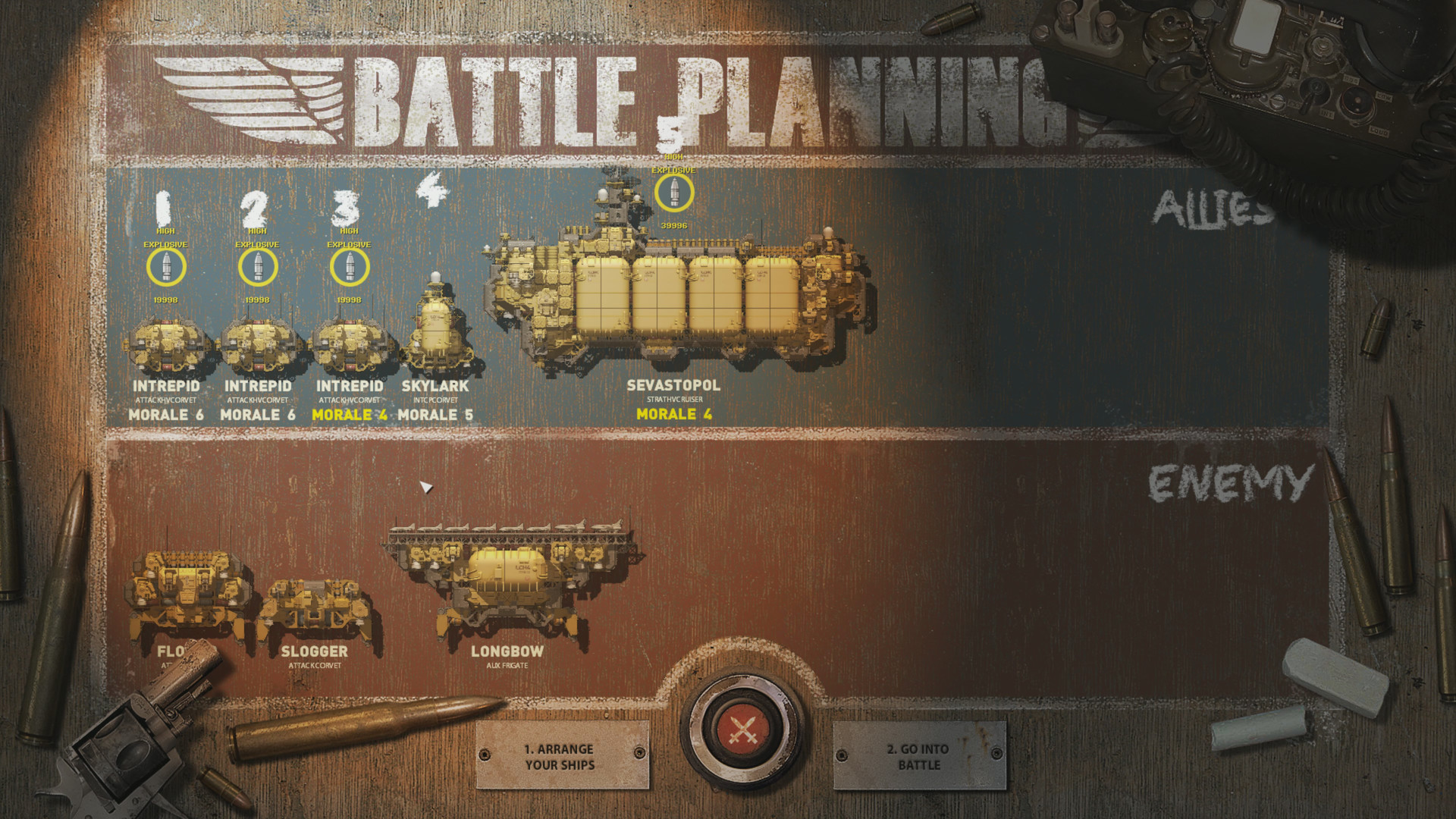
Because your flagship is irreplaceable and repairs are costly, the smart way to fight is with cheap, capable ships you can afford to lose. Small strike craft are not only more disposable but also more fuel-efficient, so a swarm of affordable ships is often more effective — and far safer for your campaign — than committing an expensive hull. Send those cheap ships to hit lightly defended garrisons for resources, use a fast scout to gather information without risk, and hold your flagship in reserve.
Above all, choose your battles. Avoiding a fight is frequently the correct decision: strike groups you cannot beat should be evaded, not engaged, and any battle you do take should be one you can win without crippling losses. In combat, remember that enemy ships have weak points — armor is thickest on top and the sides, so aim for exposed or already-damaged areas — and always be willing to retreat rather than lose valuable ships. A commander who fights only on favourable terms will outlast one who brawls at every opportunity. Once these survival habits are second nature, move on to our strategic guide, combat guide and ships tier list.