The verdict up front
HighFleet is one of the most original games in all of strategy, and for the right player it is unforgettable — provided you can weather a famously brutal learning curve. It drops you into a dieselpunk desert world of colossal, nuclear-powered flying warships, and hands you a fleet built around a mighty flagship that you must guide north through hostile territory toward a distant objective. What makes it special is the tension: this is as much a game of hiding as of fighting. On the strategic map you plan every jump, hoard fuel, gather intelligence and try to locate the enemy while keeping your own position secret — because the moment you are found, a heavy strike group can descend and end everything. It holds a Very Positive rating on Steam, and it earns that devotion.
So is it worth buying? If you crave a strikingly original, atmospheric strategy game and you relish mastering something difficult, absolutely — the art, the tension and the depth are extraordinary, and there is genuinely nothing else like it. The honest caveats are real and significant: it is punishing, it explains very little, losing your flagship ends the run, and it is available only in English and Russian. HighFleet asks a lot of you. For players willing to meet it halfway, it gives back something no other game can.
HighFleet is a dieselpunk strategy game from developer Konstantin Koshutin and publisher MicroProse. Command a fleet of giant flying warships across a hostile world: manage fuel and detection, hunt the enemy by intelligence, and fight tense, physics-driven real-time battles. It is a full release, gorgeous and atmospheric, and available in English and Russian only.
What you actually do
A campaign of HighFleet is a journey north across a map of enemy-held provinces and cities, and it plays out on two connected layers. On the strategic layer, you move your fleet in careful jumps across the desert, and every decision is a resource and risk calculation. Fuel is scarce and expensive, so you plan routes around cities where you can refuel, repair, buy parts and mercenaries, and — crucially — gather intelligence. Detection is the constant danger: switching on your radar, transmitting by radio, or lingering too long near a settlement can reveal your position and summon a strike group of heavy cruisers armed with cruise missiles. So much of the game is a nerve-wracking game of hide-and-seek: staying dark, reading intercepted enemy signals, and choosing when to strike and when to slip away.
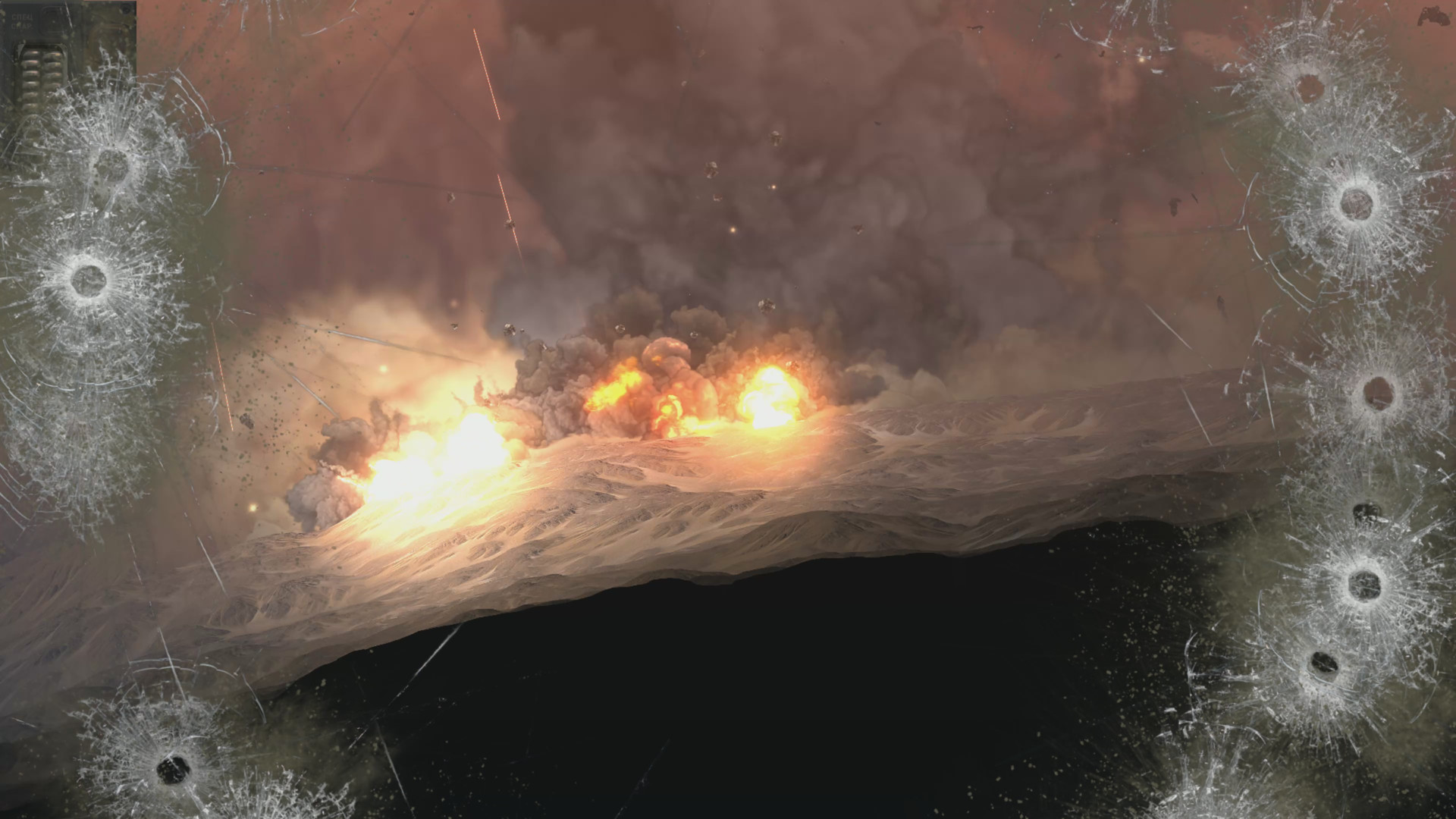
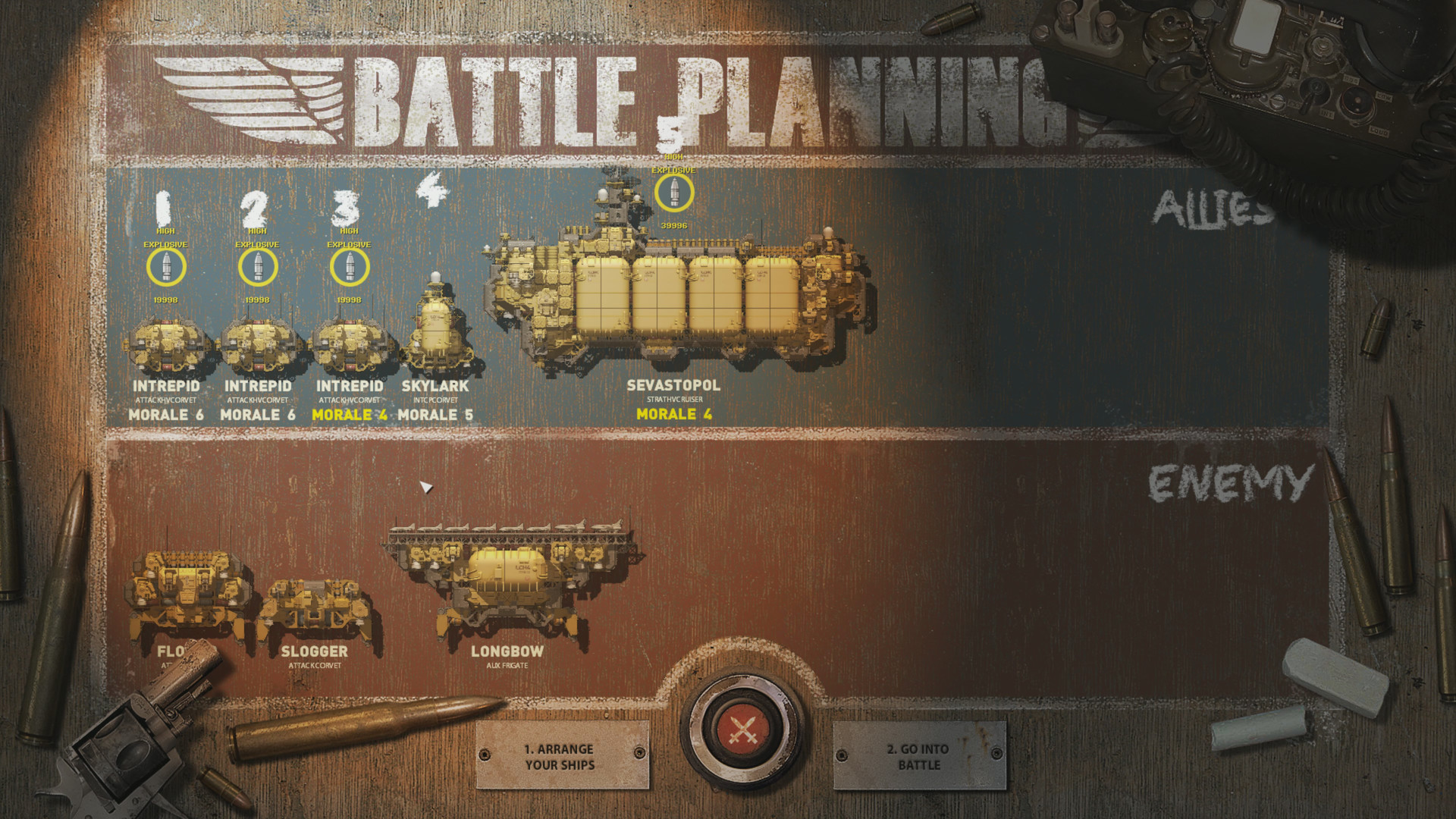
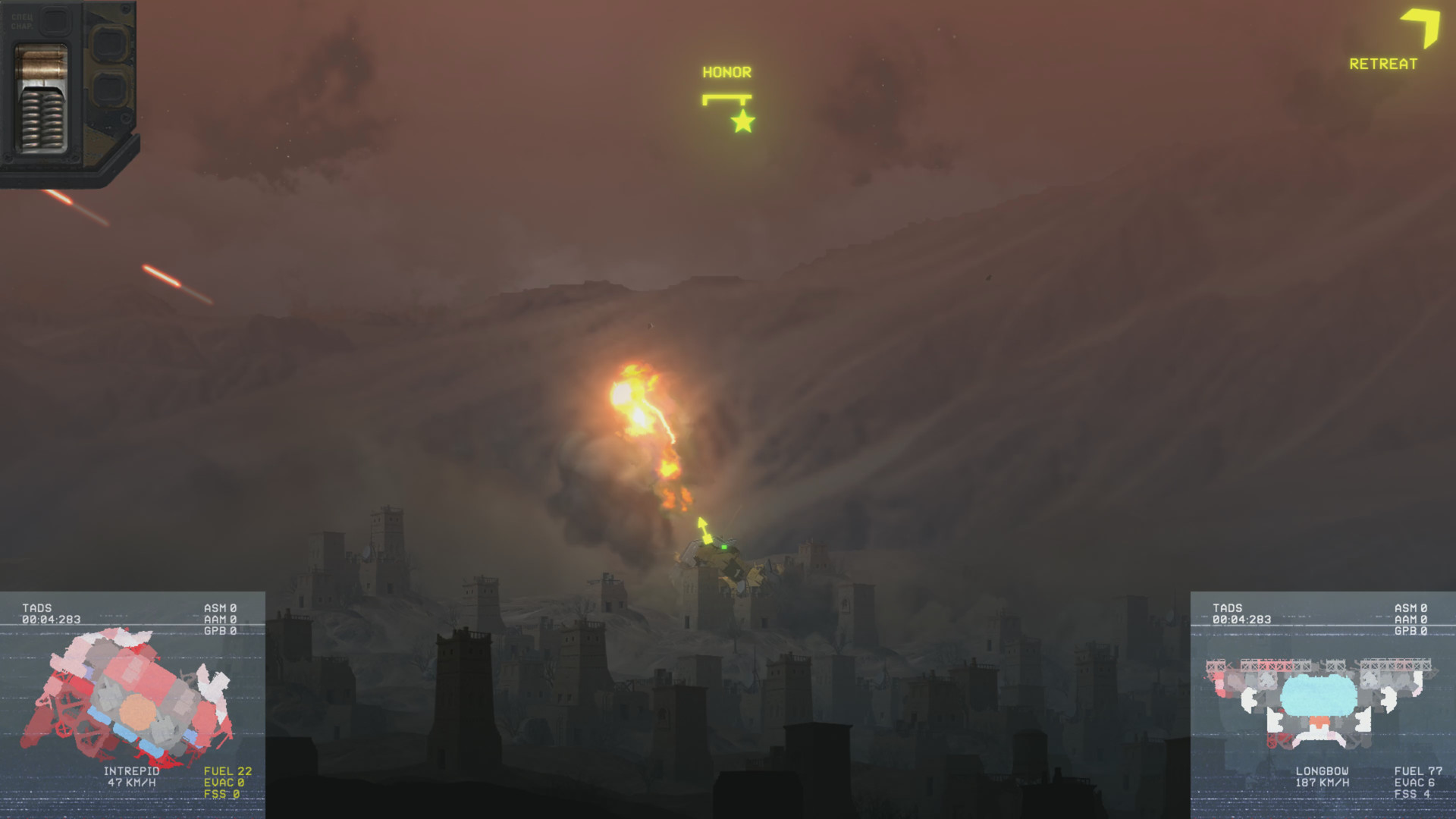
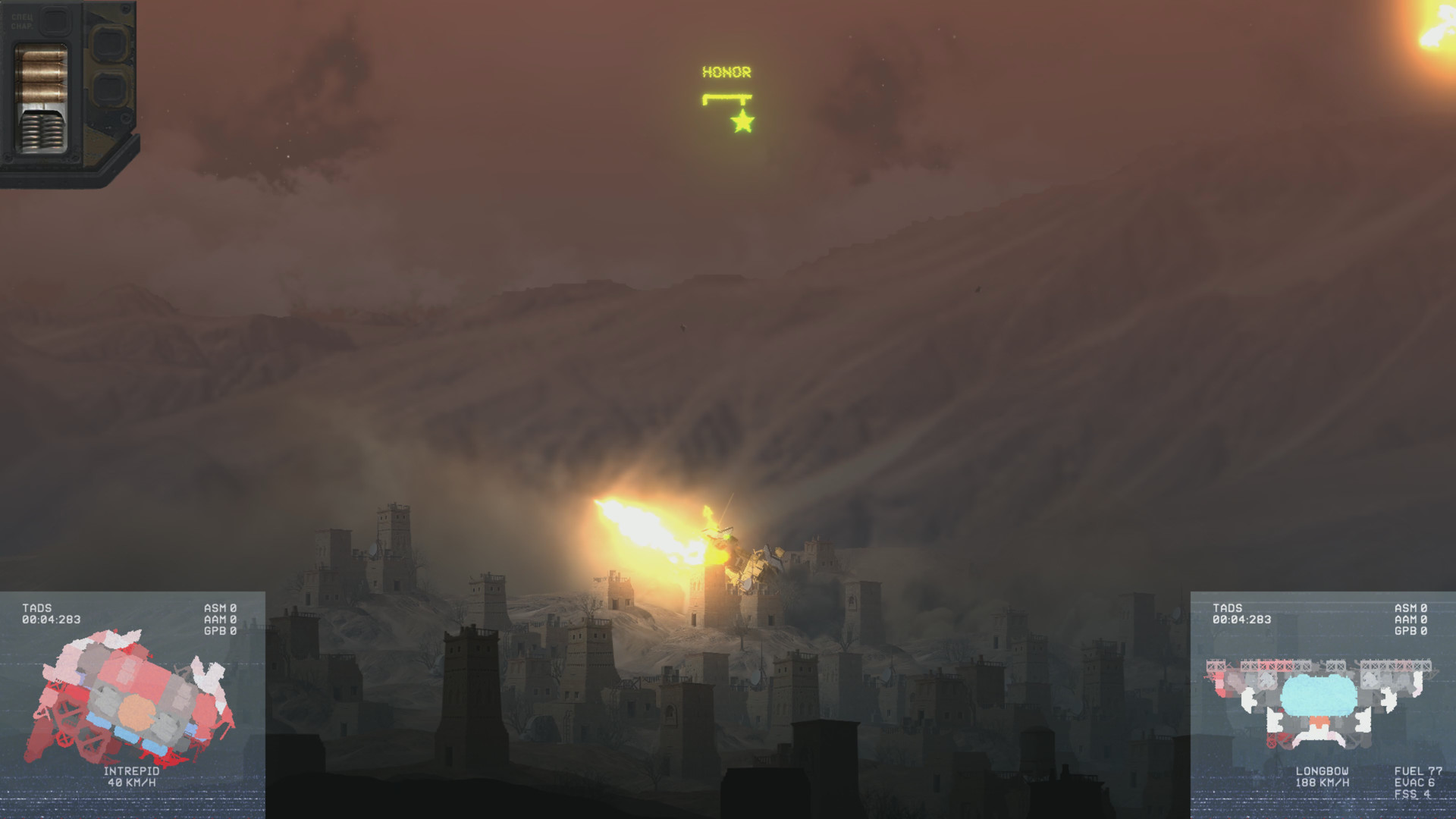
When battle comes, the game drops into its real-time combat layer, a physics-driven duel in a side-on view. Your ships fly on thrust and momentum, and you fight with ballistic guns, rockets, cruise missiles and, at the extreme, nuclear weapons — dodging incoming fire with short bursts of your jets, throwing up chaff, and trying to shred the enemy before they shred you. It is skill-based and unforgiving, and it is thrilling. Woven around both layers is a light narrative of diplomacy and intrigue, and the whole is held together by one of the most striking dieselpunk presentations in gaming.
New to the game? Keep your radar off, guard your fuel, and never risk your flagship. Our HighFleet beginner guide walks you through surviving your first campaign.
Why the atmosphere and tension carry it
The reason HighFleet is so beloved is the combination of its atmosphere and its tension. Visually and sonically it is a triumph: hand-drawn ships, gorgeous menus styled like old radar screens and paper maps, a haunting soundtrack, and a coherent dieselpunk world that feels lived-in and dangerous. But the presentation would be nothing without the tension it serves. Because you are almost always weaker than the forces hunting you, and because a single bad fight can be fatal, every jump across the map carries dread and every decision matters. Do you risk the radar to see what is ahead, or stay blind and safe? Do you attack the city garrison for its resources, or avoid the fight to preserve your ships? That constant, meaningful risk is what makes HighFleet grip you.
Underpinning it all is real depth. The strategic layer is a genuine puzzle of fuel, money, detection and intelligence; the combat rewards skill, positioning and knowledge of where ships are vulnerable; and the ship editor lets you design and refine your own war machines down to individual modules. Our strategic guide and combat guide go deeper into both.
Pros
- +A singular dieselpunk world of giant flying warships, with gorgeous hand-drawn art and UI.
- +Tense strategic hide-and-seek — manage fuel, detection and intelligence across a hostile map.
- +Deep, physics-driven real-time combat and a superb modular ship editor.
- +Outstanding atmosphere, presentation and soundtrack.
Cons
- −A brutal, opaque learning curve with very little hand-holding.
- −Punishing — losing your flagship ends the run, and combat is unforgiving.
- −A fairly short main campaign that leans heavily on replay and mastery.
- −English and Russian only; no Japanese, and it is text- and menu-heavy.
Ships, design and mastery
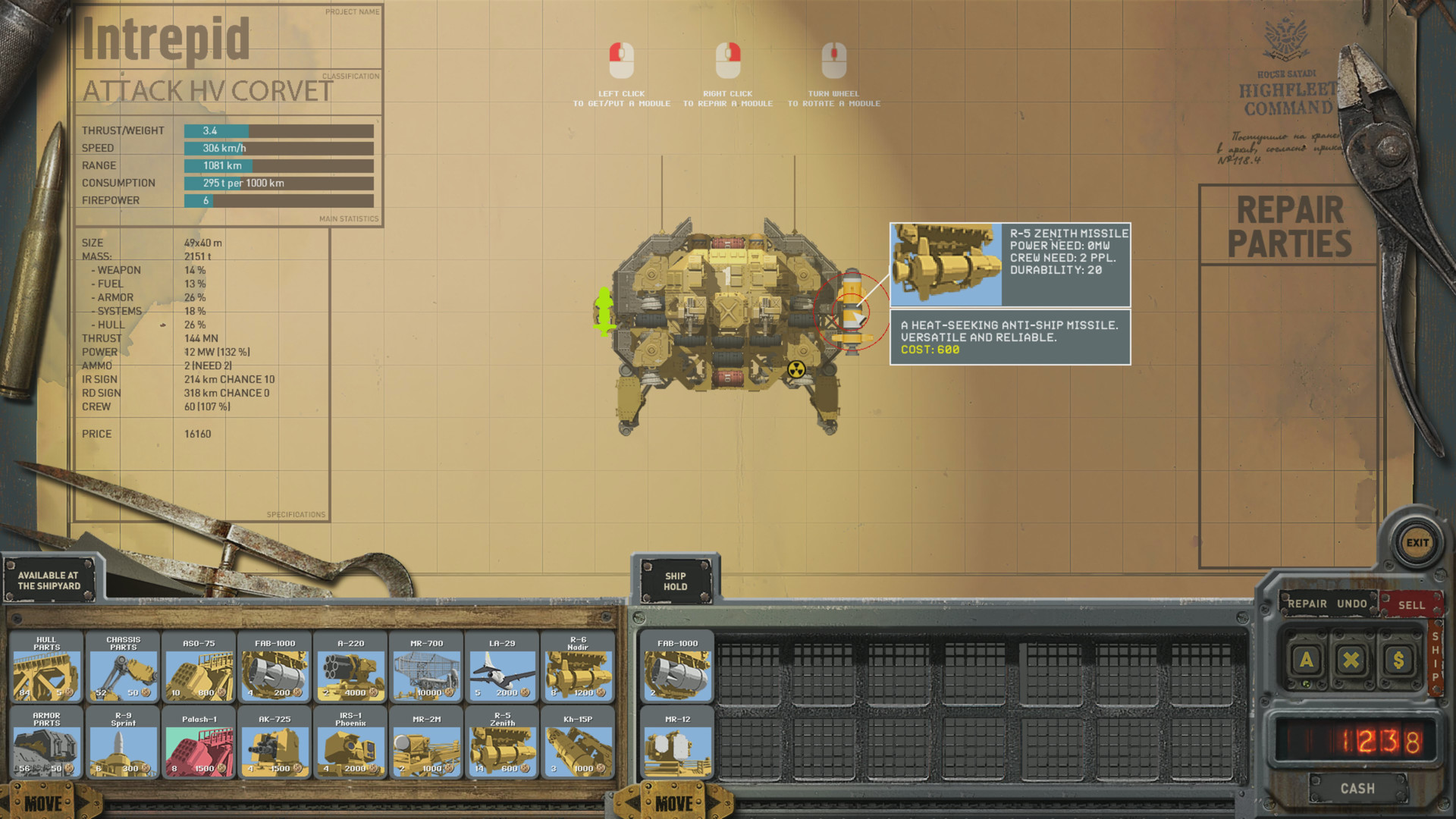
One of HighFleet's most distinctive strengths is that your fleet is yours to shape. You can field capable prebuilt ships — from the heavy flagship that anchors your group to nimble strike craft, interceptors and long-range scouts — and you can dive into the ship editor to build and refine your own, welding together armor, engines, fuel tanks, weapons and sensors. Design is a web of trade-offs: armor protects you but adds weight, which cuts your thrust-to-weight ratio and your range; where you place fuel tanks and structure affects how a ship survives hits and hard landings. Learning to read those trade-offs, and to exploit the fact that armor is directional and ammunition can cook off when struck, is a huge part of mastering the game.
That depth is why HighFleet's replayability lives in getting better. Your first campaign will likely be a bruising education; your fifth will be a far more confident hunt, with sharper tactics and ships you have tuned to your style. Whether you prefer a swarm of cheap, fuel-efficient strike craft or a carefully protected flagship supported by specialists, the game rewards the effort you put into understanding it. For where to start, see our ships tier list.
The honest weaknesses
Now the caveats, which are substantial. The first and biggest is the learning curve: HighFleet explains remarkably little, and new players routinely bounce off it hard, overwhelmed by its systems and punished for mistakes they did not know they were making. This is a game you must be willing to learn the hard way, ideally with a guide open. The second is the difficulty and its stakes — combat is lethal and unforgiving, detection can doom you, and because losing your flagship ends the entire run, failure can feel abrupt and harsh. The third is scope and length: the main campaign is fairly short and comparatively linear, so much of the value depends on your appetite to replay and improve rather than on a single long journey. And finally, it is available only in English and Russian, with no Japanese or Korean, and it is fairly text- and menu-heavy.
It is fair to say HighFleet trades accessibility and polish of onboarding for originality, atmosphere and depth. It rewards players who love to master a hard, unusual system and who find tension exhilarating rather than stressful, and it will frustrate anyone who wants a smooth, guided, forgiving experience. Be honest with yourself about which you are before you buy.
Buy HighFleet for its originality, atmosphere and skill ceiling, not for an easy or guided ride. If you need gentle onboarding, forgiving difficulty, or Japanese support, weigh that carefully. If a brutally tense dieselpunk hunt sounds thrilling, nothing else plays like it.
Who should buy it
If you want a strategy game unlike any other — atmospheric, tense, deep and demanding — HighFleet is an easy recommendation, and a genuine cult classic. Players who relish learning a hard system, who find risk and evasion thrilling, and who enjoy designing and mastering their own war machines will find enormous reward here, and its art and mood alone are worth the price of admission. To get started on the right foot, read our beginner guide, then dig into the ships tier list, strategic guide and combat guide.
Who should pass? Anyone who wants an accessible, forgiving or heavily tutorialised game, or who needs Japanese support. Be honest about that, because the brutal curve, punishing stakes and sparse hand-holding are its real limits. For the players it suits — those who prize originality, atmosphere and mastery — HighFleet is a landmark, with the honest asterisks that it is hard, unforgiving, fairly short in a single run, and English/Russian only.