Verdict Games Verdict Games
HighFleet Ship Tier List — Best Ships and Roles Ranked

HighFleet Ship Tier List — Best Ships and Roles Ranked

Author: Verdict Games Editorial Team Last Updated:

The Bottom Line

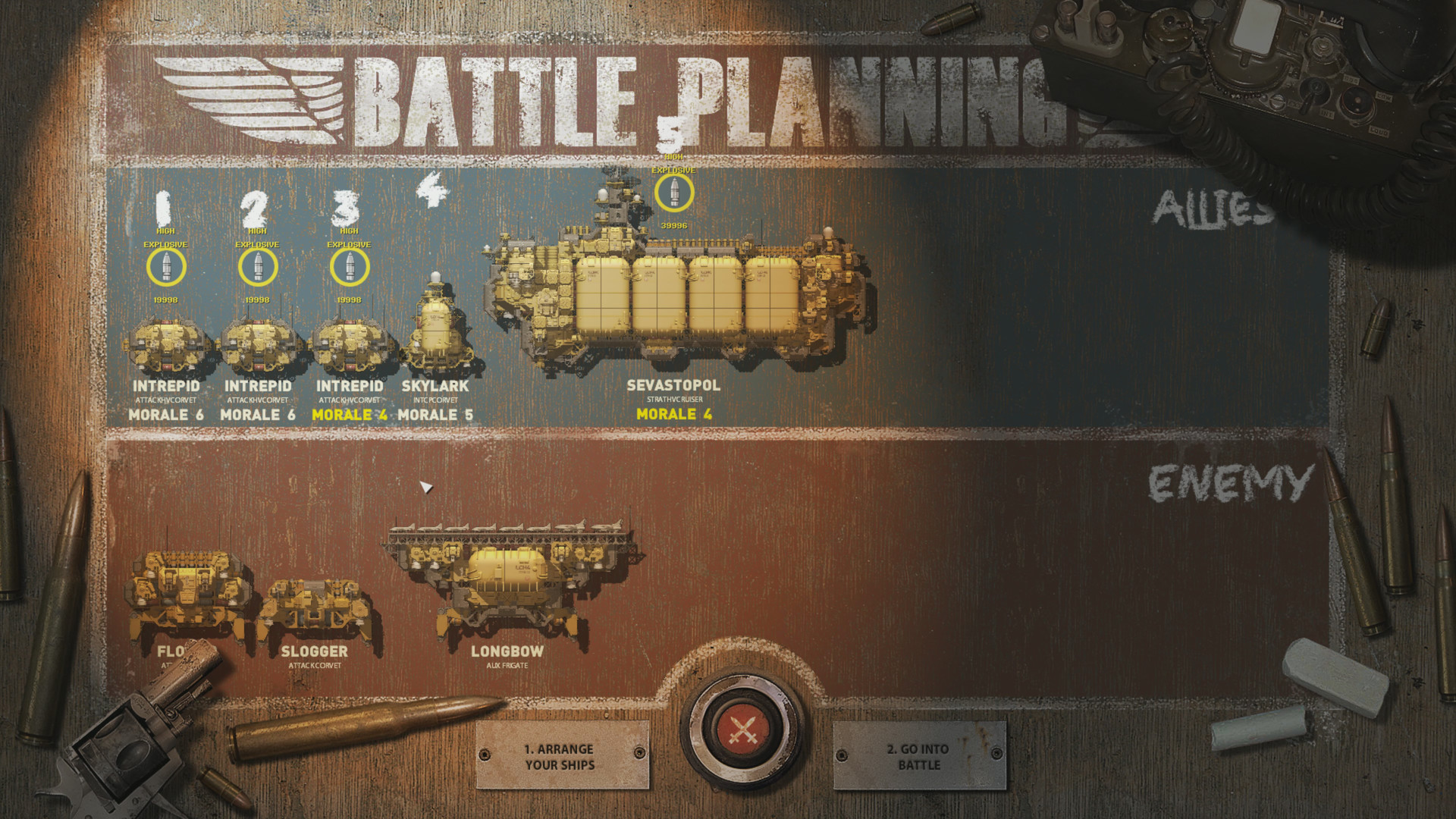
In HighFleet, the best fleet is a balanced mix of roles, not a single best ship. Your Sevastopol flagship and a long-range Skylark scout-tanker are near-essential; cheap, fast strike craft like the Gladiator do your fighting; carriers like the Longbow and interceptors like the Lightning add flexibility. Because ships are customizable, this tier ranks role and value — but composing your fleet well matters more than any single hull.

Summary

This HighFleet ship tier list ranks notable stock ships — the Sevastopol flagship, the Skylark scout-tanker, the Gladiator strike ship, the Longbow carrier and the Lightning interceptor — by how valuable each is to a campaign fleet. Because HighFleet ships are highly customizable, this ranks role and reliability rather than raw power. A strong fleet is a balanced mix: a protected flagship, cheap strike craft, and a scout to keep you fuelled and informed.

Who This Is For: HighFleet players choosing and building their campaign fleet Intermediate

Key Points

Key Points

1

The Sevastopol flagship is your irreplaceable base — protect it, don't brawl with it.

2

A Skylark-style scout-tanker is near-essential for range, detection and fuel.

3

Cheap, fast strike craft like the Gladiator do your fighting efficiently.

4

Ships are customizable — rank roles and value, and build a balanced fleet.

How to read this tier list

HighFleet does not really have a single "best ship," and any tier list has to acknowledge two things about the game. First, ships fill distinct roles — flagship, strike craft, scout, tanker, carrier, interceptor — and a winning fleet is a balanced mix of them, not a stack of the strongest hull. Second, ships are highly customizable: you can tune the prebuilt designs or build your own from scratch in the editor, so raw power is only part of the story. For those reasons, this list ranks notable stock ships by how valuable and reliable their role is to a typical campaign fleet, and how easy they are to use well, rather than by pure firepower. Use it to decide which ships to build your fleet around and which to add for specific jobs.

Treat the tiers as a guide to role value and dependability. Higher tiers are near-essential or high-value across most campaigns; lower tiers are strong in the right situation or come with a catch like cost. Whatever you field, the golden rule at the bottom holds: composing a balanced, fuel-aware fleet matters more than any single ship.

This ranks ships by role and value for a campaign fleet, not by raw power, because HighFleet rewards a balanced mix and lets you customize hulls. Every ship here is useful in the right role — the art is composing a fleet that can see, move and fight cheaply.

The tier list

S
Sevastopol (flagship) Your irreplaceable core: a heavy cruiser flagship envisioned as the heart of a strike group. Losing it ends the run, so its value is absolute — but use it as a protected base and command ship, not a frontline brawler, since it is powerful yet slow to repair. Skylark (scout-tanker) A light tanker fitted with sensor equipment, with excellent range and speed. It scouts far ahead to find the enemy and refuels a small task group — serving the two things that win campaigns, detection and fuel. Near-essential support for almost any fleet.
A
Gladiator (fast strike) A premium strike ship, fast enough to catch a city's defenders on the ground as battle starts; with practice one can beat several defending corvettes or frigates while taking little damage. Superb for efficient raids — its only real drawback is a high price. Longbow (carrier frigate) A carrier heavy frigate that combines an affordable price with well-balanced stats. Fielding aircraft adds reconnaissance and flexible offence, and its cost-to-capability ratio makes it a dependable, versatile addition to a growing fleet.
B
Lightning (interceptor) A fast ship well suited to intercepts — chasing down fleeing enemies, aircraft or missiles, and reacting quickly to threats. Valuable in the right situation and as a flexible responder, though narrower in role than the fleet's core ships.
C
Brawling with your flagship Not a ship but the biggest mistake: throwing your Sevastopol into every fight. It repairs slowly and its loss ends the campaign, so risking it directly is how good runs end abruptly. Keep it back and let cheap ships fight. Neglecting scouts and tankers Fielding only warships and no long-range scout-tanker leaves you blind and short on fuel — the two things that most often doom a campaign. A pure-firepower fleet that cannot see or travel far is far weaker than it looks.

Why the flagship and scout lead

The reason the Sevastopol and a Skylark-style scout-tanker top this list is not that they are the strongest fighters, but that they are the most important ships to your survival. The flagship is your entire campaign in one hull: it is mighty, it anchors your fleet, and if it dies you lose, full stop. That makes protecting it your highest priority and its value non-negotiable — but it also means you should use it as a base, not a brawler. The scout-tanker earns its place because HighFleet is won by fuel and information as much as by guns: a ship that can range far ahead to locate the enemy and refuel your task group directly serves the two survival factors that matter most. Neither ship is what you win fights with, yet both are what let you win campaigns.

The A-tier ships are where your fighting power and flexibility come from. A fast strike ship like the Gladiator lets you raid efficiently and win favourable battles cheaply, while a carrier like the Longbow adds aircraft and versatility at a reasonable price. They rank just below the essentials only because they serve the campaign rather than underpinning its survival, but a maturing fleet will almost always want them.

Build your fleet around roles: a protected flagship, a scout-tanker for range and detection, and cheap fast strike craft for the fighting. Add carriers or interceptors for aircraft and missile defence. Watch your fuel, since larger fleets drain it faster.

Customization, cost and building your fleet

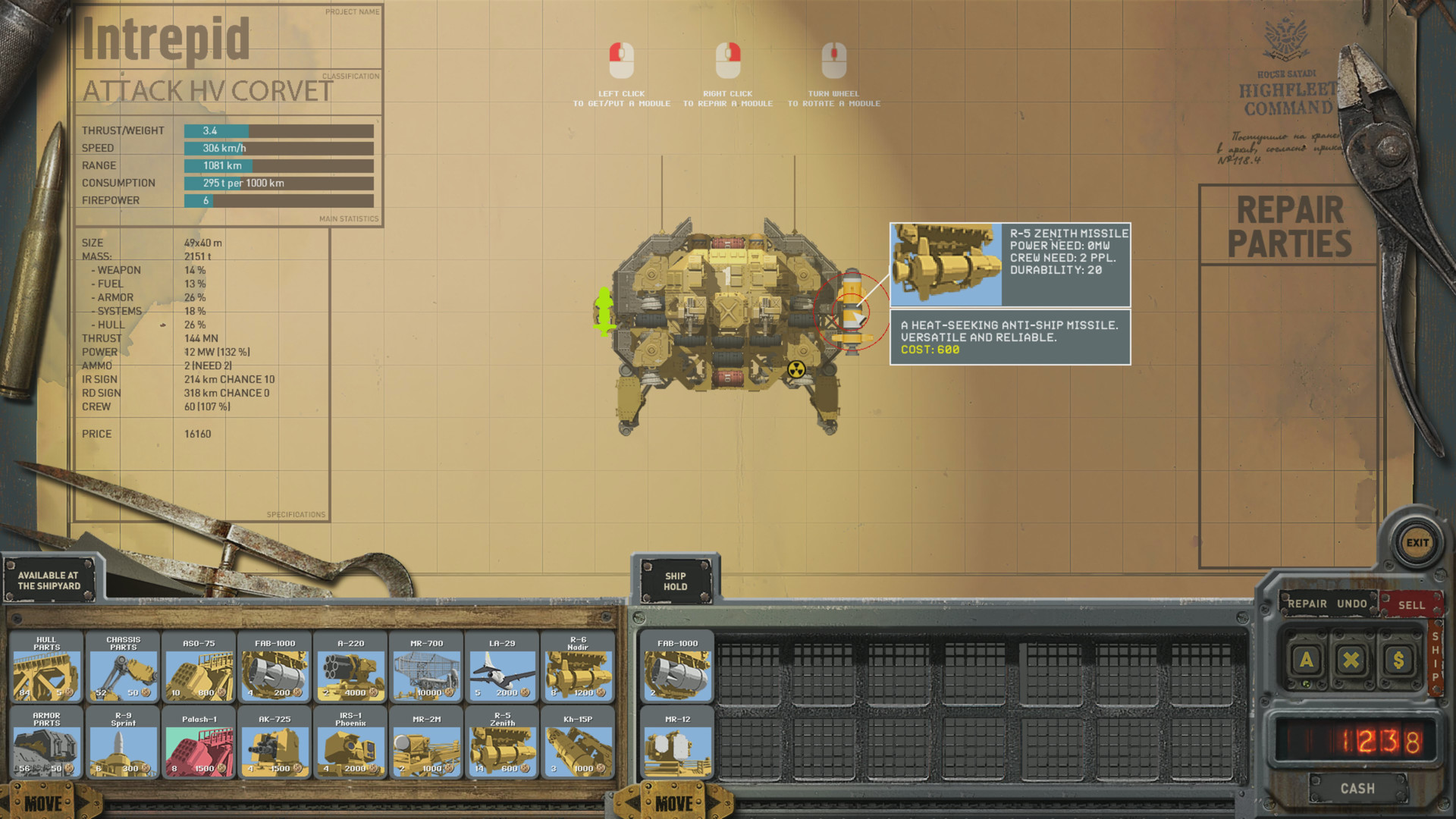
The B-tier and situational ships are not weak — they are specialists that shine in the right role. An interceptor like the Lightning is exactly what you want when you need to run down a fleeing enemy, swat aircraft, or respond fast to a threat, even if it is narrower than your core ships. And this is where HighFleet's customization matters: because you can tune the prebuilt designs or build your own hulls in the editor, the "right" ship for a job is often one you have adapted to your budget and tactics. A cheap strike craft you can afford to lose is frequently worth more to your campaign than an expensive hull you dare not risk.

All of which comes back to the real lesson of the tier list: in HighFleet you are not picking a single best ship, you are composing a fleet. The strongest fleets balance their roles so each ship covers the others' weaknesses — a flagship to anchor, scouts to see and fuel, strike craft to fight cheaply, and specialists for the jobs in between — while keeping a careful eye on fuel. Get that composition right and you can hunt across the map with confidence; lean on raw firepower alone, with no scouts and an over-exposed flagship, and even strong ships will not save you. For how to use them, see our combat guide and strategic guide, and the beginner guide if you are just starting out.

Never build a fleet of pure firepower with no scout-tanker and an exposed flagship. Without eyes and fuel you will be ambushed and stranded, and risking your flagship in combat can end the run. Balance and fuel-awareness beat raw strength.
FAQ

FAQ

There is no single best ship, because HighFleet rewards a balanced fleet of complementary roles and lets you customize or design your own hulls. That said, your Sevastopol flagship is the most important single ship simply because losing it ends the run, and a long-range scout-tanker like the Skylark is arguably the most valuable support ship because it keeps you fuelled, extends your range and gathers information safely. For fighting, cheap and fast strike craft such as the Gladiator offer the best value. The 'best' ship is the one that fills the role your fleet is missing.
Yes, the Gladiator is a strong strike ship if you can afford it. It is fast — quick enough to catch a city's defenders on the ground as a battle begins — and with practice a single Gladiator can defeat several defending corvettes or frigates without taking much damage. That speed and punch make it excellent for raiding garrisons efficiently. The catch is cost: it is expensive, so early on you may lean on cheaper strike craft, bringing in Gladiators once your economy can support them.
Because HighFleet is won by fuel and information as much as by firepower. A light scout-tanker like the Skylark carries ELINT-style sensor equipment and has excellent range and speed, letting it scout far ahead to locate the enemy and act as a refuelling ship for a small task group. That means you can see threats before they see you and extend how far your fleet can travel between cities — two of the most important survival factors in the whole game. A good scout keeps the rest of your fleet alive.
Both are valid, and most players do both. The prebuilt ships are well-designed and a fine way to learn the game and field a capable fleet quickly, so lean on them early. As you understand the systems — armor placement, thrust-to-weight, weapon and sensor loadouts — the ship editor lets you tune existing designs or build bespoke hulls tailored to your tactics and budget. Designing your own is a big part of HighFleet's depth and replayability, but it is not required to enjoy or win the game.
Aim for a balance of roles rather than a pile of firepower. You want your flagship as a protected base and command ship, one or more long-range scout-tankers for range and detection, several cheap, fast strike craft to do the actual fighting, and optionally a carrier or interceptors for aircraft and missile defence. Keep an eye on fuel, since big fleets drain it fast, and favour cheap, expendable ships for combat so losses do not cripple your campaign. A well-rounded fleet that can see, move and fight cheaply beats an expensive, fuel-hungry one.

Our editorial policy is honest, no-spin reviews. We separate facts from opinion and back every rating with reasoning. View Editorial Policy

Related

Related Articles