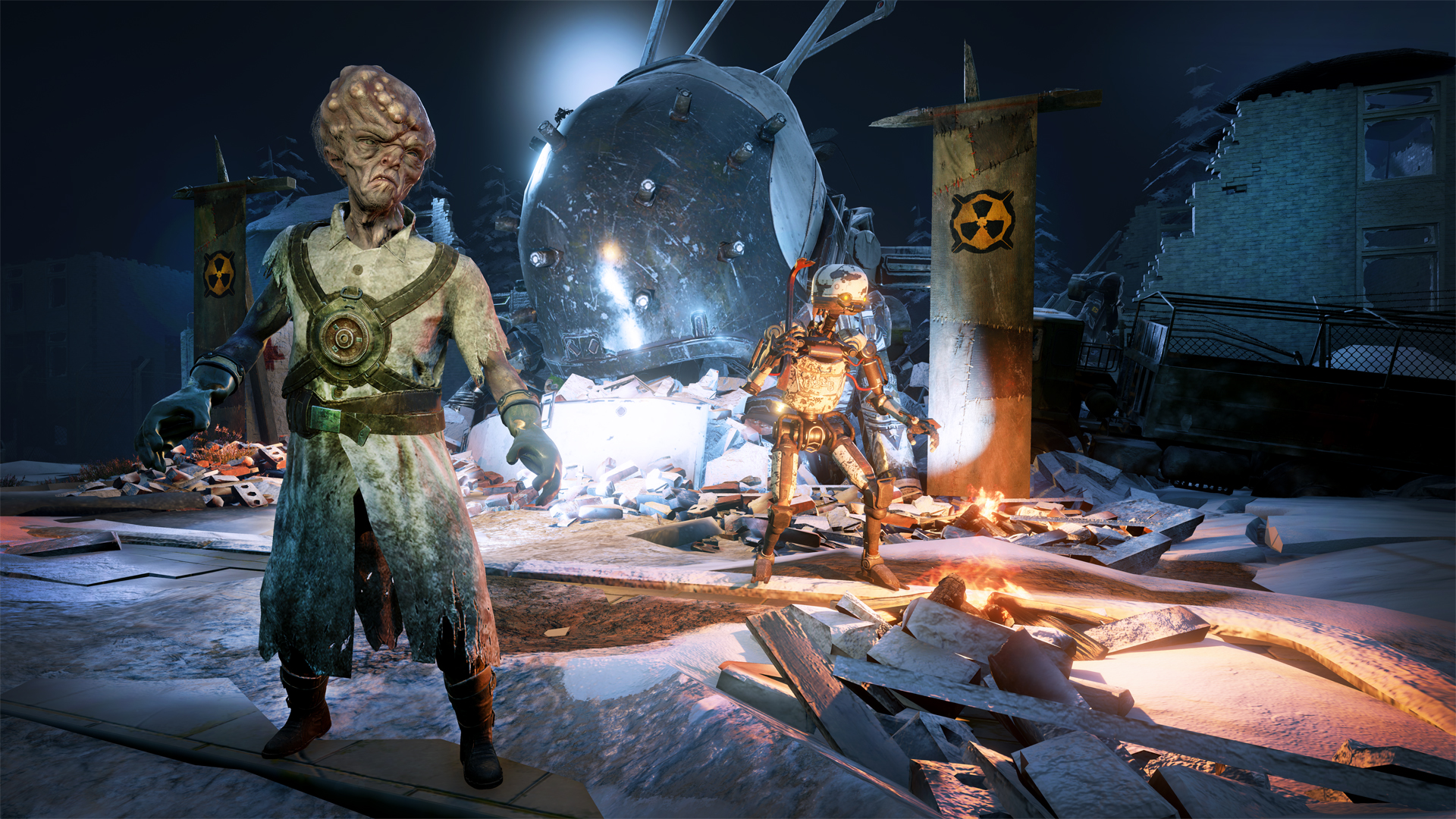
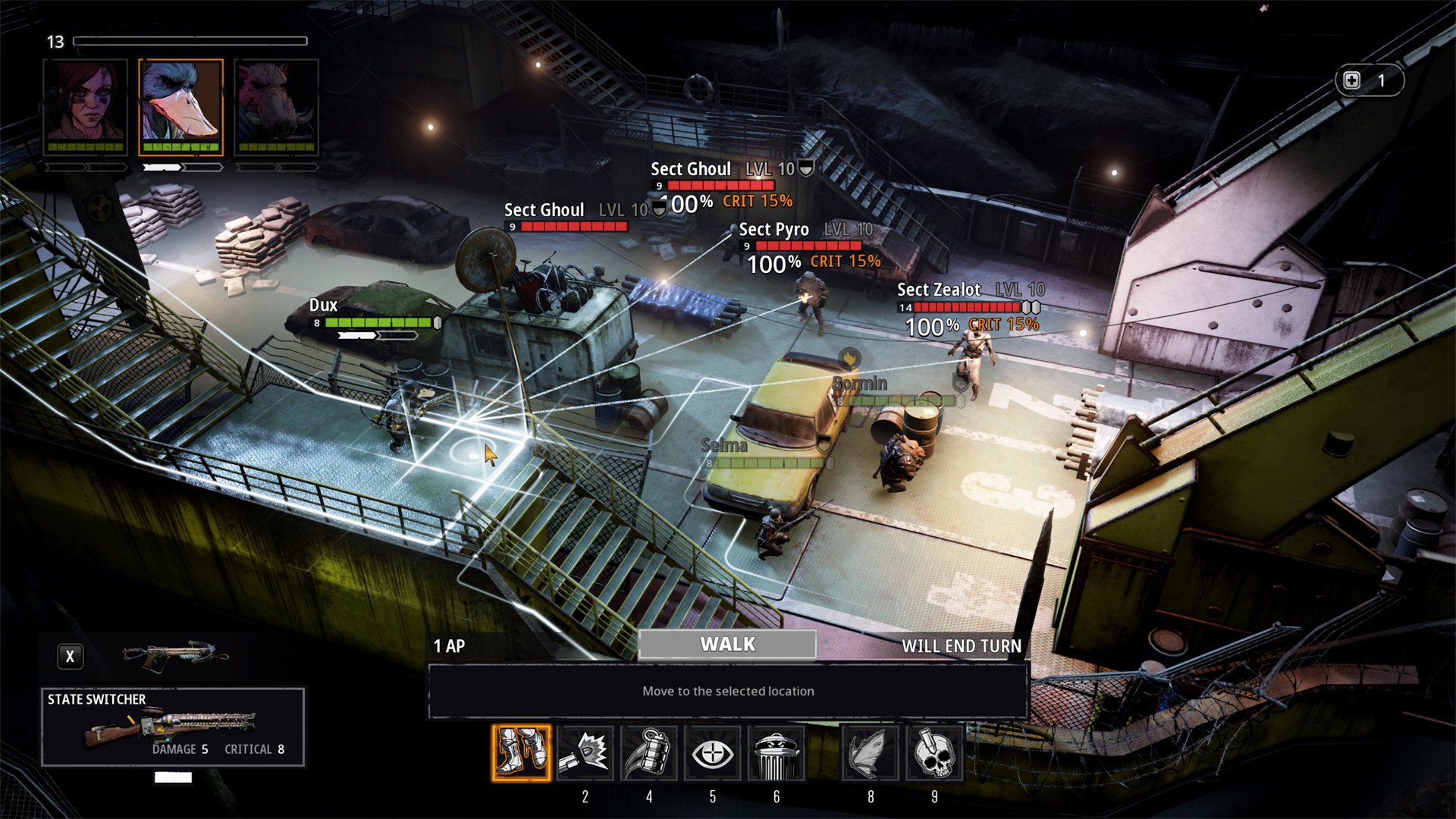
Most turn-based tactics games begin the fight for you. You arrive, the enemy notices, and the interesting decisions start on turn two.
Mutant Year Zero hands you turn one.
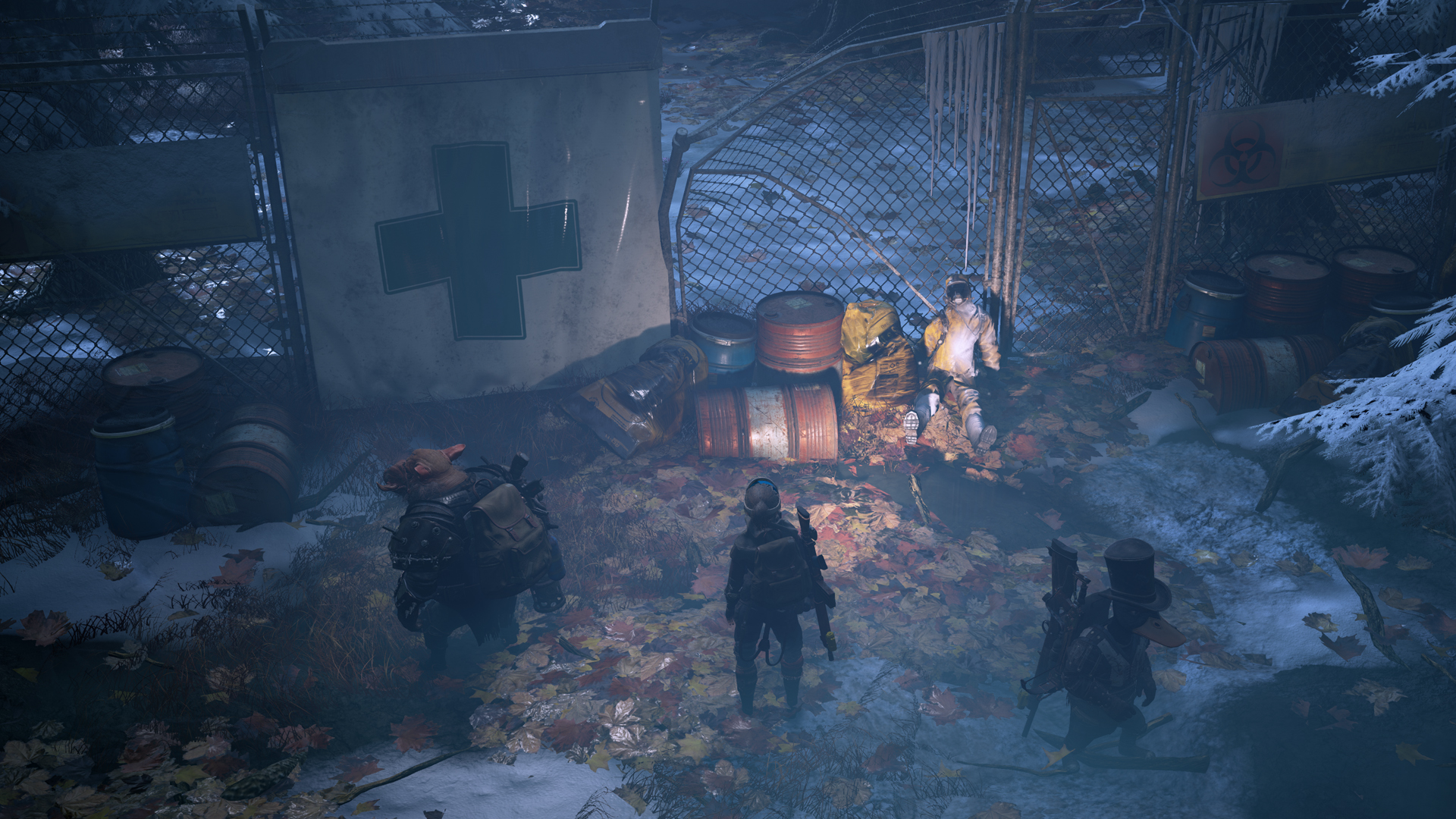
You approach a camp in real time with the lamps off, split the squad, watch the patrol routes, walk one mutant up onto a roof, and shoot the guard who wandered too far from the others. Nobody hears. You do it again. Then you pick the moment, the position and the target, and the turn-based game begins on your terms. No other tactics game lets you author the opening this completely, and it is worth the price of admission on its own.
What the approach buys
It changes what a map is. In most games of this shape, terrain is where you will fight; here it is something you read before deciding whether to fight at all. A camp of six with a lazy patrol is a different proposition to a camp of four standing together, and you can tell which is which before committing anything.
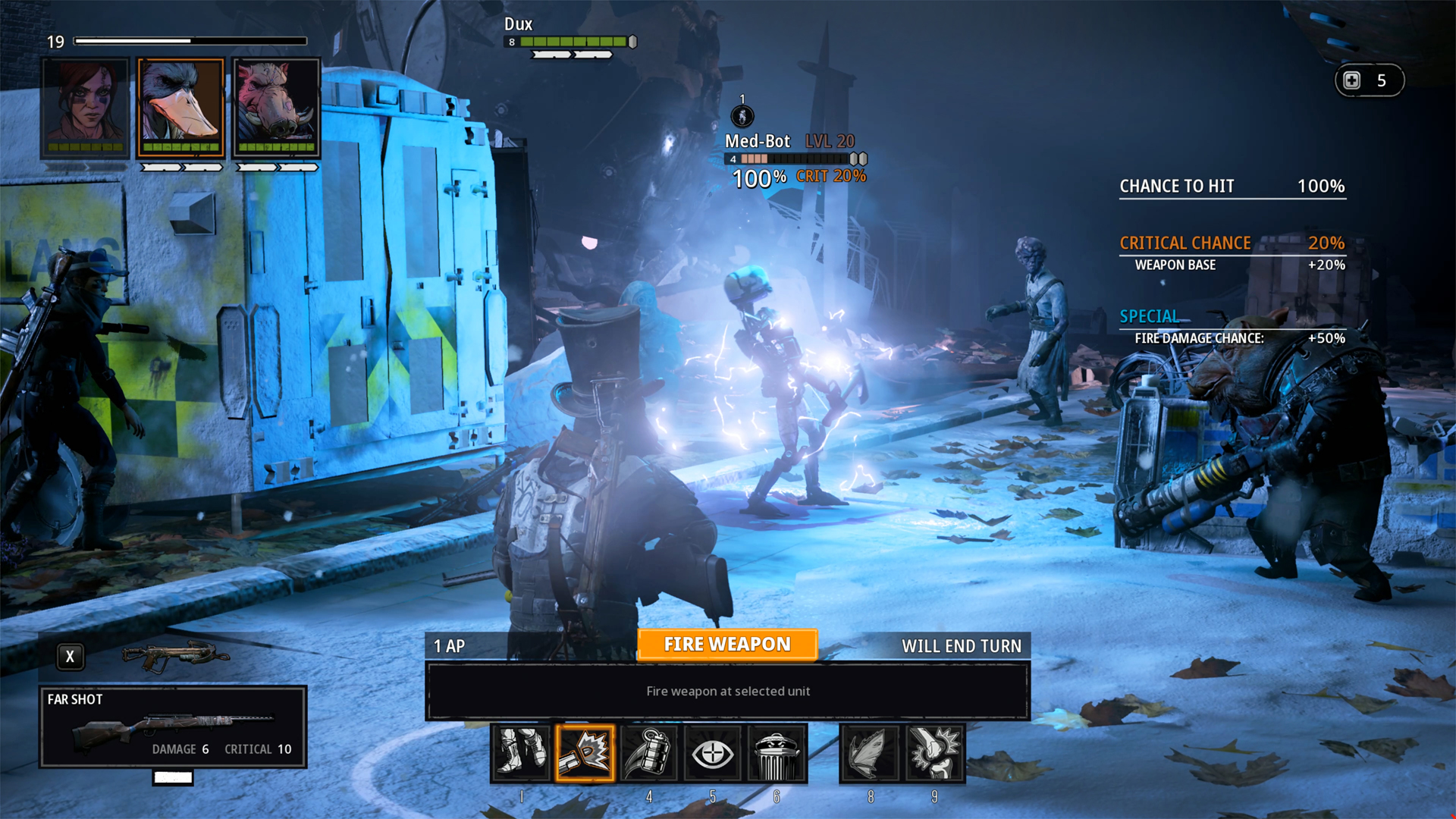
It also makes the turn-based layer better by subtraction. Removing two enemies silently turns a losing five-on-three into a workable three-on-three, and since mutations recharge on kills rather than turns, those stealth kills have already paid part of the bill for the abilities you are about to use. The two systems feed each other properly.
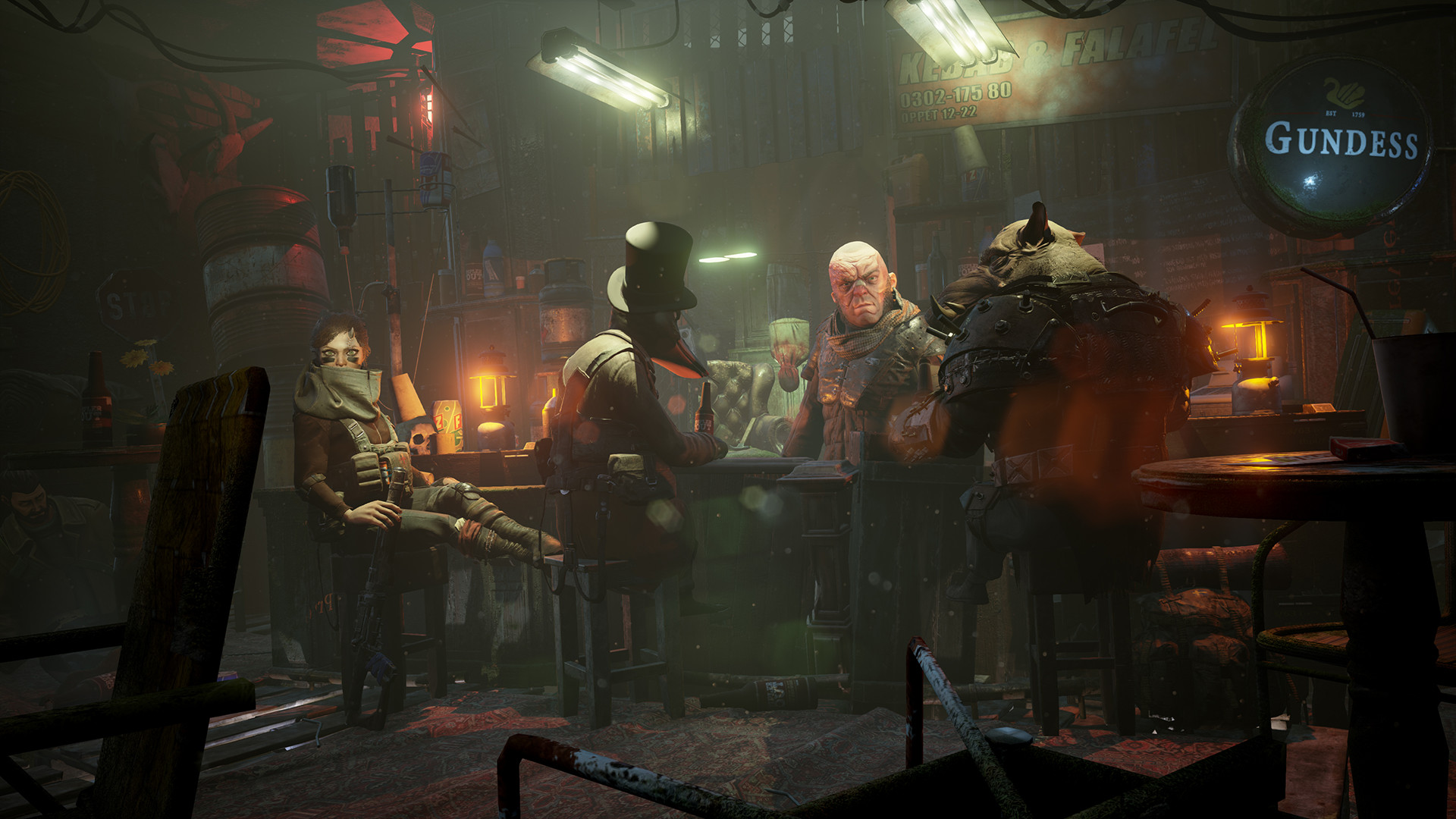
The writing deserves a mention. A talking boar and a talking duck arguing across post-apocalyptic Sweden should not work, and the banter is genuinely the reason to keep walking between objectives. The plot they are walking through is thinner and ends abruptly, but Bormin and Dux are better company than most tactics squads.
Where it falls short
The signature system does not scale, and you can point at the number.
Every silenced weapon in the base game deals exactly 4 damage: the Ancient Pistol, the Crossbow, the MIMIR Needle Pistol. Same 4, same 10 range. Meanwhile enemies get tougher on the ordinary curve. So the opening that cleared three stragglers in the first zone clears one in the last, and by the endgame you are mostly walking into fights and playing a competent, unremarkable cover shooter with three units.
That is a strange shape for a game to have — its best idea gets quieter as it goes.
The second weakness is how little the characters differ mechanically. Every character has 12 movement, 0 armour and 10 throw range, and health is either 8 or 6. What separates them is which mutations they can buy cheaply, which is real but invisible: nothing in the interface tells you that Skull Splitter costs Dux 1 point and Magnus 9. A genuinely interesting design decision is hidden behind a price you have to go looking for.
Where it stands
| Item | State |
|---|---|
| Release | 4 December 2018 |
| Developer and publisher | Developed by The Bearded Ladies, published by Funcom |
| Steam rating | Around 90 percent positive |
| Structure | Turn-based tactics campaign with a real-time stealth approach phase, three characters fielded from six |
| Localisation | Japanese, Russian, Simplified Chinese, Korean, French, German, Spanish, Italian, Polish, Brazilian Portuguese. Interface, full audio and subtitles |
Comparisons
| Compared with | How Mutant Year Zero differs | Who that suits |
|---|---|---|
| XCOM | You choose when the fight starts. Smaller squads, simpler turns, far better openings | Players who find the approach more interesting than the attrition |
| Into the Breach | Vastly less pure. Into the Breach is a perfect puzzle box, this is a journey with a stealth layer | Players who want atmosphere and travel rather than a solved board |
| Gears Tactics | Slower and quieter, with a real decision before every engagement | Players who want to avoid fights, not win them faster |
| Warhammer 40,000: Mechanicus | Both bolt one strong idea onto ordinary tactics. Mechanicus uses a campaign clock, this uses the approach | Players who like a system above the combat doing the real work |
Who should buy and who should skip
| Buy it if | Skip it if |
|---|---|
| You want to author the first turn of every fight | You want the tactical combat itself to be the deep part |
| You like reading a map before committing to it | You want a stealth system that keeps growing with you |
| You will enjoy well-written companions on a thin plot | You need a story that pays off |
| You want full voice acting in Japanese, Russian, Chinese or Korean | You expect meaningful stat differences between characters |
Verdict
Mutant Year Zero is built on one excellent idea and executes it better than anyone else has. The real-time approach makes the opening of a fight into the most interesting decision in the fight, and the kill-based mutation recharge ties the two halves together properly instead of bolting them side by side.
What it lacks is follow-through. The silenced weapons stay at 4 damage while everything else grows, so the thing you came for fades in the last third. The characters are nearly identical on paper and differentiated only by prices the interface hides. Neither ruins it, and both are worth knowing before you start.
Buy it for the first move. It is the best one in the genre.
The opening hours are in the beginner guide, the pricing rule the game hides is in the mutations tier list, the 4-damage ceiling and how to raise it is in the stealth guide, and who to field is in the characters guide.
For the other game that bolts one strong system onto ordinary tactics, the Warhammer 40,000: Mechanicus review covers a campaign where a clock does the job the approach phase does here.