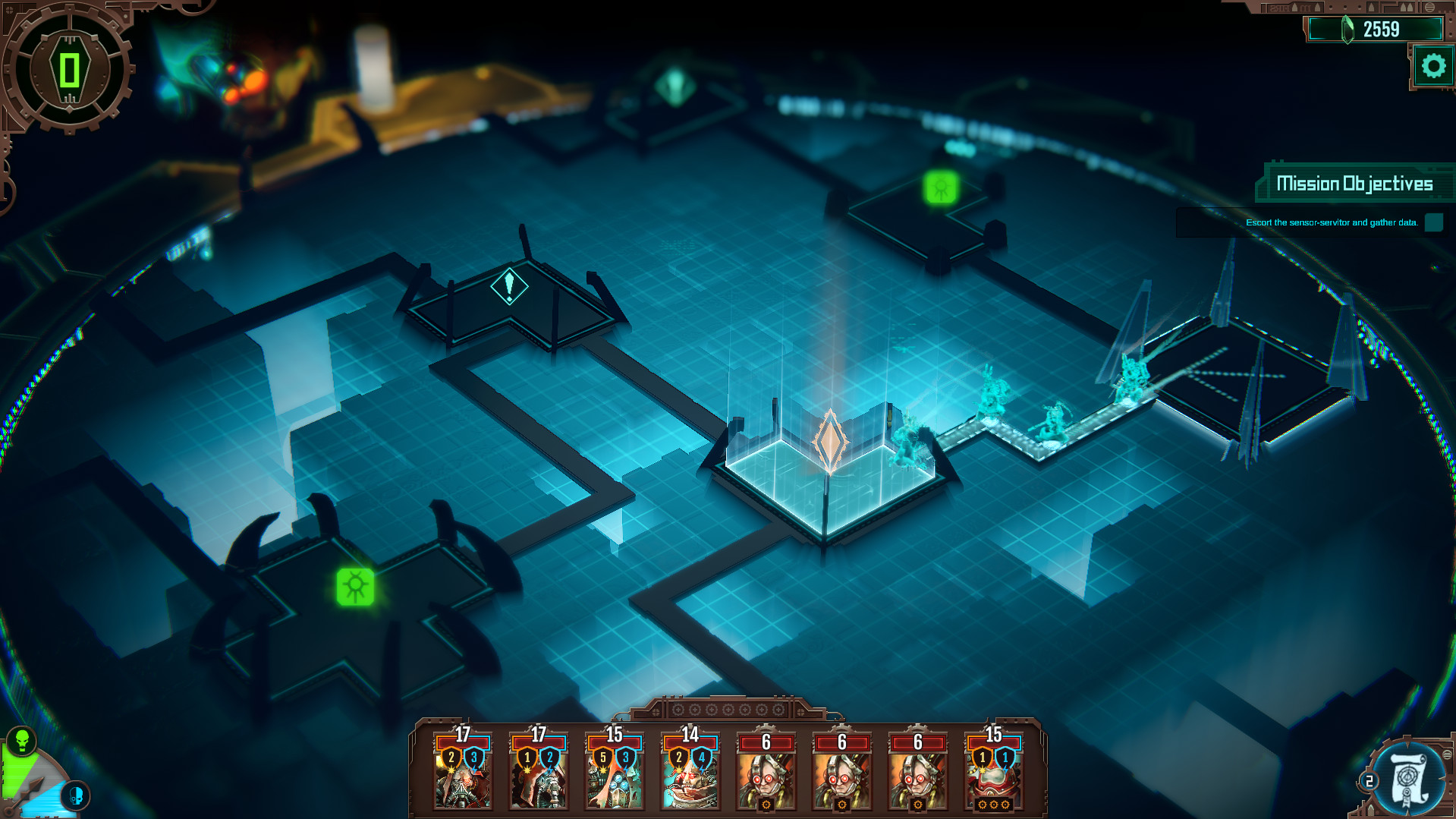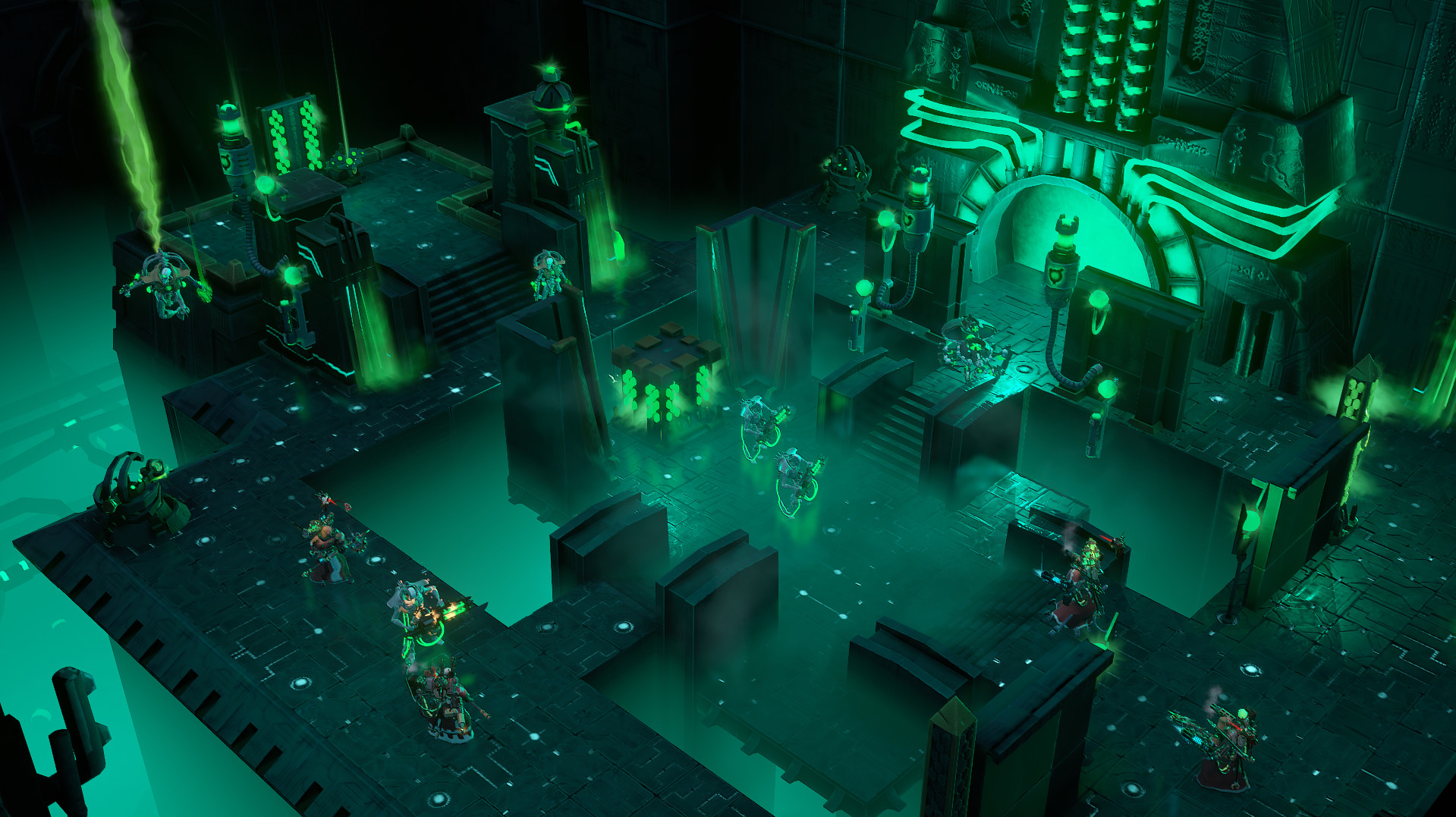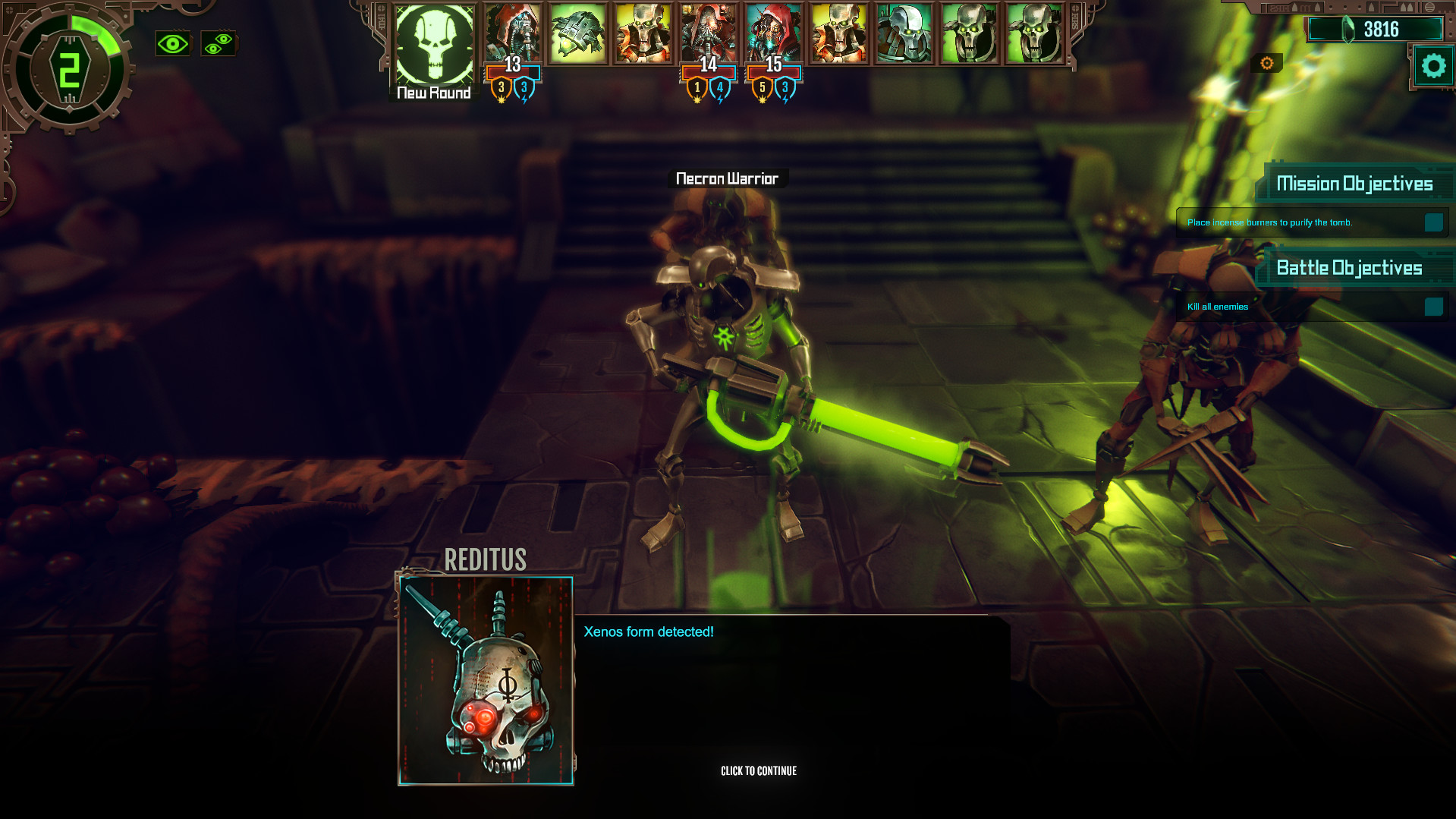
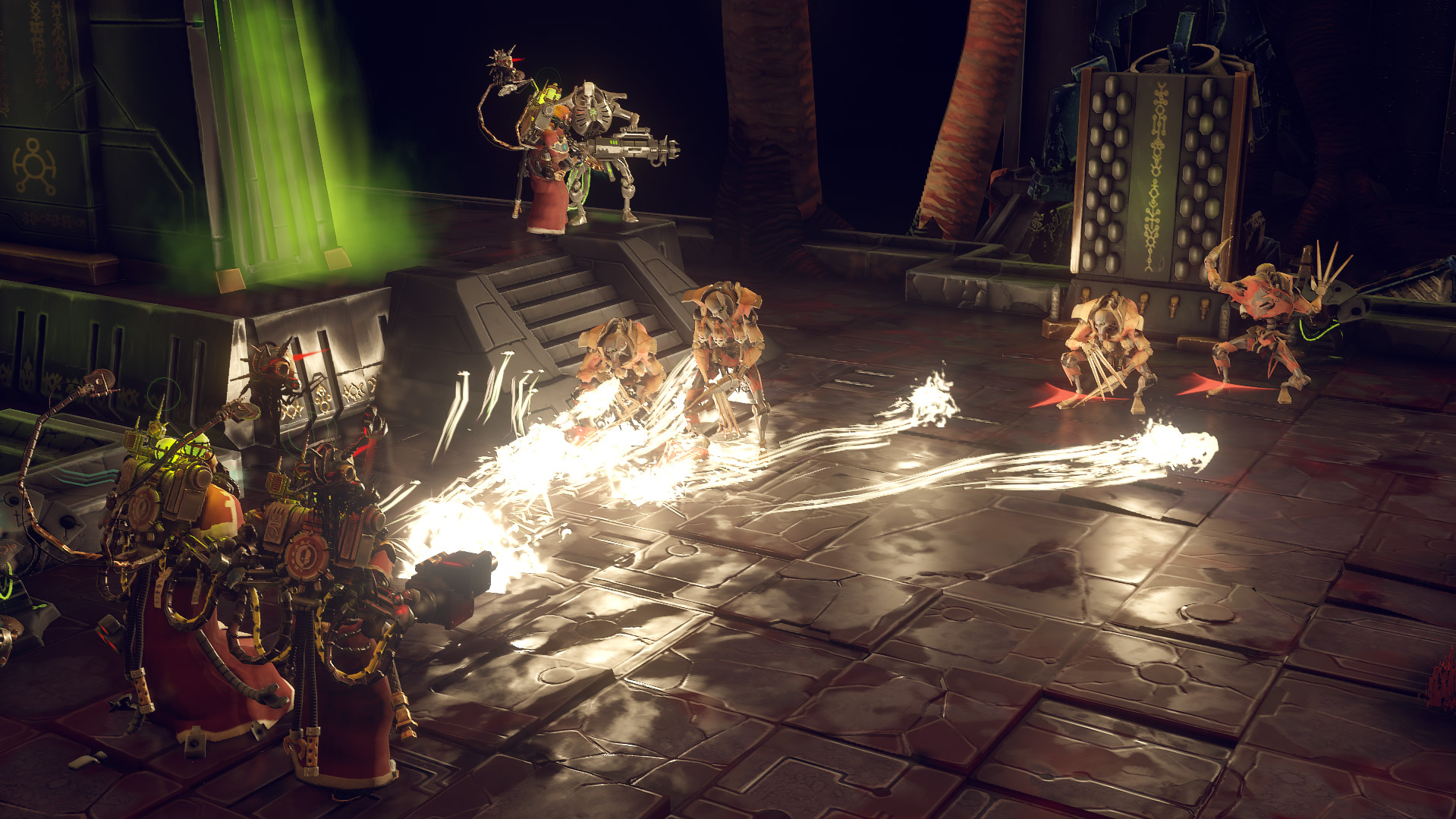
Most tactics games ask how you will win the fight. Mechanicus asks whether you should have walked into the room at all.
You are excavating a Necron tomb, and everything you do wakes it up. Entering a room is two ticks on the awakening meter. Every combat turn after the first is another. Let the planet reach full awakening before you clear the final area and you lose the campaign outright. So curiosity has a price, it is paid in a currency you can count, and the whole game is that trade made repeatedly.
What the clock buys
It makes exploration a decision. In almost every other game of this shape, clearing the map is free value and the only question is whether you can survive it. Here the Blackstone in the last room is weighed against a percent of your campaign, and the answer genuinely changes depending on how far into the run you are.
It also makes speed a strategic virtue rather than a stylistic one. A fight that runs long adds ticks, and the ticks raise mission awakening, which spawns more Necrons and revives them faster — so a slow fight makes itself slower. That feedback loop is a better reason to play aggressively than most tactics games manage.
The Cognition economy does similar work at the tactical level. CP pays for extra movement, for summoning Skitarii and for firing any weapon bigger than your starting pistol, so a turn is not "what is the best move" but "what can I afford". It is a simple constraint that makes an ordinary tactical grid interesting.
The presentation deserves its own mention. The Adeptus Mechanicus are a faction of machine-worshipping priests who intone liturgy while dismembering robots, and the game commits to that completely — the voice work, the binary chanting, the interface as a devotional object. It is one of the better arguments that licensed games benefit from picking a narrow corner of a setting and going deep.
Where it falls short
The tech-priest itemisation is the weak link, and it is weak in a specific, checkable way.
Each armour slot offers a piece from every discipline, but they are not really alternatives. Several are simply dominated — a head giving 2 HP sits beside a head giving 2 HP and 1 armour, a torso giving 3 HP beside one giving 4. Once you know the table, a large share of the available pieces are pieces you will never take in any build. The customisation screen presents a wide menu and contains a narrow one.
That interacts badly with two other rules. There is no respec, and level-ups get progressively more expensive in Blackstone. So the system simultaneously asks you to commit permanently and gives you fewer meaningful ways to commit than it appears to.
The tactical layer is the other soft spot. It is competent — cover, overwatch-style positioning, a reasonable enemy roster — but if you come to Mechanicus for the battles specifically rather than for the clock above them, it is solid rather than memorable. The Necron roster in particular repeats itself well before the campaign ends.
Where it stands
| Aspect | Where it is |
|---|---|
| Release | 15 November 2018 |
| Developer and publisher | Bulwark Studios, published by Kasedo Games |
| Steam reception | Around 91 percent positive |
| Structure | Campaign across a Necron tomb, governed by a planetary awakening meter |
| Localisation | Japanese, Russian, Simplified Chinese, Korean, French, German and Spanish — interface, full audio and subtitles |
How it compares
| Against | Mechanicus is | Which suits you if |
|---|---|---|
| XCOM | Less about losing soldiers, more about losing time. Fallen priests return for a Blackstone fine | You liked the campaign tension but not permadeath anxiety |
| Gears Tactics | Slower and more thoughtful, with a real strategic layer above the fights | You want decisions between missions, not only inside them |
| Chaos Gate — Daemonhunters | Warmer presentation, tighter clock. Daemonhunters has the better tactical combat | The strategic squeeze interests you more than the battles |
| Into the Breach | Far bigger and far less pure. Into the Breach is the better puzzle; this is the better campaign | You want atmosphere and progression rather than a perfect tactical box |
Who should buy it
| Buy it if | Skip it if |
|---|---|
| You want exploration to be a decision with a price | You want to clear every map and be rewarded for it |
| You enjoy resource constraints shaping turns, not just positioning | You want deep, varied tactical combat above all |
| You like 40k atmosphere, or want a good way into it | Liturgical chanting and machine-worship will wear on you |
| You play in Japanese, Russian, Chinese or Korean and want full audio | You expect a rich, meaningful gear system behind the customisation screen |
Verdict
Mechanicus is a game built around one very good idea, executed with enough discipline that the idea carries twenty hours. The awakening clock turns map exploration from a reflex into an argument with yourself, the Cognition economy does the same thing at the scale of a single turn, and the presentation is committed in a way licensed games rarely manage.
What it does not have is depth in the places you might expect to find it. The combat is fine. The gear is thinner than it looks, with a real share of the armour pieces existing only to be passed over. Neither is enough to spoil it, and both are worth knowing before you spend forty level-ups you cannot take back.
Buy it for the clock. It is the best thing in the game and there is not much else quite like it.
Start with the beginner guide for the opening missions, the awakening guide for the tick arithmetic the game never explains, the discipline tier list for where level-ups belong, and the build guide for three complete tech-priests.
The other Warhammer 40,000 strategy game we cover made the opposite choice: the Gladius review is a 4X that cut diplomacy out entirely rather than adding a clock on top. And if what appeals here is specialising a roster you cannot unspend, the Templar Battleforce review covers the squad tactics game that commits hardest to that idea.