Battles test everything you built
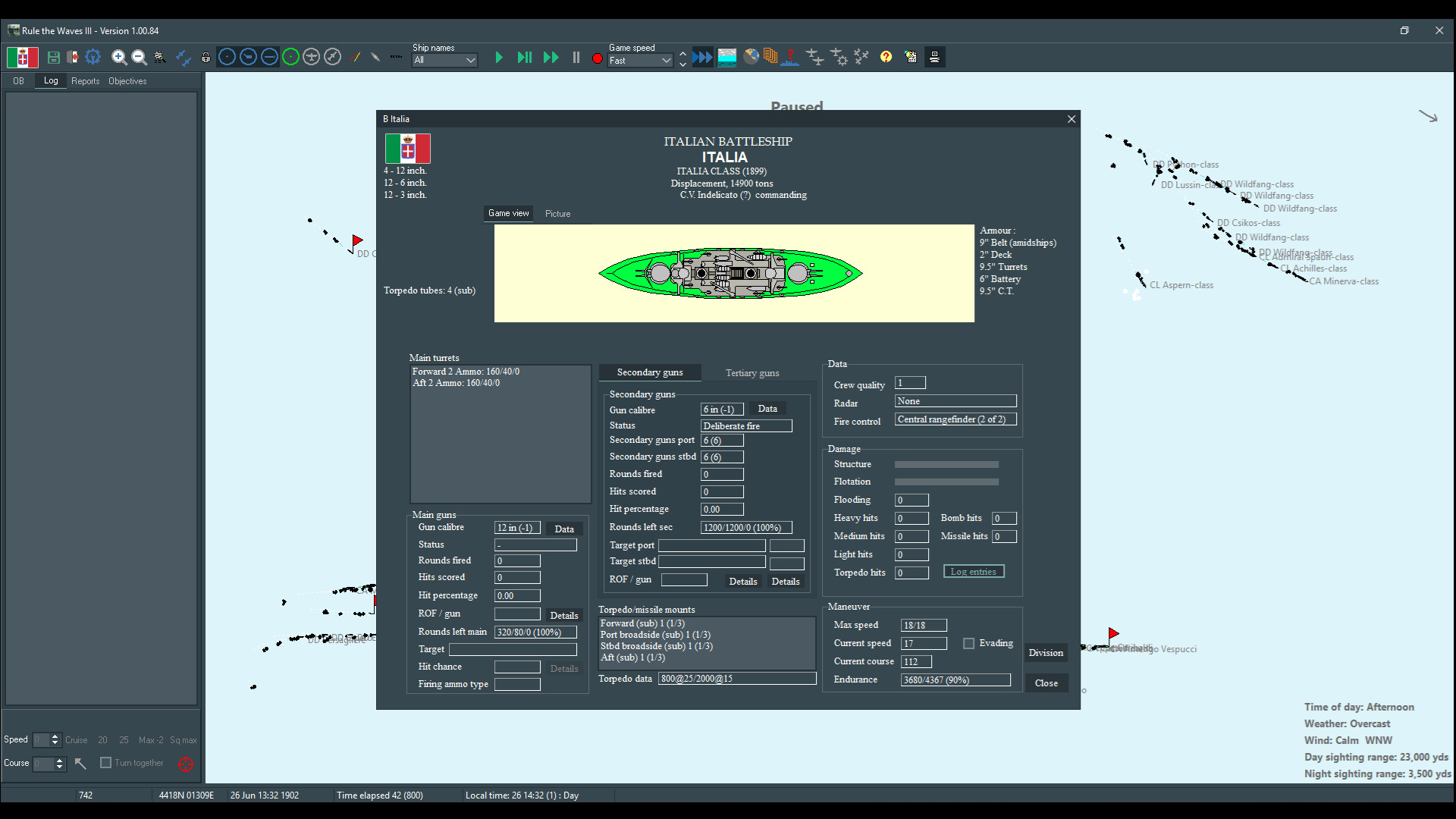
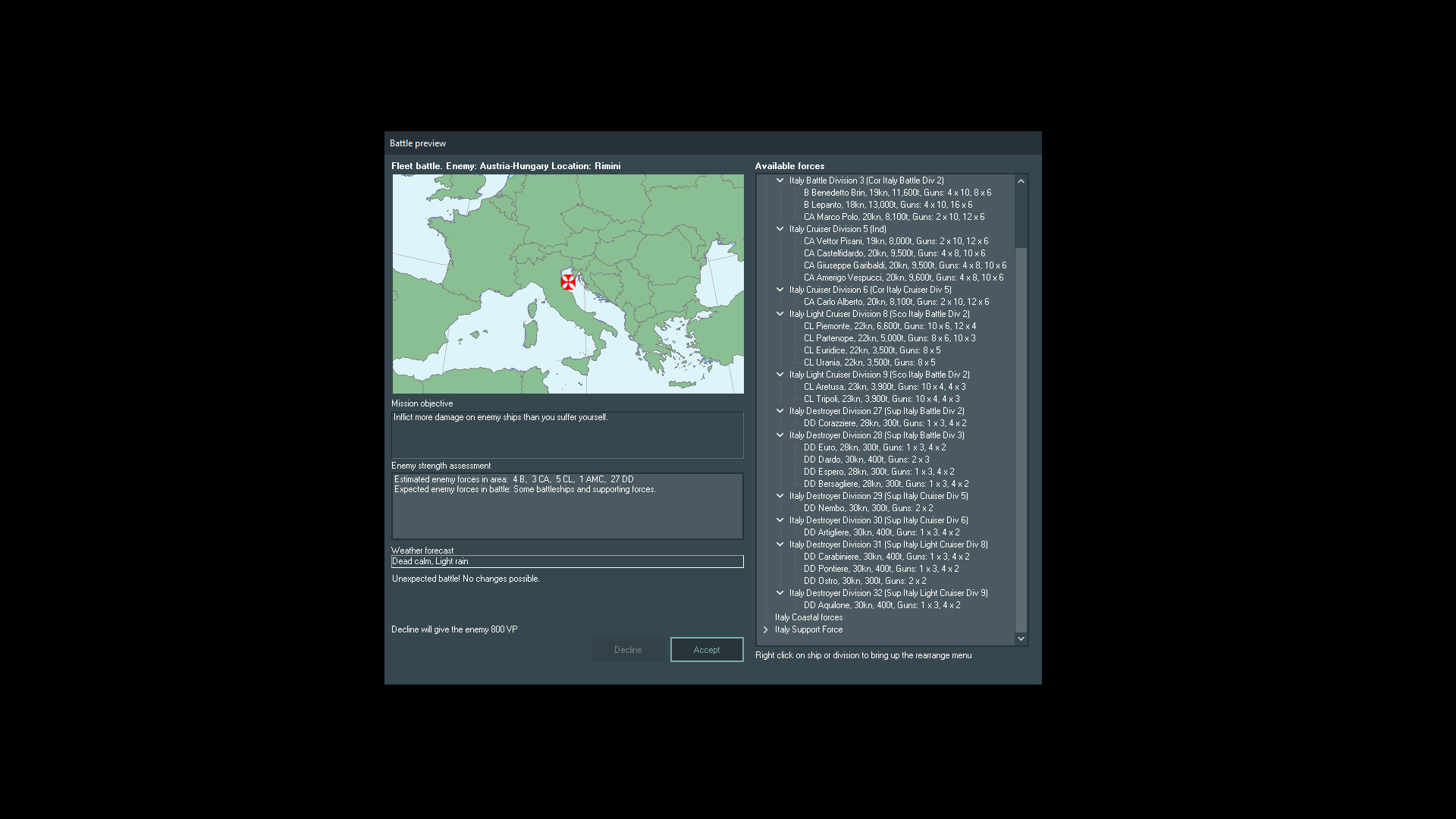
The tactical battles of Rule the Waves 3 are where all your strategic work — your ship designs, your research, your training budget — finally meets the enemy, and winning them is a skill in its own right. When an action occurs you can fight it from a top-down view in real time with pause, maneuvering your fleet, managing what you can see, directing your gunnery and launching torpedoes, or you can auto-resolve it and let the numbers decide. Fighting yourself gives you the chance to win battles your fleet might otherwise lose, by out-thinking the enemy in the moment. But a battle is not won purely in the moment; it is won by the designs and decisions you made beforehand and by a handful of tactical principles applied well. This guide covers those principles — spotting, the battle line, torpedoes, the role of weather and training, and the underrated art of disengaging.
The mindset to carry into every action is that battles are decided by advantage, not bravery. See first, shoot first, concentrate your strength, commit your torpedoes when they will tell, and never trade ships you cannot afford to lose for a victory that does not matter. Everything below serves that.
You can pause at any time to assess and issue orders, so take your time. Battles reward calm, deliberate decisions — checking the range, the visibility and the state of your ships before committing — far more than frantic micromanagement.
Win the spotting battle and fight your line
Many naval actions are decided before the heavy guns matter, in the contest to see the enemy first. Visibility in Rule the Waves 3 depends on weather, time of day and range, and your scouting assets — cruisers early on, and aircraft and radar as the decades advance — are how you find the enemy before they find you. Winning that spotting battle is a huge advantage: it lets you open fire first, bring your concentrated fleet to bear, and choose whether and how to engage, while poor visibility can hide a fleeing enemy or set up an ambush against you. So use your scouts actively, watch the conditions, and do not blunder your main fleet into a situation you cannot see.
When the battle lines meet, fight yours as a unit. Keep your capital ships concentrated in a coherent line rather than letting them straggle, so their combined firepower and the fire control you invested in can be brought to bear together. Concentrate that fire on individual enemy ships to cripple and sink them quickly, rather than spreading damage thinly across the whole enemy fleet, and hold a heading and range that play to your guns and armour. A disciplined, well-trained battle line that shoots accurately and focuses its fire can defeat a larger fleet that fights as a disorganised crowd — which is exactly how skill-focused navies overcome bigger opponents.
Concentrate your fire. Several ships hammering one target will cripple or sink it far faster than each dueling a different enemy, and a sunk or crippled ship stops shooting back. Reducing the enemy's firepower quickly is often more valuable than spreading your own damage around.
Torpedoes, weather, training and knowing when to quit
Your light ships and torpedoes are the other half of tactical success. Destroyers screen your battle line, hunt submarines and, crucially, deliver torpedo attacks, while torpedo-armed cruisers can do the same. The thing to understand about torpedoes is that individual ones often miss, so the winning approach is to launch enough of them that something connects — which is why navies built around torpedoes commit many ships to the attack at once. Time your torpedo runs for when they are likely to land and when the target cannot easily evade, and try to minimise how long your fragile attackers are exposed to enemy gunfire, because destroyers caught in the open by heavy guns do not last long. Weather and crew training quietly shape all of this: poor visibility changes how battles unfold, and well-trained crews — the product of a training budget you should not neglect — shoot straighter, control damage better and simply perform when it counts.
Finally, the most underrated tactical skill is knowing when not to fight. Not every action must be pressed to the finish. If you are outmatched, your ships are badly damaged, or the conditions favour the enemy, disengaging to preserve your fleet is frequently the right decision, because warships are expensive and slow to replace, and a navy kept intact can still win the campaign after losing a battle. Throwing away ships in an unwinnable fight, by contrast, can cripple your navy for years. Judge each action honestly: fight when you have the advantage, and break off when you do not. Combine that judgement with winning the spotting battle, a disciplined battle line, well-timed torpedoes and trained crews, and your fleet will win the actions that matter. To build the ships that make all this possible, see our ship design guide; to match tactics to your nation, the nations tier list; and for the fundamentals, the beginner guide.
| Factor | How to use it | Why it matters |
|---|---|---|
| Spotting & visibility | Scout with cruisers, aircraft, radar | See and shoot first; control the engagement |
| Battle line | Concentrate ships, focus fire | Cripples enemies fast, beats larger fleets |
| Torpedoes | Mass them, time the run | Enough launched means hits land |
| Disengaging | Break off when outmatched | Preserves ships to win the campaign |
Bringing it together
A won battle in Rule the Waves 3 is the sum of good preparation and sound tactics. You bring ships you designed for the job and crews you trained, you win the spotting battle so you see and strike first, you fight your battle line as a concentrated, focused-fire unit, you use your destroyers to screen and your torpedoes en masse when they will land, and you respect the weather and the state of your fleet enough to disengage when a fight is not worth it. None of these is complicated on its own; together they turn your strategic investments into victories at sea, and victories at sea into the prestige and security that carry your campaign. Lose sight of them — scatter your line, fritter away your torpedoes, fight on when you should run — and even a strong fleet can be ground down. Master them, and the battles become the rewarding payoff of everything you have built.
Do not let your destroyers charge heavy guns in the open. Their torpedoes are valuable, but the light ships carrying them are fragile, and a destroyer attack pressed home under concentrated enemy fire often ends with your ships on the bottom before they launch. Pick your moment, use cover and conditions, and attack when the odds favour you.