The verdict up front
Rule the Waves 3 is the deepest naval strategy game ever made, and for the right player it is close to magical. Developed by Naval Warfare Simulations and published by Matrix Games, it hands you control of a great power's navy and lets you steer it across decades of the most dramatic period in naval history — from the pre-dreadnought era of the 1890s, through the age of the battleship and the rise of the aircraft carrier, into the modern world of radar, jets and missiles. What makes it extraordinary is the breadth of what you control. You do not just command ships; you design them, fund them, research the technology that makes them possible, manage the politics and tension that decide who you fight, and then fight those wars at sea. It holds a Very Positive rating on Steam, and among naval strategy games it stands more or less alone.
So is it worth buying? If you love naval history, deep systems, or the fantasy of building and commanding your own fleet, absolutely — there is nothing else with this combination of design, strategy and decades-long campaign. The honest caveats are real and significant: the interface is dense and spreadsheet-like, the presentation is plain, and the learning curve is steep enough that you will need the manual and some patience. But push through that, and Rule the Waves 3 offers a depth and replayability almost no strategy game can match.
Rule the Waves 3 is a single-player naval grand strategy game from Naval Warfare Simulations, published by Matrix Games. It spans roughly the 1890s to the modern missile era, combining custom warship design, a deep strategic management layer (budgets, research, tension, fleets) and real-time-with-pause tactical battles. Multiple nations and start dates are available.
What you actually do
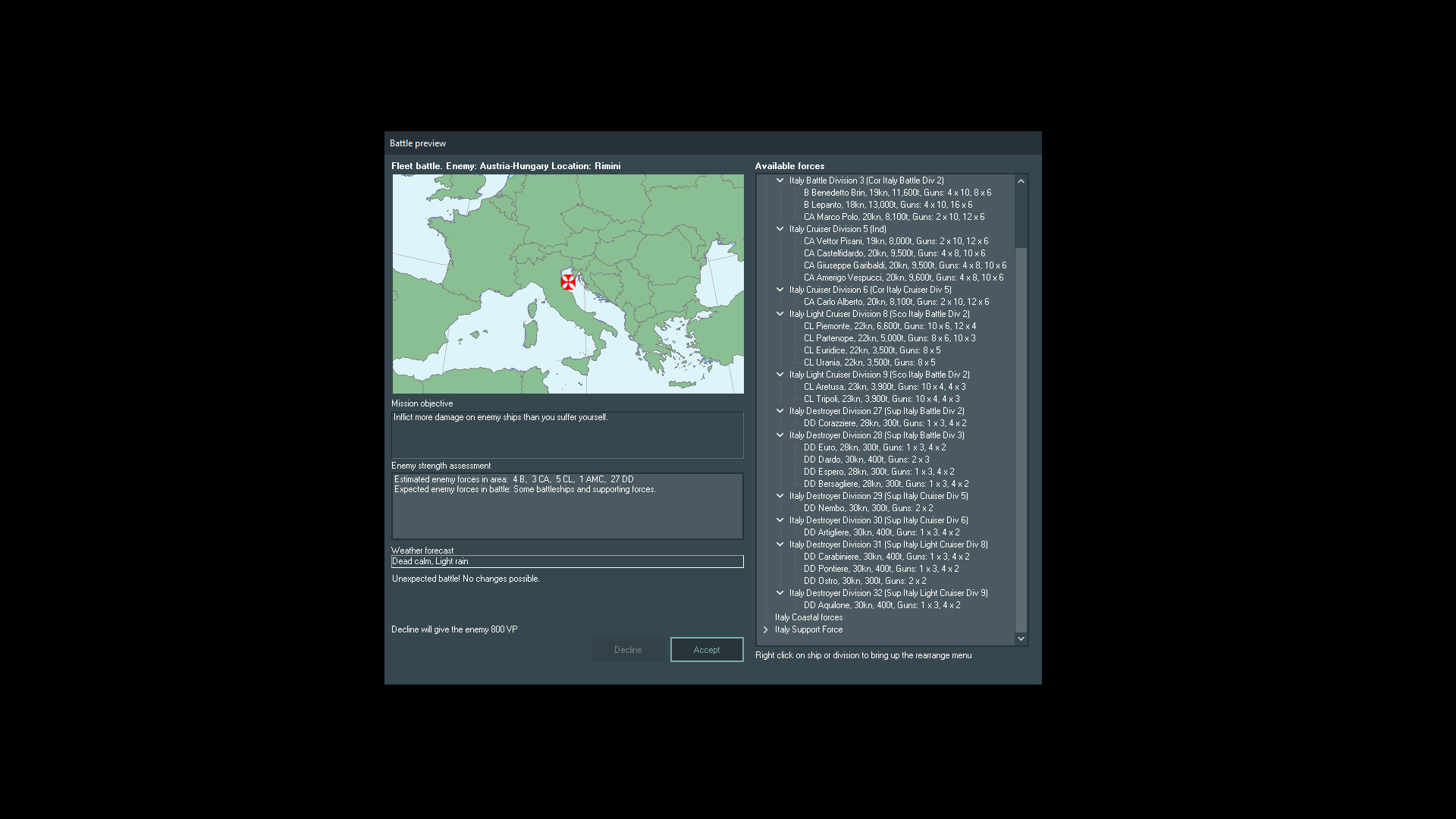
A campaign of Rule the Waves 3 plays out over decades, turn by turn, as you run the navy of a nation such as Britain, Germany, the United States or Japan. Each turn you manage the strategic side: setting your budget, deciding which warships to build and — crucially — designing them yourself, directing research across dozens of technologies, deploying your fleets, and watching the tension with rival powers rise and fall. That tension is the engine of the campaign: relations sour, crises flare, and eventually wars break out, at which point your fleet has to deliver. When a naval action occurs, you can fight it in a real-time-with-pause tactical battle — maneuvering your line, managing spotting and visibility, directing gunnery and launching torpedoes — or resolve it automatically. The results ripple back into the campaign as victories, losses, prestige and political consequences.
The effect is a living naval history that you author. Your design choices, research priorities and strategic decisions compound over years, producing a fleet and a story that are uniquely yours. Few games give you this much ownership over so long an arc.
New to the game? Start a 1900 campaign, which lets you design your own starting fleet, and lean on auto-design while you learn what makes a good ship. Our Rule the Waves 3 beginner guide walks you through your first decades.
Why ship design and the long campaign carry it
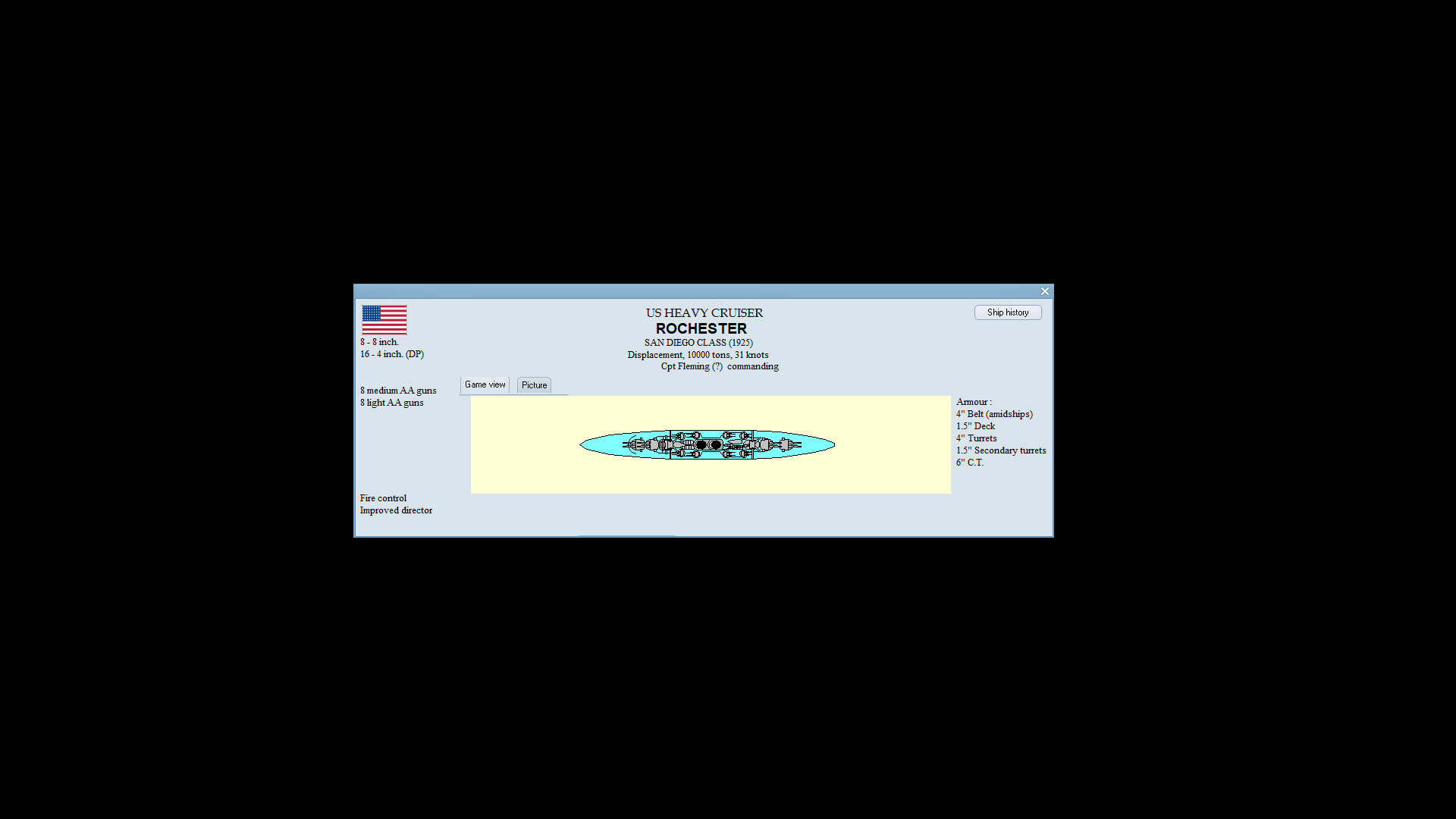
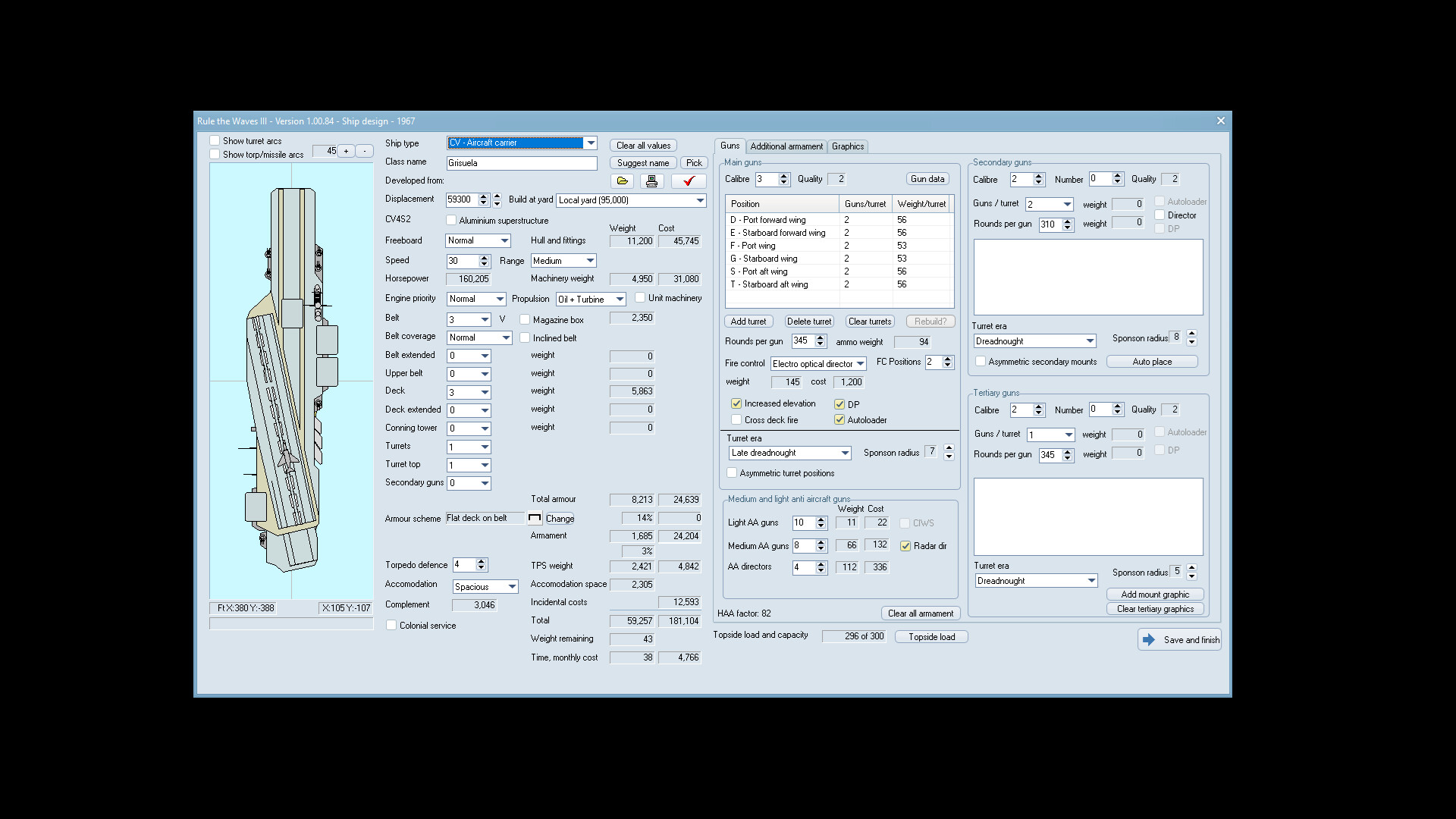
The beating heart of Rule the Waves 3, and the reason it inspires such devotion, is the ship design system. You do not pick warships from a list; you design them, balancing main guns, secondary armament, armour, engine power and speed, torpedoes, range and displacement against your era's technology and your ever-tight budget. Every decision is a trade-off — more armour means less speed or fewer guns, a bigger ship costs more and takes longer to build — and the ship you create then lives or dies on those choices in battle. This single system would carry a lesser game on its own; here it is woven into everything, because the fleet you design is the fleet you fight with, decade after decade.
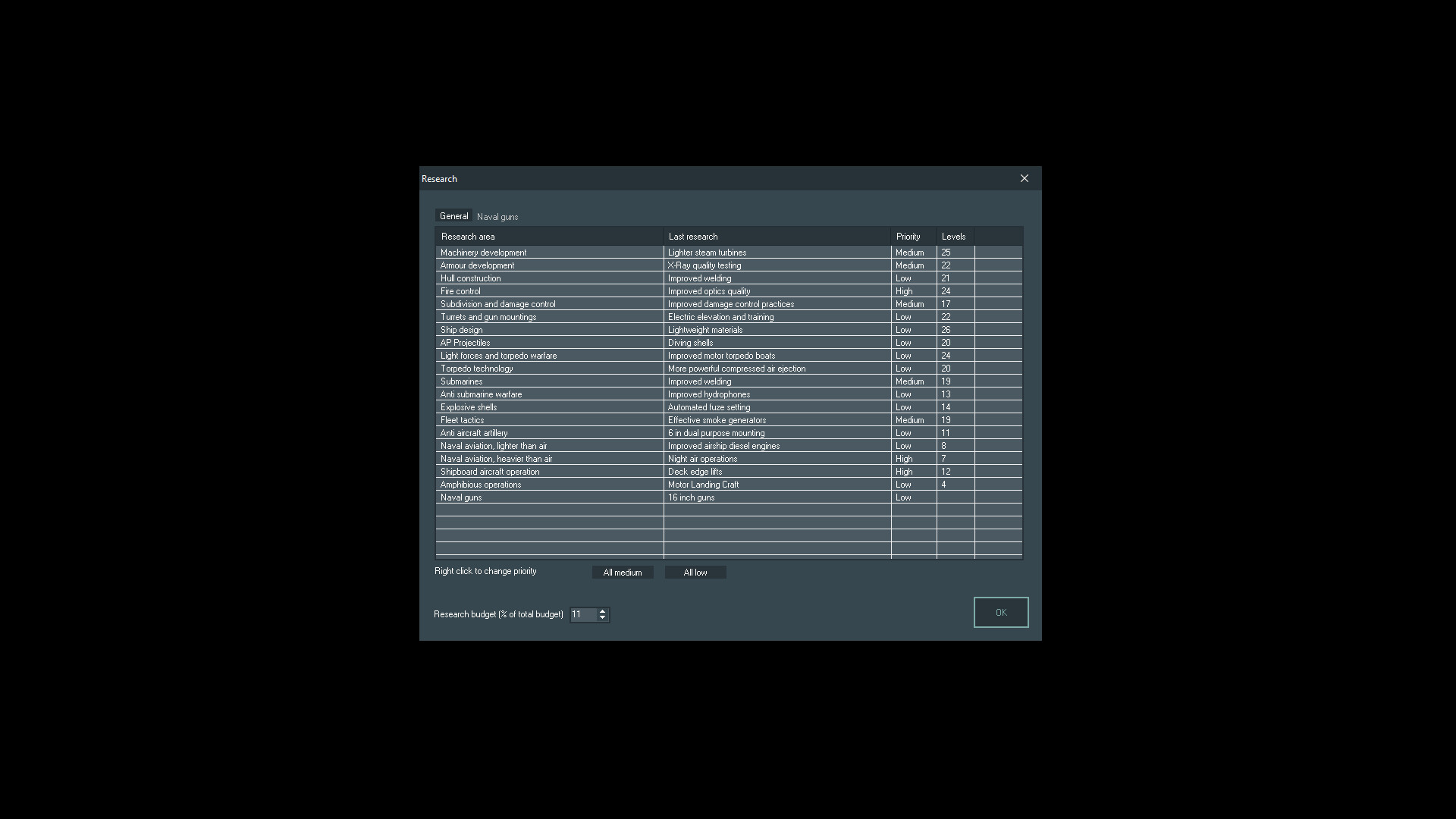
Wrapped around that is the campaign, and its depth is staggering. Budgets force hard priorities; research transforms what is possible as the decades turn, taking you from coal-fired pre-dreadnoughts to carrier aviation and beyond; tension and politics decide your wars; and the long timeline means your decisions have consequences that play out over years. Because so much is simulated and so much emerges from your choices and your rivals', no two campaigns are alike, and the replayability is immense. The strategic layer and the design system reinforce each other into something far greater than either alone. Our ship design guide and nations tier list go deeper.
Pros
- +A brilliant, endlessly engaging custom warship design system.
- +An enormously deep strategic campaign spanning decades of naval history.
- +Tense real-time-with-pause battles where your designs and decisions matter.
- +Huge replayability across nations, eras and emergent wars.
Cons
- −A dense, spreadsheet-like interface with a steep learning curve.
- −Plain, functional presentation and abstract, top-down battles.
- −Little hand-holding — you must lean on the manual to learn it.
- −English only and very text-heavy.
Battles and longevity
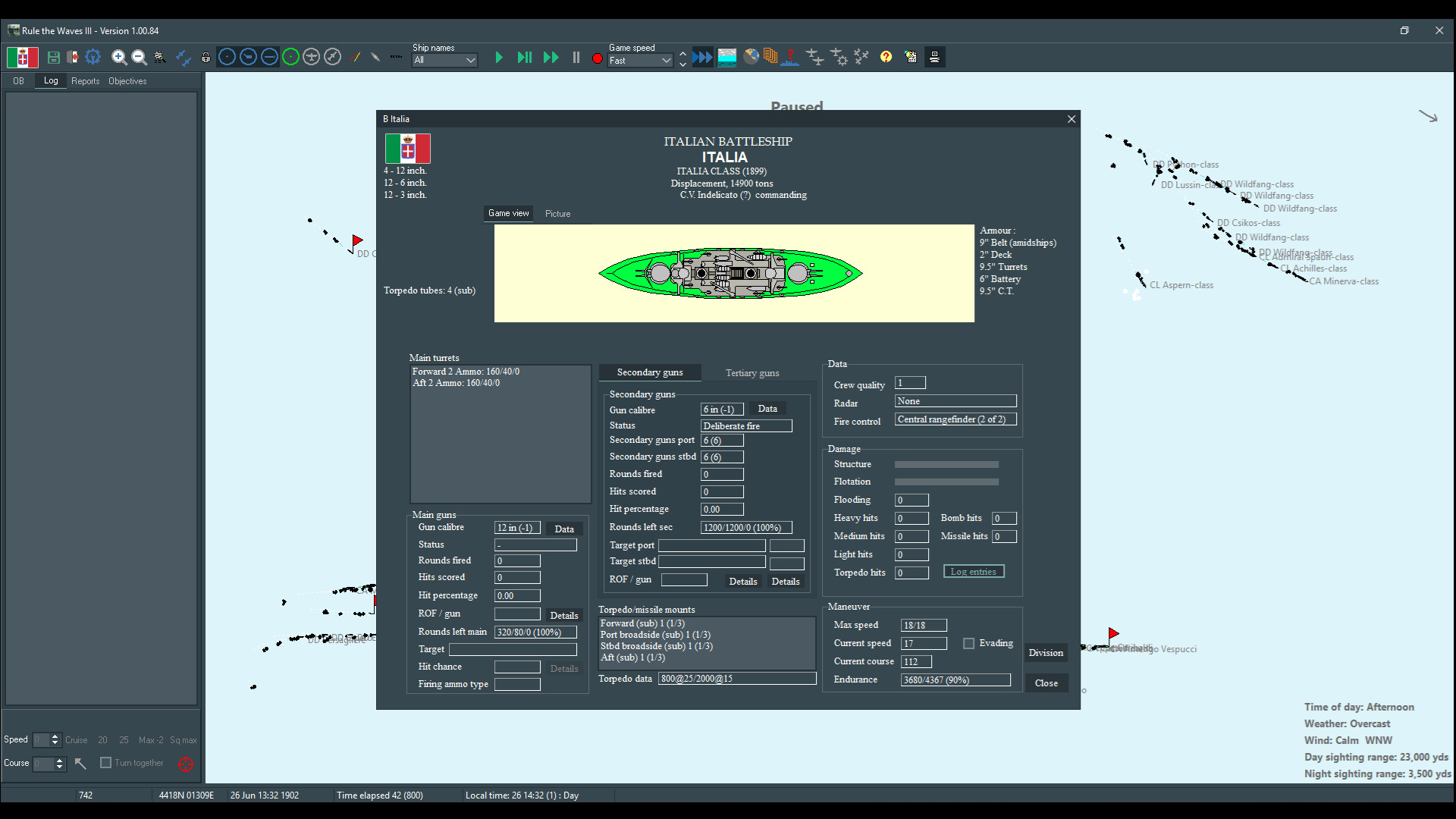
The tactical battles are where your strategic work is tested, and they are genuinely tense. Fought from a top-down view in real time with pause, they ask you to maneuver your fleet, win the spotting and visibility battle, direct your gunnery and time your torpedo attacks, all while your ship designs and crew training quietly decide what is possible. They are abstract rather than spectacular — this is not a game of crashing waves and cinematic explosions — but the tension is real, because these are the ships you designed and the war you steered into, and the outcomes matter. You can also auto-resolve actions you would rather not fight, keeping the focus on the strategic picture when you want it. Between the design system, the decades-long campaign, the roster of playable nations and the emergent wars, the longevity is enormous; players sink hundreds of hours into it and keep finding new campaigns to run.
That combination — a brilliant design system, a deep campaign and meaningful battles, all endlessly replayable — is why Rule the Waves 3 has such a devoted following despite its rough edges. It is a game you settle into for the long haul.
The honest weaknesses
Now the part that keeps Rule the Waves 3 from being for everyone. The interface is dense and spreadsheet-like, packed with numbers, menus and reports, and it does little to ease you in — you will need the manual and some determination to learn how everything connects. The presentation is plain and functional throughout, from the strategic screens to the abstract, top-down battles, so anyone hoping for visual spectacle will be disappointed. And the learning curve is steep: this is a deep simulation that expects you to engage with its systems, not a streamlined, accessible strategy game. It is also English only and extremely text-heavy, which is a real barrier for many players.
None of this undermines the brilliance underneath, but it is honest to say Rule the Waves 3 asks a lot before it gives. It is a game that rewards patience and curiosity enormously, and frustrates anyone wanting a smooth, guided or good-looking experience.
Buy Rule the Waves 3 for its depth, its ship design and the fantasy of building a navy over decades, not for polish, accessibility or spectacle. If you need a gentle tutorial, a clean interface or cinematic battles, weigh that carefully. If the deepest naval strategy game ever made excites you, nothing else comes close.
Who should buy it
If you love naval history, deep strategy, or designing your own machines of war, Rule the Waves 3 is essential — a one-of-a-kind game that lets you build and command a navy across the most fascinating century in naval history, with a design system and strategic depth no rival can match. Grand strategy and simulation fans who relish systems and long campaigns will find more to sink into here than almost anywhere else, and with effectively limitless replayability the value is exceptional. To get past the steep start, read our beginner guide and ship design guide, then study the nations tier list and battle guide.
Who should pass? Anyone who needs a polished, accessible or visually spectacular strategy game, or who has no patience for a dense interface and a steep learning curve. Be honest about that, because the game is demanding. For the players it suits — naval enthusiasts and deep-strategy lovers — it is the finest naval strategy game ever made, with the honest asterisk that it is hard, plain and unapologetically deep.