Design is everything
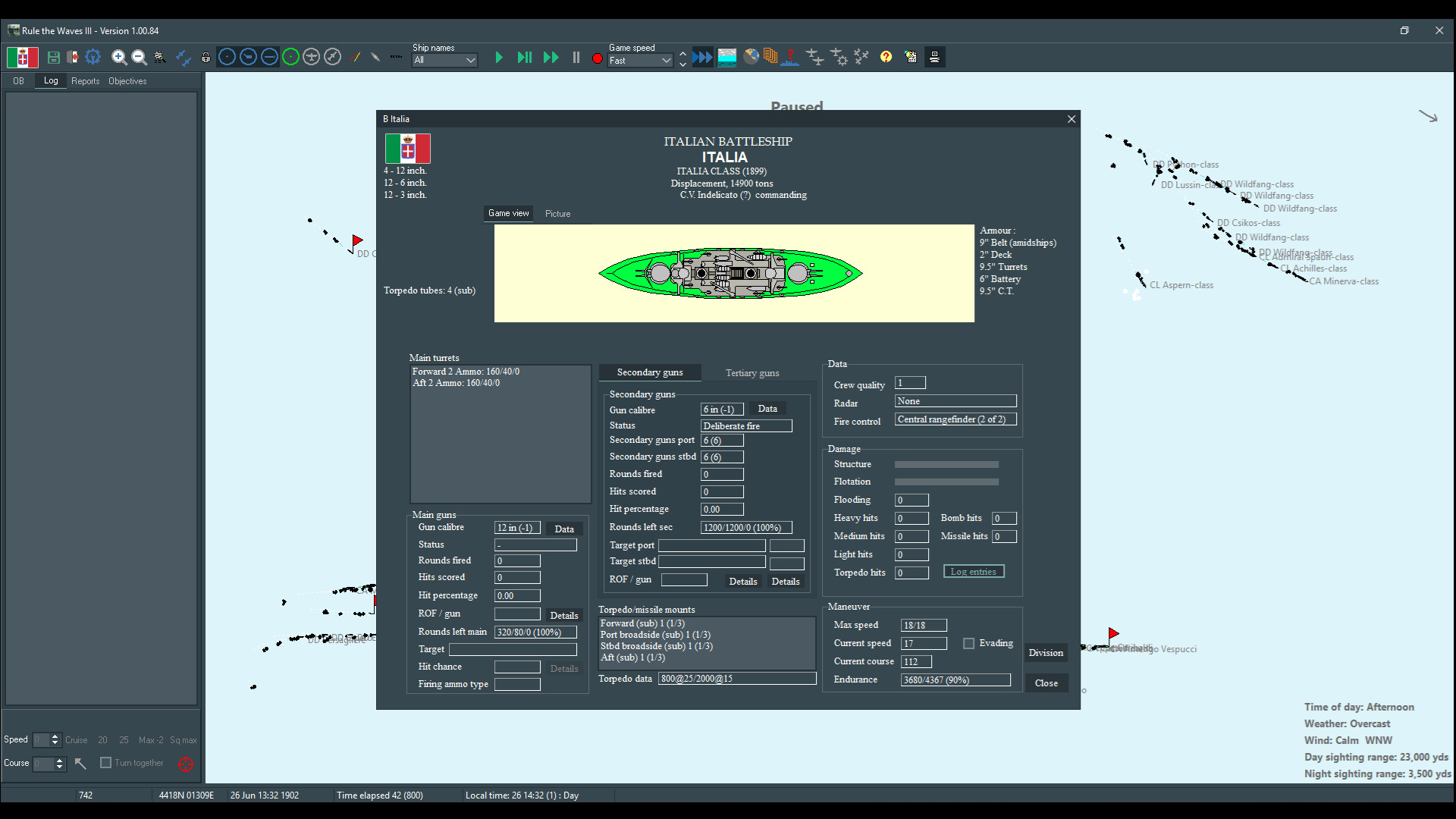
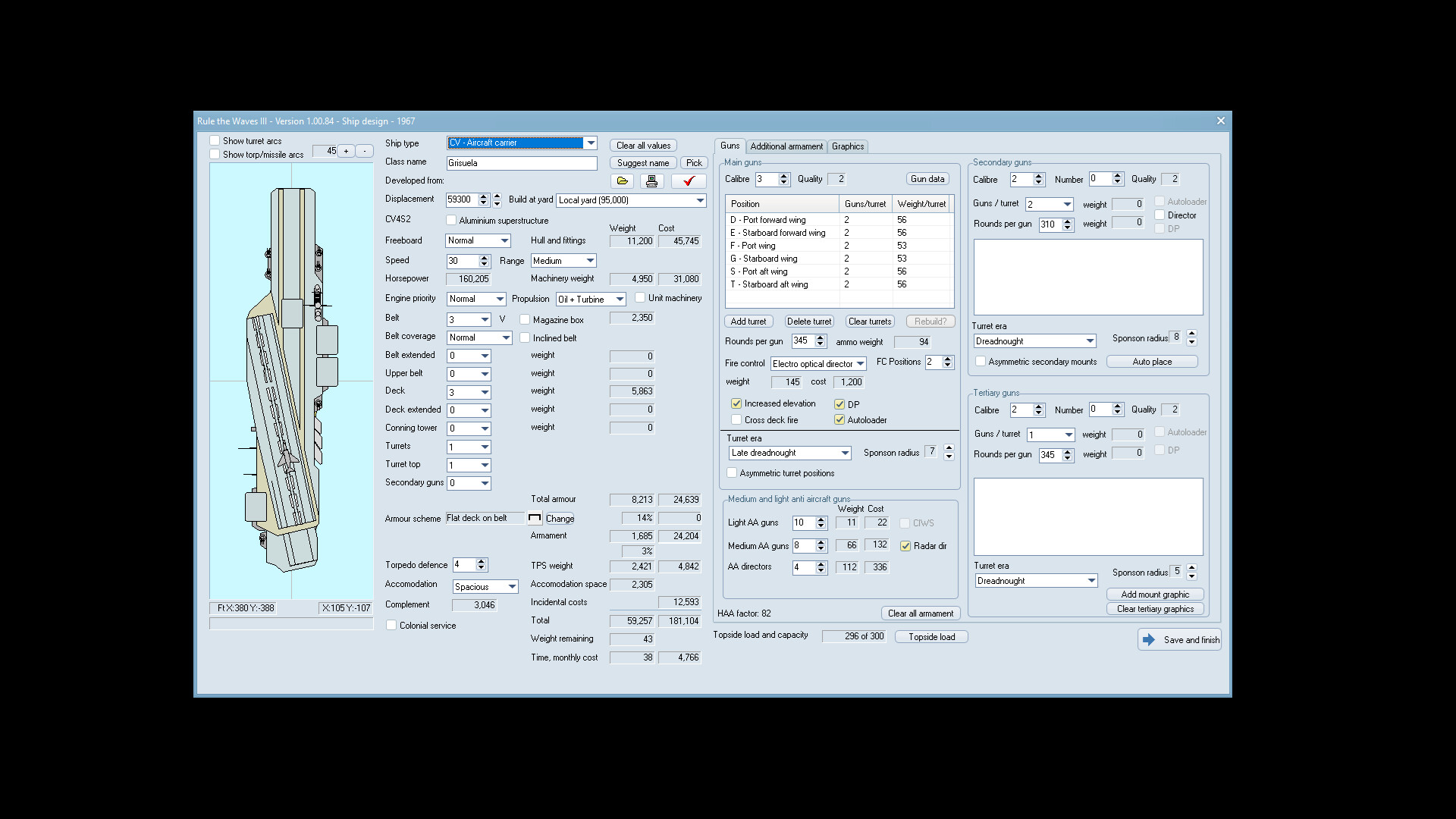
Ship design is the soul of Rule the Waves 3. You do not choose your warships from a catalogue; you create them, and the ships you create are the ships you fight with for years, so the quality of your designs shapes the whole campaign. The design screen hands you a hull and a displacement and asks you to divide that tonnage among everything a warship might want — main guns, secondary guns, armour, engine power and speed, torpedoes, range and more — all within the bounds of the technology you have researched and the budget you can afford. The crucial truth, and the thing every good designer internalises, is that you cannot have it all. Displacement and money are finite, and every element competes for them, so designing a ship is really an exercise in deciding what it should be good at and accepting that it will be weaker elsewhere. This guide is about making those choices well.
Once you embrace that designing means compromising, the system opens up. A great warship is not one that is good at everything; it is one that does its specific job superbly, with its weaknesses placed where they will not matter. Everything below is about achieving that.
While you are learning, use auto-design freely — it builds serviceable ships and lets you focus on the campaign. But designing your own ships is one of the biggest edges in the game, because you can tailor each vessel to your nation's doctrine and theatre far better than the auto-designer ever will.
The core trade-offs
Every ship design in Rule the Waves 3 comes down to balancing four things — firepower, protection, speed and range — against the two resources that pay for them, displacement and cost. Each pulls against the others. More armour makes a ship far harder to sink, but armour is heavy, so it demands a larger, costlier hull or forces you to cut guns or speed to fit it. More speed means more engine power and the space and weight that come with it. Bigger main guns hit harder and outrange smaller ones, but they are heavy and expensive and reduce how many you can carry. A long cruising range, vital for some theatres, eats into tonnage you could spend elsewhere. There is no free lunch: every gain in one area is paid for in another.
The art is to balance these for the ship's intended role rather than chasing high numbers everywhere. A design that tries to be heavily armed, heavily armoured, fast and long-ranged all at once becomes enormous, ruinously expensive, and usually mediocre at its actual job. A focused design that spends its tonnage on what the ship is for — and deliberately skimps on what it does not need — delivers far more capability for the cost. Learning to spend displacement where it counts, and to accept weaknesses where they are acceptable, is the whole skill of ship design.
Before you place a single gun, decide what the ship is for and what it can afford to be bad at. A battleship can be slow; a destroyer can be fragile; a coastal ship can have short range. Naming the acceptable weakness first stops you wasting tonnage protecting against everything.
Designing each class to its role
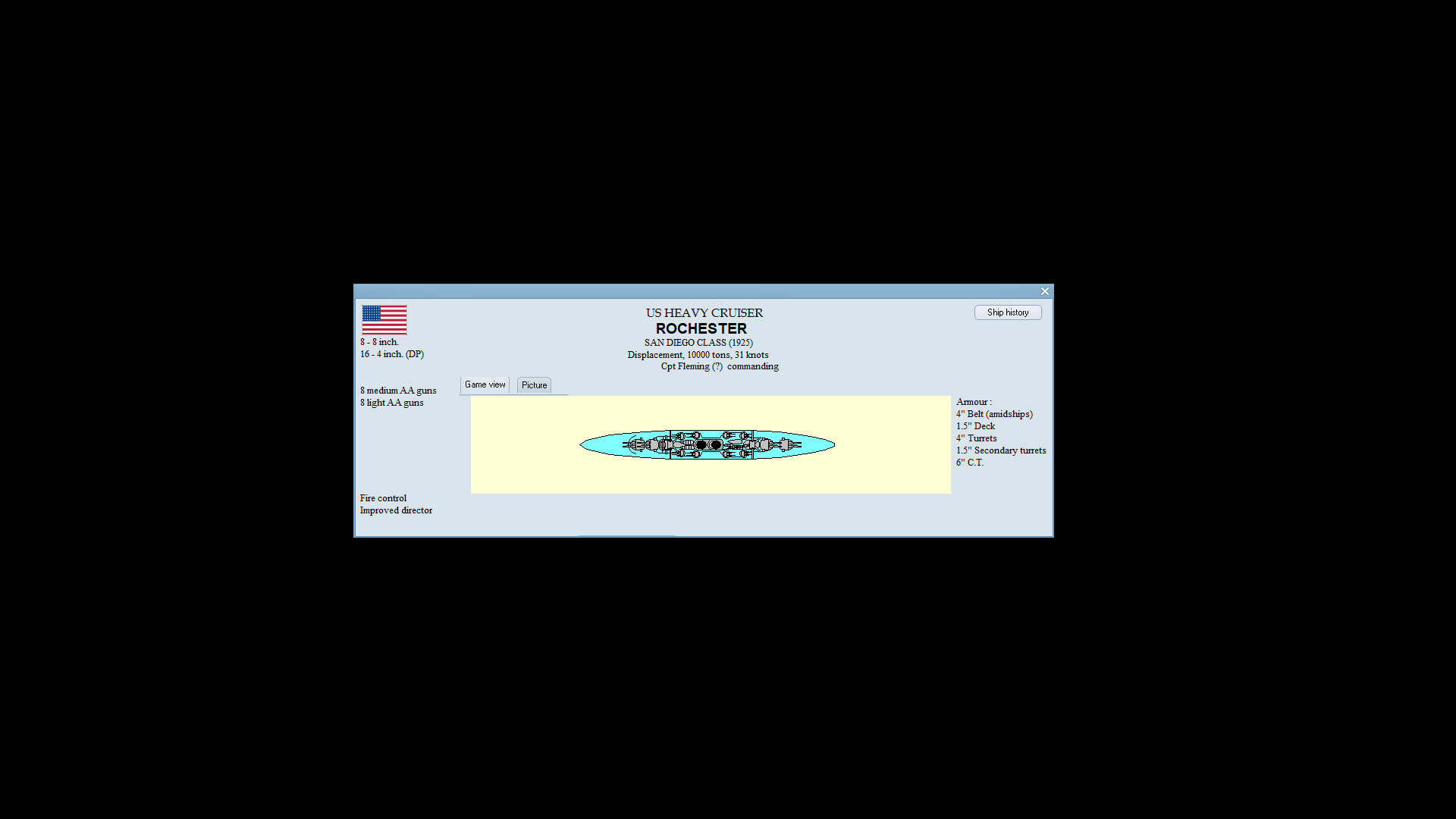
Because each ship type has a different job, each wants a different balance, and good fleets are built from ships designed to their roles. Capital ships — battleships and battlecruisers — are your battle line, so they prioritise heavy main guns and strong armour to deal and absorb punishment. A battleship can afford to be large, costly and a little slow; what it cannot afford is to skimp on the firepower and protection that define it. Battlecruisers trade some of that armour for higher speed, filling a faster-striking role. Cruisers are your scouts and trade protectors, so they want speed and range above heavy armour, with guns suited to fighting other cruisers and screening the fleet. Destroyers are the workhorses of the screen: fast and torpedo-armed, built to protect your capital ships, hunt submarines and dash in to launch torpedo attacks, accepting that they are thin-skinned and expendable. Later in the timeline, carriers shift the balance entirely, designed around aircraft capacity rather than guns.
The unifying principle is to give each ship the qualities its role demands and not the ones it does not. Loading a destroyer with heavy armour squanders the speed and numbers that make destroyers useful; making a battleship fast and long-ranged at the expense of guns and protection produces an expensive ship that loses the battles it was built to win. Design every vessel as a specialist, and your fleet becomes a team where each part does its job.
| Ship class | Prioritise | Accept as weakness | Role |
|---|---|---|---|
| Battleship | Heavy guns, strong armour | Speed, cost | Anchor the battle line |
| Battlecruiser | Heavy guns, speed | Armour | Fast capital striking power |
| Cruiser | Speed, range, moderate guns | Heavy armour | Scout, screen, protect trade |
| Destroyer | Speed, torpedoes | Protection | Screen, torpedo attacks, ASW |
Technology, upgrades and putting it together
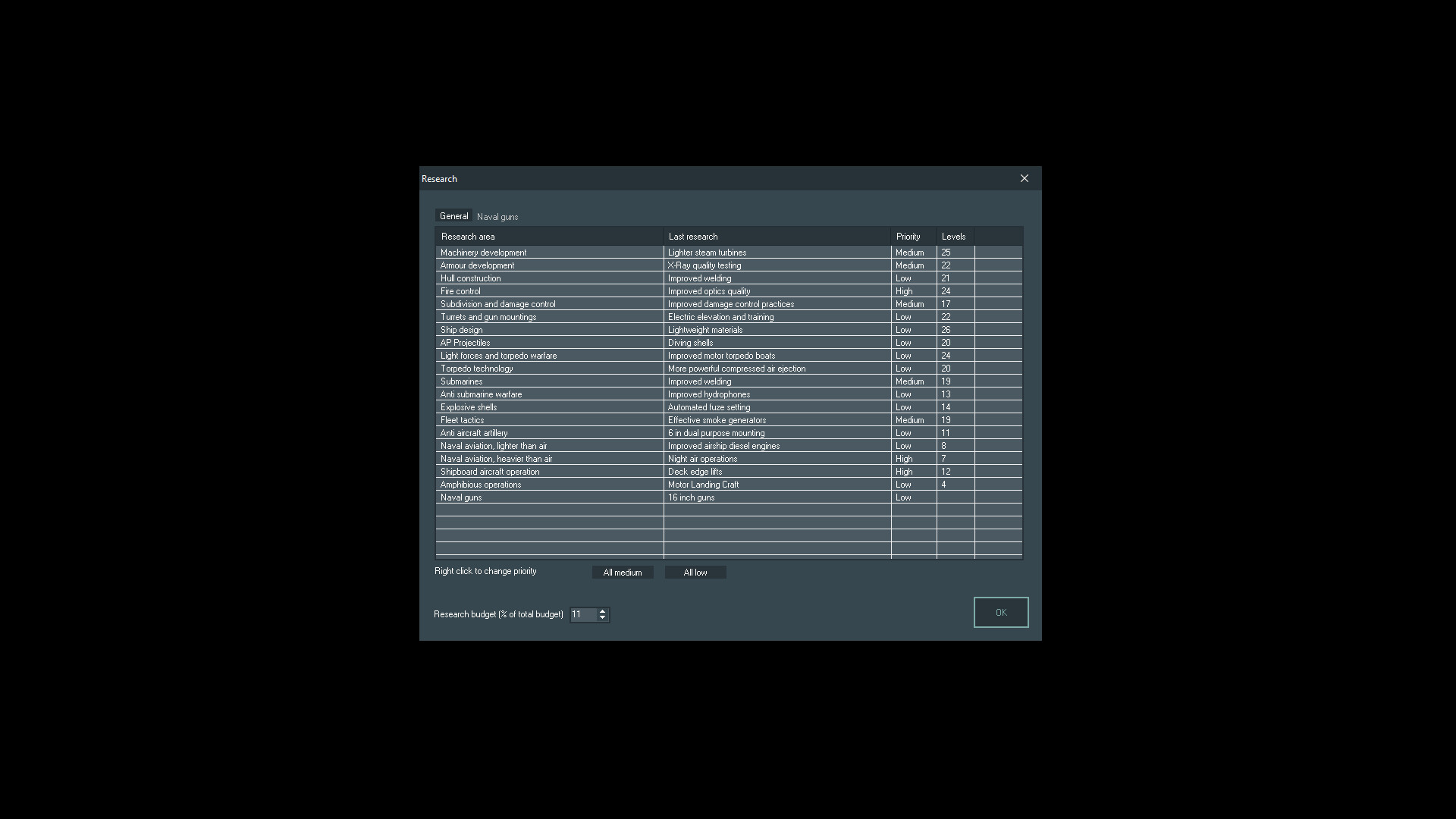
Your designs do not exist in a vacuum; they are shaped by the technology you have researched and should evolve as that technology advances. Early in a campaign you are working with primitive guns, armour and engines, so your ships reflect those limits; as research delivers better fire control, more powerful engines, improved armour, torpedoes and eventually aviation and radar, you can design markedly more capable ships. This is why ship design and research are partners: focusing your research (say, on fire control and gunnery) lets you design ships that out-fight others of similar size, and every few years you will want to design fresh classes that take advantage of your latest technology rather than building the same outdated design over and over.
Bring it all together and good ship design becomes a clear, repeatable process: decide the ship's role, design it around the technology you have, spend your displacement on the firepower, protection, speed or torpedoes that role demands, accept weaknesses where they are tolerable, and keep an eye on cost so you can actually afford a fleet of them. Pair focused designs with a balanced fleet and sound research, and your navy will punch well above its budget. To see how those designs perform when it counts, read our battle guide; to match your designs to your nation's strengths, the nations tier list; and if you are just starting, the beginner guide.
Do not keep building the same design for decades. Technology moves fast in Rule the Waves 3, and a class that was strong ten years ago will be outclassed by newer enemy ships. Design new classes as your research advances, and retire or refit obsolete designs, or your fleet will quietly fall behind.