Start in a way that lets you learn
Rule the Waves 3 is famously deep, and the fastest way to bounce off it is to start in a hard situation and drown in systems you have not learned. So the single best thing a new player can do is choose a forgiving start. For your nation, pick a strong, resilient navy — Britain is the classic choice, beginning powerful and staying competitive for decades, which gives you the breathing room to make mistakes and still recover. The United States is another fine option, with a robust economy and few early threats. Steer clear of the hardest starts, like small or politically hemmed-in navies, until you understand how the game works. For your era, choose the 1900 start: it lets you design your own starting fleet, so you learn ship design from the very beginning, and it begins in the pre-dreadnought age, letting you grow alongside the technology as the great innovations arrive.
With a strong nation and an early, simple starting point, the game becomes a story you can actually follow, where each new system arrives in turn rather than all at once. That alone makes the difference between an overwhelming first campaign and an enjoyable one.
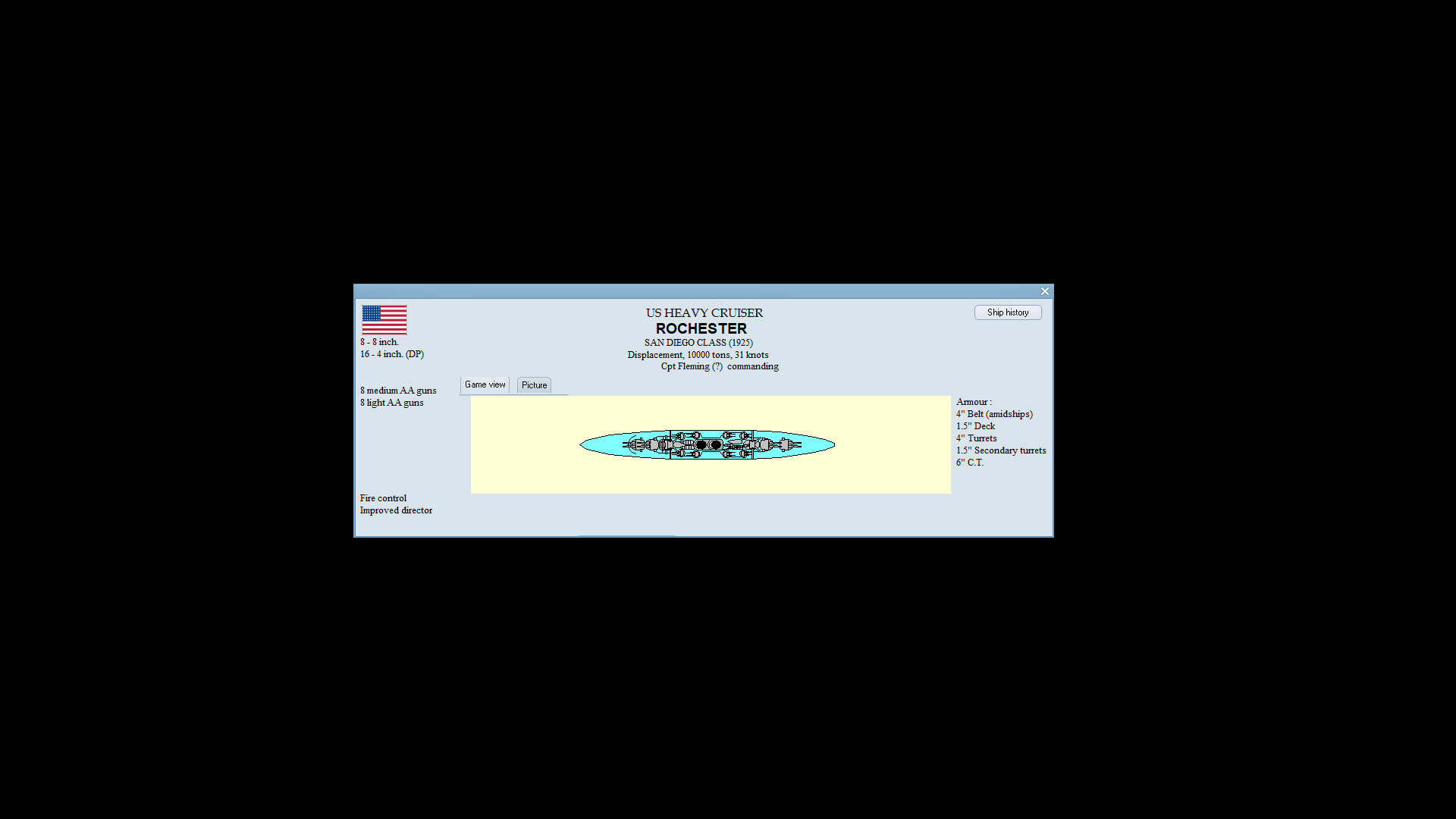
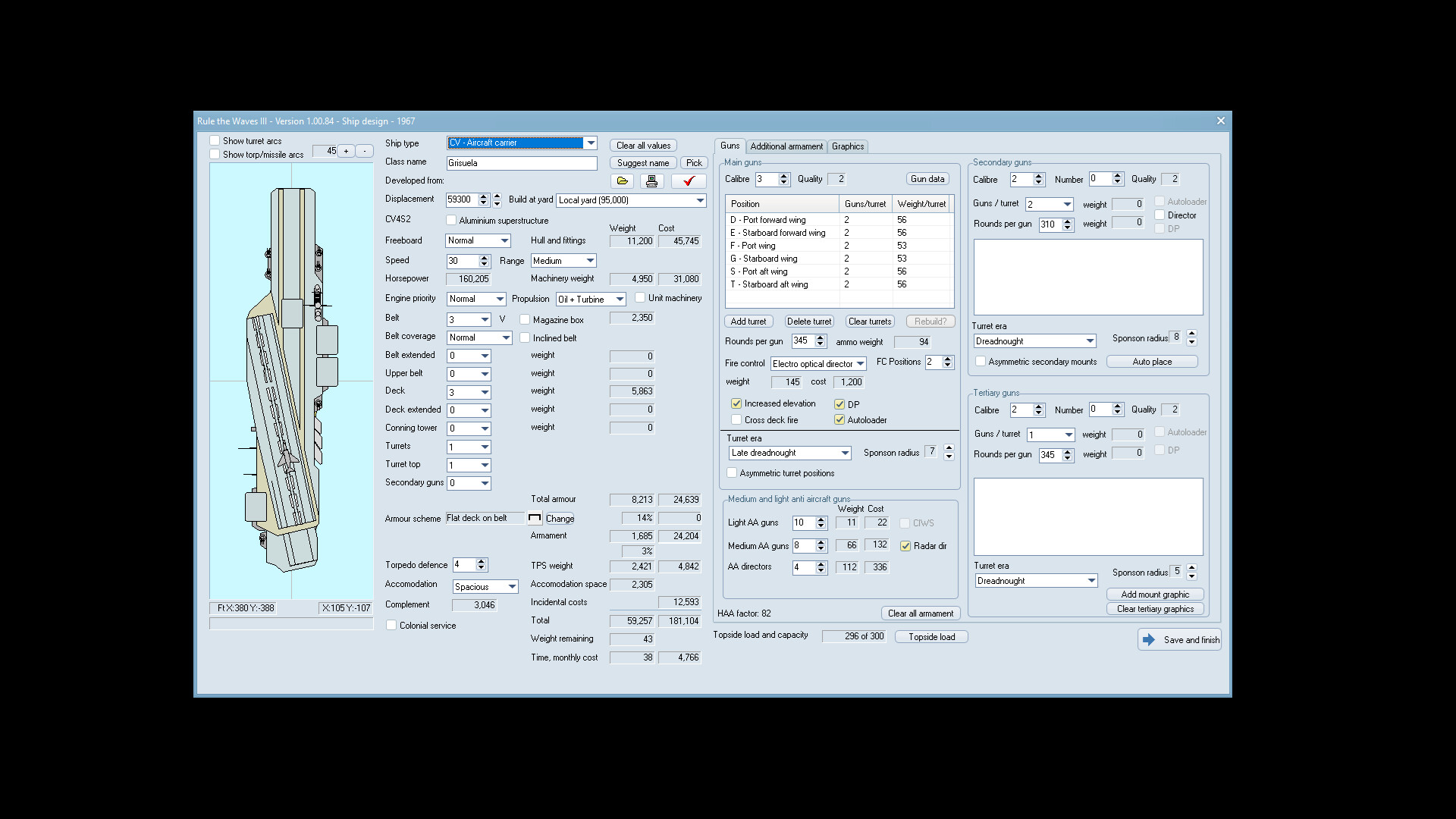
Do not be afraid to use auto-design for your ships while you are learning. It produces serviceable warships and lets you focus on the strategic picture — budget, research, fleet and tension — until you are ready to take design into your own hands. Our ship design guide covers that next step.
Manage your budget and research
Once your campaign is running, the discipline that keeps your navy healthy is money. Your budget has to do three jobs at once — build new ships, maintain the fleet you already have, and fund your research — and the classic beginner mistake is to blow it all on construction, leaving you unable to maintain your ships or react when events demand. Spend carefully: keep a reserve, stagger your building so you are not paying for and crewing a dozen new ships at once, and remember that a smaller fleet you can fully maintain and train beats a larger one you cannot afford to run. A well-run navy is balanced, not bloated.
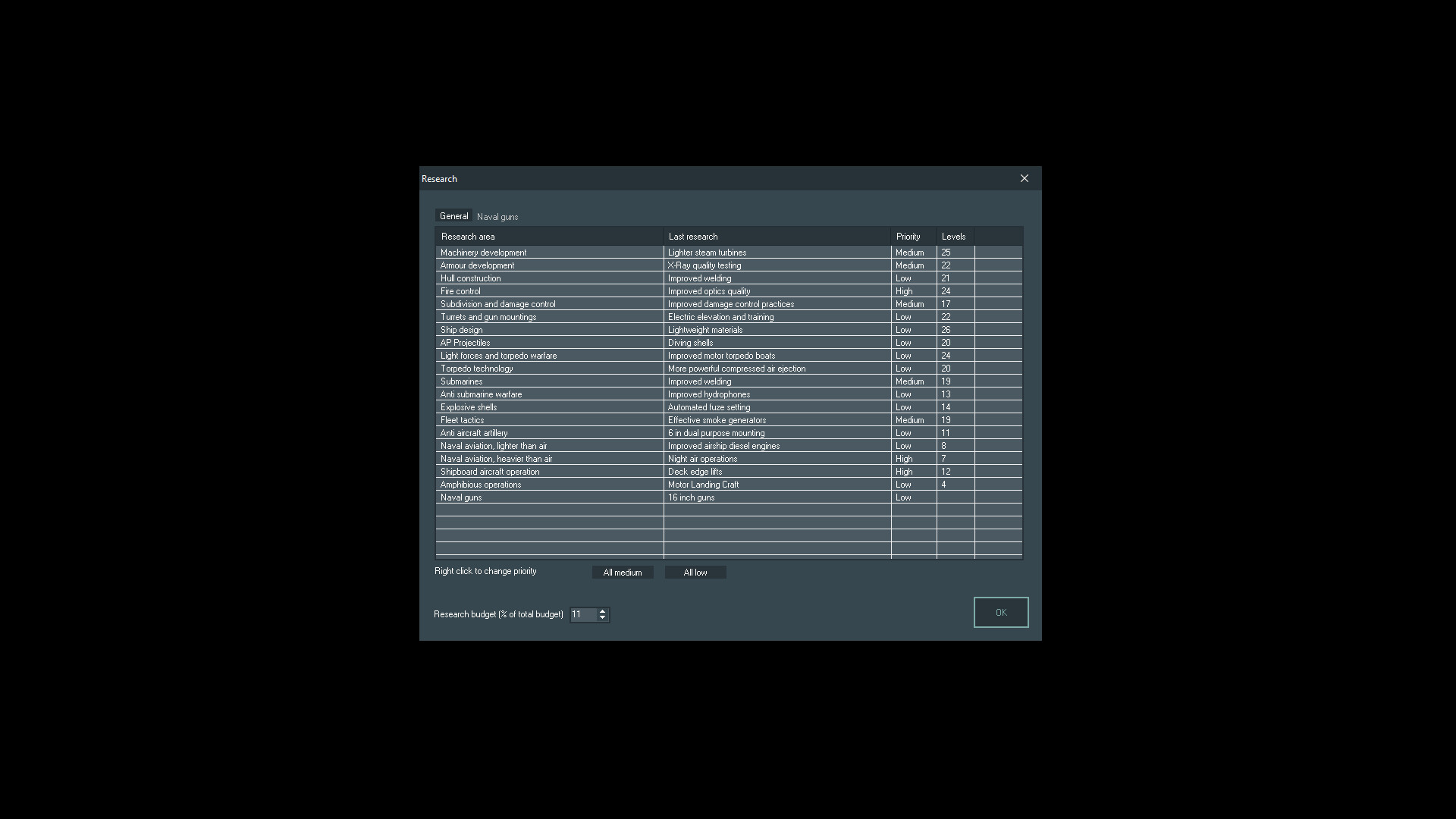
Research deserves the same discipline. You set priorities across many areas — guns, armour, engines, fire control, torpedoes, aviation and more — but funding is finite, so setting everything to high priority simply means nothing is prioritised and everything crawls. Instead, pick a few areas that fit your strategy and push them. A navy built around its battle line, for instance, benefits hugely from prioritising fire control and gunnery, which let your ships hit harder and more accurately than the enemy. Focused research turns your budget into a real edge.
Stagger your shipbuilding across roles and years. Rather than building three of the same class at once, alternate between a battleship, a cruiser and some destroyers over several years. This spreads out the cost and dock space, keeps your fleet balanced, and lets later ships benefit from newer technology.
Build a rounded fleet and watch the tension
A strong navy in Rule the Waves 3 is a balanced one, so resist the urge to pour everything into giant battleships. You want a mix of ship types that support each other: capital ships (battleships and battlecruisers) to anchor your battle line, cruisers to scout and protect trade, and destroyers to screen your fleet, hunt submarines and deliver torpedo attacks. A lopsided navy — all battleships and no screen, or all small ships and no punch — gets exploited, while a rounded fleet can handle the variety of situations the campaign throws at you. While you are still learning, auto-design is perfectly fine for filling these roles; the important thing early on is the balance of your fleet, not perfect individual designs.
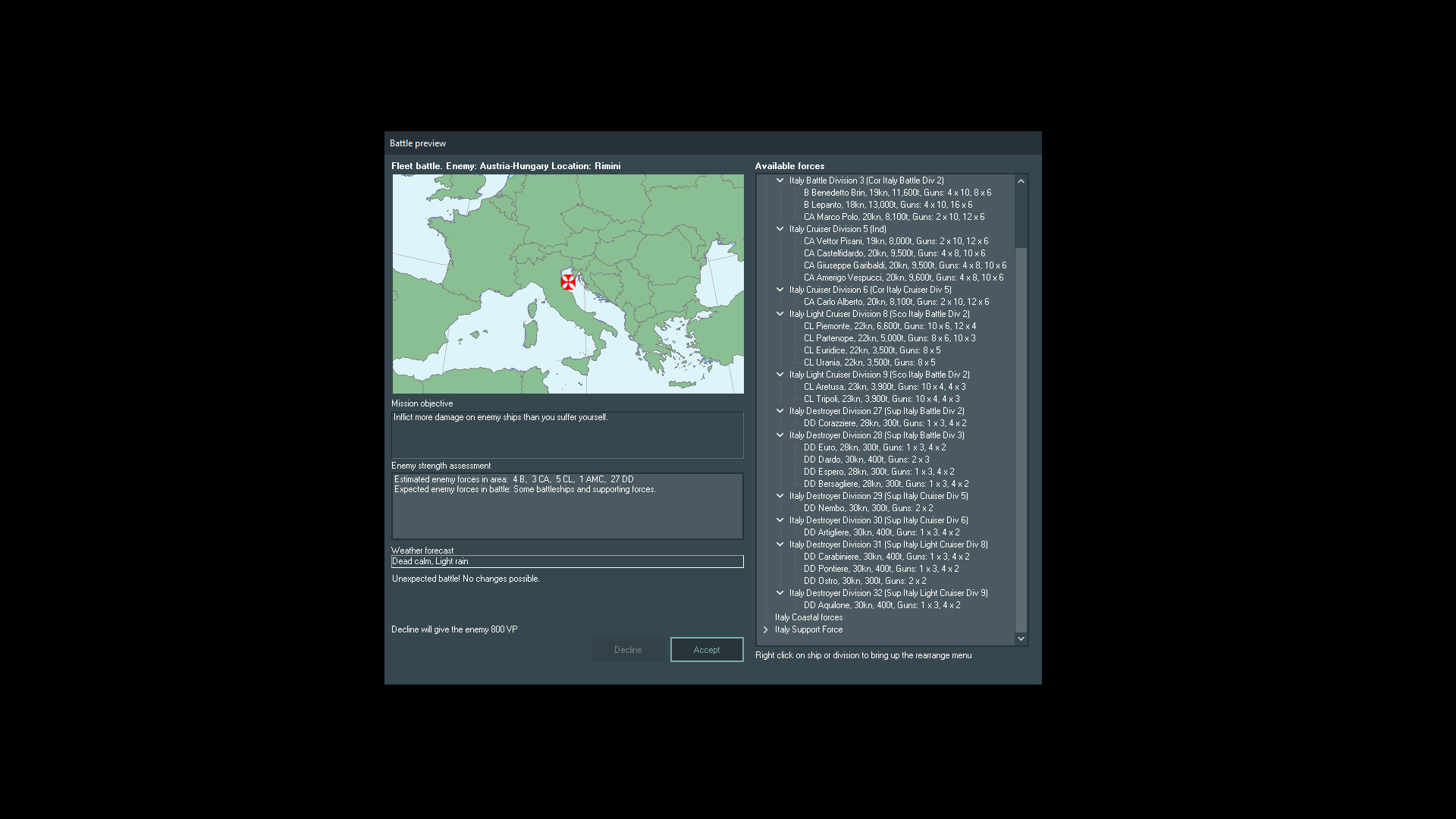
The other thing to keep your eye on is tension. Each rival nation has a tension level with you that rises and falls with events and crises, and when it climbs high enough, war comes. Treat it as an early-warning system: if relations with a neighbour are souring, that is your cue to prepare — build, train and position your fleet before the crisis becomes a shooting war. Being caught mid-construction by a war you did not see coming is how promising campaigns unravel. Watch the tension, prepare in time, and you will fight your wars on your terms.
| Priority | Do this | Why it matters |
|---|---|---|
| Nation & start | Britain or USA, 1900 start | Forgiving, and you design your fleet |
| Budget | Stagger building, keep reserves | A bankrupt navy cannot fight |
| Research | Focus a few key areas | Spreading it thin slows everything |
| Fleet & tension | Build balanced, prepare for war | Rounded fleets win; warning prevents disaster |
Survive your first decades
Put it together and your first campaign has a clear shape: pick Britain or the USA and the 1900 start, design or auto-design a balanced starting fleet, then run your navy decade by decade — budgeting carefully, focusing research, staggering construction, and watching tension so no war catches you off guard. You will make mistakes, lose ships, and misjudge a crisis or two; that is part of learning, and a forgiving nation lets you absorb it. The goal of your first campaign is not to dominate the world but to understand how the strategic loop fits together — how budget, research, ship design, fleet composition and tension all feed into one another — so the dense, intimidating systems gradually become second nature.
Survive your first few decades this way and Rule the Waves 3 stops being overwhelming and starts being brilliant. From there you can dig into the depth at your own pace. When you are ready, our ship design guide helps you build better warships, the nations tier list compares who is good to play, and the battle guide teaches you to win the actions your fleet fights.
Do not overbuild early. The most common way new players ruin a campaign is launching a huge, expensive fleet they cannot maintain, then finding themselves broke when war or a crisis arrives. Build within your means, keep a reserve, and grow your navy steadily — a sustainable fleet beats an impressive one you cannot afford.