The verdict up front
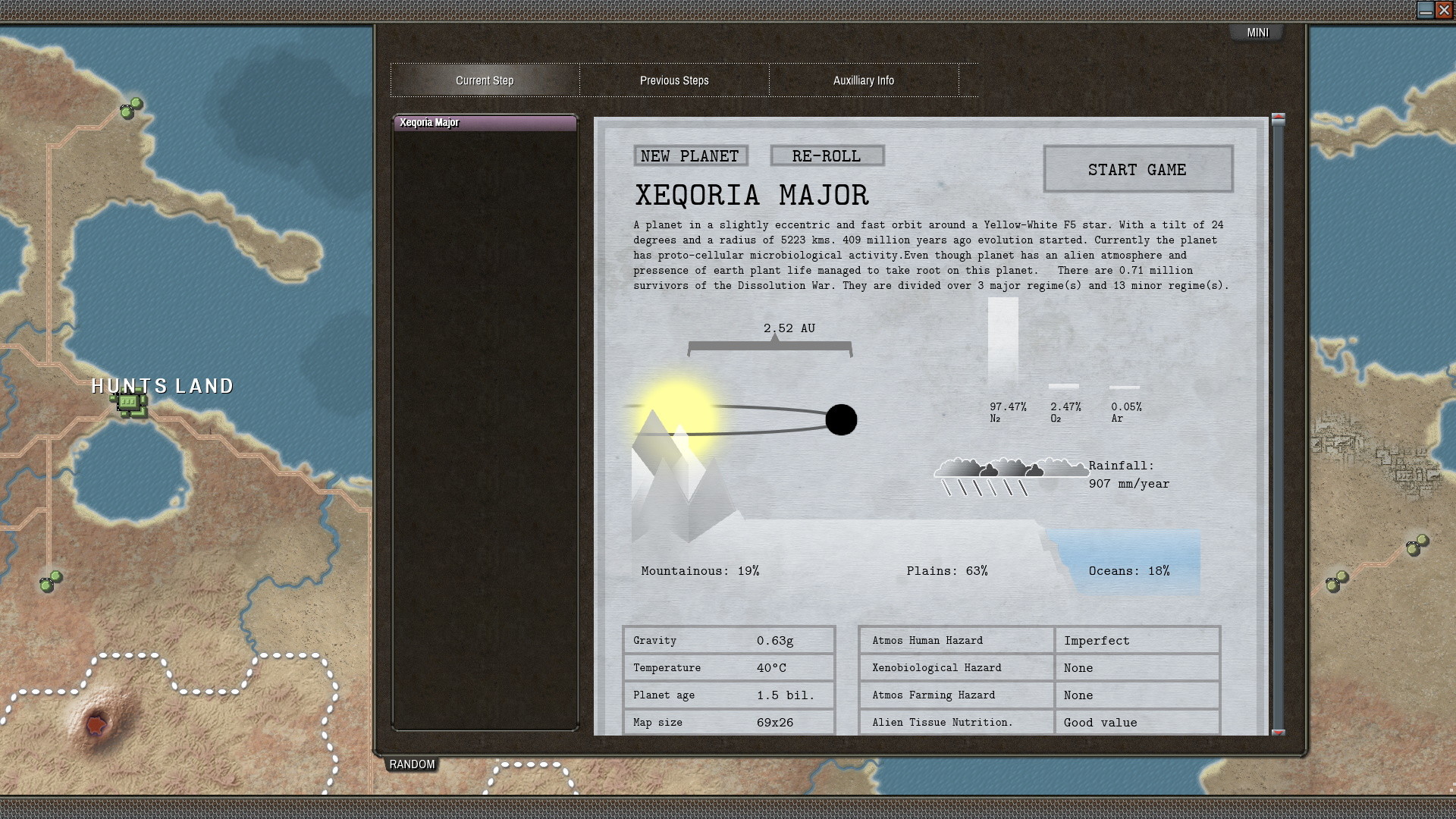
Shadow Empire is spoken of in hushed, reverent tones by the grand-strategy community, and the reverence is earned. Created largely by Vic Reijkersz under the VR Designs banner and published by Matrix Games, it is a turn-based sci-fi 4X wargame in which you take command of a fledgling regime trying to reunify a procedurally generated planet after the fall of galactic civilization. What sets it apart is the sheer breadth and interlock of its simulation: a living world with its own geology and history, a genuine logistics system, political councils staffed by leaders with real personalities, hundreds of stratagems, custom unit design, and hex-based military operations, all feeding into one another. It holds a Very Positive rating on Steam, and that score reflects a game of almost unrivalled depth.
So is it worth buying? For strategy and 4X devotees, absolutely — this is a landmark, a game you can sink hundreds of hours into and still be learning. The honest caveats are real and large: it is brutally hard to learn, its interface is dated and dense, and it is English only and extremely text-heavy. If those do not deter you, nothing else in the genre offers quite this much to master.
Shadow Empire is a primarily single-player sci-fi 4X wargame from VR Designs, published by Matrix Games. It is a one-time purchase with optional paid expansions and no predatory microtransactions, has been supported since its 2020 release, and holds a Very Positive rating on Steam.
What you actually do
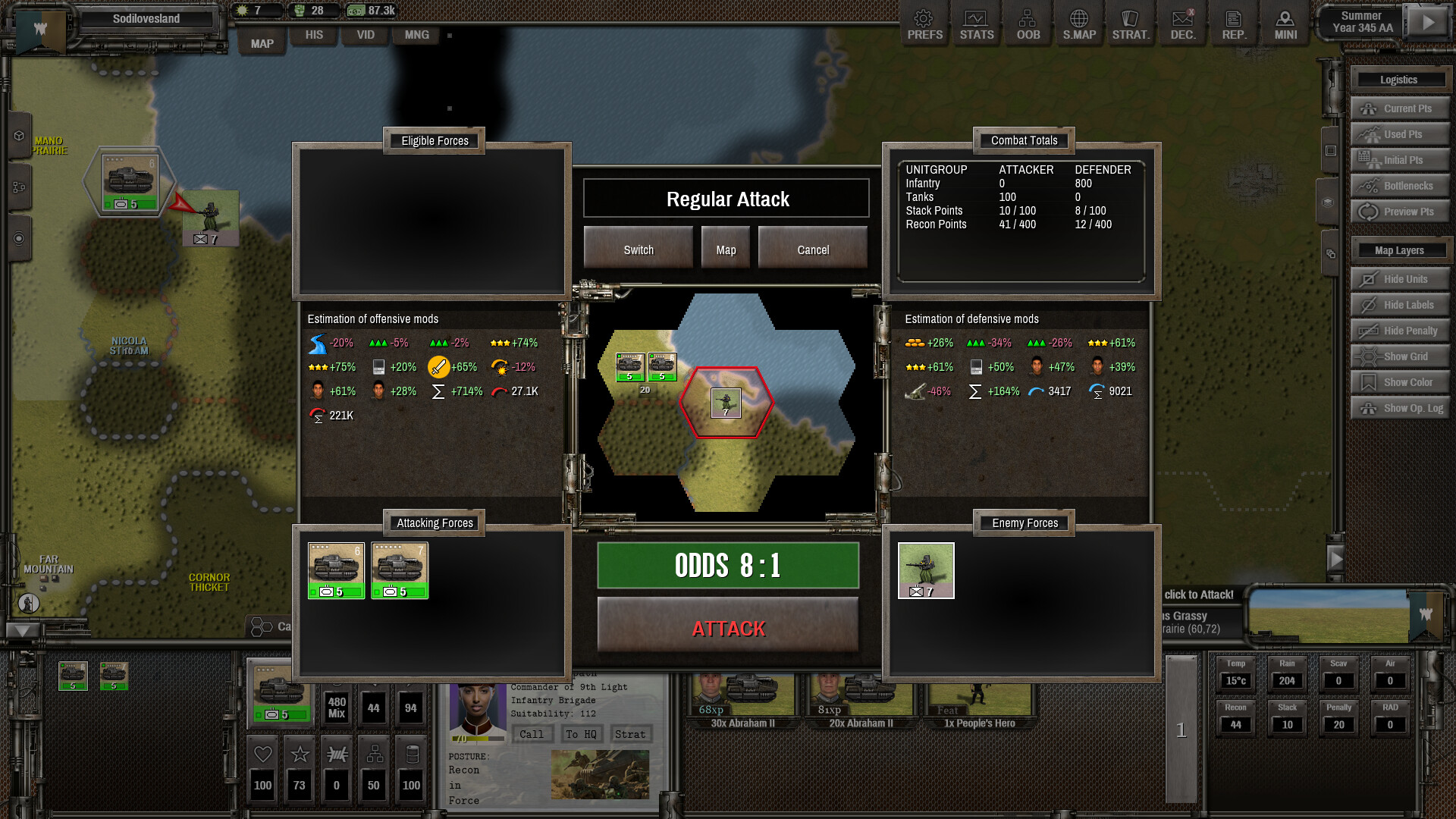
You begin on a freshly generated planet — its atmosphere, water, temperature, terrain and history all simulated — as the leader of one small regime among others, with the goal of surviving, expanding and ultimately dominating. From there you do almost everything an empire must: set tax rates and manage an economy of resources like metal, rare metals, energy and food; research technologies; recruit leaders and appoint them to run councils; play stratagems to shape your nation; design military units and organise them into formations; and wage hex-based war while keeping your armies supplied. Each turn is a web of decisions across politics, economy, logistics and military, and the systems constantly affect one another.
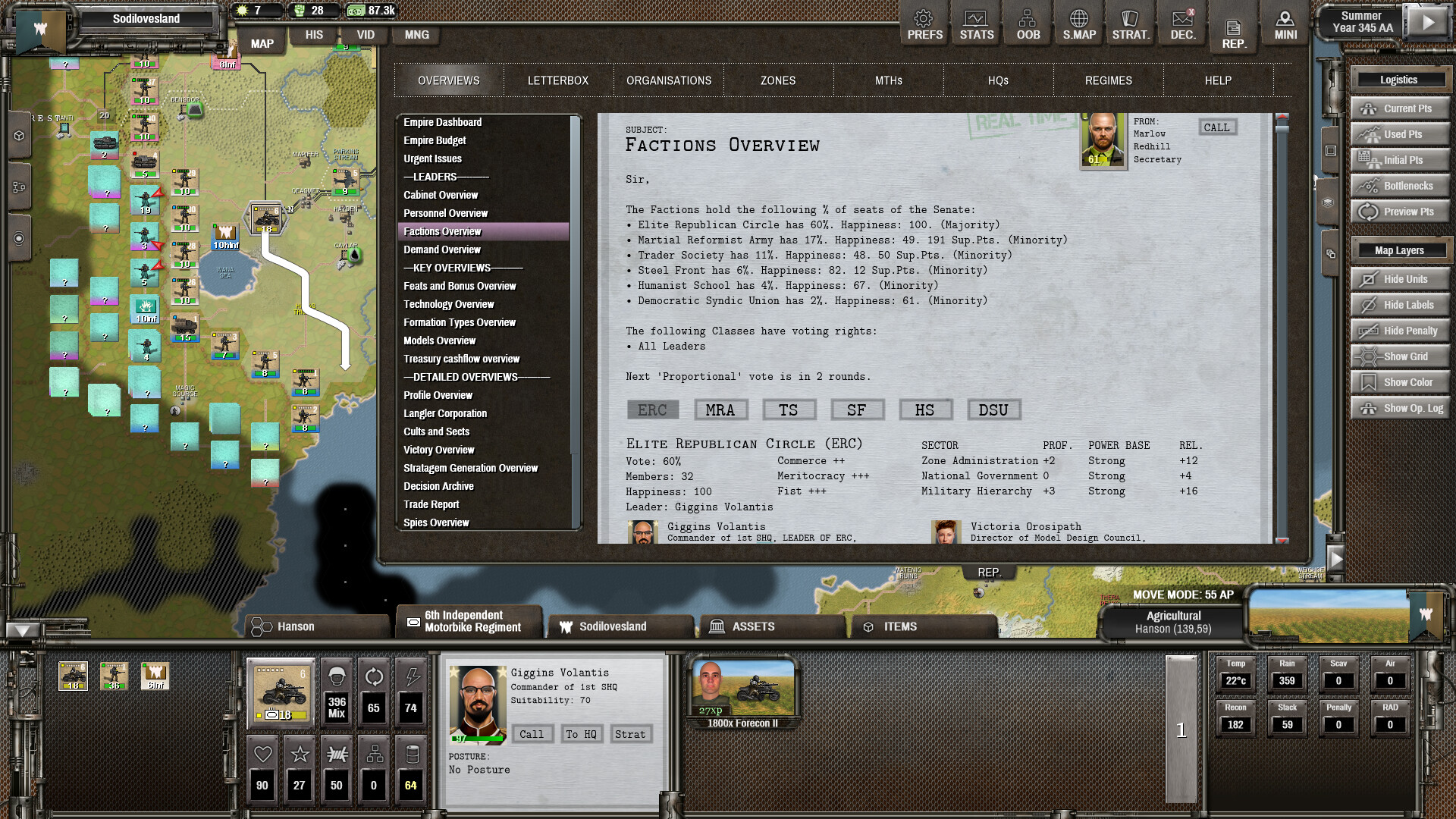
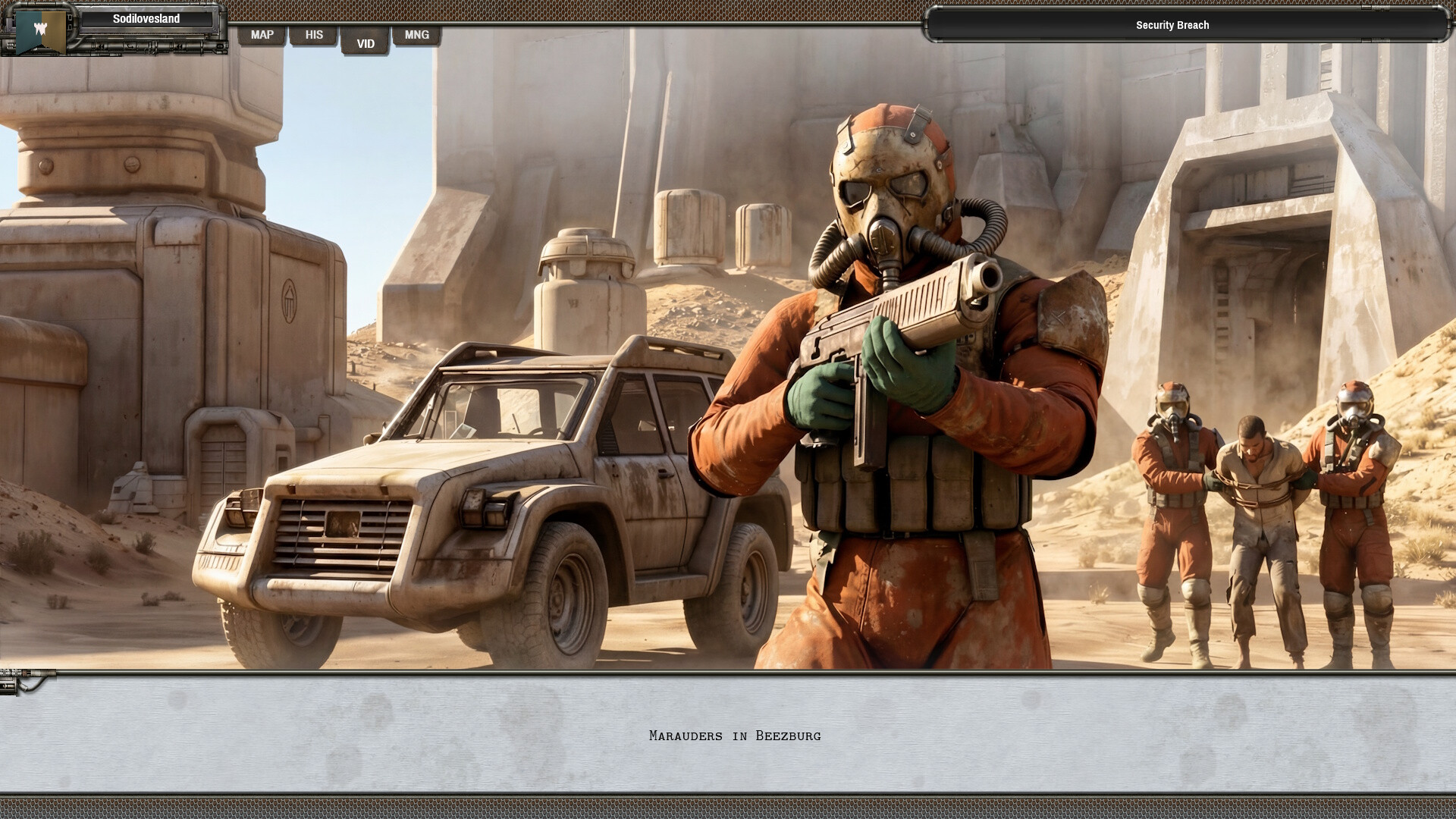
What makes it special is that this is a simulation, not a set of menus. Your leaders have ambitions and loyalties and can scheme or revolt; your supply lines genuinely constrain your wars; your planet's geography shapes your whole strategy. The result is a game that generates real, emergent stories rather than scripted ones.
New rulers almost always over-expand and collapse under their own logistics. Early on, stay tight — expand only a few hexes from your capital, build your councils, and keep supply flowing. Our Shadow Empire beginner guide covers the priorities that keep a first game alive.
Why logistics carries everything
It is worth being specific about logistics, because it is Shadow Empire's most famous and defining system. In most strategy games, supply is an abstraction you barely think about; here it is a genuine, physical network you must build and manage. Your Strategic HQ collects resources and supplies, and truck stations and rail lines move them across the map, with ranges determined by terrain and roads — flat ground, hard terrain, dirt roads and paved roads all carry different costs. Armies pull supply from nearby, and an offensive that outruns its supply will grind to a halt no matter how strong its units. This turns every campaign into a logistical puzzle: where to place truck stops, how to use roads and rail, and how far you can safely push.
This is the heart of what makes Shadow Empire feel real. War is not just about stacking the biggest army; it is about whether you can feed it where it needs to fight. Mastering logistics is mastering the game, and our logistics guide breaks the whole system down.
Pros
- +Arguably the deepest, most interlocking simulation in the 4X genre.
- +A real logistics system that makes supplying war a strategic puzzle.
- +Leaders, councils and politics that generate emergent, memorable stories.
- +Procedural planets and enormous replayability, with ongoing expansions.
Cons
- −A brutal learning curve that overwhelms newcomers.
- −A dated, dense, utilitarian interface.
- −English only and extremely text-heavy.
- −Slow, deliberate pacing throughout.
Leaders, politics and emergent stories
The other half of Shadow Empire's magic is its people. You govern through councils — interior, military, economic and more — each run by a leader you recruit and appoint, and those leaders have skills, ambitions and loyalties of their own. You spend political power to interact with them, respond to events, create new posts and play stratagems, and the political model (with parliaments, senates and politburos depending on your government) means your hold on power is never purely a formality. Leaders can be brilliant assets or dangerous schemers; neglect them and you may face unrest or a coup. This human layer, sitting atop the economic and military simulation, is what produces the unscripted dramas players remember: the loyal general who saves your war, the ambitious director who turns against you, the crisis you resolve with exactly the right stratagem.
Combined with custom unit design and deep research, it means no two campaigns play the same. Our stratagems and governance guide and military guide go deeper on running your nation and your armies.
The honest weaknesses
Now the part the store page underplays, and it is significant. Shadow Empire is one of the hardest games to learn that you will ever play. The volume of interlocking systems, delivered through a dense, dated and utilitarian interface with limited onboarding, makes the first several games genuinely overwhelming — you will lose, and lose confused, before it clicks. For players who relish climbing that mountain it is the whole appeal, but for anyone wanting an accessible or polished experience it is a wall, and it would be dishonest to pretend otherwise.
The presentation is the other caveat. This is a functional, simulation-first game with basic visuals, a workmanlike interface and little of the audiovisual polish modern strategy players expect. Add that it is English only and extremely text-heavy — events, reports and systems are all dense reading — and you have a brilliant but pointedly niche game. None of this undermines the depth, which is exceptional; it simply defines who it is for.
Buy Shadow Empire for its depth and simulation, not for accessibility or presentation. If you need a gentle learning curve, a modern interface, fast pacing, or your own language, this is not the game for you. If mastering the deepest 4X wargame around excites you, few games reward the investment this richly.
Who should buy it
If you love deep, simulation-driven strategy and the satisfaction of mastering interlocking systems, Shadow Empire is a landmark worth every hour. Grand-strategy and 4X devotees will find more to learn and exploit here than in almost any other game, and anyone who values emergent, story-generating campaigns over scripted content will be richly rewarded. At its price, with procedural replayability and ongoing expansions, the value is excellent for the right player. To get past the brutal opening, start with our beginner guide and logistics guide, then dig into the military and stratagems guides.
Who should pass? Anyone who needs a gentle on-ramp, a modern interface, fast-paced play, or their own language, and anyone without the patience for a dense, demanding simulation. For everyone else, Shadow Empire is the deepest sci-fi 4X wargame there is — with the honest asterisk that it is punishing to learn, plain-looking, and proudly built for players who want exactly this.