War is an extension of your city
Songs of Syx is not only a city builder — once your settlement matures, it opens onto a world map of rival kingdoms where you wage war on an enormous scale, commanding armies of thousands in massive real-time battles for conquest. But the defining truth of Songs of Syx warfare is that your army is an extension of your economy. Your soldiers come from your population, their weapons and armour from your industry, their provisions from your farms, and every one of them is individually simulated and supplied by the city you have built. This guide covers how war works — the world map and diplomacy, raising and equipping armies, fighting huge battles, and expanding without breaking your city — but the thread running through all of it is that the strongest weapon in the game is a strong economy. Win the peace first, and the war follows.
The mindset to carry into every campaign is that battles are won in the years before they are fought. The city that has quietly built the industry to arm and feed thousands of soldiers will crush the one that has not, no matter how the battle itself is commanded. War rewards preparation on a civilisational scale.
Your military strength in Songs of Syx reflects your economy. Armies of thousands are raised from your population and equipped and supplied by your industry, so a war-ready empire is really a productive city that has turned its surplus into soldiers. Build the city, then the army.
The world map, diplomacy and conquest
Beyond the walls of your city lies the world map, where Songs of Syx becomes a game of grand strategy. Here you encounter rival kingdoms and territories, conduct diplomacy, expand your borders, and ultimately wage war to build an empire. Your city sits at the centre of this as your power base: it funds your ambitions, supplies your armies, and provides the population from which your soldiers are drawn. The world map transforms the game from a self-contained builder into a contest for dominance, where the metropolis you have grown becomes the engine of conquest and the prize you must protect.
Approaching this layer wisely means recognising that expansion has costs as well as rewards. Every campaign draws on your economy and population, and territory you take must be held and integrated. The strongest players treat the world map patiently, expanding when their city can support it and consolidating their gains, rather than overreaching into wars their economy cannot sustain. Diplomacy and timing matter as much as force — picking the right moment and the right target, from a position of economic strength, is how empires are built to last rather than collapsing under their own ambition.
Do not rush to the world map. Your first and most important job is a thriving city; war comes later, powered by the economy you have grown. A stable, productive settlement can raise and supply armies almost indefinitely, while a fragile one collapses the moment it tries to fight. Build first, conquer second.
Raising, equipping and supplying armies
Building a military in Songs of Syx is an economic undertaking as much as a martial one. You raise soldiers from your population — potentially thousands, and at large scale even tens of thousands — and every one of them needs weapons, armour and supplies that your industry must produce. This means a war economy has to be planned: dedicated production chains for arms and provisions, enough workers to run them, and a surplus large enough to equip and sustain a campaign. An army you cannot supply is worse than no army at all, because it drains your economy without delivering strength, so logistics is the foundation of military power. Before you march, confirm that your production can arm your troops and keep them provisioned for the campaign ahead.
Composition matters too, and this is where your races come into play. Different peoples make different soldiers: martial races form a strong melee line, skilled archer races provide ranged power, and resilient races add durability, so a balanced army blends these strengths much as a balanced city does. The force you can field — its size, equipment and quality — is ultimately a reflection of the city behind it, which is why economic preparation is the real work of war. A well-supplied, well-composed army raised from a thriving city is a formidable thing; a hastily assembled one from a struggling city is not.
Winning battles and expanding safely
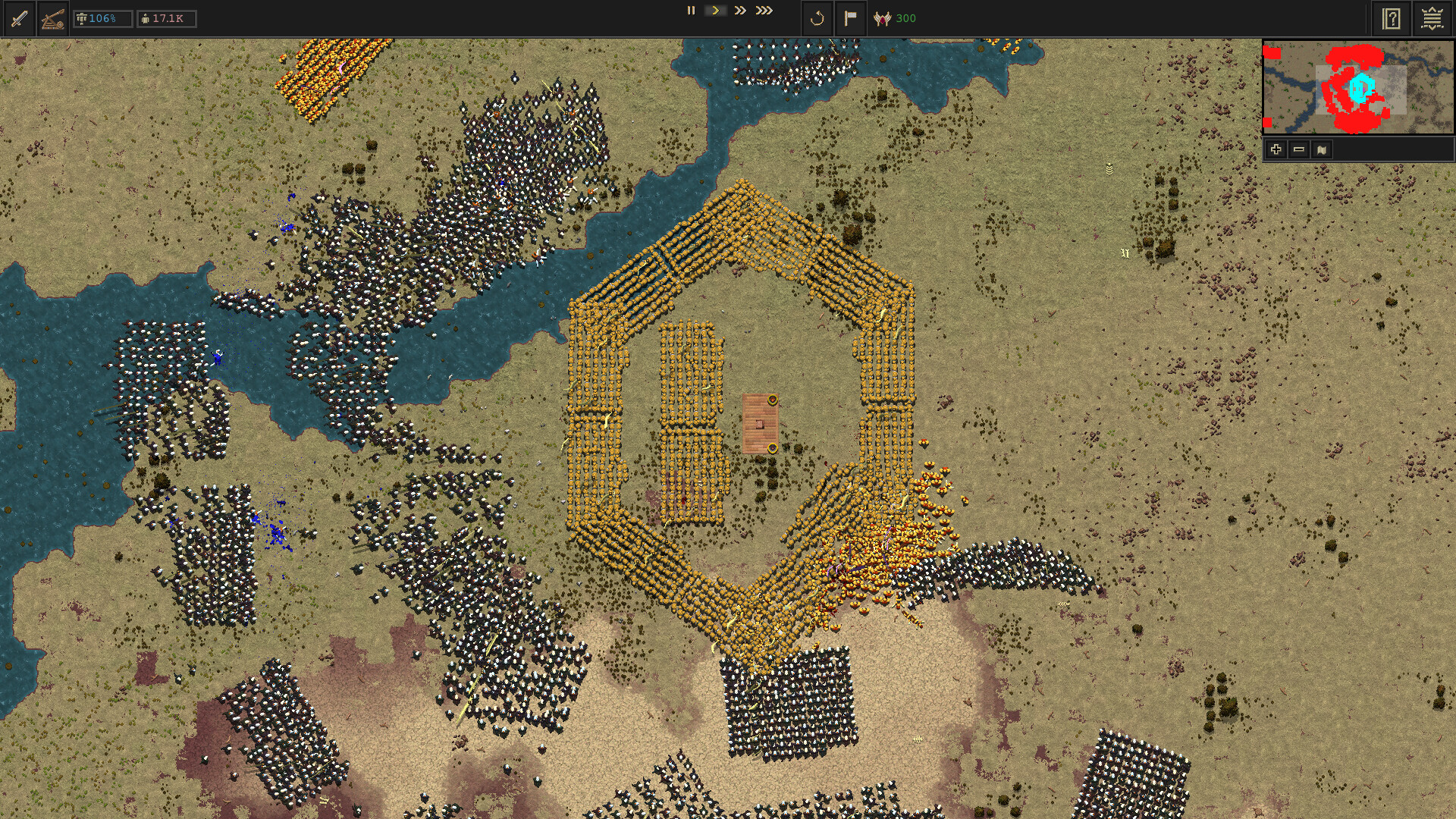
When armies meet, Songs of Syx stages massive real-time battles with every soldier simulated, and victory comes from both preparation and command. The preparation is everything discussed above — a large, well-equipped, well-composed force supplied by a strong economy — and on the field it is joined by tactics: positioning your line and ranged troops, using the terrain, and directing your forces during the fight. A superior army, brought to the battle by a superior economy, will usually prevail, but good battlefield command can amplify that advantage or, occasionally, overcome a disadvantage. Because your losses are real citizens and real equipment, though, even victory has a cost, so fighting battles you are well-prepared to win, rather than throwing forces at every fight, is the mark of a skilled commander.
Above all, expand only as fast as your city can sustain. The temptation to conquer aggressively is strong, but overextension — fielding more troops than your economy can supply, or campaigning beyond what your city can support — endangers everything you have built, potentially triggering shortages and unrest at home even as you fight abroad. The reliable path to empire is to grow a strong, stable city, turn its surplus into a well-supplied army, and expand deliberately from that position of strength, consolidating as you go. Do that, and the world map becomes yours to conquer at a pace that never breaks the city at the heart of it all. For the economy that makes it possible, see our economy guide; for the peoples who fill your ranks, our races tier list; and if you are new, start with the beginner guide. To decide whether the game is for you, read our review.
Never field an army your economy cannot supply. An unsupplied force drains your city without winning wars, and overextension can collapse your home even in victory. Build the industry to arm and feed your troops first, expand only when your city can sustain it, and conquer from strength — not ambition alone.