The verdict up front
Gary Grigsby's War in the East 2 is the most detailed and ambitious wargame of the World War Two Eastern Front ever created, and for the right player it is a masterpiece. Developed by the legendary 2by3 Games team and published by Matrix Games, it simulates the entire Eastern Front — from Operation Barbarossa in June 1941 to the fall of Berlin in 1945 — at the operational level, with you commanding forces at division and corps scale across a colossal hex map, one week per turn. What makes it special is the sheer completeness of its simulation: a rail and supply network of extraordinary depth, a flexible air war, a full command hierarchy, weather and mud seasons that reshape entire campaigns, and content measured in thousands of hours. It holds a Very Positive rating on Steam, and among serious wargamers it is revered.
So is it worth buying? If you are a dedicated wargamer who dreams of commanding the whole Eastern Front and will invest the many hours it takes to learn, absolutely — there is nothing else with this depth. But the honest caveats are severe: it has one of the steepest learning curves in all of gaming, a dense and dated interface, and it demands an enormous time commitment, all delivered in English only with a 520-page manual. This is a specialist instrument, not a casual strategy game.
Gary Grigsby's War in the East 2 is a hardcore operational wargame of the entire WWII Eastern Front, from 2by3 Games and Matrix Games. It is turn-based (one week per turn), played at division and corps level, and famous for its deep logistics. It is single-player and multiplayer, premium priced, and English only with a 520-page manual.
What you actually do
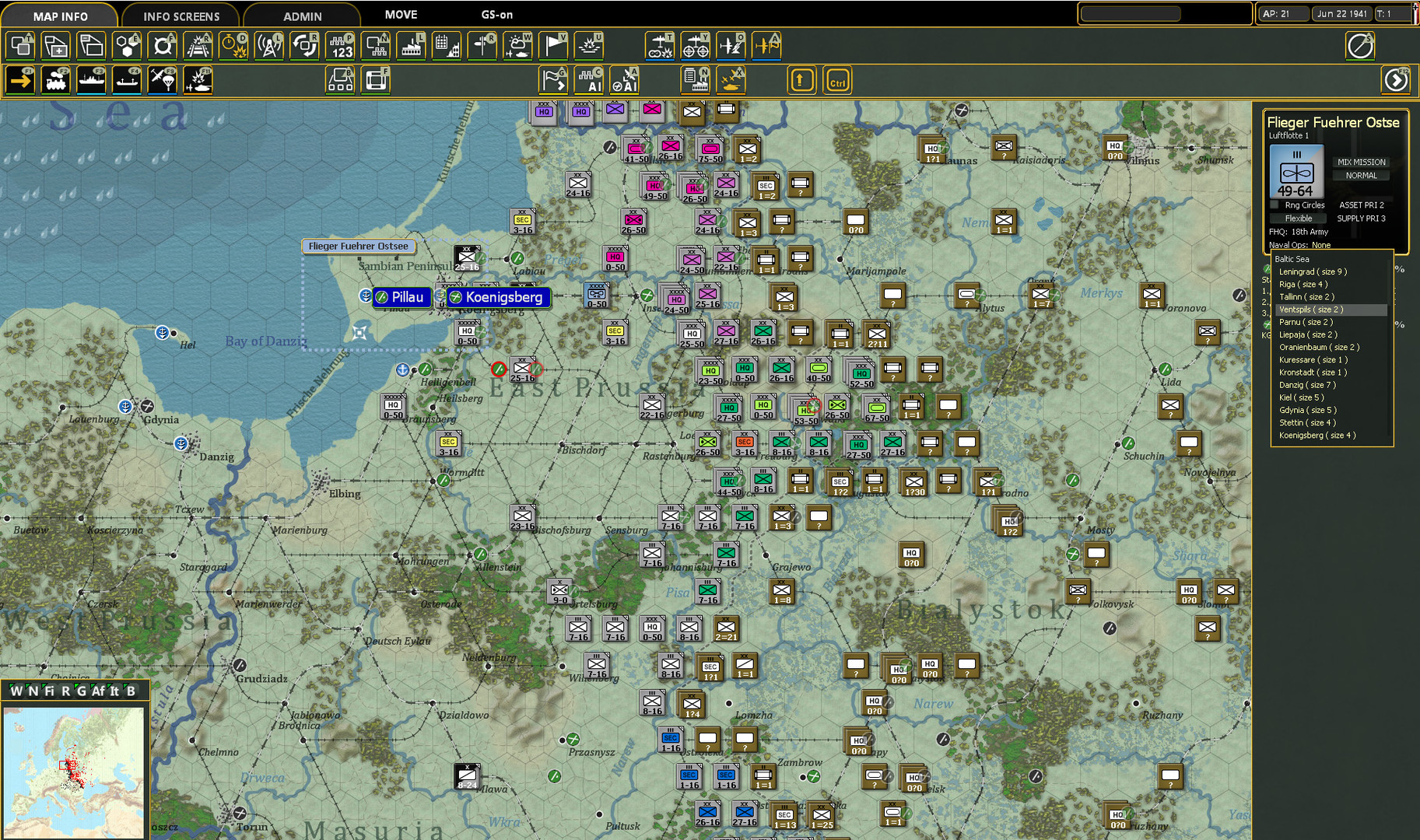
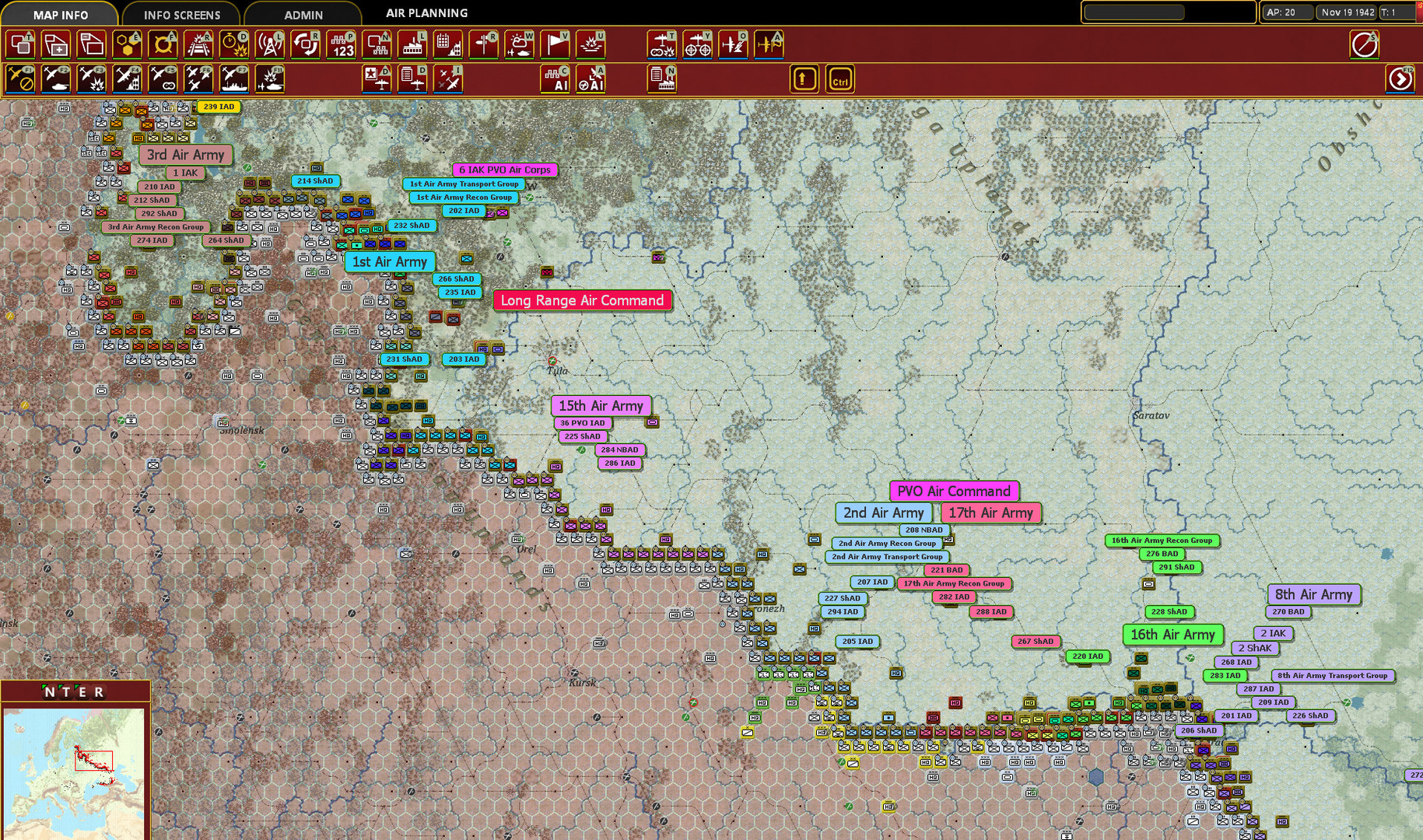
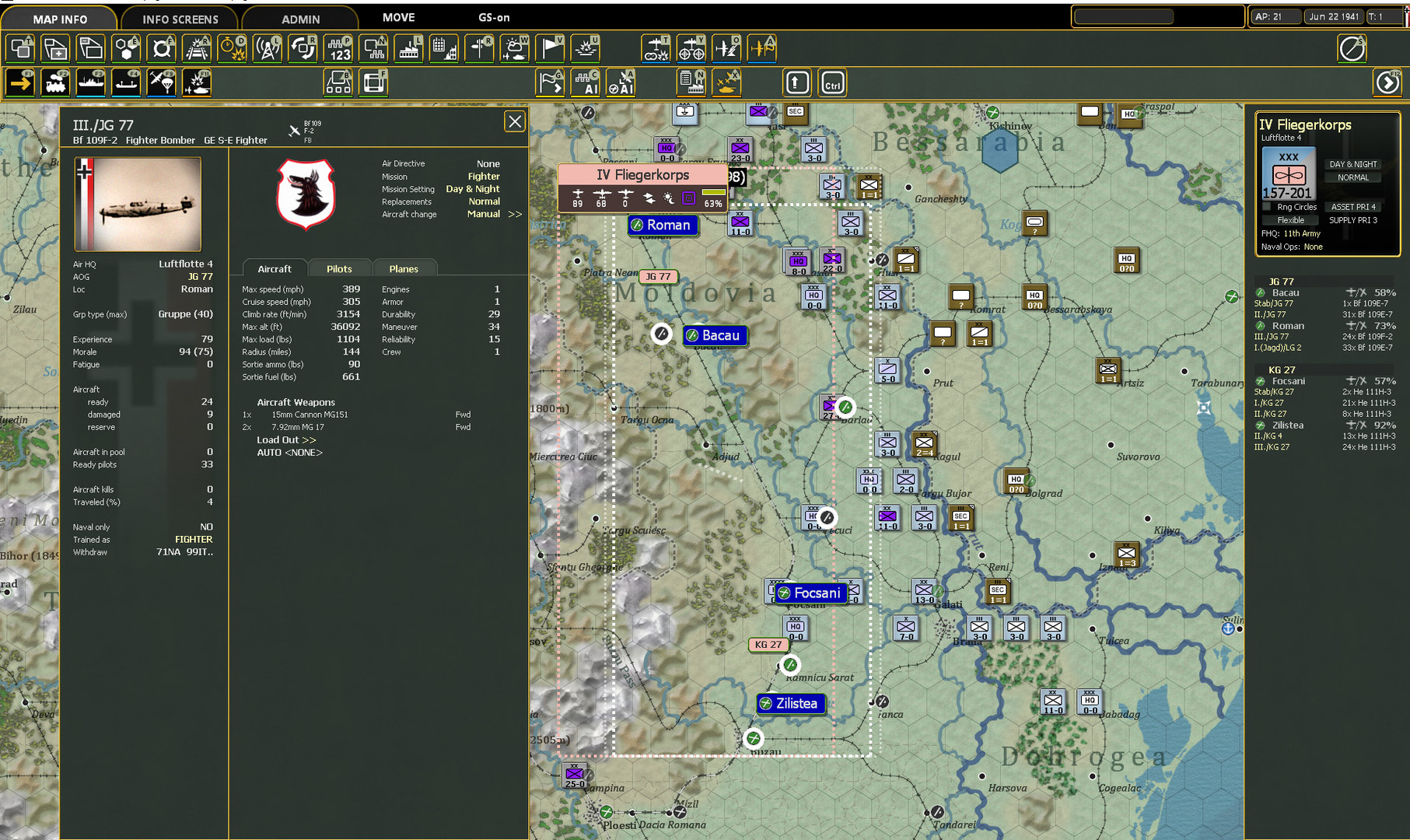
A game of War in the East 2 casts you as the supreme commander of either the Axis or the Soviet forces on the Eastern Front, and asks you to manage everything that entails at an operational scale. Across weekly turns you move and fight with divisions and corps over a vast, historically detailed map complete with the full rail and road network. But movement and combat are only the surface. Beneath them sits the game's true substance: keeping your armies supplied through a rail, truck and depot logistics network; managing a command hierarchy of HQs that feed supply and coordination to your units; conducting an air war, either in fine detail or in a streamlined mode; and timing your offensives around the brutal seasons of mud and winter that can freeze an entire front in place. Every turn is a puzzle of priorities — where to attack, what to supply, when to rest units, how to extend your railhead — played out across the largest land campaign in history.
The result is a simulation of staggering scope and authenticity. This is not a game of clever tricks; it is a game of sound operational art, where victory comes from managing logistics, husbanding your forces, and applying pressure where the enemy is weakest, exactly as real Eastern Front commanders had to.
New to the game? Do not start with the full 1941 Grand Campaign. Begin with the tutorials and a small operational scenario to learn the systems at a manageable scale. Our War in the East 2 beginner guide and scenario tier list show you where to start.
Why the depth and logistics carry it
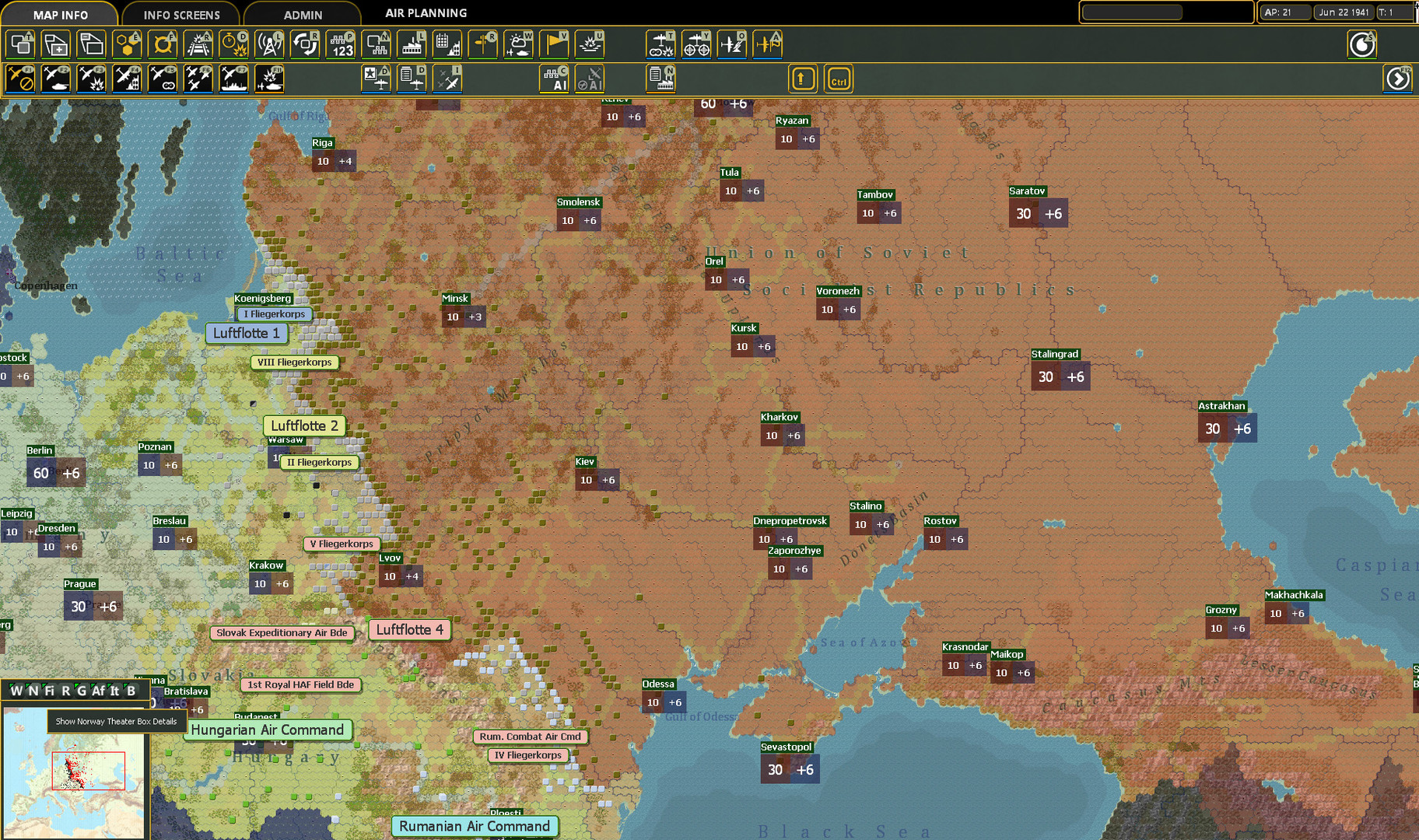
The reason War in the East 2 is so revered is the completeness and coherence of its simulation, and above all its logistics. Where most strategy games abstract supply into a simple number, War in the East 2 makes it the beating heart of the entire game. Supplies are produced on the home front and must be carried to the front line through a detailed rail network, by trucks, and via depots, with the railhead — the furthest point your rail reaches — being one of the most vital things on the whole map. Distance penalties, HQ placement, the need to repair captured Soviet track to a different gauge, and the separate flows of general supply, ammunition and fuel all combine into a system that rewards genuine operational planning. An offensive that outruns its supply grinds to a halt exactly as historical ones did, which makes managing logistics not a chore but the core strategic challenge.
Around that spine sits equally deep detail: a combat system distinguishing deliberate from hasty attacks, with preparation and delay points that reward resting and massing your forces; a two-mode air war that can be micromanaged or delegated; a command hierarchy where HQ placement and multinational penalties matter; and a rebuilt AI. This combination — a complete, historically grounded operational simulation with logistics at its core — is what gives the game its towering reputation. Our logistics guide and combat guide go deeper.
Pros
- +The deepest, most complete WWII Eastern Front simulation ever made.
- +A legendary logistics and supply system with real strategic weight.
- +Enormous content — campaigns and scenarios worth thousands of hours.
- +A rebuilt AI and a detailed, flexible air war.
Cons
- −One of the steepest learning curves in all of gaming.
- −A dense, dated and unintuitive interface.
- −An enormous time commitment per turn and per campaign.
- −English only, premium priced, and reliant on a 520-page manual.
Scale, content and authenticity
Few games can match War in the East 2 for sheer scope. It offers three full-map campaigns and seven smaller operational scenarios, ranging from a four-month operation like the Destruction of Southwest Front up to the complete 1941–1945 Grand Campaign, which alone can absorb hundreds or thousands of hours. The map is enormous and historically faithful, the order of battle is exhaustively researched down to individual weapons and units, and a built-in encyclopedia documents it all. For a player who loves the history of the Eastern Front, the level of authenticity is intoxicating: you are not playing an abstraction of the war but a genuine operational model of it, complete with the mud that stopped Barbarossa and the winter that turned the tide.
That scale is also what gives the game its extraordinary longevity. A single Grand Campaign is a months-long undertaking, the scenarios offer more focused experiences, and the depth of the systems means there is always more to master. For the dedicated wargamer, this is close to a bottomless well, which is a large part of why the game commands such devotion despite its demands.
The honest weaknesses
Now the caveats, which are serious. The foremost is the learning curve, which is genuinely among the steepest in all of gaming. The 520-page manual and in-game encyclopedia exist because there is simply that much to learn — logistics, air war, command, combat preparation, weather, and more — and new players should expect many hours of study and small scenarios before they can play a campaign competently. Compounding this is the interface, which is dense, dated and often unintuitive, presenting mountains of information in a way that overwhelms newcomers. The game also demands an enormous time commitment: a single turn of a large campaign can take a long time, and a full campaign is a months-long project. And it is English only, premium priced, and heavily reliant on that vast manual, all of which raise the barrier further, especially for non-English players.
It is fair to say War in the East 2 asks more of its players than almost any other game. It rewards those willing to study, plan and commit with an unmatched simulation, and it will utterly overwhelm anyone looking for accessibility, polish or a quick game. This is by design — it is a specialist tool for serious wargamers — but it means the audience is narrow, and you should be honest with yourself about whether you are in it.
Buy War in the East 2 for its unmatched depth and historical simulation, not for accessibility or a modern interface. If you want a game you can pick up quickly, or cannot commit serious time to learning and playing, this is not for you. If the deepest possible Eastern Front wargame is your dream, nothing else comes close.
Who should buy it
If you are a dedicated wargamer who wants the most complete and authentic simulation of the WWII Eastern Front, and you will invest the time to learn its logistics, combat and command systems, Gary Grigsby's War in the East 2 is an easy recommendation — a landmark of the genre with depth and longevity that no other game offers. Serious students of the war, veterans of complex wargames, and players who relish operational planning and logistics will find a near-bottomless masterpiece here. To get started, read our beginner guide, then dig into the scenario tier list, logistics guide and combat guide.
Who should pass? Anyone wanting an accessible, fast, or modern-feeling strategy game, anyone who cannot commit the substantial time it demands, and anyone who needs a language other than English. Be honest about that, because the learning curve, interface and time cost are its real barriers. For the players it suits — serious wargamers who prize depth and authenticity above all — War in the East 2 is a monumental achievement, with the honest asterisks that it is punishingly complex, dated in presentation, and English only.