Verdict Games Verdict Games
Mechanicus Best Disciplines — All Seven Ranked

Mechanicus Best Disciplines — All Seven Ranked

Author: Verdict Games Editorial Team Last Updated:

The Bottom Line

Rank disciplines by what they do to your Cognition economy, not by their armour totals. Lexmechanic generates CP and Tech-Auxilium reduces the need for it, which makes both structurally stronger than the stat-line disciplines. Secutor's +11 HP set is the best raw armour in the game and Dominus has the best legs, but hit points do not fire your weapons. And because level-ups cannot be reset, these choices are permanent.

Summary

Mechanicus discipline rankings usually compare armour stat lines. Those matter, but they are not what separates the disciplines over a campaign — Cognition is, because CP pays for extra moves, summoning troops and firing anything larger than the default pistol. So the disciplines that make or save Cognition outrank the ones that give you hit points. This ranks all seven, with the armour numbers, and covers what each is actually for.

Who This Is For: Mechanicus players deciding where to spend Blackstone level-ups Intermediate

Key Points

Key Points

1

Cognition pays for extra movement, summoning troops and firing any weapon bigger than the starting pistol — it is the binding constraint, not HP.

2

Each level-up gives one augment capacity and lets you buy one ability or one armour piece. Capacity caps at level 25.

3

Buying an armour piece from another tree requires owning the previous ability in that tree, so cross-discipline shopping costs two level-ups minimum.

4

There is no respec. Every level-up you spend is permanent for the campaign.

5

Secutor has the best HP total (+11), Dominus the best legs (+3 HP, +3 movement), Lexmechanic the only dodge in the game (+20%).

Most Mechanicus discipline rankings compare armour stat lines. It is the obvious comparison and it is the wrong one to lead with.

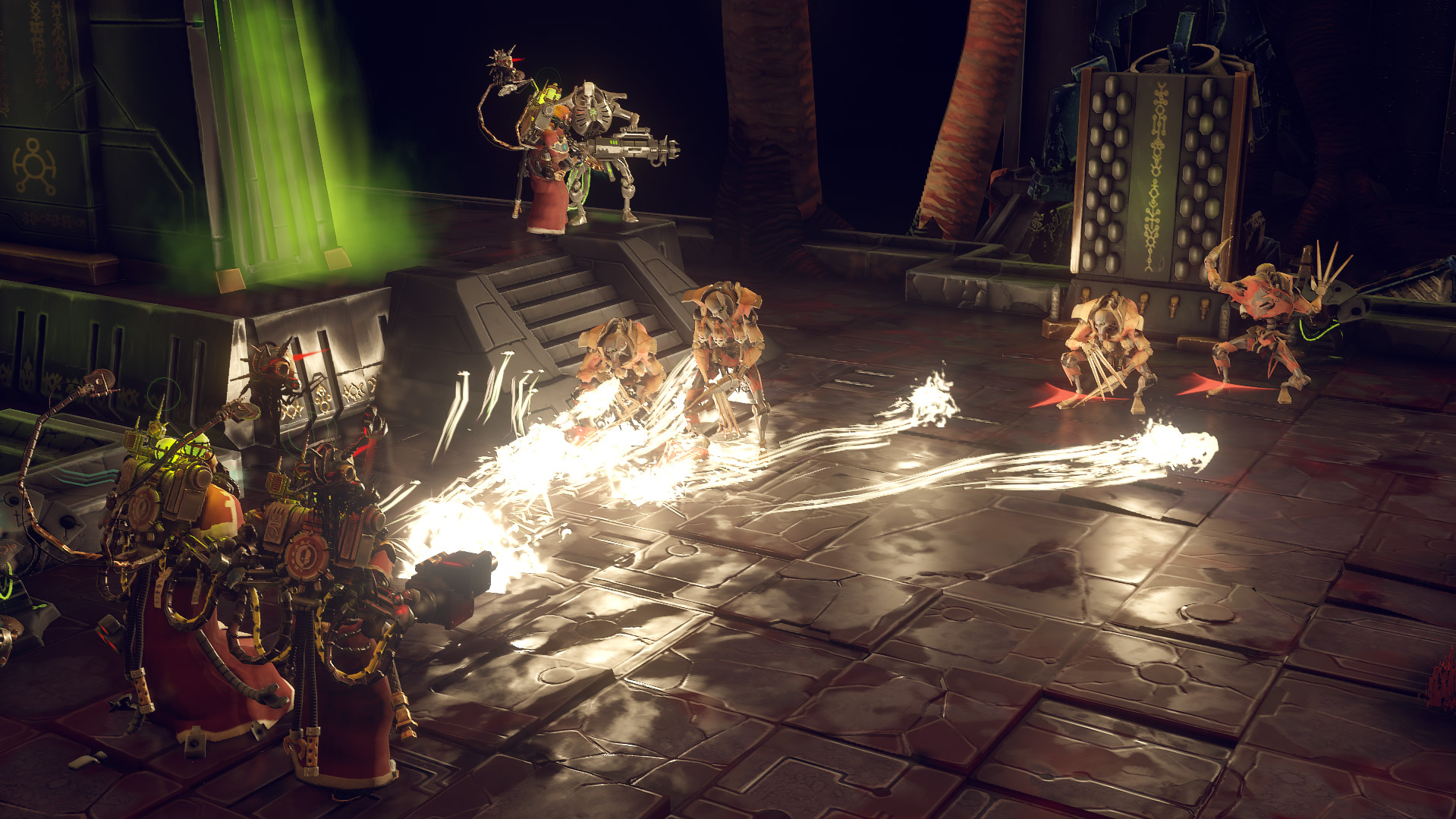
Cognition is the binding constraint in this game, not hit points. CP pays for extra movement, for summoning Skitarii, and for firing any weapon bigger than the pistol your priest starts with. A priest with a beautiful armour set and no Cognition behind it stands still and plinks. So the disciplines that make CP or reduce the need for it outrank the ones that hand you a larger health bar.

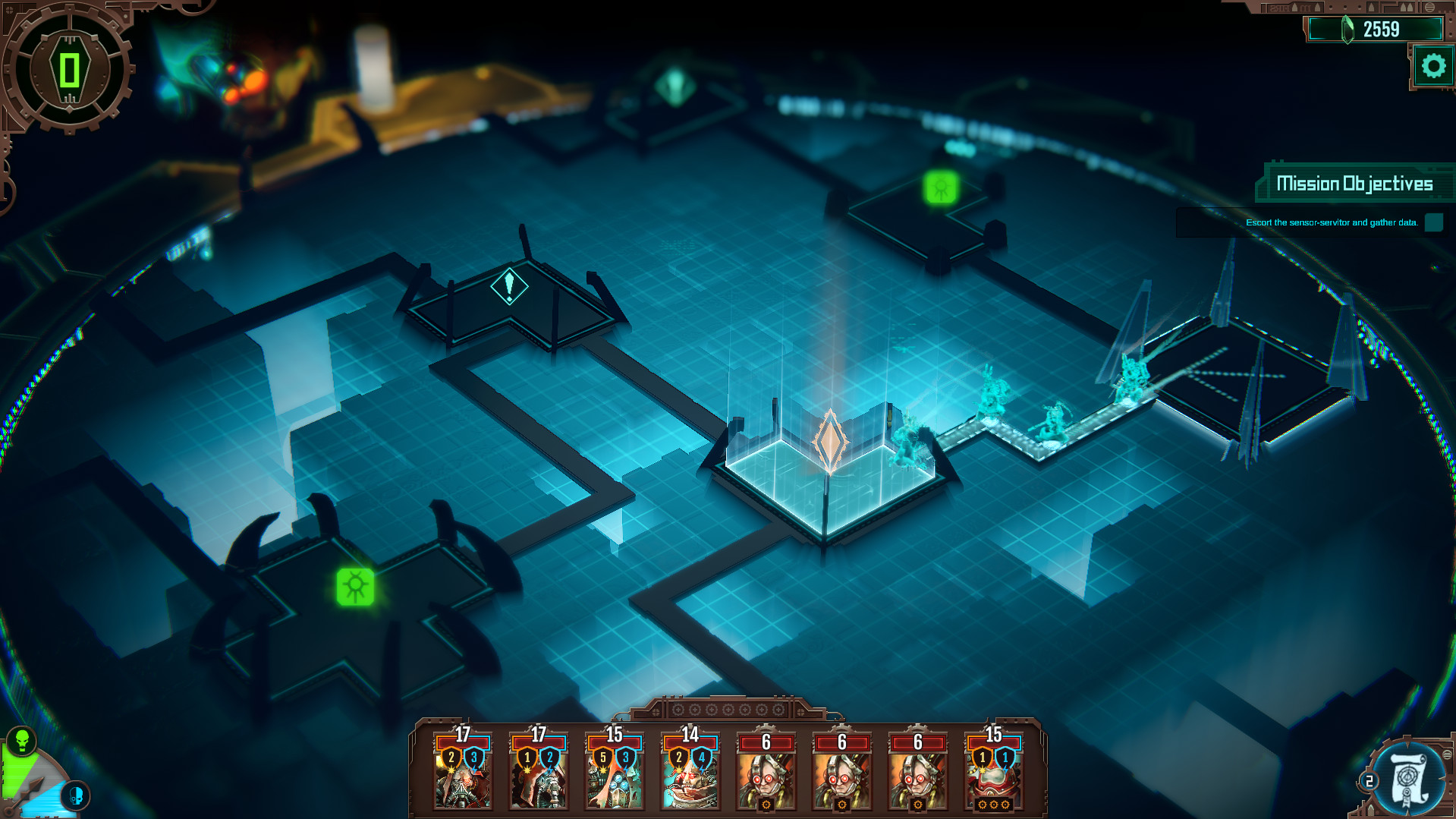
Two structural rules sharpen that further. Level-up spending cannot be reset, and augment capacity stops growing at level 25 — so you are allocating a fixed 25 slots, permanently, with level-ups that get more expensive as you go.

The tier list

S
Lexmechanic — Cognition Collector The discipline built around generating CP, which is the resource everything else spends. It also owns the only dodge in the game at +20% on its arms, and a tidy defensive set (+8 HP, +1 energy armour, +1 physical armour, +2 movement). Generating the currency beats spending it better, and this is the only tree that does. Tech-Auxilium — Squad Buffer Attacks the same problem from the other side by reducing what you need to spend. Cognition Freedom gives a free weapon shot every three turns, which on a long mission is a large number of pistol-tier turns converted into real ones. Its blessings stack, so a second Tech-Auxilium priest compounds rather than overlaps. Its head piece is the only +2 energy armour head in the game.
A
Dominus — Ranged Damage A flat +4 range on ranged weapons is the cleanest passive in the game — no setup, no condition, applies every turn to the thing you were doing anyway. Its legs (+3 HP, +3 movement) are the best single armour piece available, and +1 energy damage on the arms is real. It sits below S only because it spends Cognition rather than producing it. Secutor — Commander The best raw armour set in the game at +11 HP total, plus +20% crit on the arms and the troop-command role. If you intend to field Skitarii heavily, this is the tree that makes them worth the CP. The catch is circular — commanding troops costs Cognition, and Secutor does nothing to pay for it.
B
Explorator — Melee Fighter The only physical damage bonus on an arms piece (+1) and the best physical armour total (+2), with +3 movement. Escape ignoring opportunity attacks is genuinely useful for a melee priest that needs to disengage. Melee in Mechanicus means standing next to Necrons, though, and Necrons revive — this is the discipline most punished by high awakening. Xenarite — DLC Pure stat stacking, and very good at it. The +5 HP torso is the largest single health piece in the game, the arms give +3 HP, and the legs pair +20% crit with +2 movement. No Cognition interaction at all, which is exactly why it is not higher, but if you own it the torso belongs on almost any build.
C
Enginseer — Healer Strong in the opening hours and it does not keep up. The healing scales poorly against later enemy damage, so by the mid-campaign the mass heal is the only part still earning its slots. Its armour is respectable (+2 energy armour, +1 physical, +1 energy damage) and its early abilities are cheap, which is the honest case for taking one or two levels and stopping.

How to read the tiers

These tiers describe how much each discipline contributes over a full campaign, not whether it works. Every tree clears the game. Enginseer is in C because its curve flattens, not because early healing is bad — taking the first level or two of Enginseer on a priest that lives elsewhere is a perfectly good decision.

Because disciplines are not mutually exclusive, a tier list here means something slightly different than in other games. You are not choosing one tree; you are choosing how to spend a fixed budget of level-ups across seven of them. The ranking is really about where your marginal level-up goes.

The armour sets, in numbers

Discipline Role HP Energy armour Physical armour Movement Other
Secutor Commander **+11** +1 0 +1 +20% crit
Lexmechanic Cognition Collector +8 +1 +1 +2 **+20% dodge**
Dominus Ranged Damage +8 +2 0 **+3** +1 energy damage
Explorator Melee Fighter +7 0 **+2** **+3** +1 physical damage
Tech-Auxilium Squad Buffer +7 +2 +1 +2 +20% crit
Enginseer Healer +7 +2 +1 0 +1 energy damage

The individual standouts matter more than the totals, because you will be mixing:

  • Tech-Auxilium head — +2 energy armour, the only head that gives two.
  • Dominus legs — +3 HP and +3 movement, the best single piece in the game.
  • Xenarite torso (DLC) — +5 HP, the largest health piece.
  • Lexmechanic arms — +2 HP and +20% dodge, the only dodge available anywhere.
  • Secutor arms — +2 HP and +20% crit.
  • Explorator arms — the only +1 physical damage.
  • Dominus arms — +1 energy damage.

Taking one piece from a tree is cheap; taking four is not. Buying an armour piece requires the previous ability in that tree, so an outside piece costs two level-ups rather than one. Reaching for a fourth tree usually means giving up an ability you actually wanted, and you cannot undo it.

Where the marginal level-up should go

  1. 1

    First, enough Lexmechanic or Tech-Auxilium to fix Cognition

    If your priests are spending turns walking and firing pistols, no amount of armour helps. Generating CP or getting free shots is what turns the rest of the build on.

  2. 2

    Then Dominus for range, or Secutor if you are running Skitarii

    +4 range applies every turn with no condition. Secutor is the alternative when your plan is troops rather than priests, and it makes those troops worth what they cost.

  3. 3

    Then the standout armour pieces, not whole sets

    Dominus legs, Tech-Auxilium head, Lexmechanic arms. Whole sets are rarely correct because the good pieces are spread across trees and the weak ones are padding.

  4. 4

    Only a level or two of Enginseer

    Cheap, immediately useful, and it stops scaling. Take the early healing, skip the investment.

Mistakes that cost the most

  • Building for hit points. They do not fire your weapons, and a dead priest costs 10 Blackstone per point of maximum HP — so the tankiest priest is also the most expensive to lose.
  • Buying whole sets. The good pieces are scattered; the padding is not worth a level-up each.
  • Forgetting the level 25 cap. Augment capacity stops growing there. Equipment and weapons cost one to three slots each, so the endgame allocation is tighter than it looks at level 12.
  • Improvising. There is no respec, and level-ups get more expensive as you go. A priest built without a plan stays that way for the campaign.

For the clock all of this runs against, see the awakening guide — Blackstone and awakening are the same decision viewed from two sides. For complete priest builds, see the build guide. New players should start with the beginner guide, and the honest review covers the itemisation problem behind this list.
FAQ

FAQ

Lexmechanic and Tech-Auxilium, because both act on Cognition. Lexmechanic generates CP, which is what pays for extra movement, summons and any weapon beyond the starting pistol. Tech-Auxilium reduces the need for it — Cognition Freedom gives a free weapon shot every three turns — and its blessings stack, so several Tech-Auxilium priests compound rather than overlap.
Because CP is what turns your priests into a functioning army. Without it you can walk a short distance and fire a pistol. With it you move further, summon Skitarii and fire the weapons you spent augment slots on. A priest with excellent armour and no Cognition to spend is an expensive statue, whereas a lightly armoured one with CP behind it is doing something every turn.
Blackstone buys level-ups. Each level gives one augment capacity and lets you take either one ability or one armour piece. Armour costs one augment slot, equipment and weapons cost one to three. Capacity stops growing at level 25, so your finished priest has 25 slots to allocate and no more.
No. Level-up spending cannot currently be reset, and level-ups get progressively more expensive in Blackstone. That combination is why discipline choice deserves planning rather than improvisation — a priest built wrong stays built wrong for the campaign.
Mix, but deliberately. Disciplines are not mutually exclusive and the best gear for a given plan is usually spread across trees. The cost is that buying an armour piece requires the previous ability in that tree, so each outside piece is two level-ups rather than one. Taking one piece from a tree is cheap; taking a fourth piece from a fourth tree is not.
They come back the next mission, but you are fined 10 Blackstone for every point of maximum HP they had. That makes the tankiest priests the most expensive to lose, which is a quiet argument against stacking hit points on a priest you intend to put at the front.

Our editorial policy is honest, no-spin reviews. We separate facts from opinion and back every rating with reasoning. View Editorial Policy

Related

Related Articles