The verdict up front
Caves of Qud is the kind of game people describe in hushed, reverent tones, and for once the reputation is earned. Developed over roughly fifteen years by Freehold Games and published by Kitfox Games, it is a deeply simulated science-fantasy roguelike RPG set on a far-future Earth called Qud, where the ruins of thousand-year-old civilizations layer beneath jungles of giant fungus and salt-blasted wastes. You build a character from over a hundred mutations and cybernetics, then set loose into a world that simulates itself with rare thoroughness. It reached its 1.0 release in late 2024 to an Overwhelmingly Positive Steam rating (around 95% of more than 12,000 reviews), and that acclaim reflects something real: this is one of the deepest, most emergent RPGs ever made.
So is it worth buying? For anyone who loves deep systems, build experimentation and emergent stories, almost certainly. The build freedom is extraordinary, the world is unlike anything else, and the value is excellent. The honest caveats are difficulty and presentation. Caves of Qud is brutally hard and largely refuses to explain itself, and it presents through dense tiles and menus that look decades old. If you can meet it on those terms, few games reward curiosity so generously.
Caves of Qud is a single-player game developed by Freehold Games and published by Kitfox Games. After many years in Early Access it reached 1.0 in December 2024. It includes Steam Workshop support and a built-in level editor, and offers two play modes — Classic permadeath and a more forgiving Roleplay mode.
What you actually do
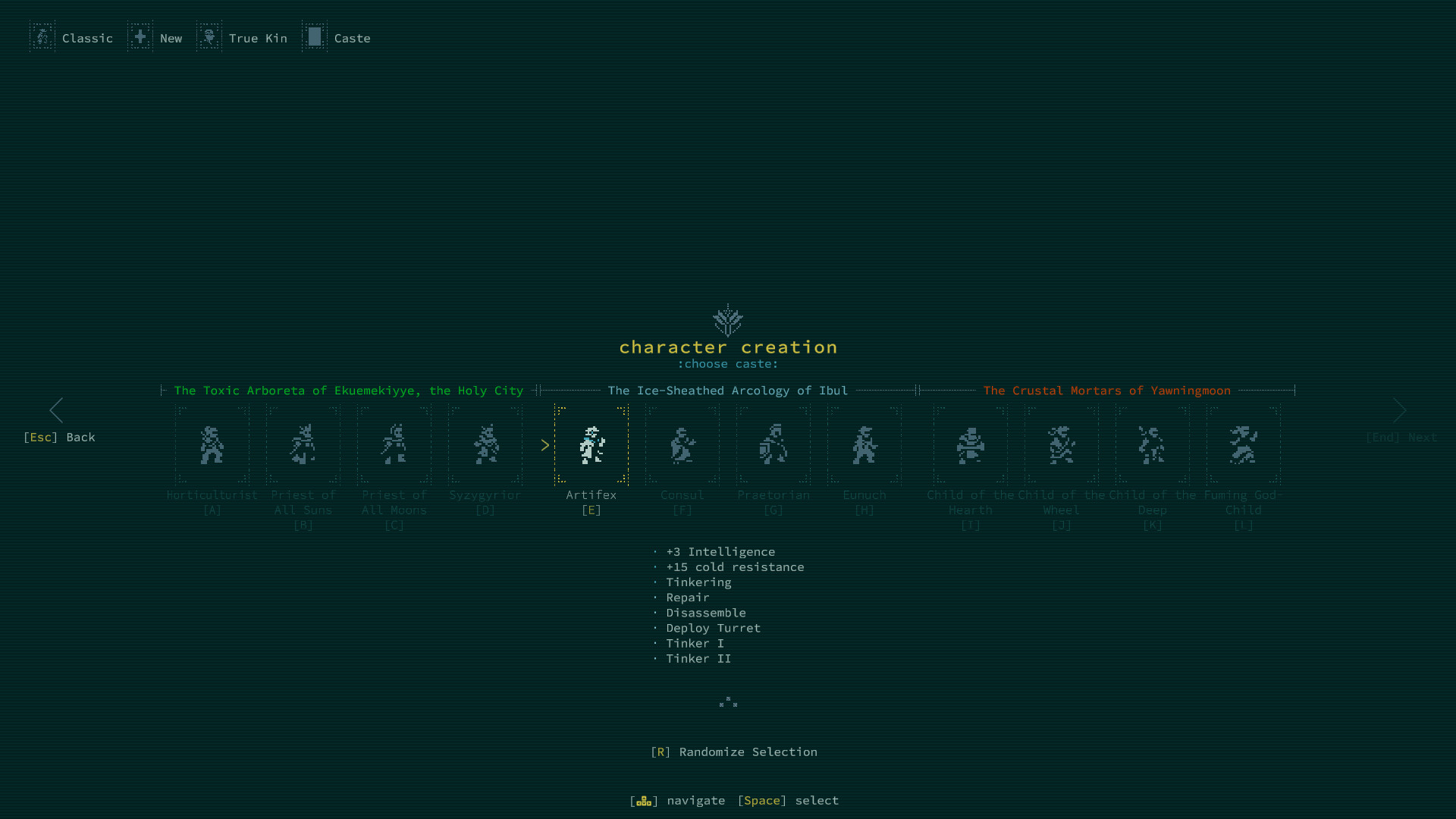
At its heart, Caves of Qud is about building a character and surviving a world that does not care about you. Character creation alone is a playground: you pick a genotype — a pure-strain True Kin who uses cybernetic implants, or a Mutant who sprouts physical and mental mutations — then shape attributes, mutations or castes, and skills into something uniquely yours. From there you are dropped into the starting village and pointed, loosely, toward a handcrafted main quest, but the world around it is a procedural sandbox you are free to explore, exploit and die in however you like.
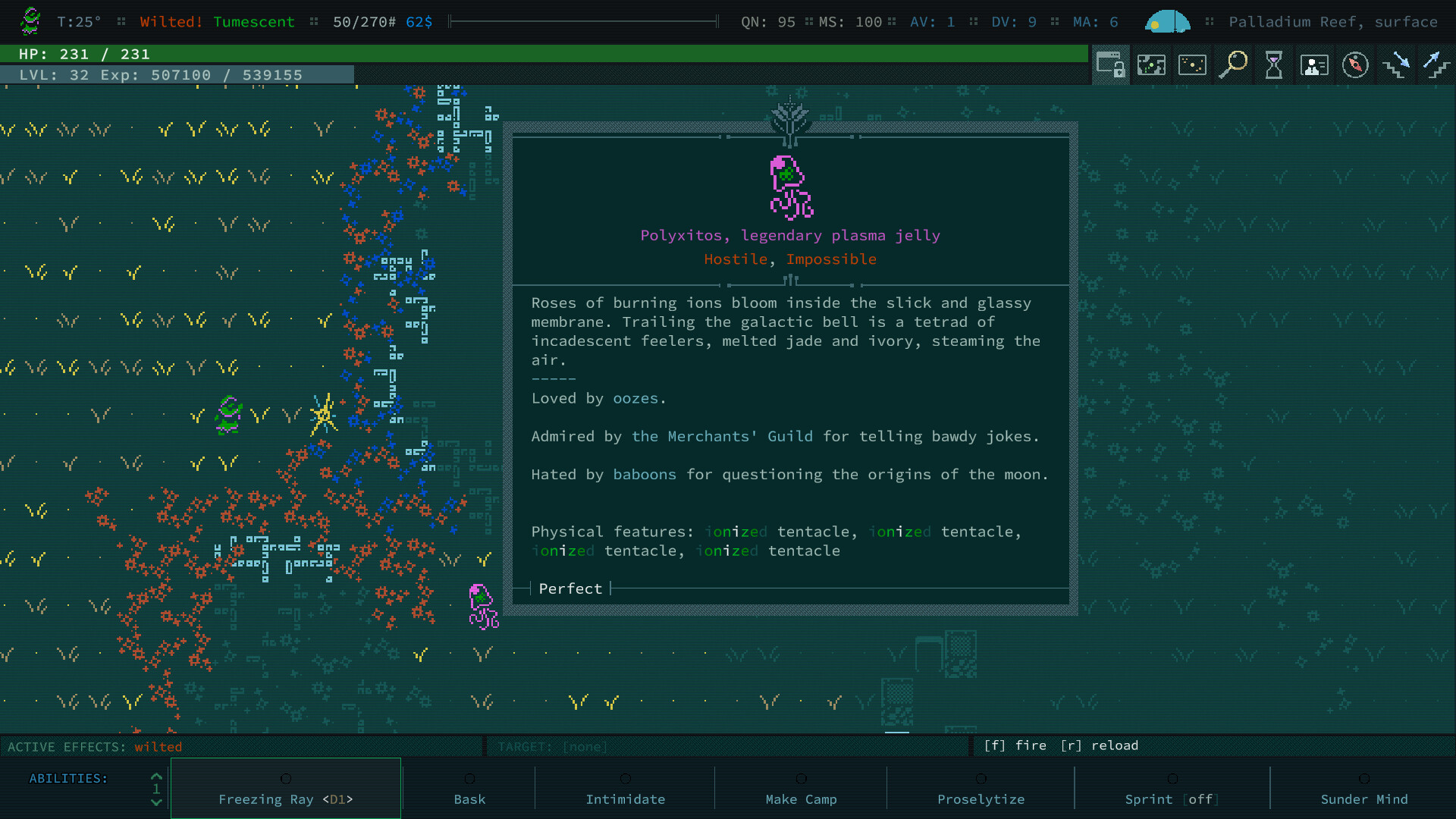
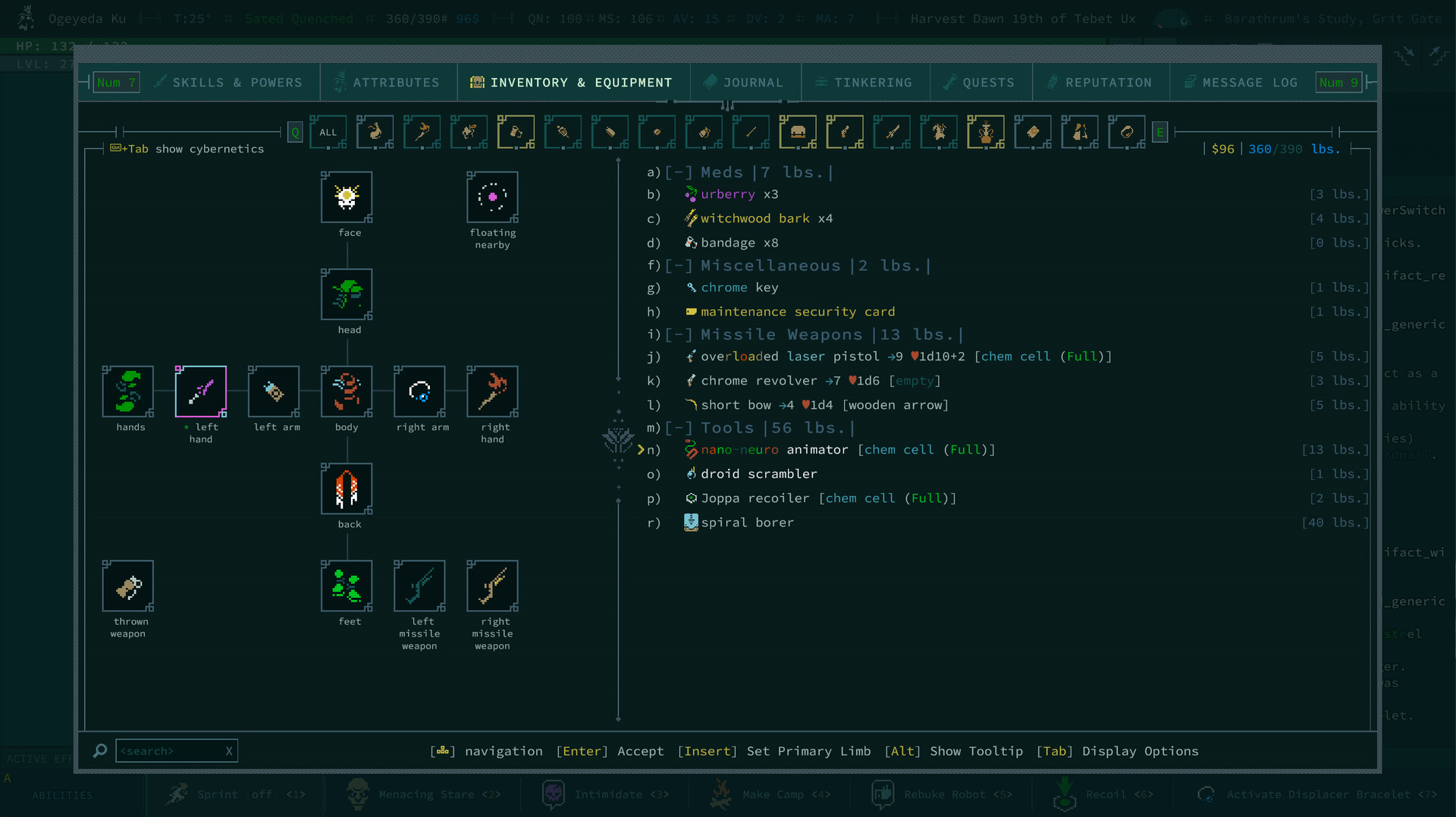
Moment to moment, you explore ruins and wilds, fight or talk your way past creatures, trade (water is the currency here), tinker artifacts together from salvaged parts, cook meals for buffs, and navigate the reputation you hold with dozens of factions. The magic is how these systems interact: a stray spark of electricity, a pool of flammable gas, a mutation you forgot you had, and a routine fight becomes an emergent story you could not have scripted. That density is the whole point.
New players should start in Roleplay mode and resist the urge to wander into danger. Caves of Qud expects you to learn through losses, so lean on the wiki and take the early main-quest steps slowly. Our Caves of Qud beginner guide covers the first hours and the habits that keep you alive.
Why the depth carries everything
It is worth being specific about what "deep" means here, because the word is overused. Caves of Qud simulates its world at a granularity most games never attempt: liquids flow and mix, gases spread, temperature and reactions matter, limbs can be severed, items can be disassembled and rebuilt, creatures have their own goals and relationships. Your character sits inside that simulation rather than on top of it, which is why builds matter so much — a mutation or a skill is not a number on a sheet, it is a lever on a living system. The result is a sandbox where experimentation is endlessly rewarded and no two runs play out the same.
This is the lens for everything else. The minimal presentation works because the systems beneath are so rich and consequential. A fight is rarely just a fight; it is a physics-and-systems puzzle that your specific build gives you specific tools to solve. Few games this side of Dwarf Fortress achieve emergence this consistently, and none wrap it in a world quite like Qud's.
Pros
- +Simulation depth that lets the world and your build interact in endlessly emergent ways.
- +Extraordinary character freedom via 100-plus mutations, cybernetics and a classless skill system.
- +A singular, atmospheric science-fantasy setting with deep lore and faction reputation.
- +Generous and fair — no MTX, Workshop, a level editor, and a forgiving Roleplay mode.
Cons
- −Brutal, opaque learning curve that leans heavily on the wiki.
- −Dense, dated tile-and-menu presentation that puts off many players.
- −Punishing RNG and sudden deaths, especially early.
- −Heavy information and UI overload; far from streamlined.
Build freedom and replayability
Where many RPGs offer a handful of classes, Caves of Qud offers a near-bottomless build space. Mutants choose from a long list of physical mutations (think extra arms, horns, carapace, regeneration, electrical generation) and mental mutations (telepathy, teleportation, pyrokinesis and more), gaining and strengthening them as they level. True Kin instead lean on a caste and cybernetic implants for a sturdier, gear-driven path. On top of the genotype, a classless skill system lets you buy abilities across weapon styles, tinkering, cooking, persuasion, survival and more. The combinations are staggering, and because the world is procedural and the systems interact, that freedom translates directly into replayability. A multi-armed melee mutant, a psychic glass cannon, and a cybernetic rifle specialist are not just different stats — they are different games.
The flip side, in fairness, is that this freedom is also part of the difficulty. With so many options and so little hand-holding, new players can easily build something that falls apart, which is why a guide and Roleplay mode matter so much early on. Our Caves of Qud builds guide and mutations tier list help you make those first choices count.
The honest weaknesses
Now the part a store page glosses over. Caves of Qud is hard, and a large share of that difficulty comes from opacity rather than fair challenge. The game explains very little about its systems, and many players will spend their early hours with the wiki open in another window. Deaths can be sudden and feel arbitrary until you understand the underlying rules, and the deep RNG of a traditional roguelike means even good play sometimes ends a run. For some that is the thrill; for others it is a wall, and it is fair to know which you are before buying.
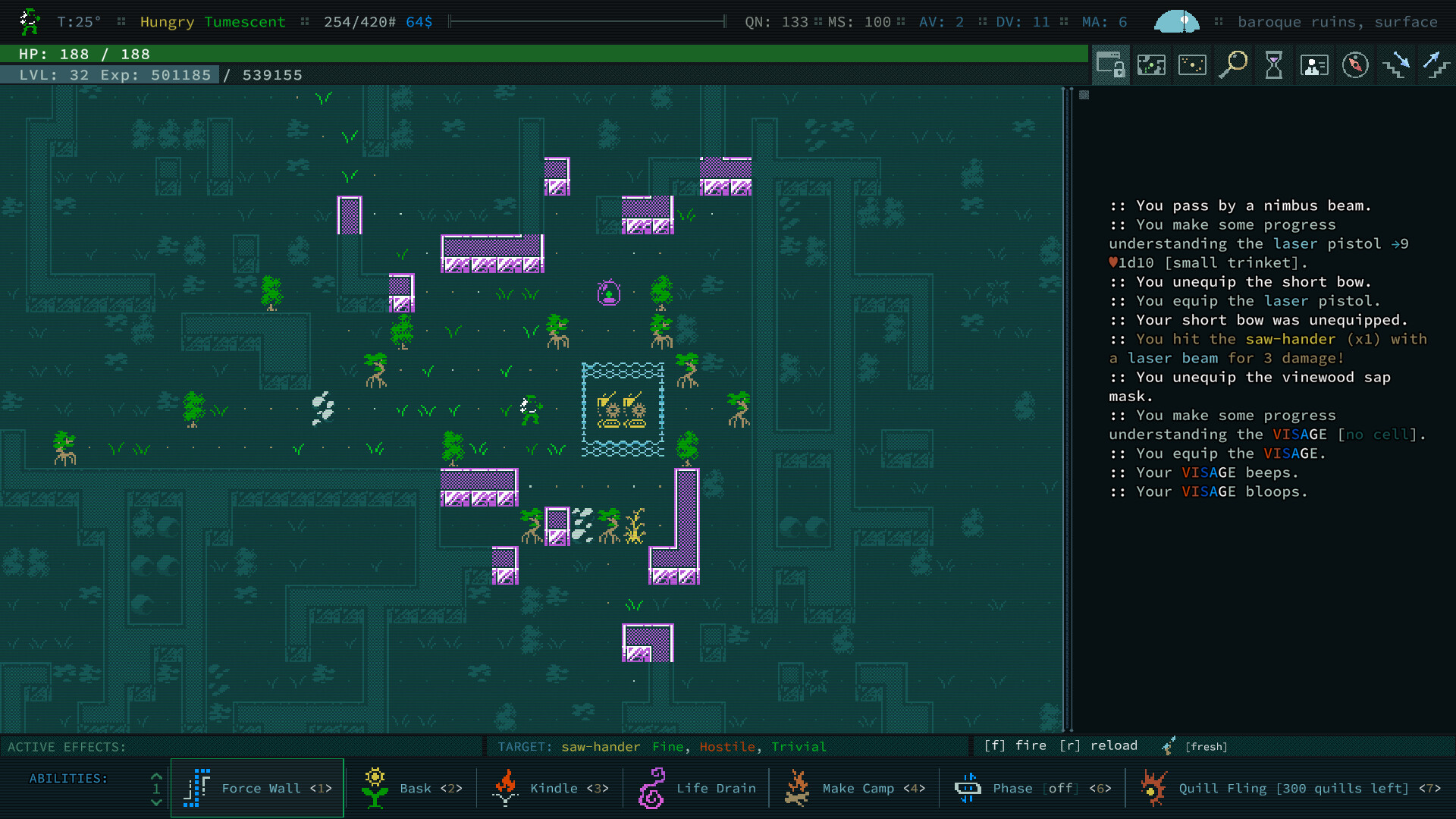
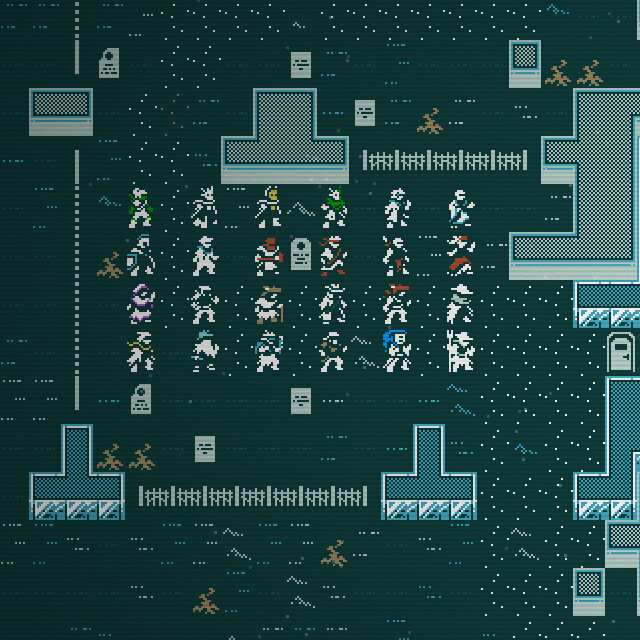
The presentation is the other honest point. Caves of Qud presents through tiles and dense menus that look and feel decades old, with information packed into every corner of the screen. The art and ambient soundscape have real character, and the tile mode is more legible than pure ASCII, but anyone expecting modern visuals or a clean, guided interface will be taken aback. None of this undermines the depth, but you should buy knowing the experience is austere, text-heavy and demanding by design — and English-only, which is a significant barrier for non-English speakers.
Buy Caves of Qud for its depth, not its accessibility. If you need a gentle learning curve, modern presentation, or your own language, this is not the RPG for you — at least not without patience and a wiki. If those are acceptable, few games offer more to discover.
Who should buy it
If you love deep systems, build experimentation and the emergent stories that only a richly simulated world can produce, Caves of Qud is essential. Players coming from Dwarf Fortress will recognise the simulation ambition; those from traditional roguelikes like ADOM or NetHack will feel at home with the permadeath and depth; and anyone who loves a singular, lore-soaked setting will find Qud unforgettable. At its price, with no monetization nonsense and effectively limitless replayability, the value is hard to overstate. To make your opening hours survivable, start with our beginner guide and survival guide.
Who should pass? Anyone who needs a gentle on-ramp, anyone put off by dense, dated presentation, anyone who wants streamlined modern design, and non-English players unwilling to navigate a heavily text-based game in English. For everyone else, Caves of Qud is a landmark roguelike RPG that earns its overwhelming praise — with the honest asterisk that it asks real patience before it gives back one of gaming's deepest worlds.