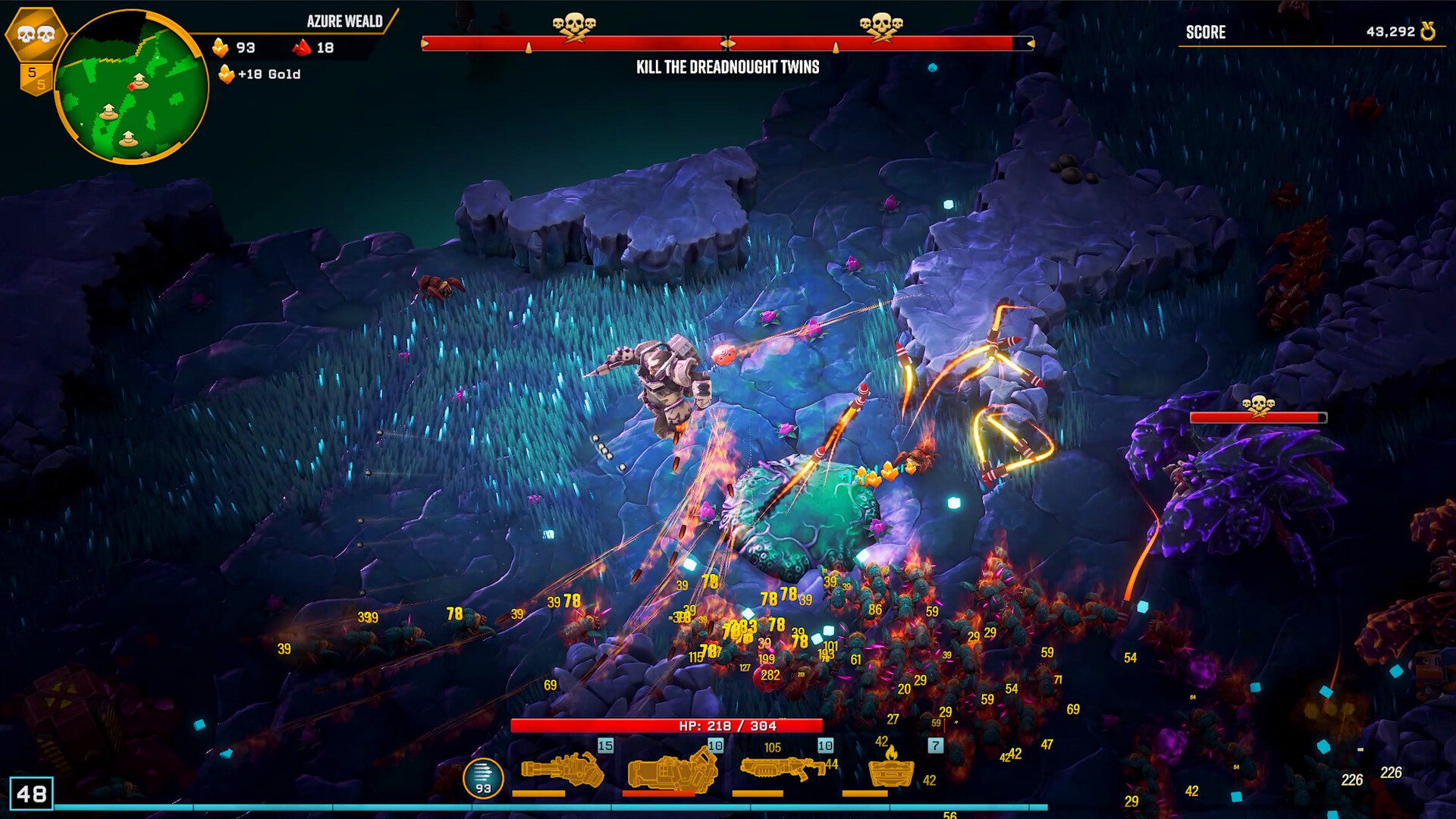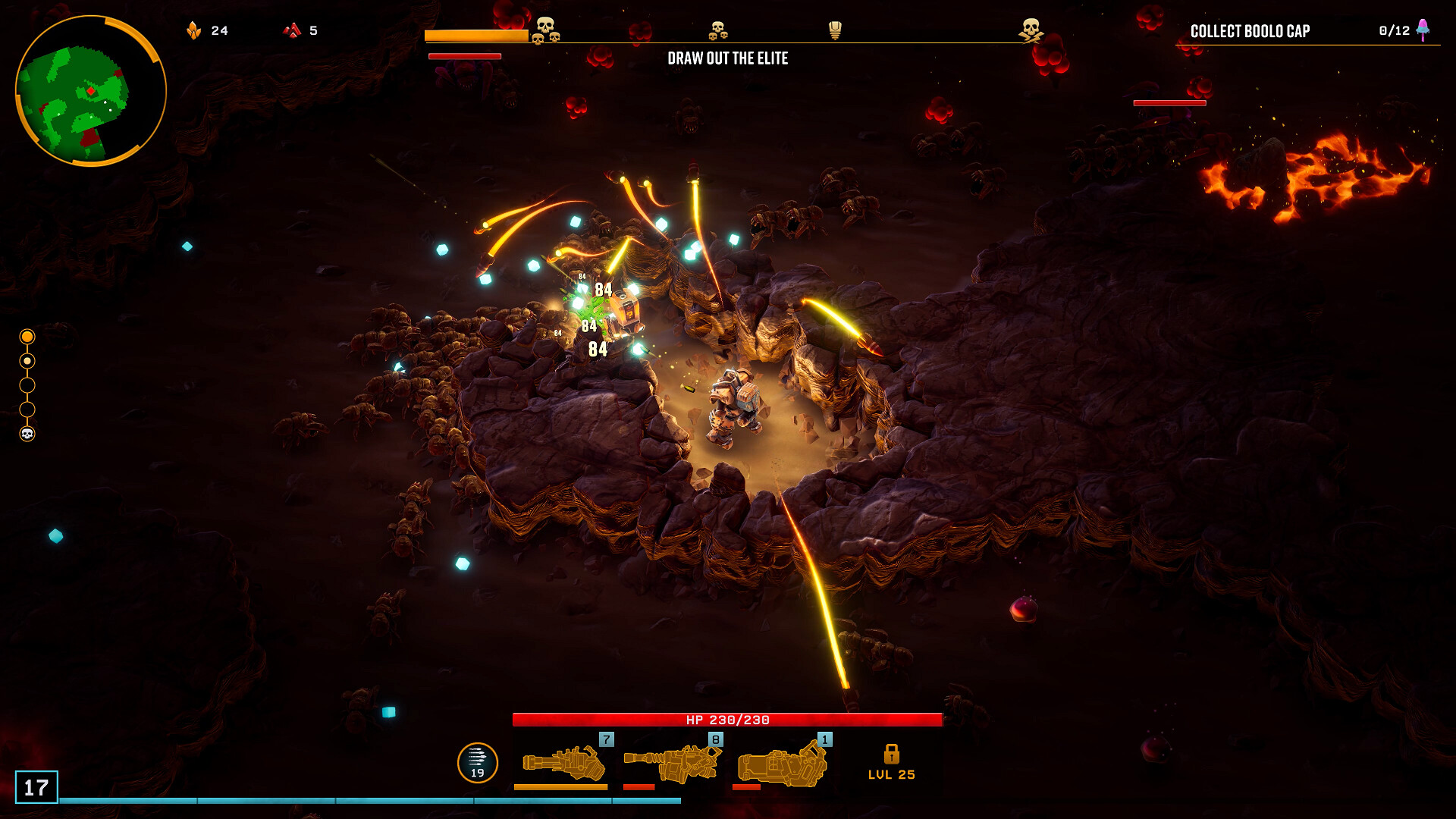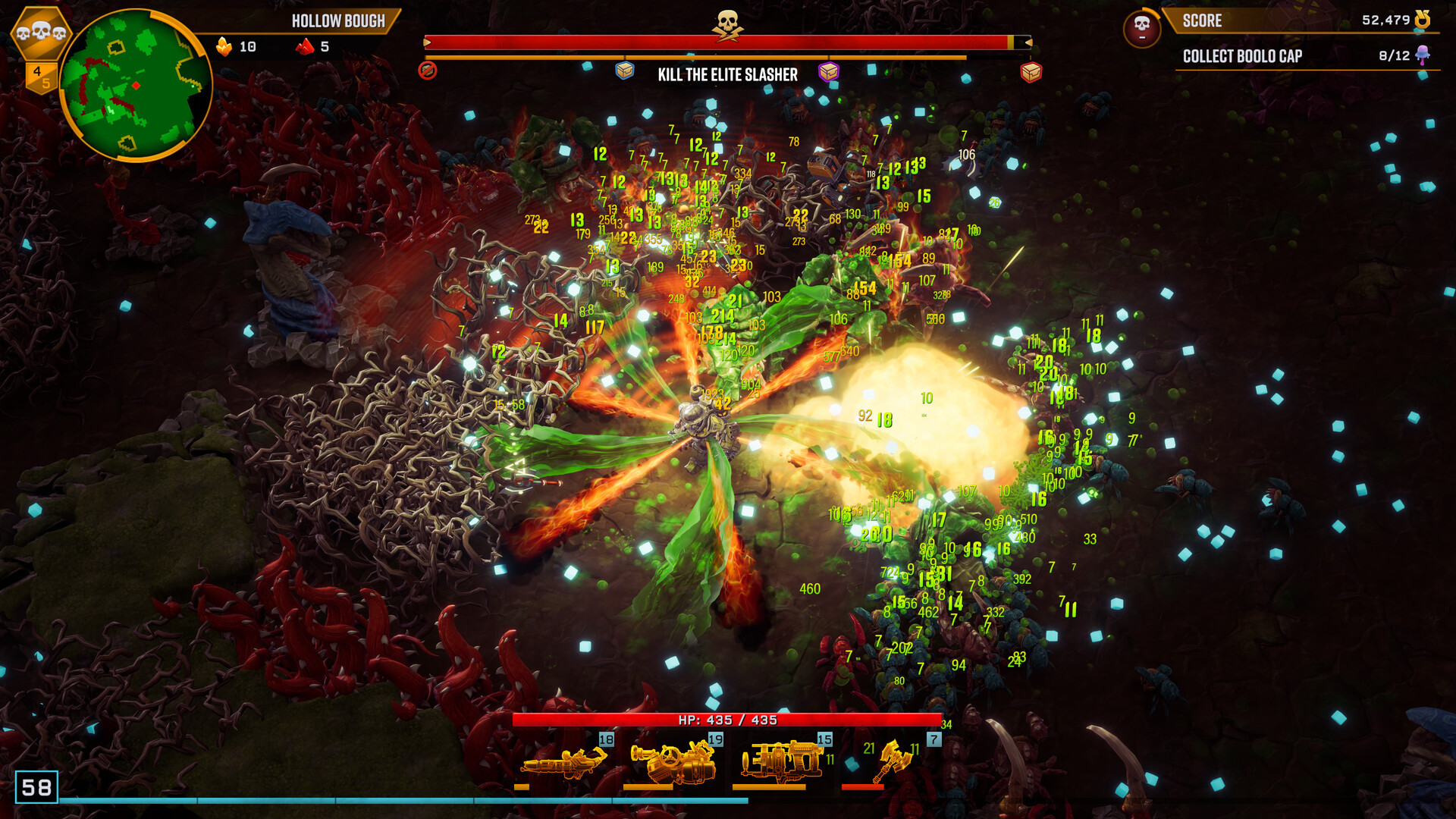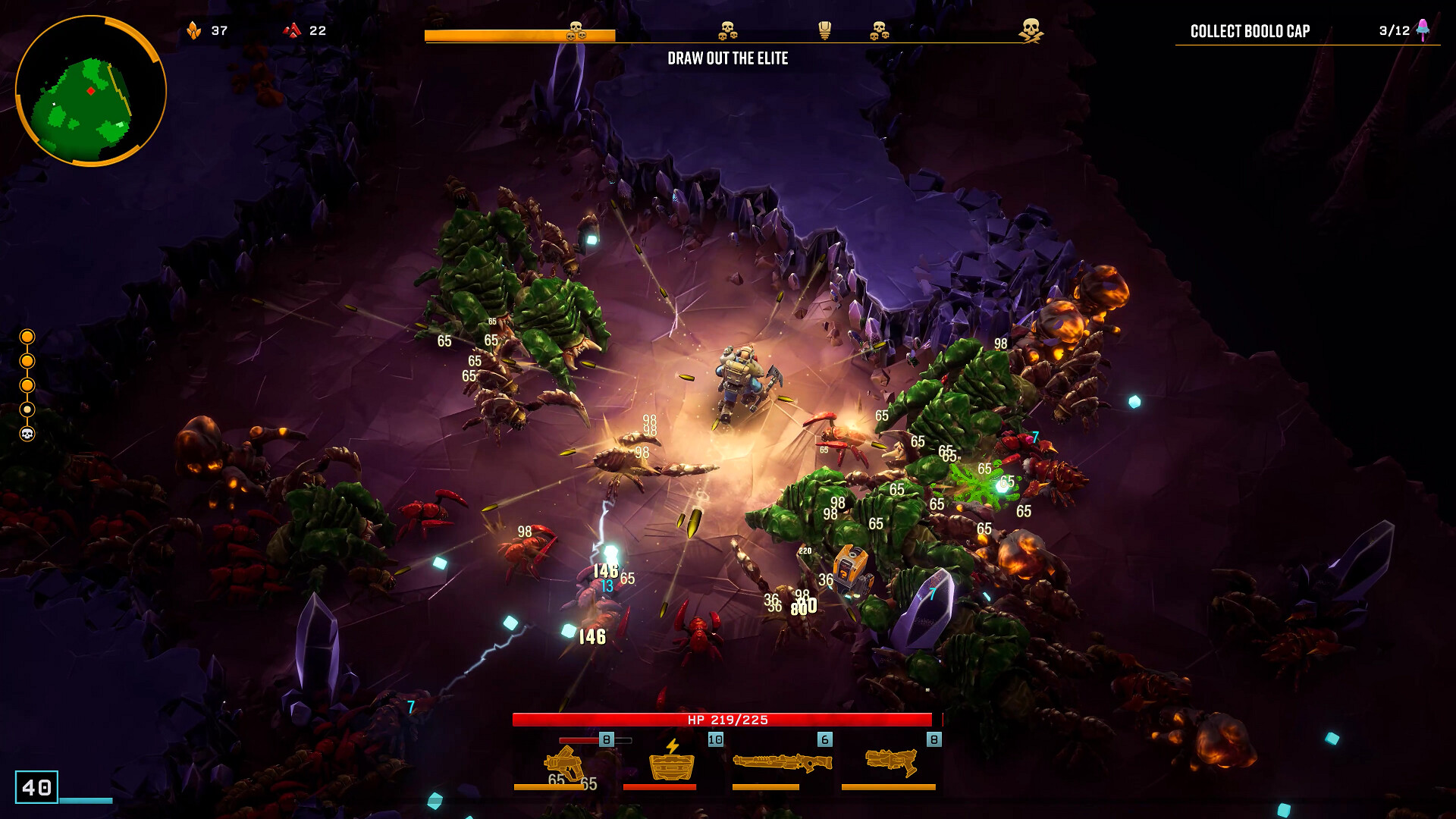
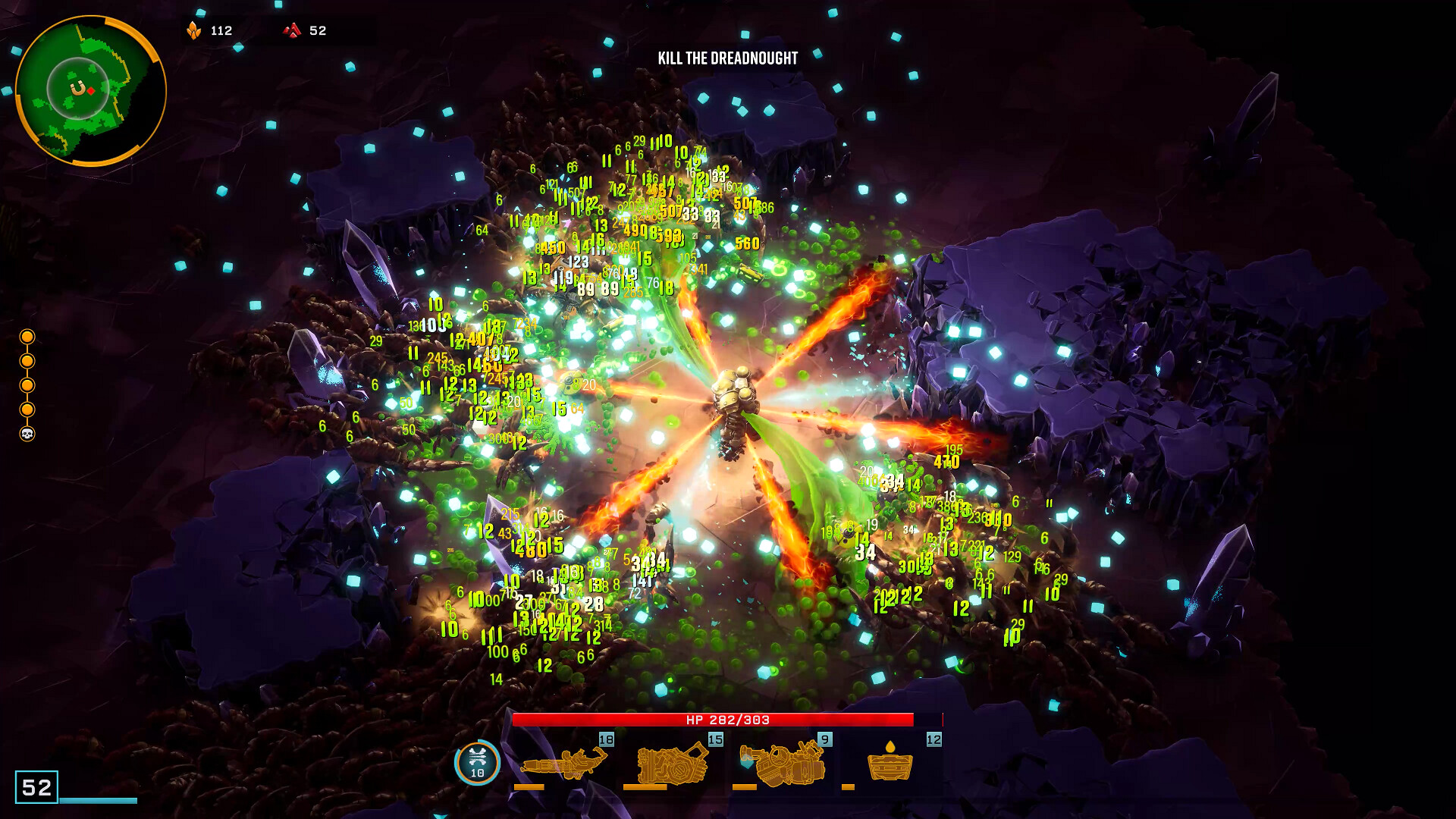
There are a lot of survivor-likes now, and most of them differ from each other in the way that two shades of the same colour differ. Deep Rock Galactic: Survivor is one of the few with an actual structural idea, and the idea is this: the terrain is destructible and mining it is how you get paid.
That sounds small. It is not, and it is the reason this review recommends the game to a specific kind of player and warns a different kind away.
What mining actually changes
In most games of this genre your movement question is "where is it safe to stand". Here there is a second question layered on top — "where is the ore" — and the two answers are frequently in different directions.
Ore funds the shop between stages, and that shop is what makes you strong enough for the next one. So a dive where you played it safe and never carved through rock is a dive you underfunded, and you find out on stage four. That is a genuinely different rhythm from the genre norm, and it is the main reason to buy this over its competitors.
It also solves the complaint that survivor-likes are passive. There is always something to do with your hands, and that something has consequences.
Where the depth is
The build system is deeper than it first appears. Five classes — Scout, Gunner, Engineer, Driller and Demolisher — each have three class mods, giving fifteen distinct starting loadouts. They are not cosmetic variations: Tinkerer starts your weapons at level 3, Interrogator trades 30 percent of your damage for double status effect damage, and every Demolisher mod carries passive health regeneration.
On top of that sit overclocks, chosen at weapon levels 6, 12 and 18. These are real power spikes rather than incremental upgrades — the level 18 "Unstable" options change how a weapon behaves, not just how hard it hits. It gives each dive a shape: a slow start, a spike, another spike, and on good runs a third that redefines your build.
The build decisions are covered in detail in the class mods tier list and the overclock guide.
Where it falls down
The grind is the problem, and it is not a small one. There are three separate progression tracks running at once. Classes unlock by player rank. Class mods unlock by that class's own rank. Hazard levels unlock by Biome Points earned from completing challenges. Each is reasonable alone; together they mean that for long stretches you are diving to open something rather than because the dive itself is interesting.
The loop is good, but it is not good enough to stay fresh for the full length of that treadmill. The most common honest complaint from players is not that the game is bad — it is that they got tired before they finished unlocking it.
Presentation is functional. It reads clearly, which in this genre matters more than beauty, but stages blur together over a long session and nothing about the visual design will stay with you.
What the score actually means
It sits at 86 percent positive on Steam across more than 48,000 reviews after leaving Early Access in September 2025. That is a good score, and it is also a meaningful step down from the original Deep Rock Galactic, which is one of the most beloved co-op shooters on the platform.
That gap is the honest summary of this game. It is not a disappointment and it is not a classic. It is a well-made take on a crowded genre with one real idea and one real weakness, and the 14 percent who did not like it are mostly people who ran into the grind.
How it compares in the genre
| Game | What it does that this one does not | What this one does better |
|---|---|---|
| Vampire Survivors | Purer, faster, and far less to learn before the fun starts | Mining gives you a decision every few seconds instead of only a movement line |
| Halls of Torment | Tighter class identity and a more distinctive look | A fixed five-stage structure with a shop between stages, rather than one long timer |
| Risk of Rain 2 | Far deeper persistent build interactions and true 3D movement | Much lower barrier to a satisfying run, and a clearer moment-to-moment goal |
Who should buy it
| Buy it if | Skip it if |
|---|---|
| You like survivor-likes but find them too passive — mining gives you something to do every second | You want a short, complete experience with no unlock treadmill |
| You want build variety — fifteen class mods is more than most of the genre offers | You bounced off the genre because runs felt samey; mining delays that feeling but does not remove it |
| You play in Japanese, Russian, Chinese or Korean — localisation here is unusually complete | You are expecting the original Deep Rock Galactic's co-op; this is single-player and mechanically unrelated |
Verdict
Deep Rock Galactic: Survivor is the survivor-like for people who want their hands busy. The mining loop is a real idea, well executed, and it changes the genre's central question in a way nothing else has managed. The fifteen class mods and the overclock breakpoints give it more build texture than most of its competitors.
What stops it short of excellent is the amount of repetition it asks for. Three overlapping unlock systems is one too many, and by the time you have opened the interesting parts, a lot of players have had enough. Buy it for the loop, not for the completion.
If you have played enough of this genre to want a build system to take apart rather than a power fantasy to watch, the Soulstone Survivors review covers the deepest one available — and the reason most people bounce off it in an hour.