Start in a way that lets you learn
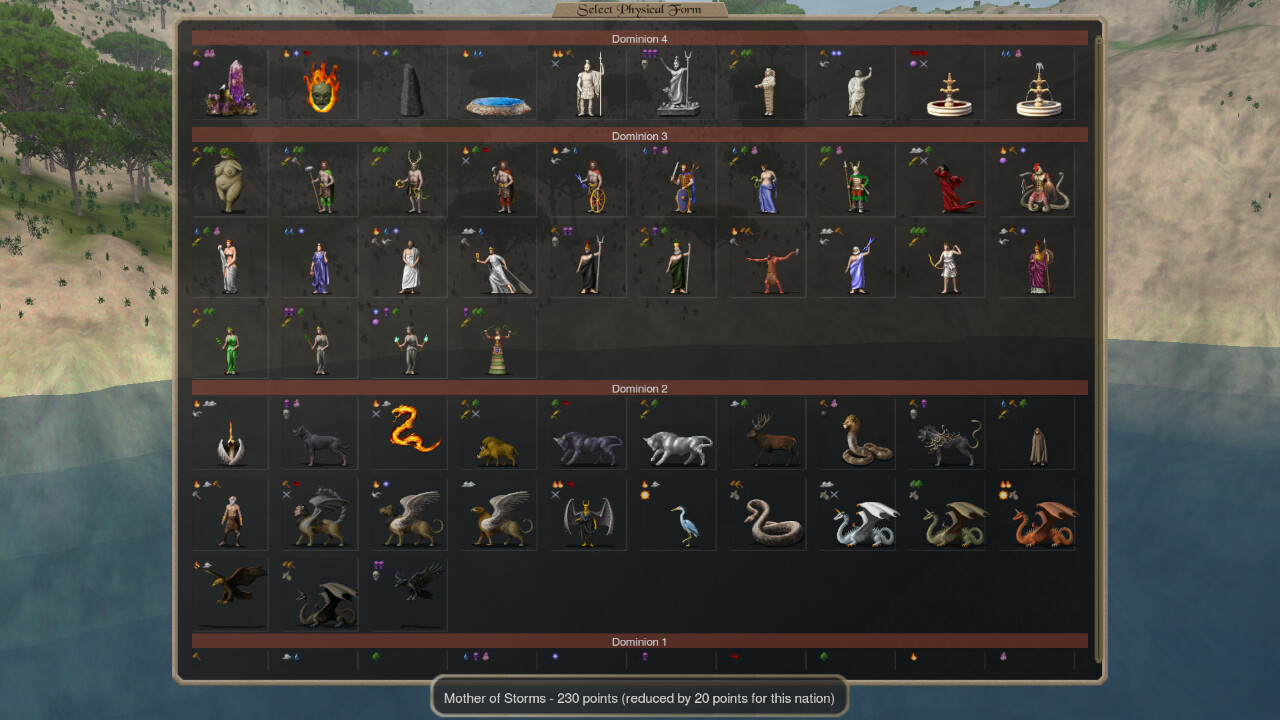
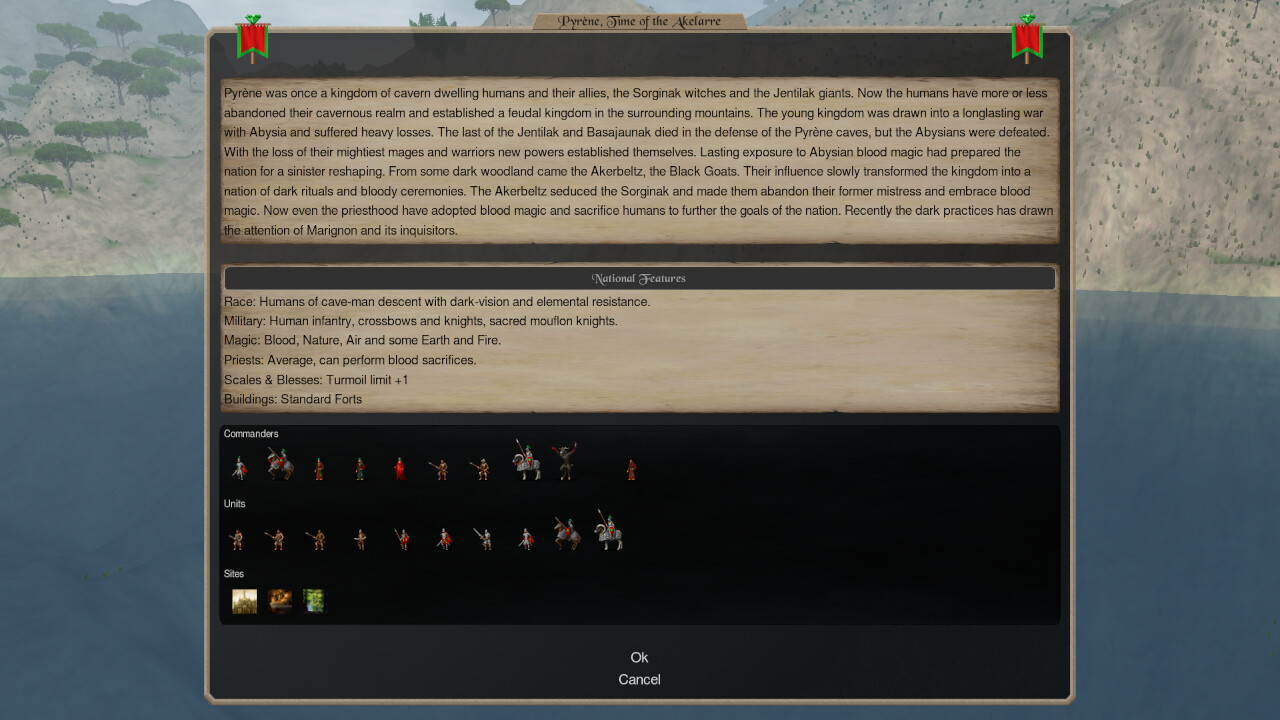
Dominions 6 is famous for overwhelming new players, and the fastest way to bounce off it is to pick a fiddly nation, agonise over an "optimal" god, and freeze under the weight of its systems. So the best thing you can do is start simple. Choose a forgiving, beginner-friendly nation — one with solid, straightforward troops that does not depend on fragile elites or intricate mechanics — so you can learn the core loop without fighting your own faction. Then design a simple Pretender God built for one job: helping you expand. An awake Pretender with a tough combat chassis, able to fight from the first turn, lets you start conquering immediately and learn the game while you grow, without needing a clever bless or exotic magic. You can design subtler gods once you know what your nation wants; for now, keep it sturdy and aggressive.
With a sturdy nation and a simple expanding god, the game stops being a paralysing mass of options and becomes a clear early task: go out and take territory. Everything else grows from there, one system at a time.
Do not try to learn everything at once. For your first game, focus on three things — expand, build temples and labs, and research some magic — and ignore the deeper systems until those feel natural. Our pretender guide covers god design in depth when you are ready.
Expand early and build your base
Once your first game is running, your overriding early priority is expansion. The opening map is dotted with weak independent provinces, and the player who grabs the most of them, fastest, builds a lead in income, recruitment and magic that compounds all game. So get moving immediately: send your starting army and your combat-capable Pretender or commanders out to conquer neighbouring provinces, clearing the independents while they are still weak and before you run into rival gods. Do not sit in your capital perfecting your economy — territory is the economy, and every province you take early is gold, recruits and research you will have and your rivals will not. Aggressive early expansion is the single most important habit a new player can build.
As you take ground, start laying your foundations. Build temples to spread your dominion — your god's influence radiating across the map, which strengthens your scales and your forces — and build laboratories so your mages can research magic. Forts let you recruit your nation's stronger units and protect key provinces. You will not be able to do everything at once, so prioritise: expand first, then temples and labs to convert that growing territory into dominion and magical progress.
Keep your Pretender expanding but not reckless. A combat Pretender clearing provinces is a huge early boost, but if it dies, you lose your god — so push it into fights it can clearly win, and pull it back from anything that looks dangerous. Losing your Pretender early can cripple a game.
Research magic and script your battles
With territory and a growing base, the other half of Dominions 6 opens up: magic and battle. Your mages, working from your laboratories, research the game's vast library of spells, and even a beginner benefits enormously from getting some research going early — useful battlefield spells, helpful enchantments, and the summons and rituals that grow more powerful as you advance. You do not need to understand the whole magic system at once; just keep your mages researching and start learning what a few useful spells do. The magic is where Dominions' famous depth lives, and it is also where games are ultimately won, so treat research as a steady, ongoing investment from early on. Our magic guide breaks the system down.
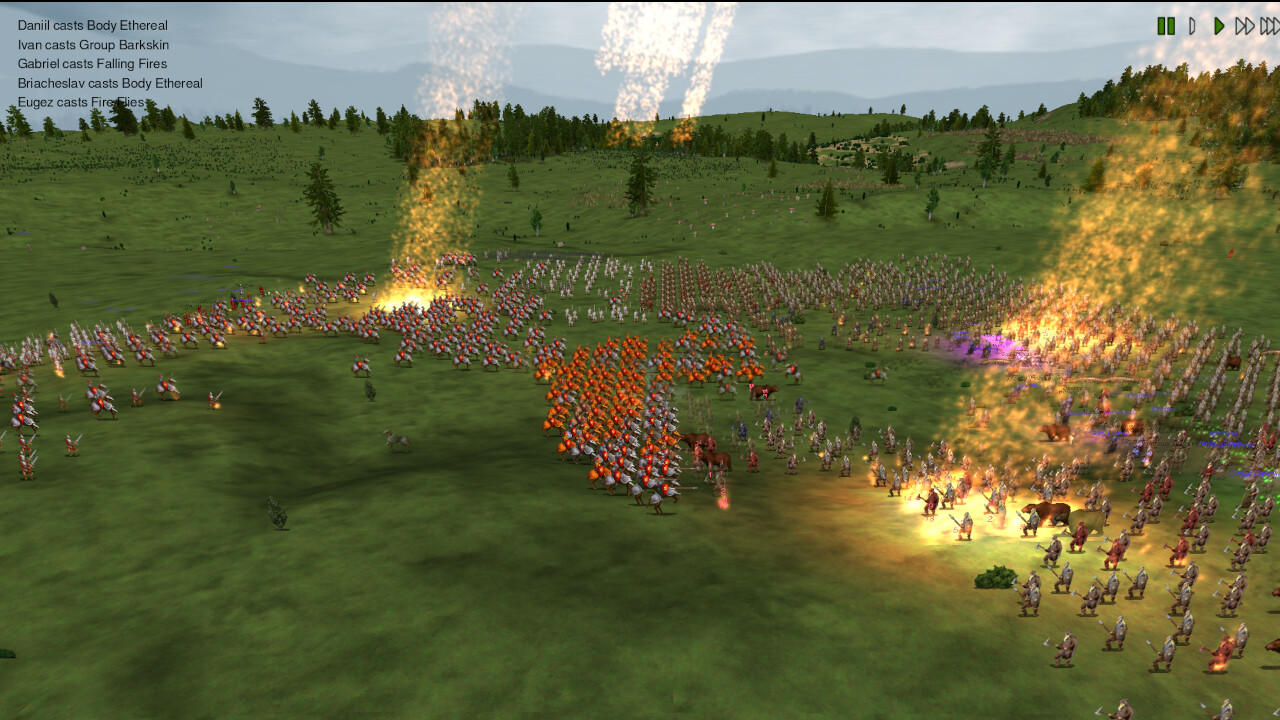
Battles, meanwhile, work differently from most strategy games, because you do not control them in real time. Instead, before a fight you set your army up and give it instructions — positioning your squads, ordering them to hold, attack particular targets, or guard your commanders, and scripting the specific spells each mage will try to cast — and then the battle resolves automatically from those plans. For your first games, a solid line of troops backed by mages scripted to cast useful spells from the rear will carry you a long way. Crucially, watch your battles play out: seeing what went wrong is how you learn to write better scripts and build better armies next time.
| Priority | Do this | Why it matters |
|---|---|---|
| Nation & god | Forgiving nation, awake expander god | Easier to learn and to expand |
| Expansion | Take independent provinces fast | Territory is income, troops and magic |
| Temples & labs | Spread dominion, start research | Builds your power and magical edge |
| Battles | Script squads and mages in advance | You cannot control combat live |
Survive and grow through your first game
Put it together and your first game has a clear shape: pick a forgiving nation and a simple awake god, expand aggressively into the independents, build temples and labs to turn that territory into dominion and research, and script your battles thoughtfully, learning from each one. You will make mistakes, lose provinces and misjudge fights — that is how everyone learns Dominions — but a sturdy nation and steady expansion give you room to recover. The goal of your first game is not to win against experts but to understand how the pieces fit: how expansion feeds your economy, how dominion and temples underpin your power, how research unlocks magic, and how scripting decides your battles. Once those connections click, the overwhelming systems start to feel like tools rather than obstacles.
Survive and grow through a game or two this way, and Dominions 6 stops being intimidating and starts revealing its astonishing depth. From there you can specialise at your own pace. When you are ready, our pretender guide helps you design cleverer gods, the magic guide opens up the spell library, and the strategies tier list maps out the main ways to win. And remember that the game truly shines against other humans, so playing multiplayer is the natural next step once you are comfortable.
Do not neglect early expansion to perfect your build. The most common new-player mistake is sitting still — fussing over a god design or economy — while rivals conquer the map. A fast, aggressive opening matters more than an optimal plan; you can always refine your strategy, but you cannot get back the provinces you let slip away.