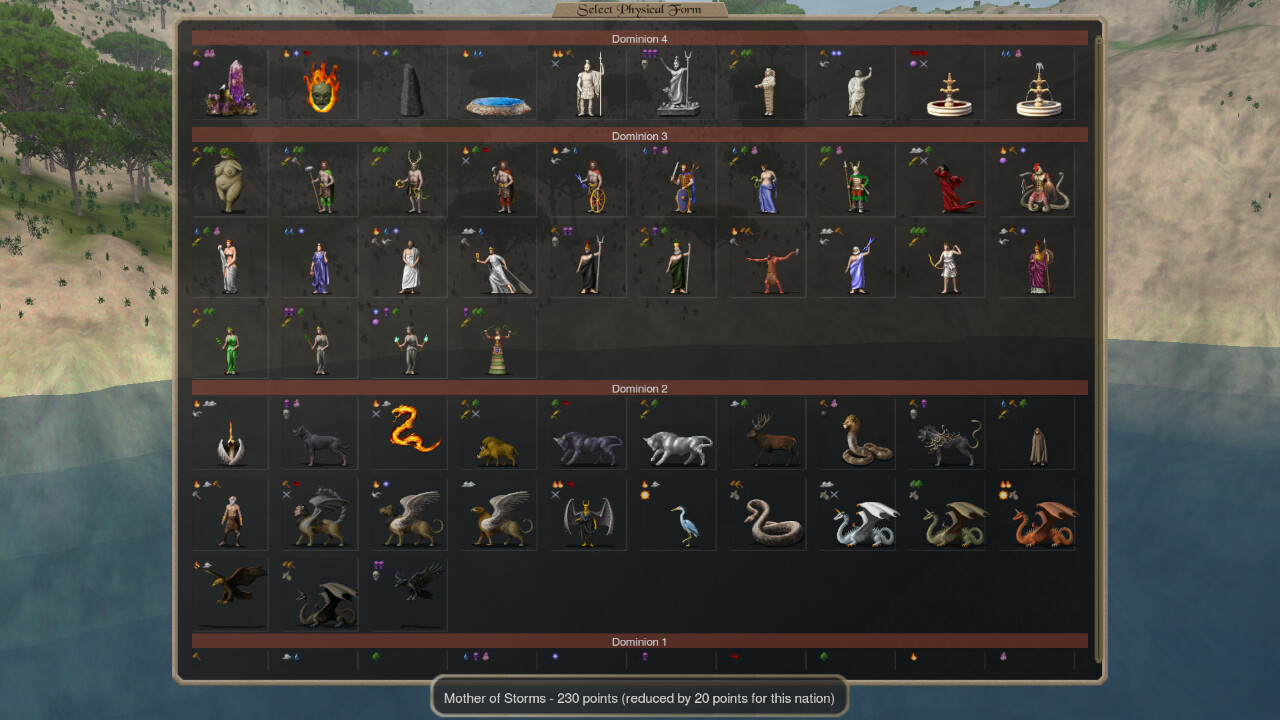
If the Pretender God is the most important decision in Dominions 6, magic is the system that decides most games. It is also the part that looks impenetrable from outside — hundreds of spells, summons and items, spread across paths and schools and paid for in several different currencies.
It is much less confusing once the pieces are separated. Three different things get muddled together by newcomers, and they do different jobs:
- Paths are the kinds of magic. They live on your mages, and they decide what a given mage is capable of casting.
- Schools are the research tracks. They are nation-wide and they decide which spells exist for you at all.
- Gems are the fuel. They pay for the powerful end of both battle magic and rituals.
Get those three straight and the rest of the system becomes navigable.
Which school to research first — ranked
Every Dominions game makes you answer the same question in the first few turns, and the answer changed in Dominions 6. Here is the order to think in, with the caveat that your nation's paths override it — a fire nation and a death nation should not open the same way.
| Rank | School | Why it ranks here | When it is wrong for you |
|---|---|---|---|
| 1 | **Evocation** | Gets your mages contributing to battles immediately. Evocation 3 to 4 puts shadow bolt, nether bolt and bolt of unlife in their hands, which turns every mage you already recruited into army support instead of a research battery. | If your nation has no offensive paths to cast them with, you are researching spells you cannot use. |
| 2 | **Conjuration** | Useful to essentially every nation. Summons cost gems rather than recruitment points and territory, which is how you field an army your provinces could never produce. | It is gem-hungry. Without an income to feed it, the spells sit unread. |
| 3 | **Alteration** | Buffs that make the army you already have substantially better, and it pairs naturally with earth nations. | Low value if your battle plan is "summon something bigger" rather than "improve what I have". |
| 4 | **Construction** | **This is the entry that changed.** In Dominions 5, Construction-first was the near-universal opening for forging boosters. In 6 there is very little reason to go there early — it becomes a mid-game school you visit for one specific booster. | Treating it as your Dom5 opening. If you learned this game before 6, this is the habit to break. |
| 5 | **Enchantment** | Where the long-term, game-shaping effects live, and a natural home for death nations. | Too slow to matter if the game is being decided in the first twenty turns. |
| 6 | **Thaumaturgy** | Situational and powerful when it lands — mind effects and magic manipulation. | Rarely the thing that wins the early game. |
| 7 | **Blood Magic** | The highest ceiling in the game. | It is a **separate economy** — blood hunting, slaves, the lot. Only research it if your nation was built for it, otherwise you are funding a second empire you do not have. |
Divine Magic needs no research at all, so it never competes for this decision.
The one rule: pick the school that matches the paths your mages already have, and push it far rather than opening several shallowly. Research is nation-wide, so depth is what unlocks the spells that actually change battles. Everything below is the machinery behind that — every path and what it powers, what lives in each school, the structural rule that caps your whole game, battle spells versus rituals, and how scripting decides whether any of it lands.
Every magic path and what powers it
There are nine arcane paths plus Holy. Each path has a single-letter abbreviation you will see on stat sheets, and each is paid for with a specific resource.
| Path | Letter | Powered by | Broadly used for |
|---|---|---|---|
| Fire | F | Fire gems | Direct damage and destructive evocation |
| Air | A | Air gems | Weather, lightning and flight |
| Water | W | Water gems | Cold, water control and aquatic magic |
| Earth | E | Earth gems | Protection, armour and heavy construction |
| Astral | S | Astral pearls | Mind magic, magic duels and communions |
| Death | D | Death gems | Undead summoning and decay |
| Nature | N | Nature gems | Healing, growth and beasts |
| Glamour | G | Glamour gems | Illusion and deception |
| Blood | B | Blood slaves | Demon summoning and sacrifice |
| Holy | H | No resource, no research | Priestly magic, gated by priest level |
Glamour is the one people miss. If you are coming from an earlier Dominions, note that it is a distinct path in Dominions 6 with its own gems, not a subcategory of illusion. Any guide that tells you there are eight paths is out of date.
Two paths break the gem pattern and it is worth internalising. Astral spends pearls, not gems, and Blood spends blood slaves — which you acquire by hunting rather than by site income, making blood a fundamentally different economy from the rest. Holy needs no resource and no research at all; what gates it is the priestly authority of the caster.
The eight schools of magic
Where paths sit on individual mages, schools are nation-wide research tracks. Your mages generate research points in laboratories, and that research opens the spell library for everyone.
| School | Broadly contains | Researched? |
|---|---|---|
| Conjuration | Summoning units and creatures | Yes |
| Alteration | Changing units physically | Yes |
| Evocation | Ranged and direct damage | Yes |
| Construction | Creating and refining magic items | Yes |
| Enchantment | Granting units additional traits | Yes |
| Thaumaturgy | Magic manipulation and mind effects | Yes |
| Blood Magic | Sacrificial spellcasting | Yes |
| Divine Magic | Holy spells | No — needs no research |
The division of labour matters when you decide where to push research. If you want an army out of spells, that is Conjuration. If you want your commanders kitted out as thugs, that is Construction. If you want to delete enemy formations, that is Evocation. Deciding what you want before you research is how you avoid spreading thin.
The structural rule that limits your whole game
This is the single most important thing to understand early, and it is rarely stated plainly.
Gem income comes mostly from magic sites hidden in your provinces, which mages uncover by site searching. But searching for a path's sites generally requires a mage of that path. So:
If your nation has no mage of a path, you will rarely find that path's sites, so you will never accumulate its gems, so you can never really use that magic.
Your nation's mage roster — and your Pretender God's paths, which is why god design and magic are so intertwined — therefore sets a hard ceiling on which magic you will ever have. It is not a soft preference. Plan your god around the paths you want access to, because the alternative is discovering at turn 40 that an entire branch of the game is closed to you.
Site searching is the highest-return chore in Dominions. A nation that diligently searches its provinces will have several times the gem income of one that does not, and gems are what separate "I researched a powerful spell" from "I can actually cast it repeatedly."
Battle spells versus rituals
Magic expresses itself in two very different modes, and they follow different rules.
| Battle spells | Rituals | |
|---|---|---|
| When | During combat | Between turns, on the strategic map |
| Cost | A mage's action, often gems | A mage's whole turn at a laboratory, plus gems |
| Controlled by | Scripts you set before the fight | Direct choice on the map |
| Used for | Damage, buffs, battlefield control | Summoning, forging, global enchantments |
Two ritual uses deserve special attention because they are how magic turns into military power.
Forging lets your mages craft magic items — weapons, armour, wondrous artefacts — that you equip on commanders. This is the foundation of thug and super-combatant strategies, where a single well-equipped commander clears provinces an army would struggle with.
Summoning builds armies out of spells rather than recruitment, calling elementals, spirits, undead and demons into being. It lets you field forces no province could ever produce, and it is often how a nation with a weak troop roster stays competitive.
Both are gem-hungry and research-dependent, which is why the gem economy above is not a side system — it is the thing that decides how much of your researched magic you can actually deploy.
Scripting: making magic actually land
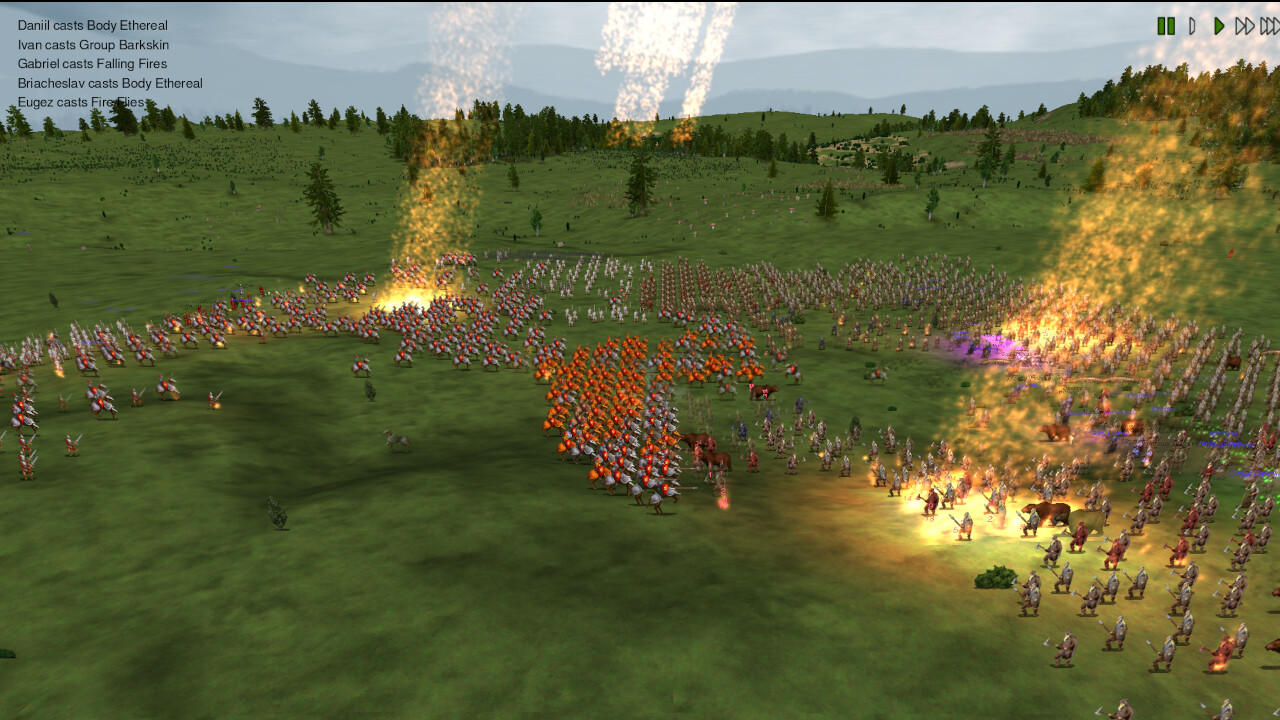
All of this has to win battles, and in Dominions 6 that comes down to scripting. You do not control combat in real time. You tell each mage in advance which spells to attempt and in what order, and then it acts on its own.
This is where a lot of magic quietly fails. A well-scripted mage line shatters an enemy army; a poorly scripted one stands around casting the wrong thing at the wrong range.
-
1
Decide what this mage is for
Buffing your line, deleting theirs, or summoning. A mage doing two jobs badly is worse than one doing a single job well.
-
2
Script the opener explicitly
Protective buffs usually go first because they matter most while your line is intact. Do not leave the first turns to the AI.
-
3
Watch the battle replay
This is the step people skip. Replays show you whether the spell fired, fizzled, or hit your own troops — you cannot fix a script you have not watched.
-
4
Refine and reuse
Once a script works for a matchup, it keeps working. Build a small library of scripts you trust rather than improvising every fight.
★ Honest Take: Deep, and needlessly hard to get into
Dominions 6 has the deepest magic system in strategy gaming, and that is not marketing — the interaction between paths, schools, gems and scripting produces situations no other game in the genre can. Once it clicks, nothing else scratches the same itch.
The honest criticism is that almost none of this is explained where you need it. The path-to-gem correspondence, the fact that Astral and Blood work differently, and above all the rule that you cannot find sites for paths you have no mages for — these are load-bearing facts you are expected to absorb from the manual or from losing. The depth is a genuine achievement; the on-ramp is not.
To build the god that anchors your magic, see the pretender guide. To see where magic fits among the ways to win, see the strategies tier list. If you are just starting, the beginner guide covers the basics.