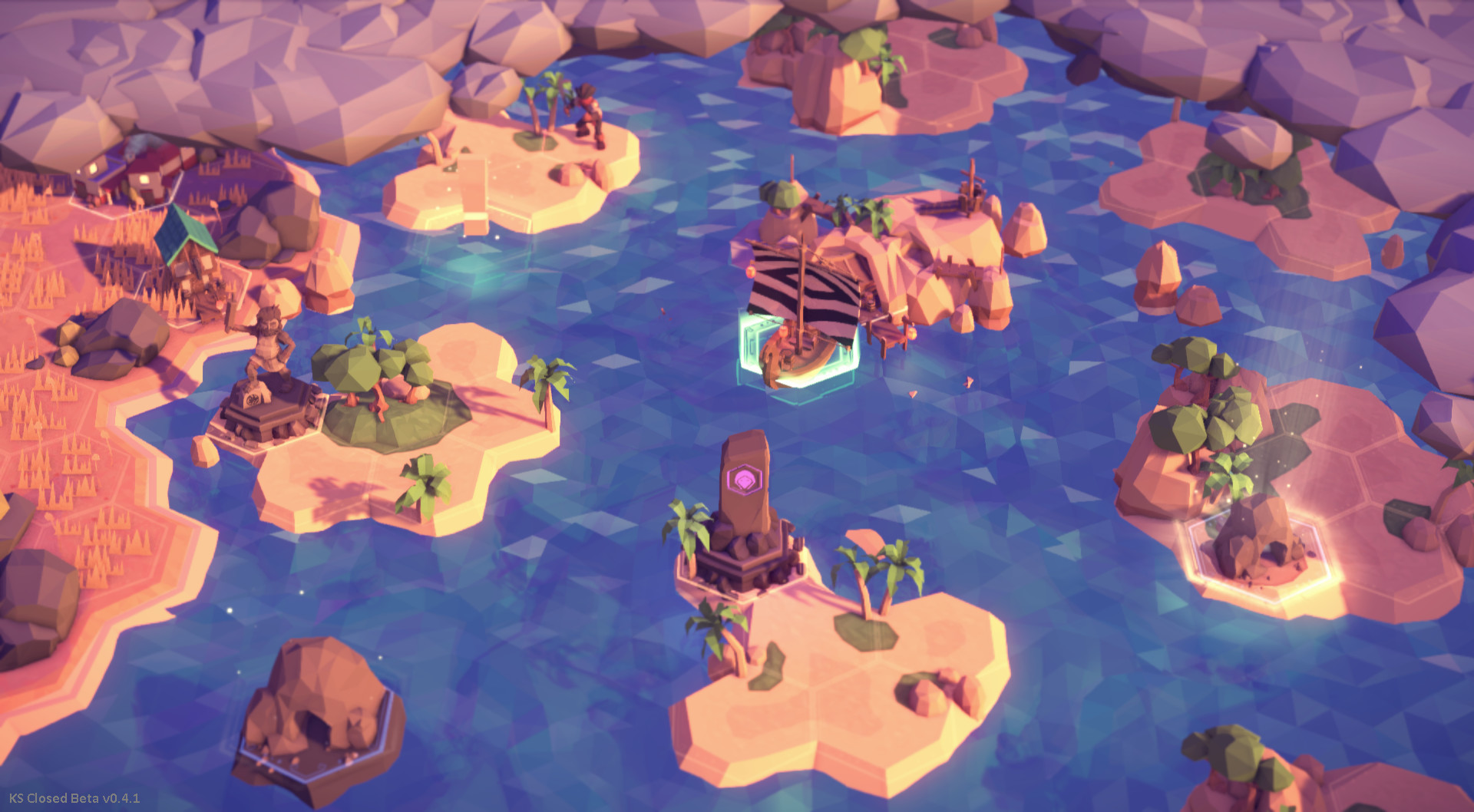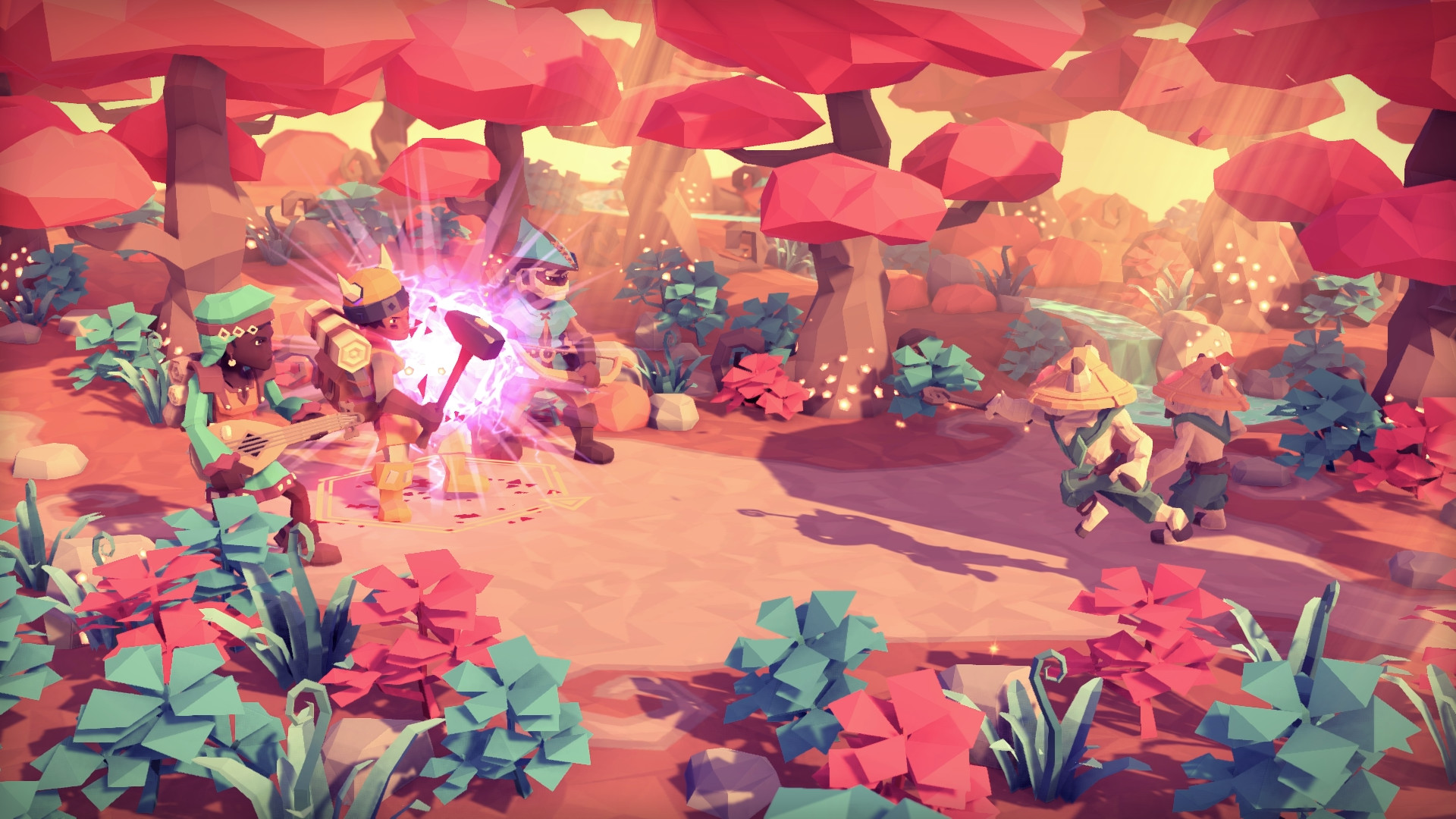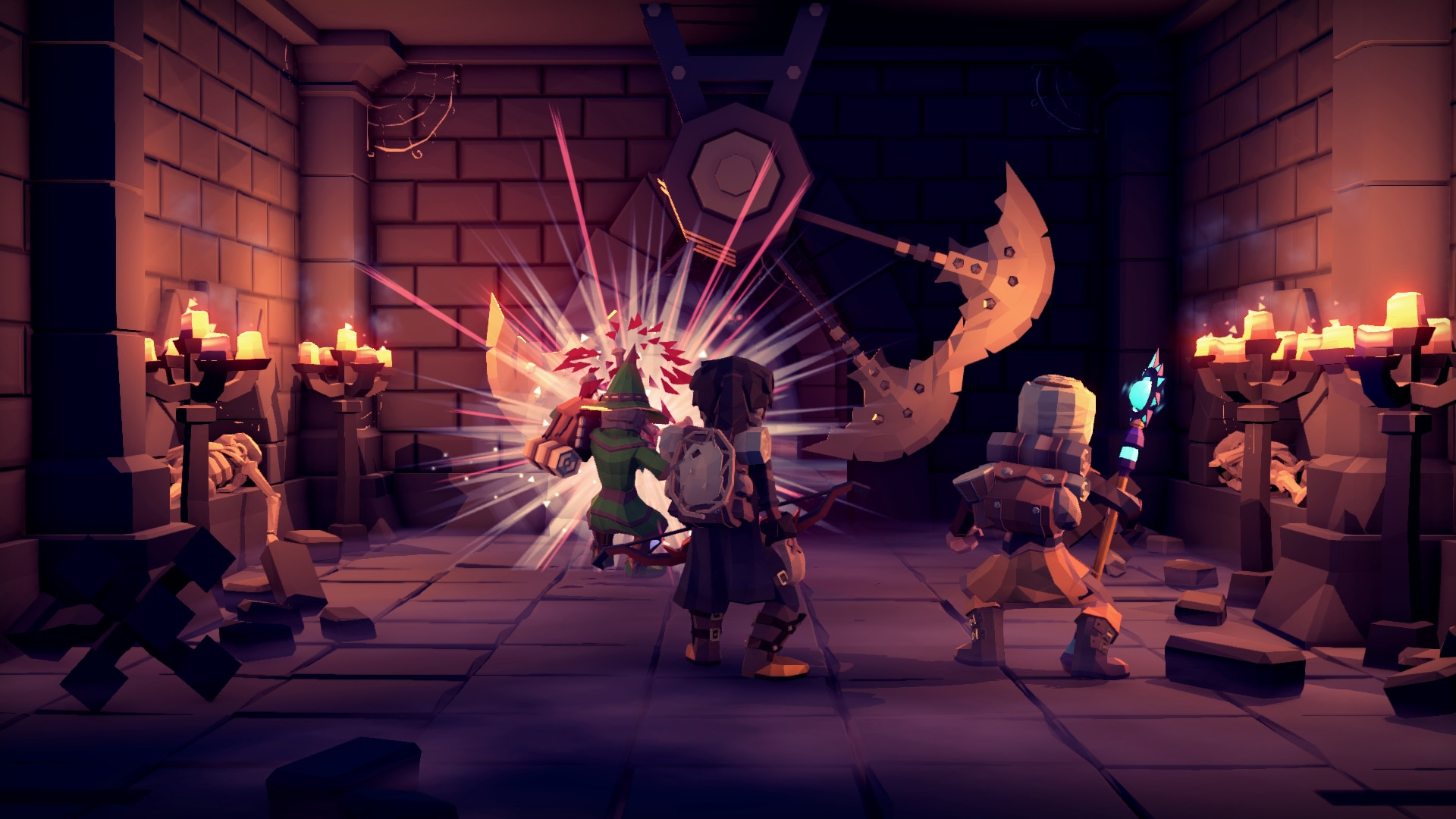
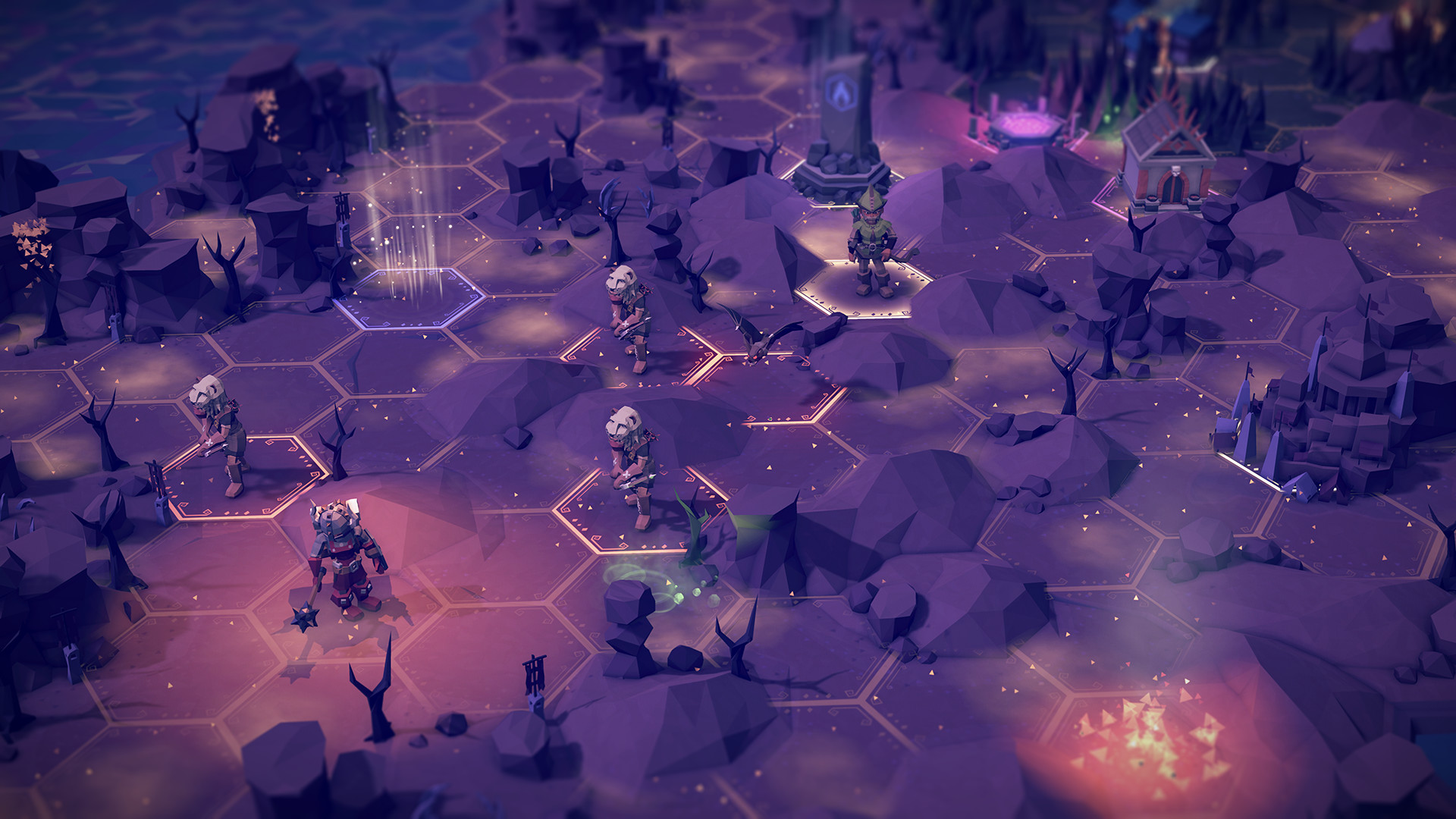
The king is dead, the land is falling apart, and three ordinary people — a blacksmith, a hunter and a scholar — are what the kingdom has left. You move them across a board of hexes, fight in turn-based battles, and every roll is a row of percentage slots.
That last part should make this a frustrating game. It mostly is not, and the reason is a single well-judged system.
Focus is the good idea
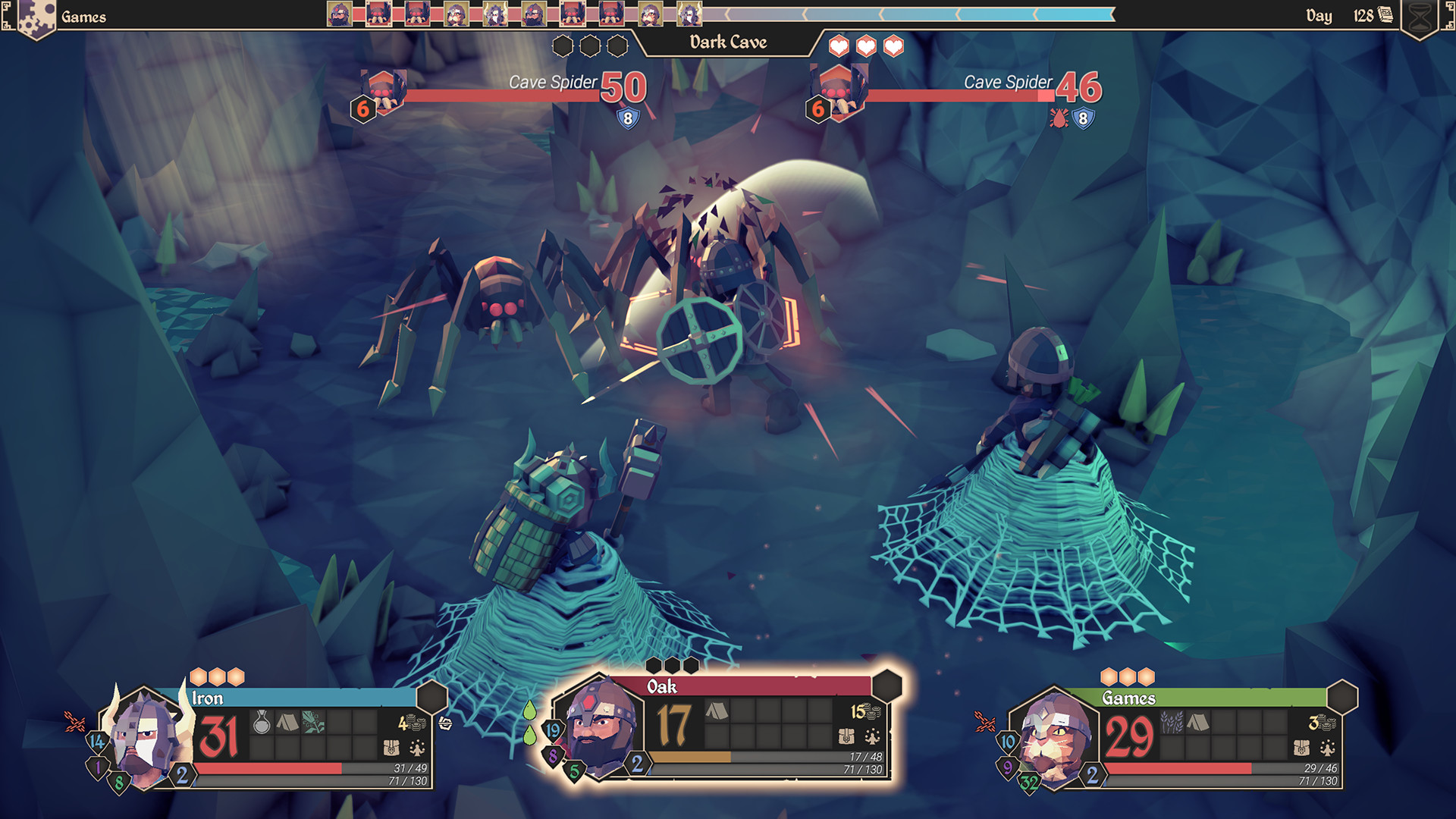
Every skill check in For The King presents slots you have a chance to fill. Focus lets you buy those slots outright. Spend a point and one slot becomes a guaranteed success; spend two and the rest of that action gets more accurate as well.
The elegance is in what it costs. Focus is one pool, capped at nine, and it pays for everything — attacks, fleeing, defending, opening chests, evading traps, and converting directly into movement on the overworld. So the question is never "will the dice betray me", it is "is this the roll worth being certain about".
That reframing does a lot of work. A dungeon becomes a budget problem: every chest you open is a guaranteed attack you will not have at the boss. It is the kind of decision that makes a random game feel authored rather than unfair.
There is exactly one thing Focus cannot touch. Luck rolls can never be focused, and every one of the thirteen characters has Luck 50 — the only stat identical across the entire roster. The game carves out a small area that nobody can influence and leaves everything else under your control if you are willing to pay for it. That is a more confident design decision than it first appears.
The co-op is the other half of the appeal. Up to three players, online or local, and the game is clearly built for the argument — whether to spend the Focus now, whether to take the long road, whether anyone can afford to open that chest. Playing it alone works and misses the point slightly.
Where it falls short
The length and the permadeath are in tension, and the game never quite resolves it.
An adventure runs for several hours. Death is permanent, and a fight that turns badly in the final stretch can cost the whole evening. Roguelikes usually answer this with short runs or meta-progression; For The King has Lore unlocks, which give you new characters rather than a stronger position, so a loss genuinely returns you to the start.
The second problem is the difficulty curve between the first two settings. Apprentice grants every character +5 to all base stats and more starting Focus, which makes it substantially easier than Journeyman rather than slightly. Players who finish an Apprentice run and step up often find a different game, and not in a way the interface prepares them for.
The third is roster depth. Thirteen characters sounds generous until you look at what separates them. Focus ranges only from 2 to 4, and the two characters that regenerate it — the Scholar with Refocus and the Monk with Discipline — are so much more valuable than the rest that parties converge. The Hobo, with a perfectly even 70 in all six main stats, is a nice idea undercut by having the lowest Focus in the game and no skills at all.
Where it stands
| Item | State |
|---|---|
| Release | 19 April 2018 |
| Developer and publisher | Developed by IronOak Games, published by Curve Games |
| Steam rating | Around 88 percent positive |
| Structure | Turn-based adventure on a hex board. Party of up to three, permadeath, Lore unlocks between runs |
| Roster | 13 characters, unlocked with Lore at costs from 0 to 20 |
| Multiplayer | Online and local co-op for up to three players |
| Localisation | Japanese, Russian, Simplified and Traditional Chinese, Korean, French, German, Spanish, Italian, Polish, Brazilian Portuguese. Interface, full audio and subtitles |
Comparisons
| Compared with | How For The King differs | Who that suits |
|---|---|---|
| Slay the Spire | An overworld journey rather than a card deck. Randomness is bought off with Focus instead of managed through draw | Players who want travel and companions, not a solved engine |
| Darkest Dungeon | Far lighter in tone and much more forgiving moment to moment, with co-op as the main event | Players who want the party-management itch without the cruelty |
| Tabletop board games | Enforces a genuinely fiddly rule set — Focus conversion, layout, trap checks — without the bookkeeping | People who like board games and not admin |
| Armello | Cooperative rather than competitive. Armello is four players against each other, this is three against the board | Players who want to plan together rather than bluff |
Who should buy and who should skip
| Buy it if | Skip it if |
|---|---|
| You have one or two friends and a few free evenings | You will mostly play alone |
| You like the idea of paying a currency to remove randomness | You want randomness genuinely gone rather than purchasable |
| You enjoy long adventures with real stakes | Losing hours of progress to one fight will end your interest |
| You want full voice acting in Japanese, Russian, Chinese or Korean | You expect deep character differentiation across thirteen classes |
Verdict
For The King solves a problem most dice-driven games just live with. Focus turns randomness into a price list, and because it draws from the same pool as movement and lockpicking, it makes an ordinary dungeon into a series of real decisions. Paired with co-op that gives those decisions someone to argue with, it earns its long life and its reputation.
What it does not solve is the cost of failing late. Adventures are long, permadeath is total, and the unlocks give you variety rather than a foothold. The difficulty jump from Apprentice to Journeyman is steeper than it should be, and the roster narrows quickly once you realise which two characters make Focus rather than merely spend it.
Buy it to play with friends. Buy it for the Focus system. Go in knowing that an evening can end badly and that this is on purpose.
New players should start with the beginner guide, the system that carries the game is in the Focus guide, every character's stats are in the class tier list, and how to combine three of them is in the party guide.
For the competitive version of a board game night, the Armello review covers four animals playing against each other rather than three adventurers playing together.