What Gladius Is, and What It Takes Away
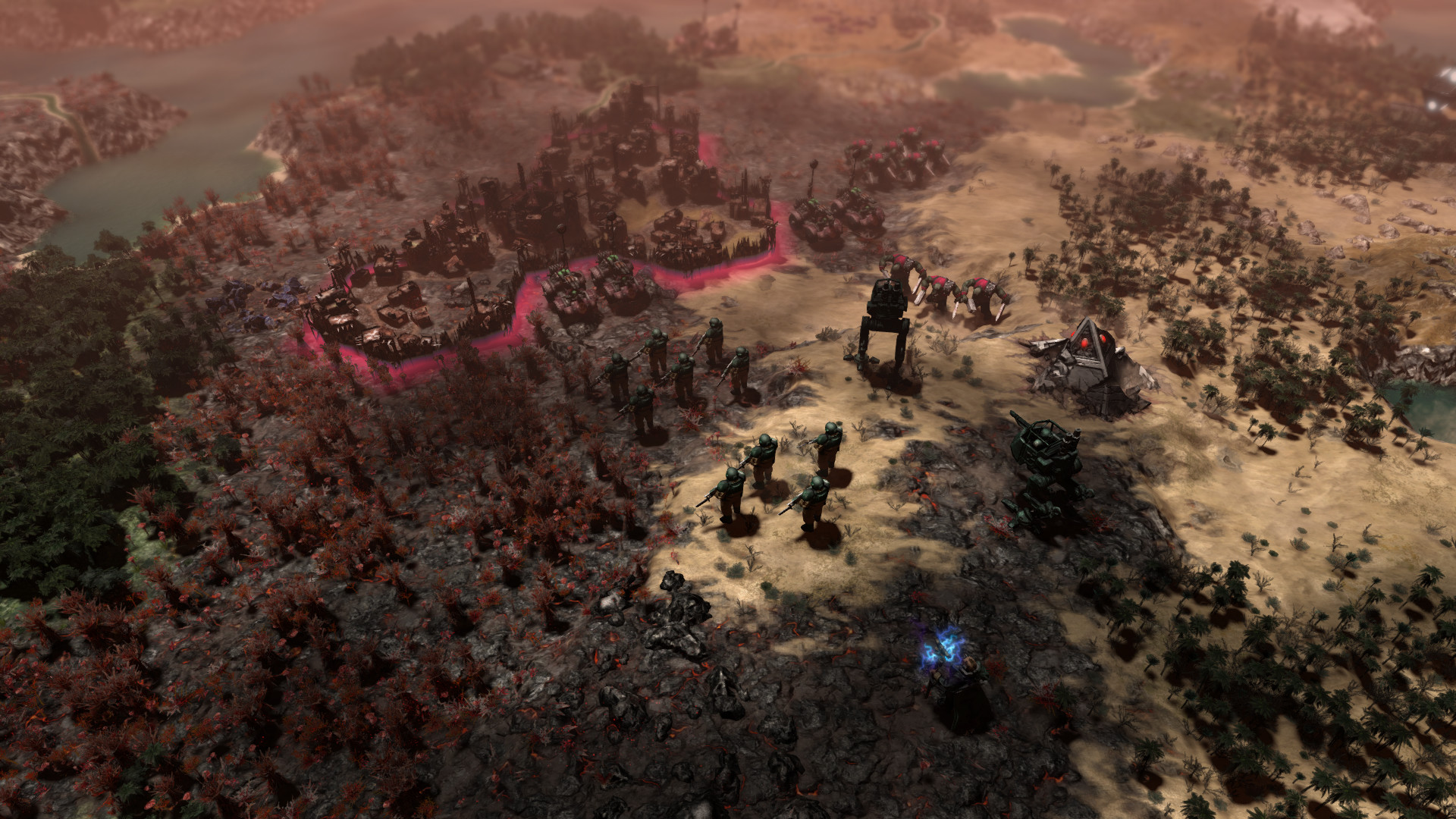
Warhammer 40,000: Gladius - Relics of War is a turn-based 4X strategy game from Proxy Studios, published by Slitherine and released in July 2018. You take one faction and fight for control of Gladius Prime, a planet where an Imperial colony has woken something very old.
The framing matters less than one design decision: there is no diplomacy. No trade, no alliances, no peace deals, not even a truce to buy time. Every faction is permanently at war with every other faction, and the neutral creatures wandering the map will attack you too.
If you come from Civilization or Endless Legend, that removal is the thing to internalise first. In those games a bad early position can be talked out of. Here it cannot. Your borders are held by units or they are not held.
The upside of losing diplomacy is that Gladius is a much shorter game than most 4X titles. There is no long peaceful build-up phase — you are usually fighting something by turn 15, and a match resolves in an evening rather than a weekend.
The Six Resources
Gladius runs on six resources, and the first mistake most new players make is assuming their faction uses all of them the way the tutorial faction does.
| Resource | What it does | What to watch |
|---|---|---|
| Food | Grows city population for most factions | Space Marines use requisition instead; Necrons consume ore for population |
| Ore | Constructs buildings, produces and maintains units | For Necrons this is also the population resource, so demand is much higher |
| Energy | Building maintenance and special units | Necrons spend it to produce units, so an energy stall stops their army |
| Influence | City tile upkeep, heroes, hero items and their skills | Every single city tile costs 1 influence per turn, forever |
| Research | Unlocks buildings, units and unit traits | Traits bought from research show as blue on the unit card |
| Loyalty | City stability | Falls per city founded and per population growth |
The influence line is the one that catches people out. It is easy to read influence as a soft, political resource that only matters for heroes. It is not — every tile your cities own costs 1 influence per turn in upkeep. A wide empire with a lot of claimed territory is paying influence continuously just to keep the map coloured in, and your heroes and their items are competing for the same pool.
Before you claim another ring of tiles around a city, look at whether those tiles are actually producing anything. Grabbing terrain for the sake of borders is a permanent influence bill for no return.
Loyalty Is the Real Cap on Expansion
In most 4X games the limit on expansion is production or happiness that you can eventually buy your way out of. In Gladius the limit is loyalty, and it moves against you twice.
Loyalty decreases for each additional city you found, and it decreases again for each population growth. So a successful city makes your loyalty problem worse simply by succeeding. The faster you snowball, the faster unrest arrives.
The practical shape of a good opening is therefore narrower than instinct suggests:
-
1
Found your capital and actually look at the tiles
Cities have high HP and armour, so they survive scouts and wandering neutrals on their own. Site your capital for resource tiles rather than for safety.
-
2
Scout with something cheap
You need to know where the neutral units and the map's chokepoints are before you commit to a second city. Losing a scout is fine; losing a real unit to a wandering monster in turn 8 is not.
-
3
Found a second city, then stop
Two cities that are loyal and paying their upkeep beat four that are unrest-ridden and running an influence deficit.
-
4
Fix loyalty before founding the third
Build the loyalty buildings your faction has access to and let influence income catch up. Then expand again.
What a Deficit Actually Does
This is worth knowing precisely, because the interface makes a deficit look more alarming than it is.
If you hit zero on a resource that a building needs for upkeep, that building's production drops by 10% per turn, down to a floor of 50%. It does not shut down and your empire does not collapse. It degrades, and it keeps degrading until you fix it or you bottom out at half output.
That has two consequences for how you play. First, a deliberate short deficit is a legitimate tool — running slightly negative for three turns to finish a key building is not a disaster. Second, a deficit you have stopped noticing is genuinely expensive, because half production across a whole empire is an enormous amount of lost tempo that never shows up as a dramatic failure message.
Check your per-turn balance every time you finish a building or claim tiles, not just when the game warns you. The slow slide to 50% is the most common way a comfortable early game turns into a losing mid-game.
Faction Choice for a First Game
Where you can put cities differs by faction, and that changes the whole opening more than the unit rosters do.
- Astra Militarum — settle anywhere, huge cheap armies, strong vehicles, mostly ranged infantry. Very vulnerable to morale loss, so they teach you positioning. The best first faction.
- Orks — settle anywhere, aggressive and melee-leaning. They resist morale loss well, but when their morale does break they take heavy damage for it.
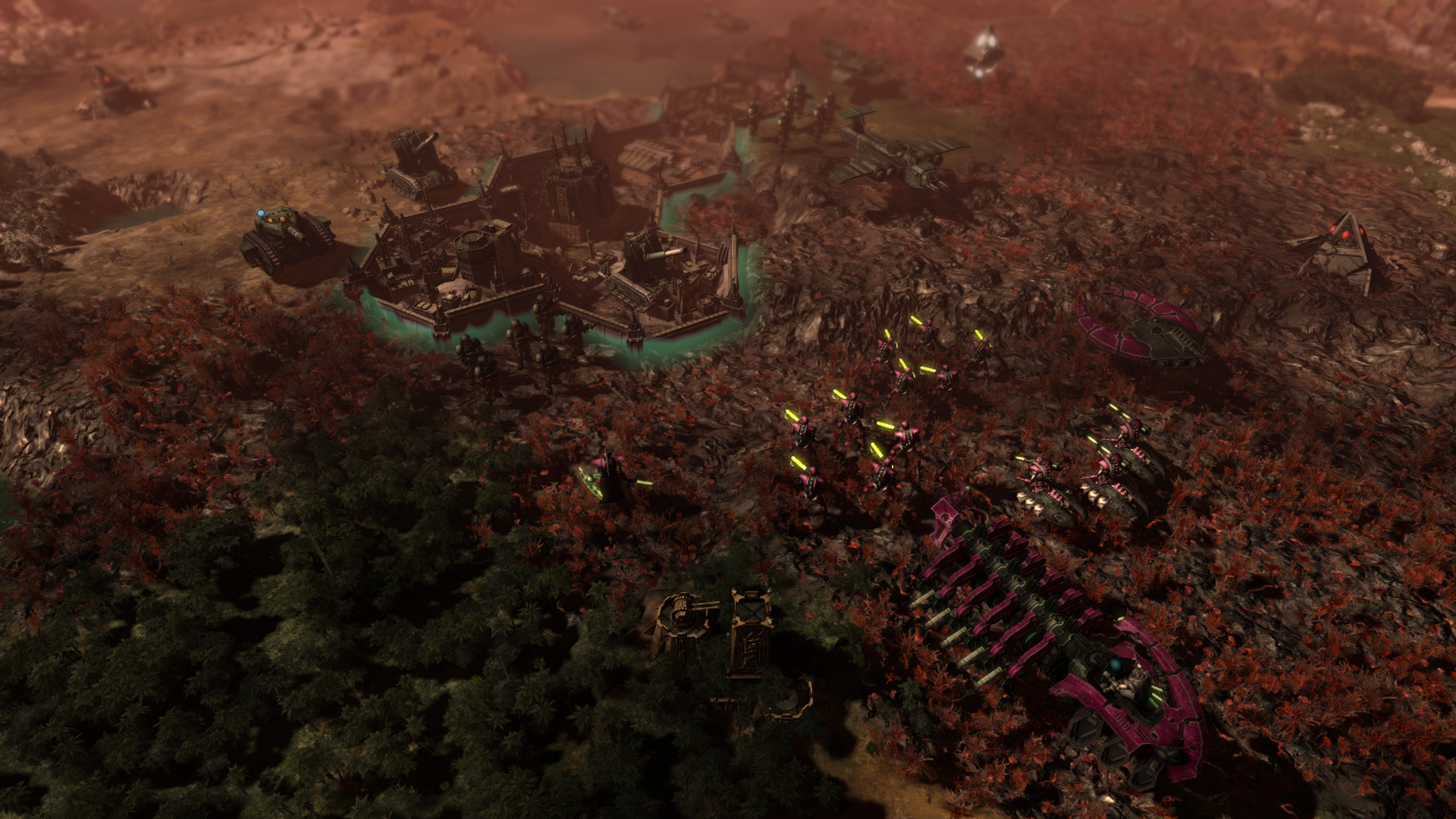
- Necrons — advanced technology and the ability to teleport between eternity gates, but they may only found cities on tomb sites, and they feed on ore, so their expansion is dictated by the map rather than by your plan.
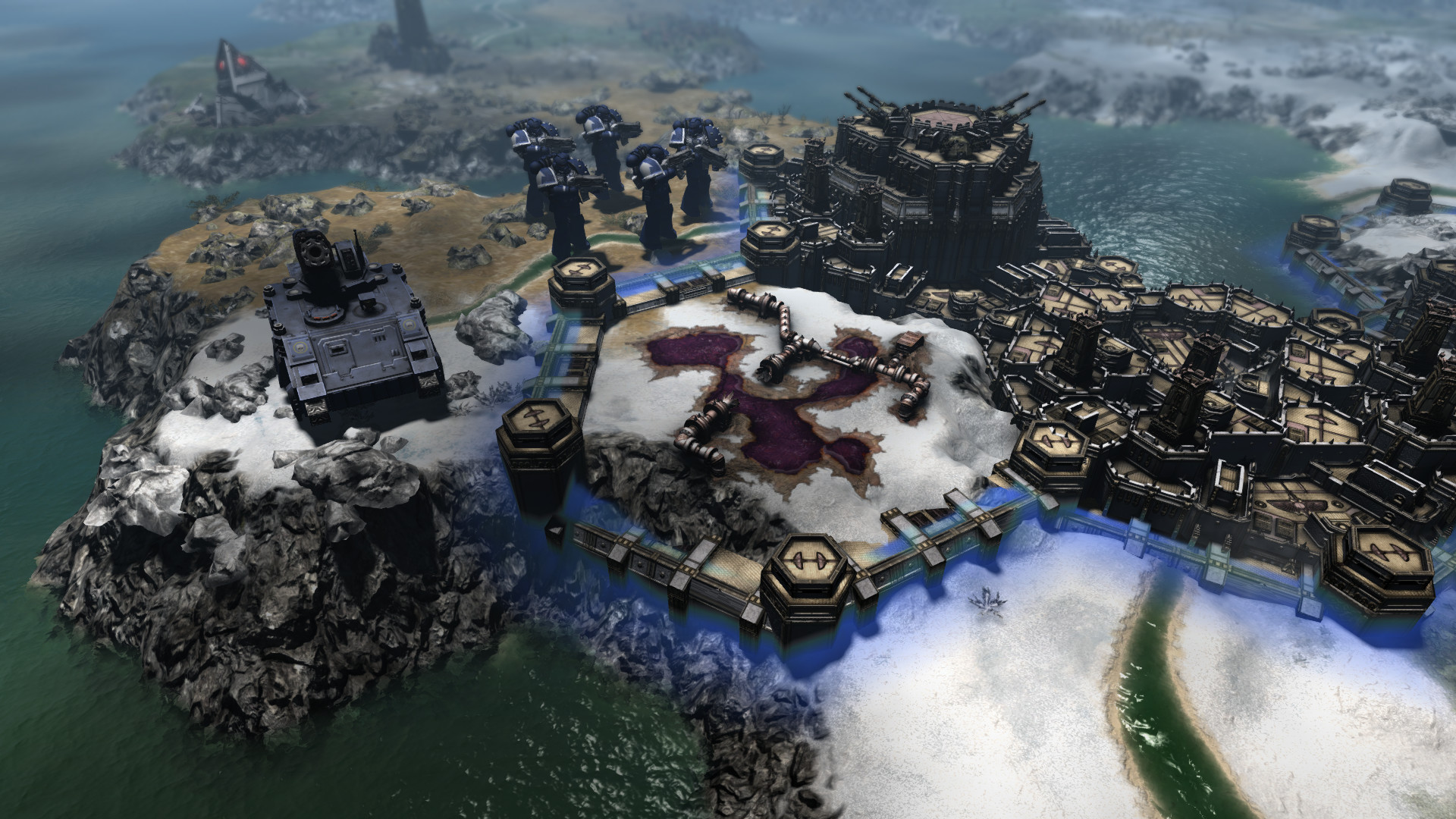
- Space Marines — run out of a single Fortress Monastery and grow vertically instead of founding many cities. Elite, expensive, few in number. Mechanically the furthest from a normal 4X opening.
For a first game, Astra Militarum. Space Marines look like the obvious power pick because of the setting, but "one city that grows upward" is a different game and it hides most of the systems this guide covers.
For the mechanical detail on each faction, see the factions guide. For how fights are actually resolved, see the combat guide.
The Early Mistakes That Lose Games
- Expanding like it is Civilization. Loyalty and influence both punish width. Three healthy cities beat six sick ones.
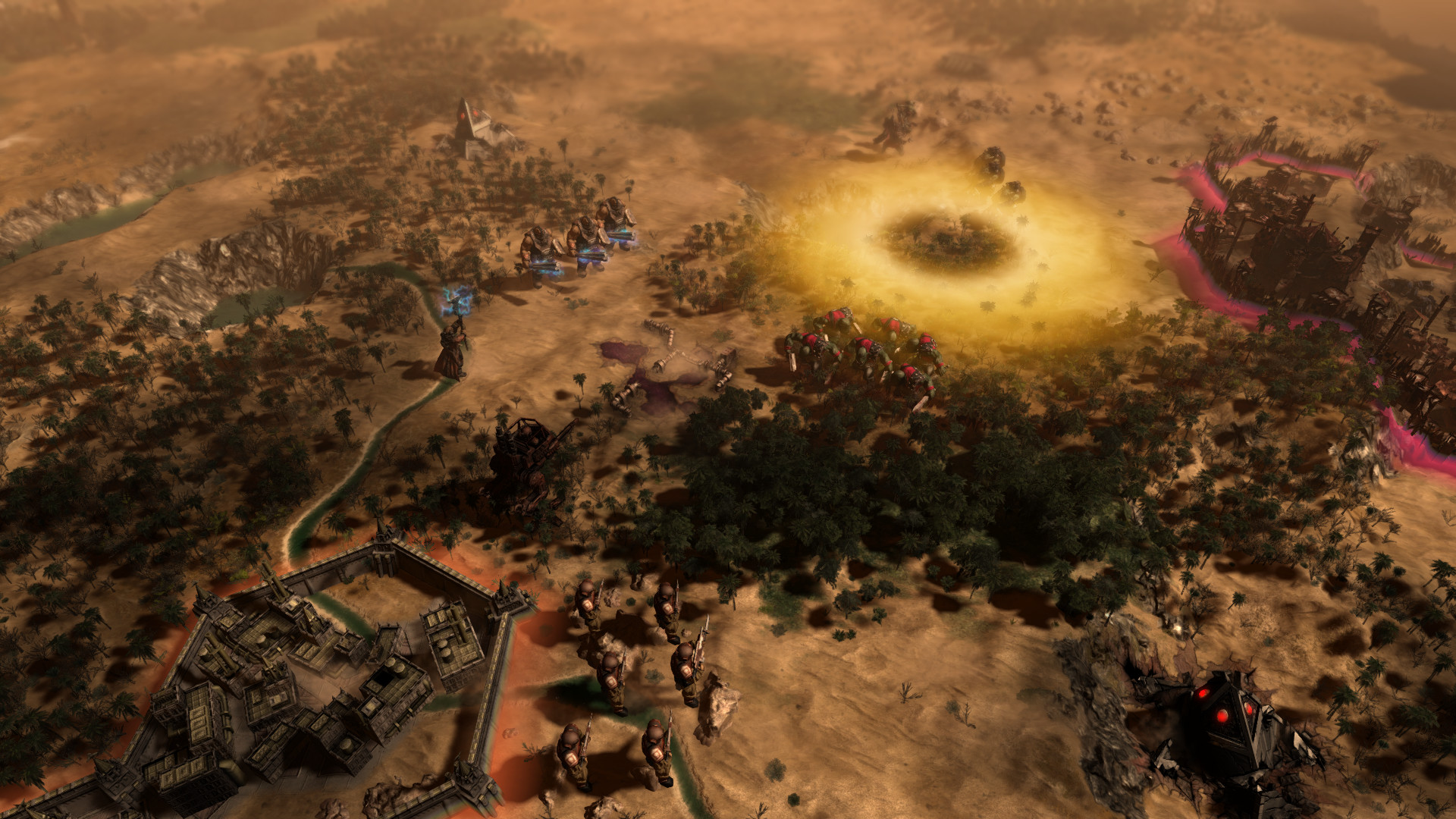
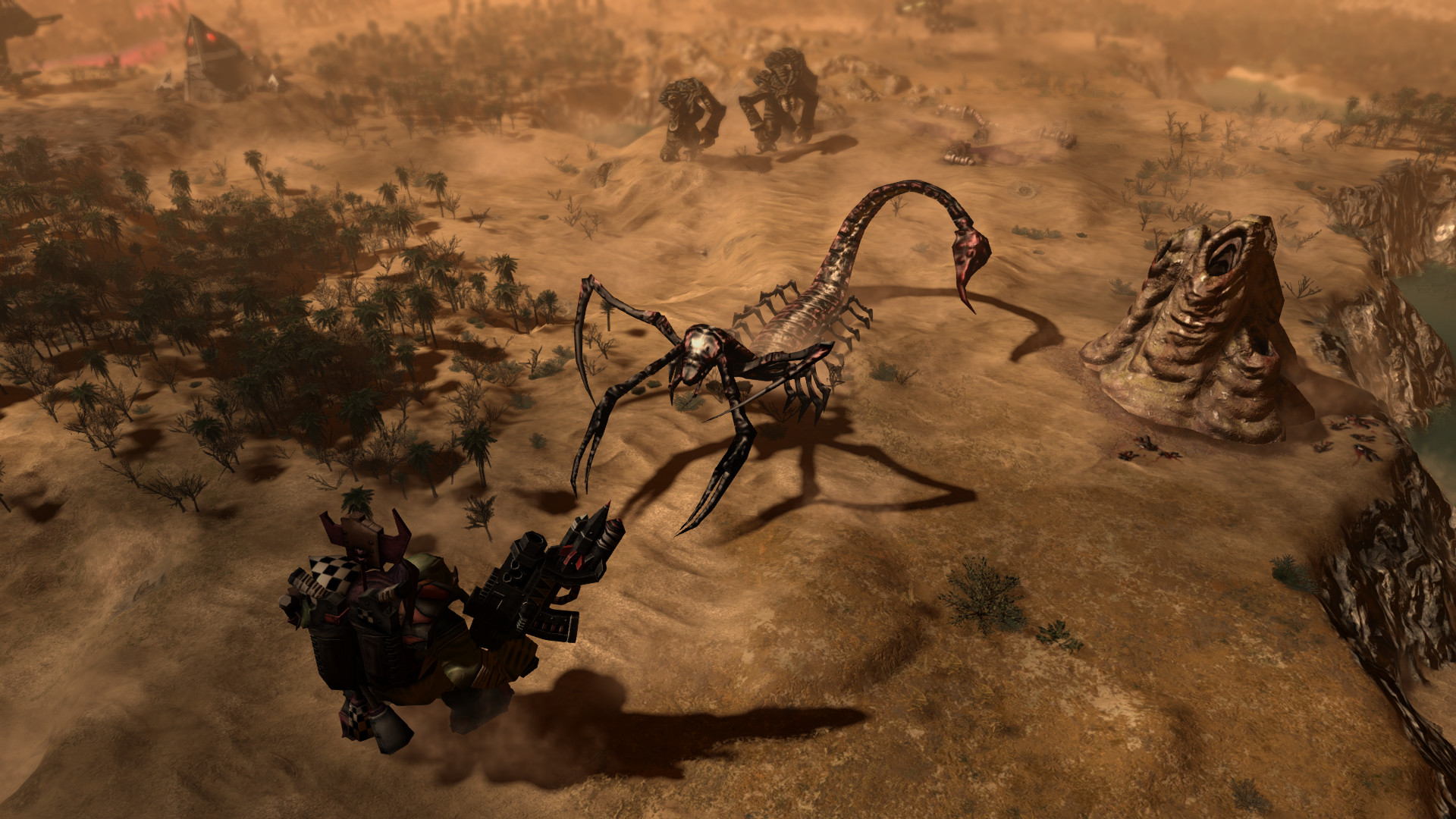
- Ignoring neutral units. They are not scenery. A wandering neutral stack will end an under-levelled unit that wandered off alone.
- Claiming tiles for the map, not the yield. One influence per tile per turn is cheap once and expensive forever.
- Copying another faction's build order. Space Marines on requisition, Necrons on ore, Tyranids on biomass — the "standard" economy advice does not transfer.
- Letting a deficit ride. Ten percent a turn down to fifty percent is quiet, cumulative and very hard to notice in the moment.
★ Honest Take: A 4X That Knows What It Is Not
Gladius is not trying to be a grand strategy game and it is much better for it. Cutting diplomacy removes a whole class of stalling tactics and leaves a tight, aggressive 4X that resolves in one sitting.
The cost is real, though. Without diplomacy there are fewer ways to recover from a bad start, and the AI's relentless hostility means an early positional mistake compounds with nothing to soften it. If you want a 4X where clever negotiation saves a losing position, this is not that game. If you want the 4X shape without the six-hour peaceful middle, it is one of the few that delivers it.