The Economy Has One Job
There is no diplomacy in Gladius. You cannot trade your way out of a bad position, buy an ally, or negotiate a pause to rebuild. That reduces the economy to a single question: can you pay for enough army to hold the ground you have taken?
Everything below follows from that. A bigger empire is only better if it produces more army than it costs to keep quiet.
Influence — The Cost You Stop Noticing
Influence is the resource most new players misread, because it sounds political and behaves like rent.
Every city tile costs 1 influence per turn in upkeep. Not once — every turn, for as long as you hold it. Your heroes draw on the same pool, as do their items and their special skills.
So there are two competing demands on one resource: the map you have coloured in, and the characters who make your army meaningfully stronger. Territory you claimed for the look of it is directly taking influence away from heroes.
Before claiming the next ring of tiles, ask what that ring produces. A tile with no yield is a permanent influence bill for a slightly larger border, and the bill arrives every single turn.
Loyalty — The Penalty for Succeeding
Loyalty is the brake on expansion, and it is unusual in that it moves against you in two separate ways:
- Each additional city you found reduces loyalty.
- Each population growth reduces loyalty.
Read that second one again, because it is the counterintuitive part. A city that is growing well is actively making your loyalty situation worse. In most 4X games growth is unambiguously good and unrest comes from external causes; here, prosperity itself is the pressure.
The practical planning rule that falls out of this is to treat expansion as something you earn back into, not something you do continuously:
-
1
Expand
Found a city, claim the tiles that actually produce something, and accept the loyalty hit.
-
2
Stabilise
Build what your faction has for loyalty and let influence income catch up with the new upkeep.
-
3
Convert the surplus into army
Once loyalty is comfortable and influence is positive, spend the margin on units that will hold the next expansion.
-
4
Only then expand again
If you cannot complete step 2 and 3, you are not ready for another city — you are ready for another army.
Deficits Degrade, They Do Not Kill
This mechanic deserves precision because the interface makes it look more binary than it is.
When you hit zero on a resource that a building requires for upkeep, that building's production drops by 10% per turn, down to a floor of 50%.
Two things follow.
A short deficit is a tool. Running slightly negative for two or three turns to finish a decisive building is a legitimate trade. You will lose a few percent of output and get it back.
A long deficit is a slow disaster. There is no alarm when you settle at 50%. Your empire simply produces half of what it should, indefinitely, and because it happened gradually it feels like the game got harder rather than like you made a mistake.
Get in the habit of checking the per-turn balance every time you finish a building or claim tiles — the two moments when upkeep changes. Waiting for the game to warn you is waiting too long.
Your Faction's Economy Is Not the Standard One
Copying a build order across factions is the fastest way to stall, because the population resource changes:
| Faction | Population runs on | What that changes |
|---|---|---|
| Astra Militarum / Orks | Food | Conventional 4X economy — food for growth, ore for building |
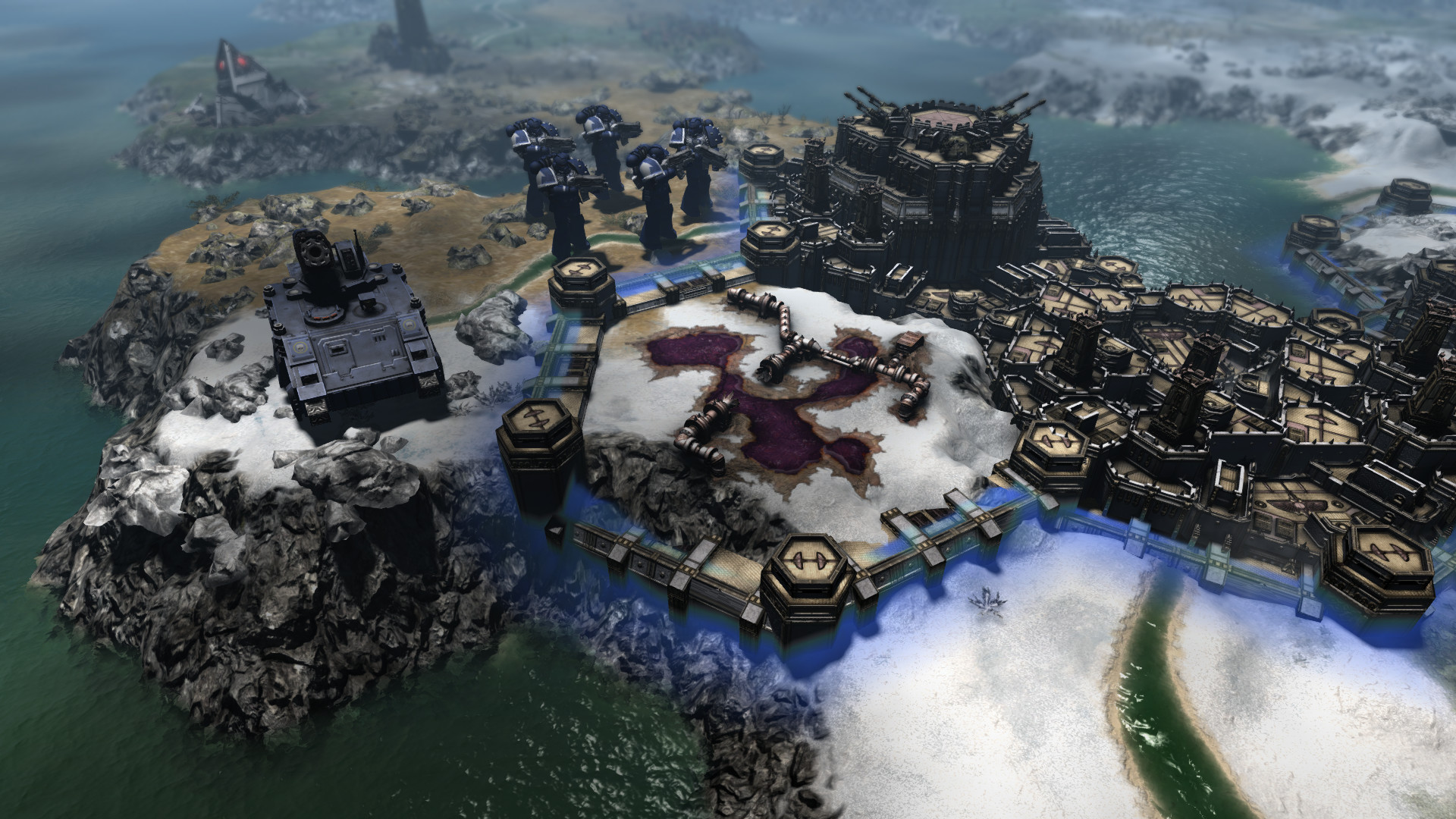
| Space Marines | Requisition | One Fortress Monastery grown vertically, so tile-claiming advice barely applies |
| Necrons | Ore | Ore is construction and population and upkeep, so ore pressure never lets up |
| Tyranids (DLC) | Biomass | Replaces food, ore and power outright — a different economy, not a modified one |
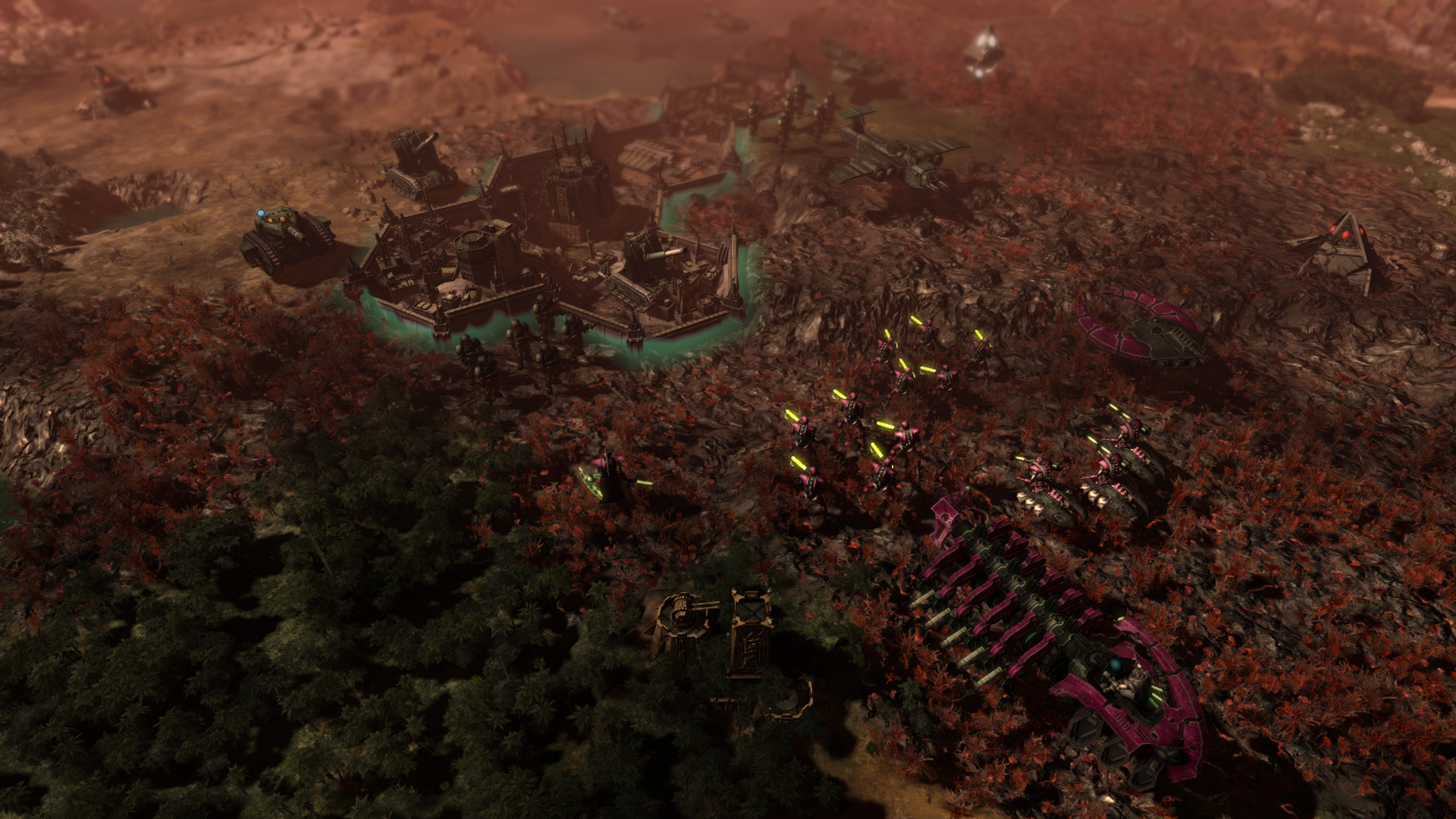
Necrons deserve a specific warning: because ore does triple duty, an ore shortfall is not a slow build queue, it is a population and upkeep problem at the same time. And since they spend energy to produce units, an energy stall stops reinforcements arriving at all.
For the placement rules that go with these economies, see the factions guide.
City or Army? A Decision Rule
When you have the production for either, use this order:
- Would founding it push loyalty negative? If yes, build army instead. Unrest costs more than the city yields.
- Would the new tiles push influence into deficit? If yes, build army instead, or claim fewer tiles.
- Can you defend it next turn? There is no diplomacy, so an undefended new city is an invitation, and cities have high HP and armour but a garrison is what actually holds them.
- If all three are fine, expand. Otherwise the same production spent on units keeps its value — veterans gain levels, and levels do not decay.
That last point is what tips most close decisions. A city that struggles is a liability that costs influence and loyalty forever. A unit that survives becomes permanently better, up to level 10. See the combat guide for why veterans are worth so much more than replacements.
★ Honest Take: A Brake That Works, Badly Explained
Making growth cost loyalty is a genuinely good design answer to the classic 4X problem of runaway snowballing. It means the strong player is fighting their own empire as well as their opponents, and it keeps games short and tense.
What is less good is how little the game tells you about it. The 10%-per-turn decay to a 50% floor is exactly the kind of rule that changes how you play once you know it and is nearly invisible until then. Players who bounce off Gladius in the mid-game are usually not being outplayed — they are sitting at half production and have not been told.