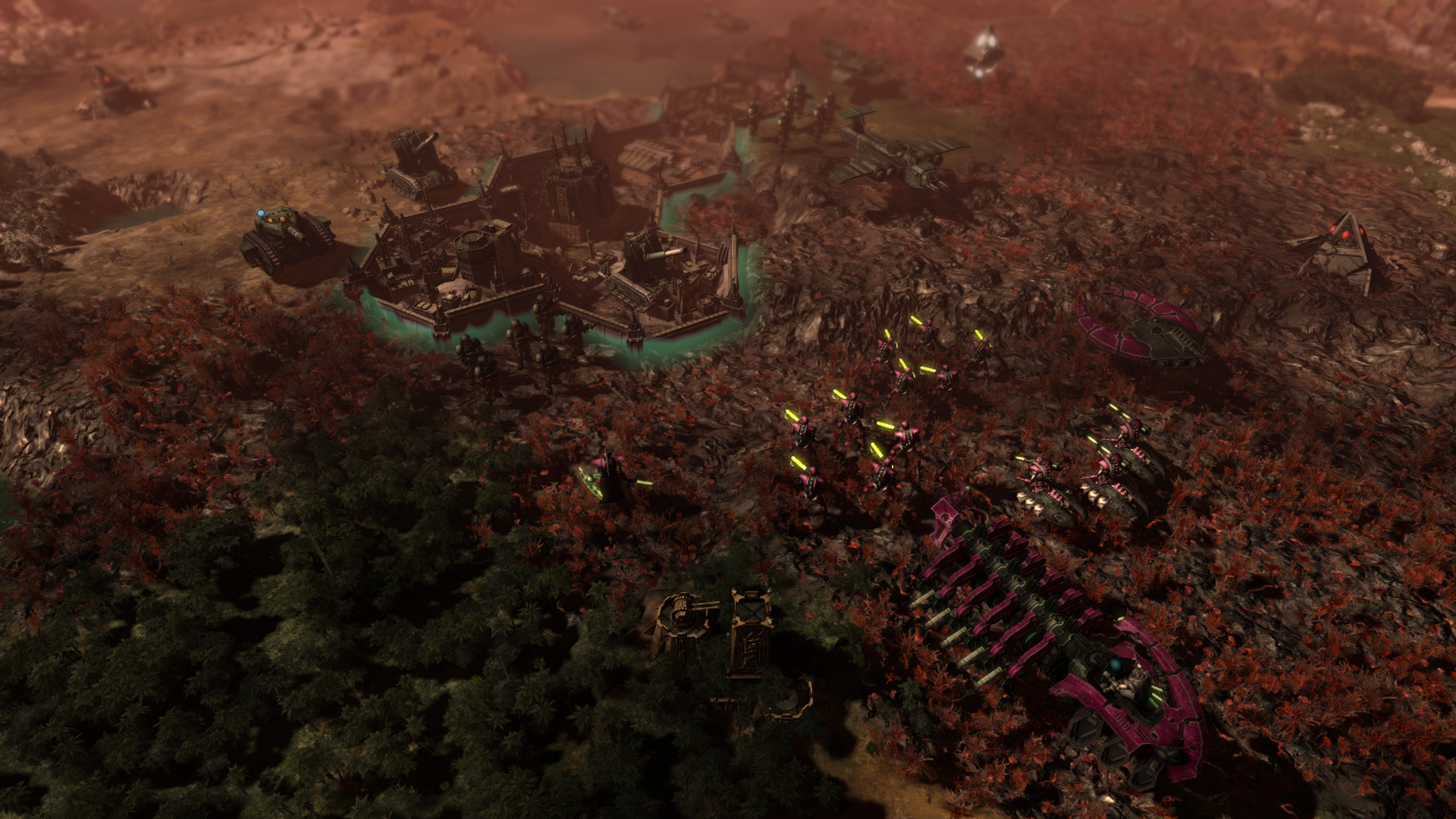
The Two Rules That Define a Faction
Before the unit lists, there are two questions worth asking about any Gladius faction, because the answers decide how your first thirty turns look:
- Where am I allowed to found cities?
- Which resource keeps my population alive?
Most 4X games answer both the same way for everyone and then differentiate with bonuses. Gladius answers them differently per faction, which is why advice that works for one army can actively mislead you playing another.
| Faction | City placement | Population runs on | Character |
|---|---|---|---|
| Astra Militarum | Anywhere | Food | Numbers and vehicles, mostly ranged, breaks under morale pressure |
| Orks | Anywhere | Food | Aggressive and melee-leaning, resists morale loss but suffers when it breaks |
| Necrons | Tomb sites only | Ore | Advanced tech, teleports between eternity gates, spends energy on units |
| Space Marines | One Fortress Monastery, grows vertically | Requisition | Elite and expensive, very few units, unconventional economy |
Astra Militarum — The Faction That Teaches the Game
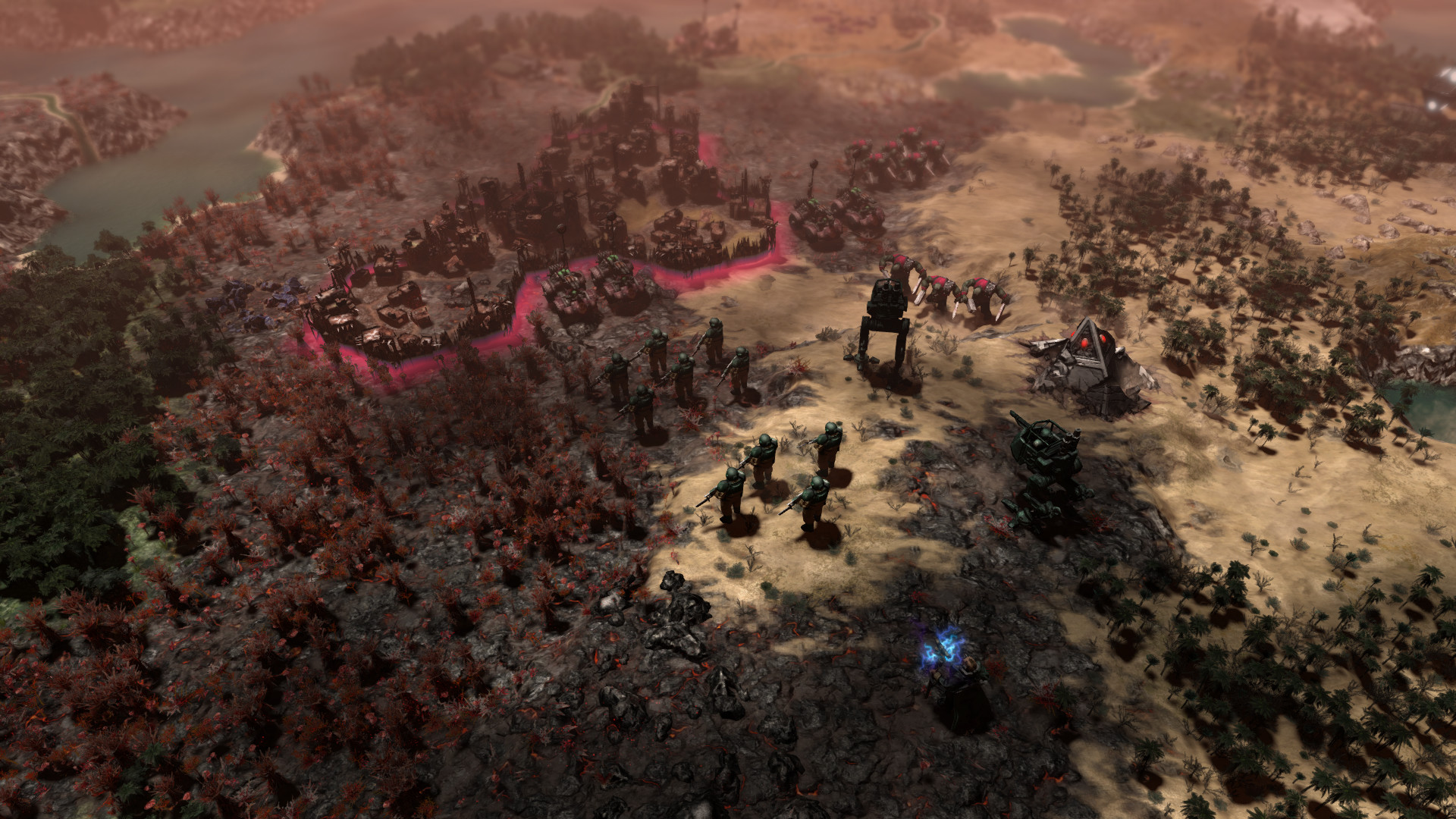
The Imperial Guard field a billion-man army, and Gladius represents that honestly: your units are individually unimpressive, collectively overwhelming, and cheap enough that trading them is a valid strategy. The roster leans on ranged infantry that wants to shoot from a distance, backed by genuinely strong vehicles.
Their weakness is morale. Astra Militarum are very vulnerable to morale loss, which means a unit caught alone and pressured does not just lose the fight — it stops functioning. That is exactly why they are the best teaching faction: the game punishes you for the thing you most need to learn, which is fighting in mutually supporting groups instead of stringing units out across the map.
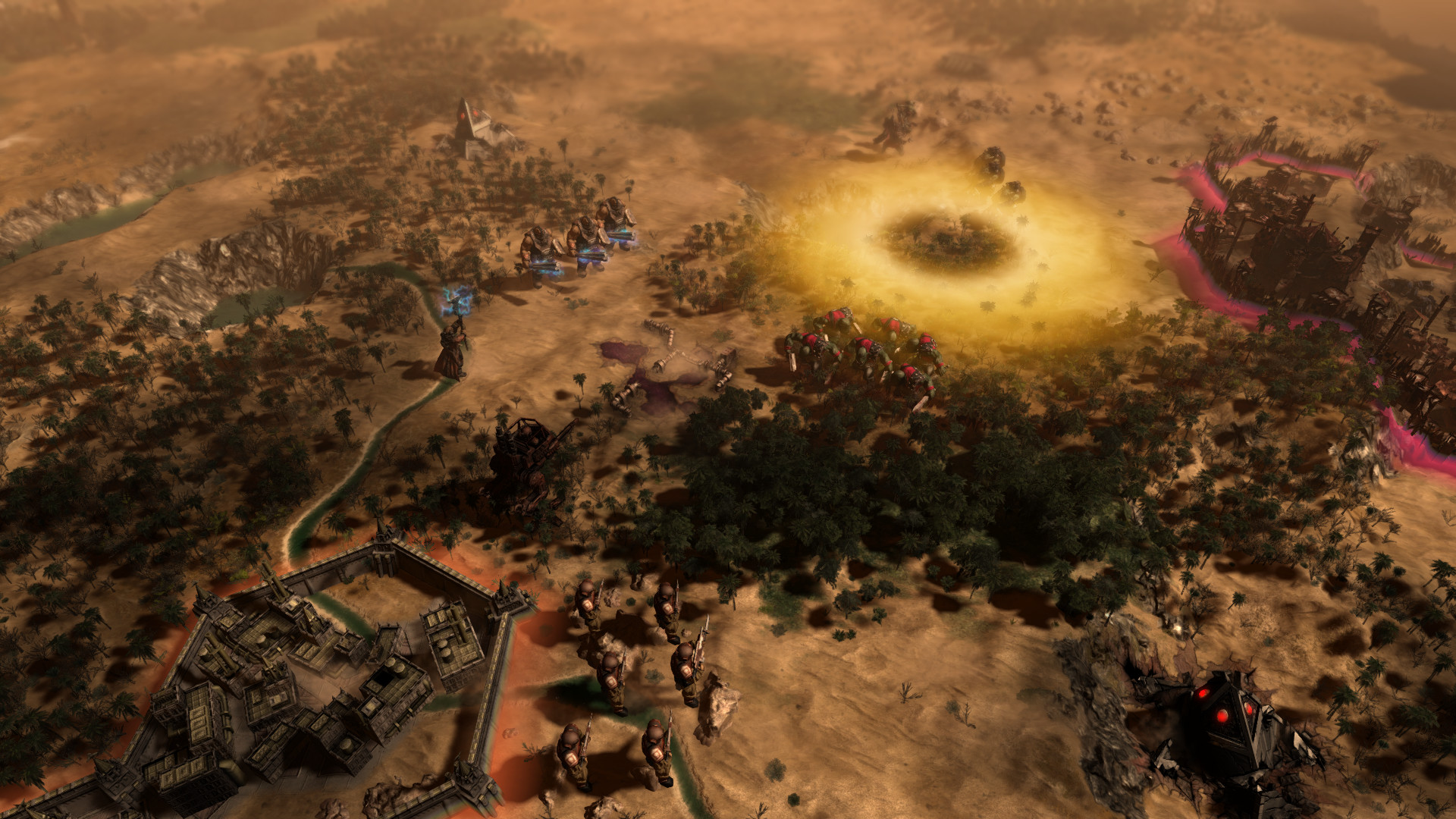
Play Astra Militarum as an artillery-and-screen army. Put cheap infantry where the enemy must walk, keep the ranged units behind them, and never let a single unit sit outside supporting range of another.
Orks — Aggression With a Cliff Edge
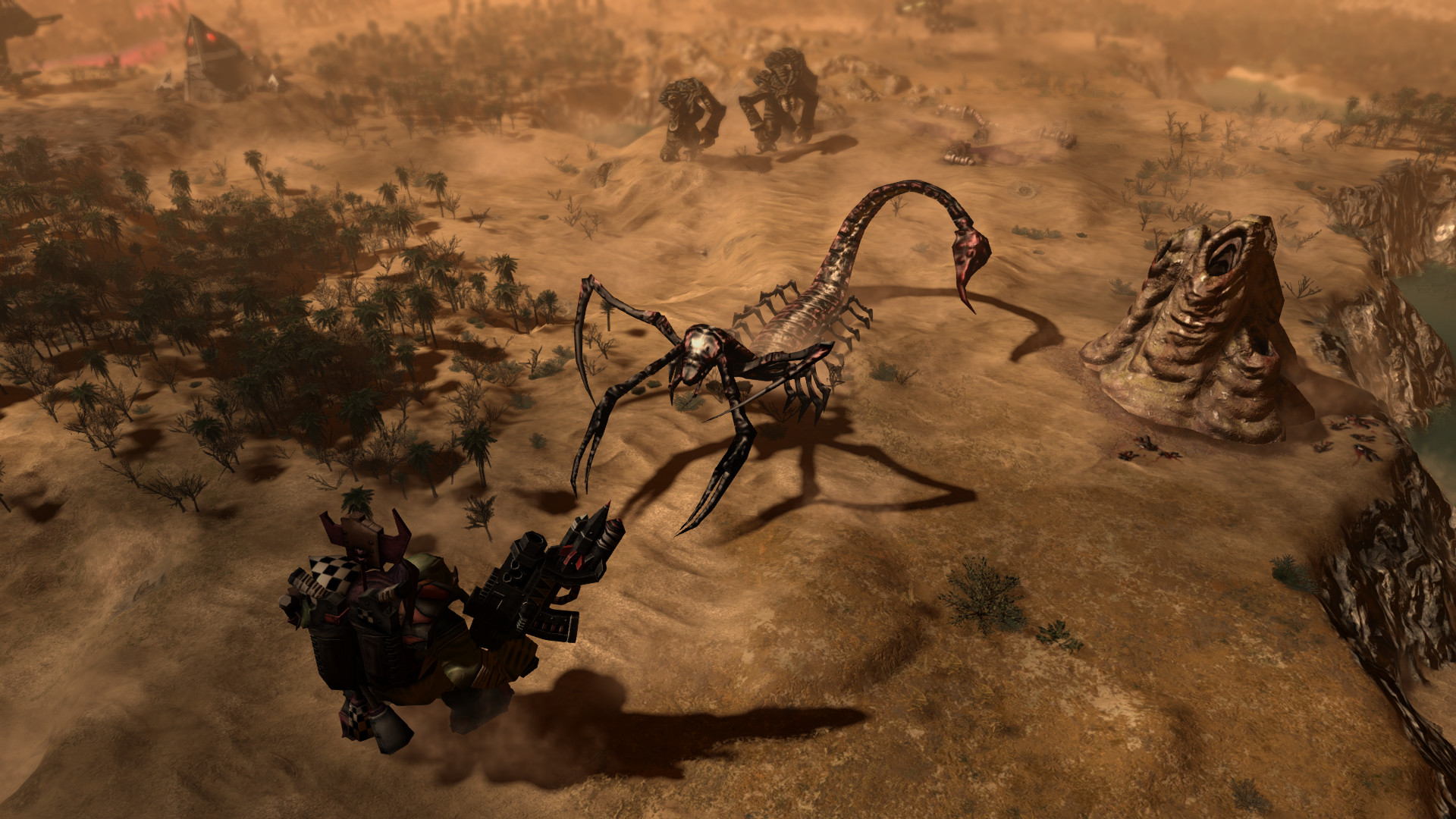
Orks settle anywhere, like the Guard, so their opening feels familiar. The difference is temperament: they are heavily muscled, aggressive and want to close distance, and their morale is far more robust than the Guard's.
The catch is what happens when that robustness fails. Orks do not lose much morale, but when they do break they take a lot of damage for it. So the failure mode is not a slow degradation, it is a sudden one. An Ork army that is winning looks unstoppable; an Ork army that has just broken can evaporate.
That makes them a good second faction rather than a first. You need enough map sense to know when a push has actually stalled, because the moment to withdraw arrives later and costs more than it does with other armies.
Necrons — The Map Chooses Your Empire
Necrons are the faction where the placement rule matters most. They may only found cities on tomb sites. You do not pick where to expand — you scout to find out where you are permitted to expand, and then work out how to hold it.
Their economy is inverted relative to the others as well. Necrons feed on ore: it is not only their construction resource but also what sustains their population and unit upkeep, so ore pressure is constant in a way it never is for the Guard. They also spend energy to produce units, which means an energy stall does not just slow a building queue, it stops reinforcements.
In exchange they get the most advanced technology in the game and the ability to teleport between eternity gates, which turns a slow, tomb-constrained empire into something that can suddenly appear where it is not wanted.
Do not plan a Necron game around a map you have not scouted. If the tombs are badly distributed you are playing a different, much tighter game, and finding that out on turn 20 is too late.
Space Marines — One City, Grown Upward
Space Marines are the faction most people pick first because of the setting, and the one that teaches the game least.
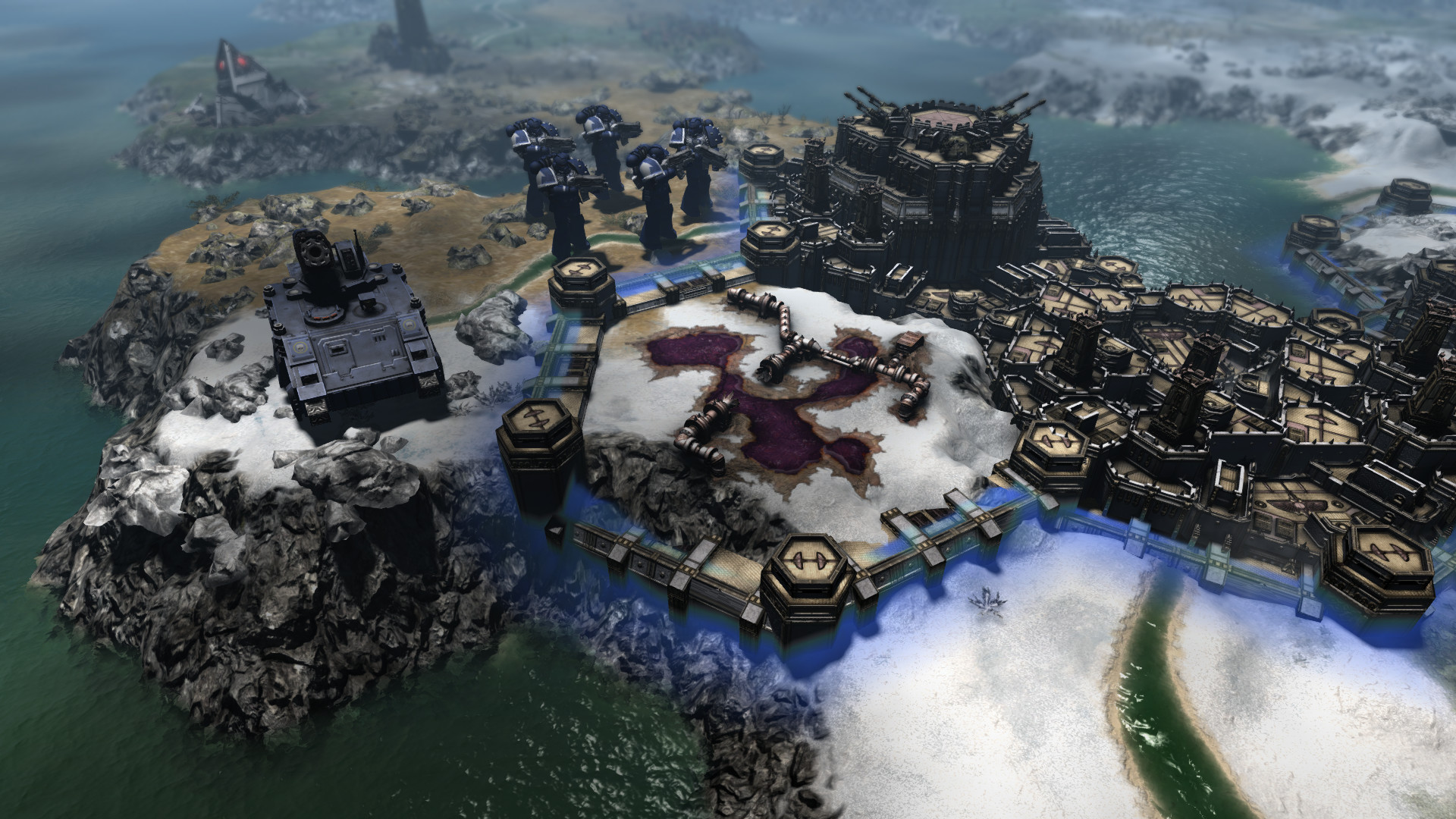
They operate from a single Fortress Monastery and grow vertically rather than founding a network of cities, and they run on requisition instead of food. Almost every piece of general economic advice — expand to a second city, watch food, claim tiles for yield — either does not apply or applies differently.
What you get instead is quality. Space Marine units are elite, expensive and few, and losing one hurts in a way that losing a Guard squad does not. It is a genuinely good faction, but it is a specialist's faction, and playing it first gives you a distorted picture of what Gladius is.
The DLC Factions
Six factions have been added after release, in this order: Tyranids, Chaos Space Marines, T'au, Craftworld Aeldari, Drukhari, and Sisters of Battle.
They are not equally transformative:
- Tyranids change the most. They do not use food, ore or power at all, running on a single biomass resource instead. That collapses three economic decisions into one and makes them play unlike anything in the base game. If you only buy one faction DLC for variety, this is the one that actually varies.
- Chaos Space Marines, T'au, Craftworld Aeldari, Drukhari and Sisters of Battle each bring their own roster, quest line and flavour, and they are well made — but they sit closer to the base game's economic shape than the Tyranids do.
There are also DLC packs that add units and content rather than a whole playable faction. Check what a pack actually contains before buying: "adds Adeptus Mechanicus content" and "adds a playable faction" are different products.
Every faction, base or DLC, has its own story quest line. If you like the campaign framing, faction DLC gives you a genuinely new set of objectives rather than just a new army list.
Which One Should You Pick?
- First game, learning the systems — Astra Militarum. Conventional expansion, cheap units, and a weakness that teaches good habits.
- You want to attack things — Orks. Just learn where the morale cliff is before you commit to a push.
- You want the map to be a puzzle — Necrons. Tomb-site expansion plus eternity gate teleports is the most distinctive base faction.
- You already know the game — Space Marines. Vertical growth out of one city is interesting once you understand what it is trading away.
- You want a different economy entirely — Tyranids, from the DLC.
For the opening itself, see the beginner guide. For how these armies actually resolve fights, see the combat guide.
★ Honest Take: Asymmetry Where It Counts
Plenty of 4X games advertise asymmetric factions and deliver a different colour palette with a production bonus. Gladius puts the asymmetry in the two places that actually change your decisions — where cities can go and what keeps them alive — and that is worth more than any number of unique units.
The honest downside is that it makes the game harder to give general advice about, and the in-game tutorial does not really flag it. A player who learns the game as Space Marines and then tries Necrons is starting over more than they expect. That is a design strength and an onboarding weakness at the same time.