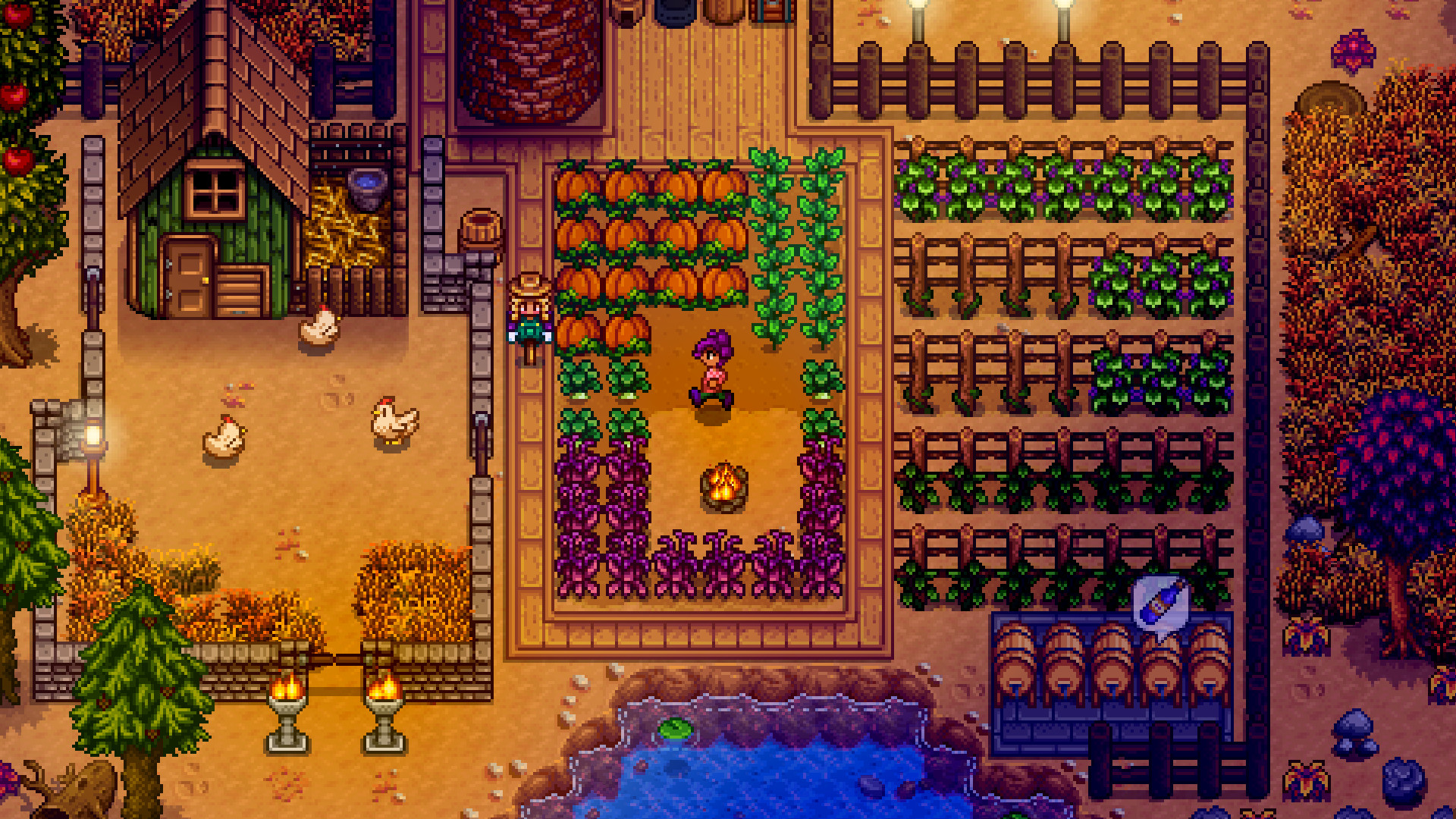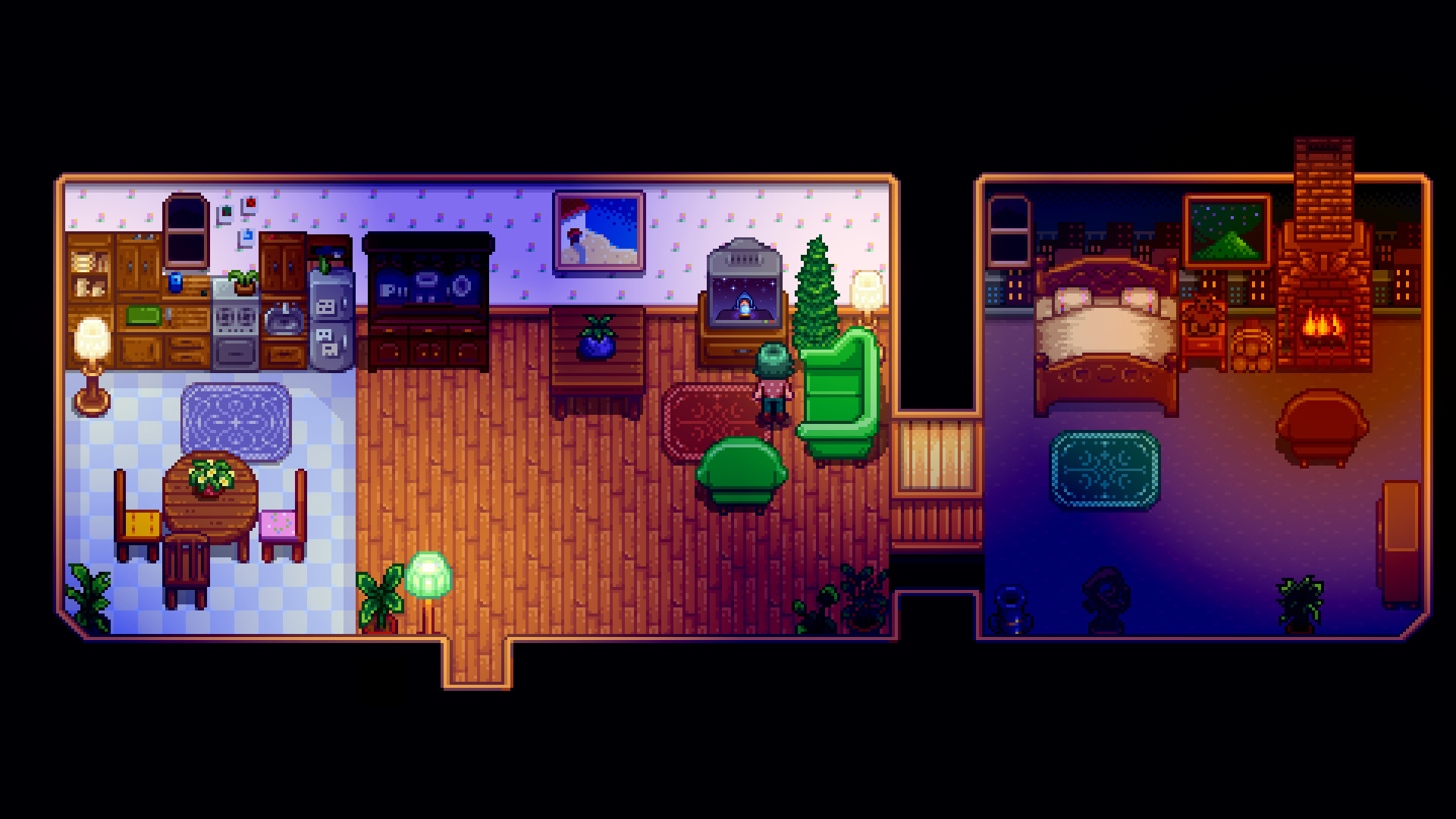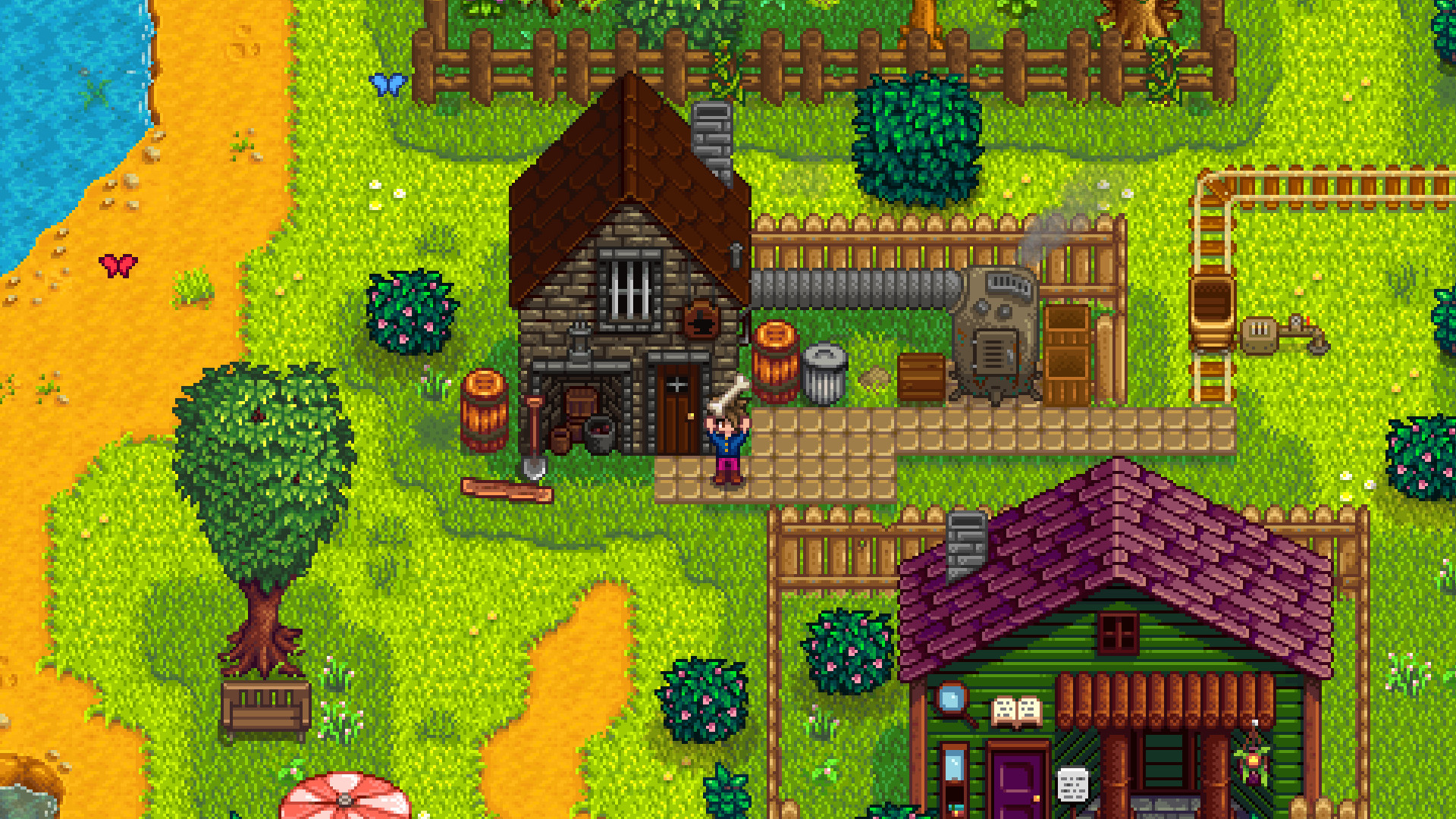
Stardew Valley's money curve has three stages, and most players get stuck between the first and second. The jump is not a better crop — it is processing: turning what you grow into artisan goods worth two to three times as much, and later aging them in casks.
The three stages at a glance
| Stage | Main income | Spend your money on |
|---|---|---|
| Early (first season) | Crops, fishing, foraging | Tools, quality sprinklers, more seeds |
| Mid (summer of year 1 onward) | Kegs, preserves jars, animal products | More machines, barn and coop, the greenhouse |
| Late (year 2 onward) | Ancient fruit or starfruit wine, casks, Ginger Island | Sheds full of kegs, iridium sprinklers |
Early game: crops, fish and sprinklers
-
1
Plant everything you can water
Start with the parsnip seeds you are given, then buy more seeds. Watering by hand limits you, so do not plant more than you can water each morning.
-
2
Fish when the farm is done for the day
Willy gives you the Bamboo Pole early in spring. Fishing is the best money while the farm is small, and leveling fishing early makes it far more comfortable.
-
3
Forage on the way
Spring onions, leeks, daffodils and other forage are free money and energy.
-
4
Put profits into sprinklers
Quality sprinklers (Farming 6) and later iridium sprinklers are what let your farm grow without your mornings disappearing.
-
5
Buy strawberry seeds on Spring 13
The Egg Festival is the only place to get them in year 1, and strawberries regrow every 4 days.
For which crop to plant each season, rank them by profit per day, not sell price. Blueberries in summer and cranberries in fall beat many expensive single-harvest crops. The numbers are in Best Crops by Season.
Mid game: processing multiplies everything
Processing is where Stardew Valley's money really starts. The machines unlock with your Farming level:
| Machine | Unlocks at | Turns | Value |
|---|---|---|---|
| Bee House | Farming 3 | Nearby flowers into honey | Better flowers make better honey |
| Preserves Jar | Farming 4 | Fruit into jelly, vegetables into pickles | 2× base value + 50 |
| Keg | Farming 8 | Fruit into wine, vegetables into juice | Wine 3×, juice 2.25× base value |
The rule: expensive fruit into kegs, cheap produce into preserves jars. The +50 makes jars better for cheap items; the 3× makes kegs far better for valuable fruit.
Take the Artisan profession at Farming 10. It adds 40% to every artisan good — wine, jelly, cheese, mayonnaise, cloth — and is the largest single money multiplier in the game. See Skills and Professions.
Animals pay through processing too. Eggs become mayonnaise, milk becomes cheese, wool becomes cloth. Pigs are the standout: they dig up truffles, which sell well on their own and better as truffle oil.
Late game: wine, casks and Ginger Island
| Source | How it works | Why it is strong |
|---|---|---|
| Greenhouse ancient fruit | Regrows every 7 days in every season | A steady supply of high-value fruit for wine |
| Casks | Age wine (and other goods) in the cellar | Iridium quality doubles the value |
| Sheds of kegs | Process the fruit you grow | Scales your wine output with little work |
| Ginger Island farm | Grows crops in every season | A second large farm with no seasons |
Casks go in the cellar you get with the third house upgrade. Wine aged to silver, gold and iridium quality is worth 1.25×, 1.5× and 2× — so iridium ancient fruit or starfruit wine is among the most valuable things you can sell.
Late-game income is mostly about scale: more fruit, more kegs, more casks. Iridium sprinklers and Junimo Huts reduce daily work so the farm keeps earning while you spend your days elsewhere.
Mistakes that slow your money down
- Selling everything raw once you have machines. Even a few kegs on your best fruit change your income.
- Expanding fields faster than sprinklers. Watering by hand eats the time you could spend fishing or mining.
- Skipping the Farming levels. Kegs at Farming 8 are the turning point; farm enough to get there in year 1.
- Picking Rancher over Tiller. Tiller leads to Artisan, which also boosts animal artisan goods.
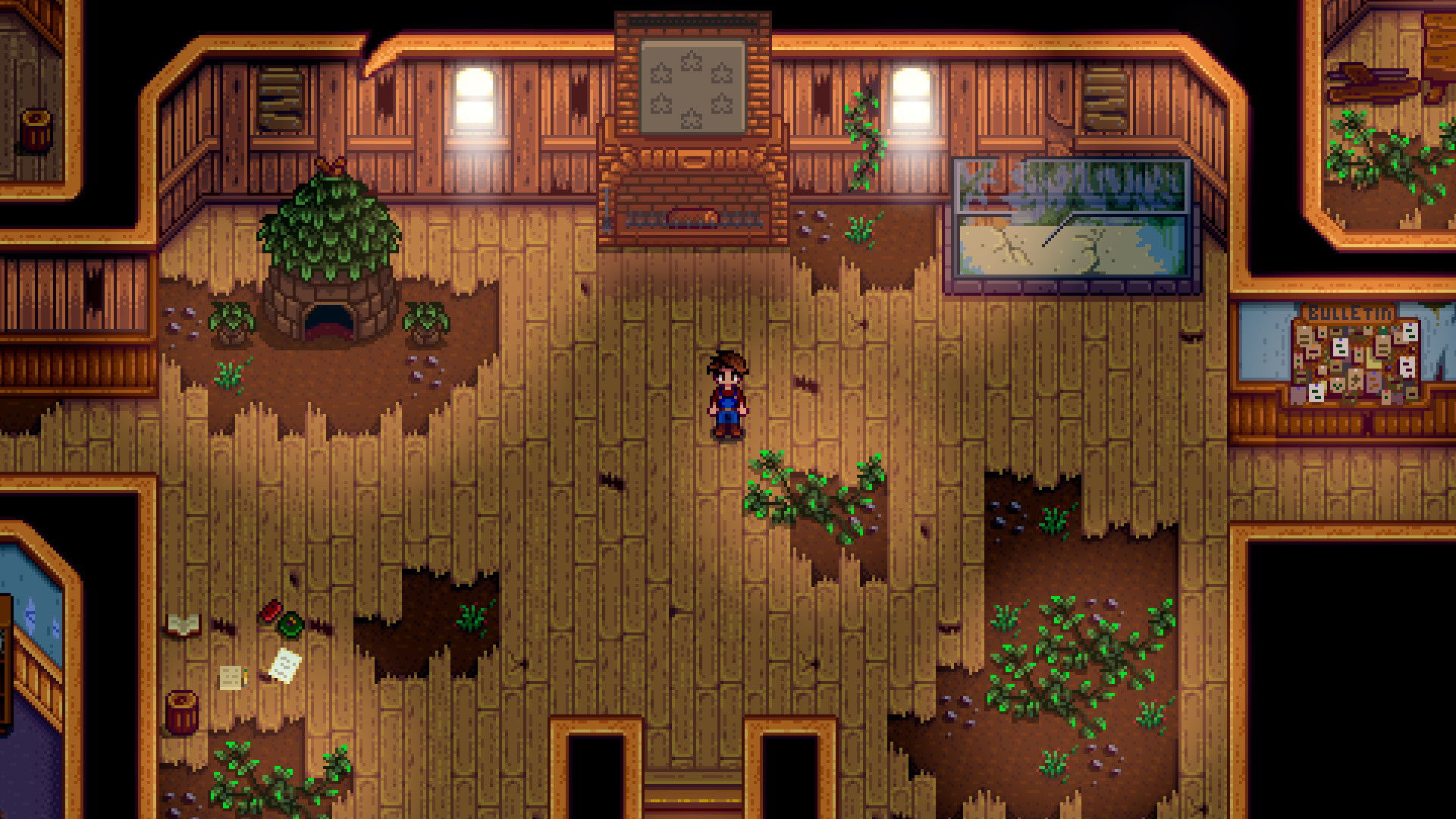
- Leaving the greenhouse half empty. Fill it with fruit trees and ancient fruit as soon as it is restored.
For the year-one basics, see the Beginner Guide. For making money from fishing specifically, see the Fishing Guide.
★Honest Take: the money curve is the game's real story
Stardew Valley's farm life is relaxed, but its economy is a clear climb: grow, then process, then scale. The moment kegs arrive, the game changes from counting coins to deciding how big you want the farm to become. You do not need to optimise any of it to enjoy the game — but knowing that processing is the jump makes the first year far less of a grind.