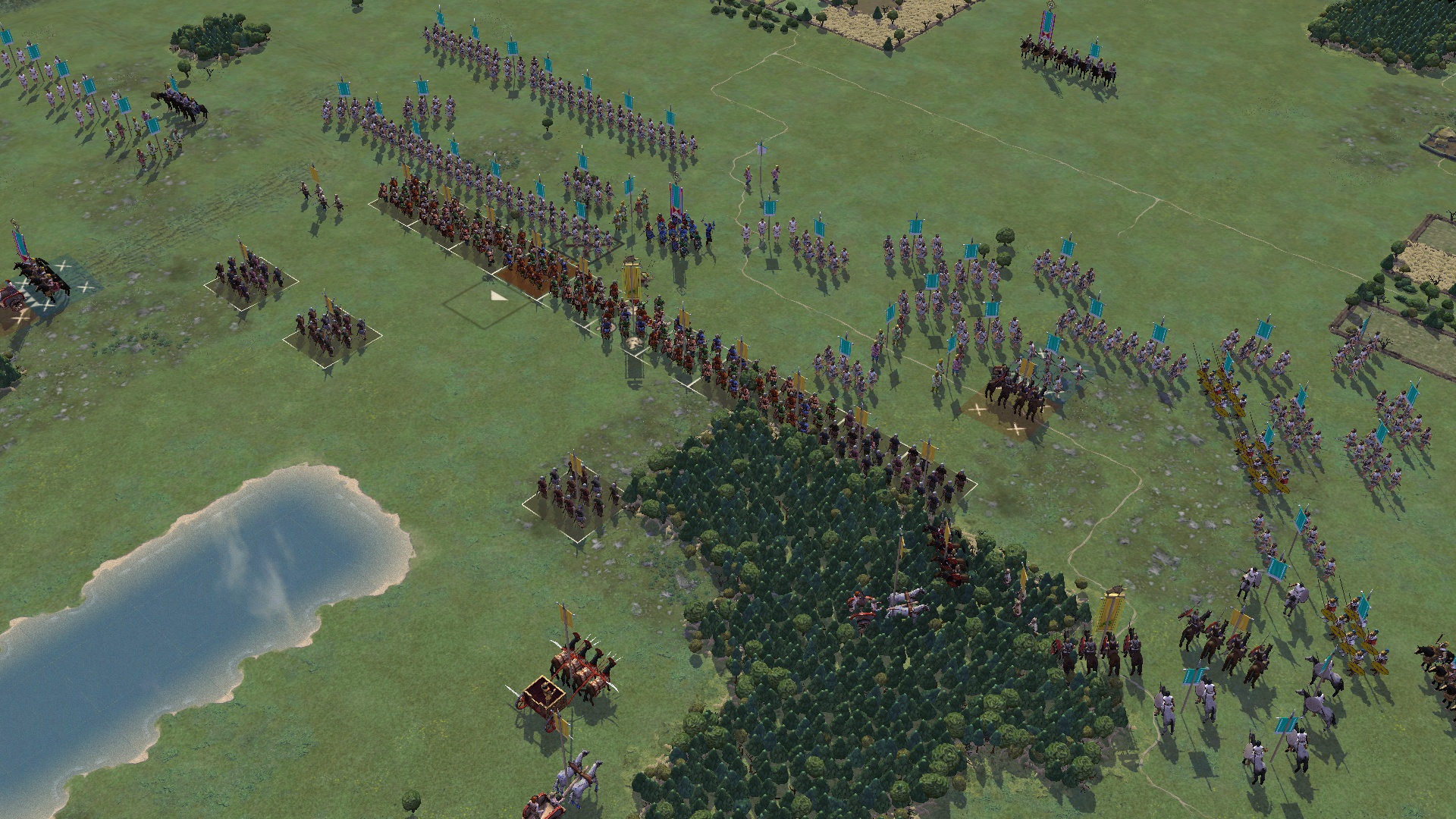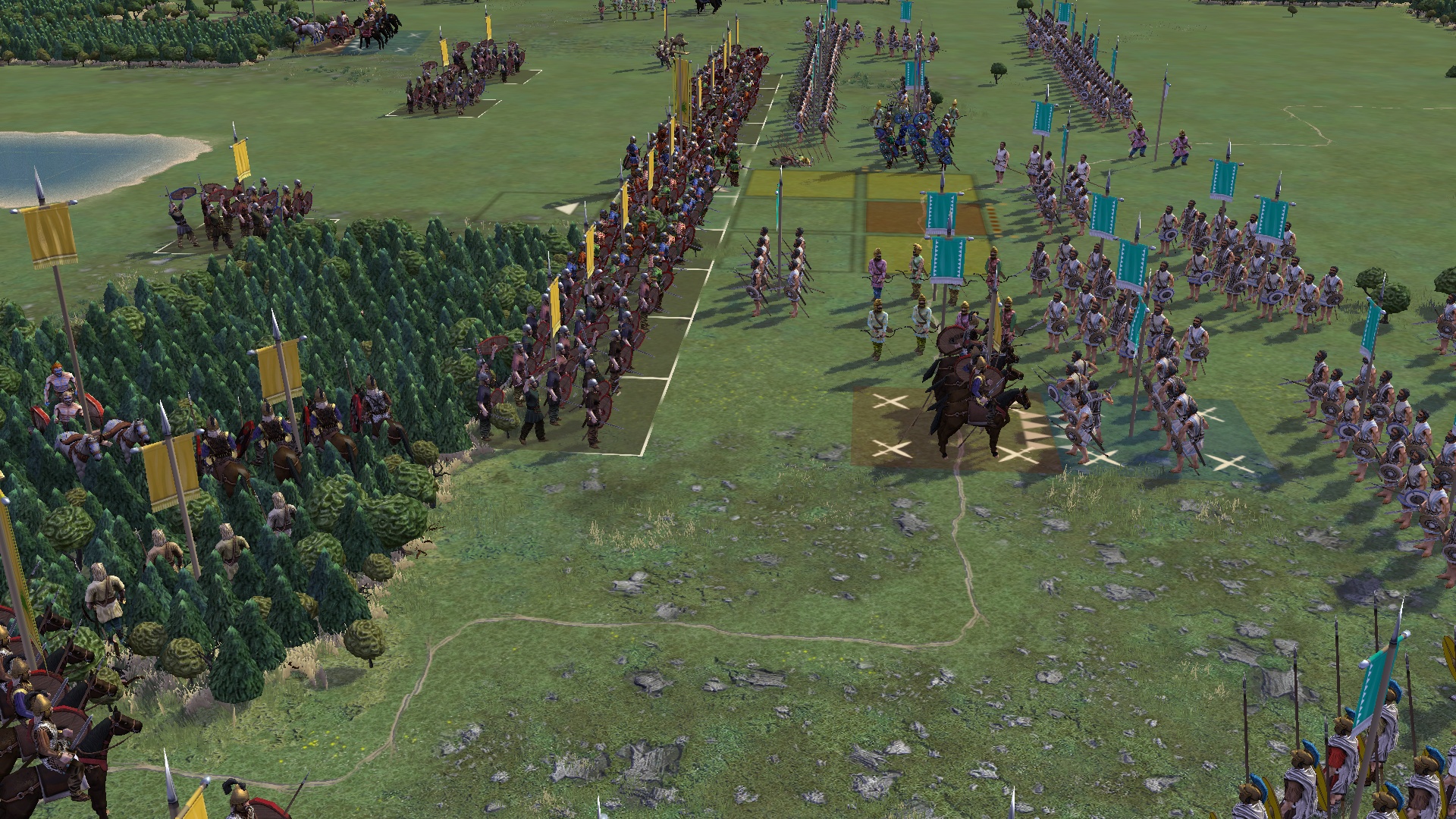
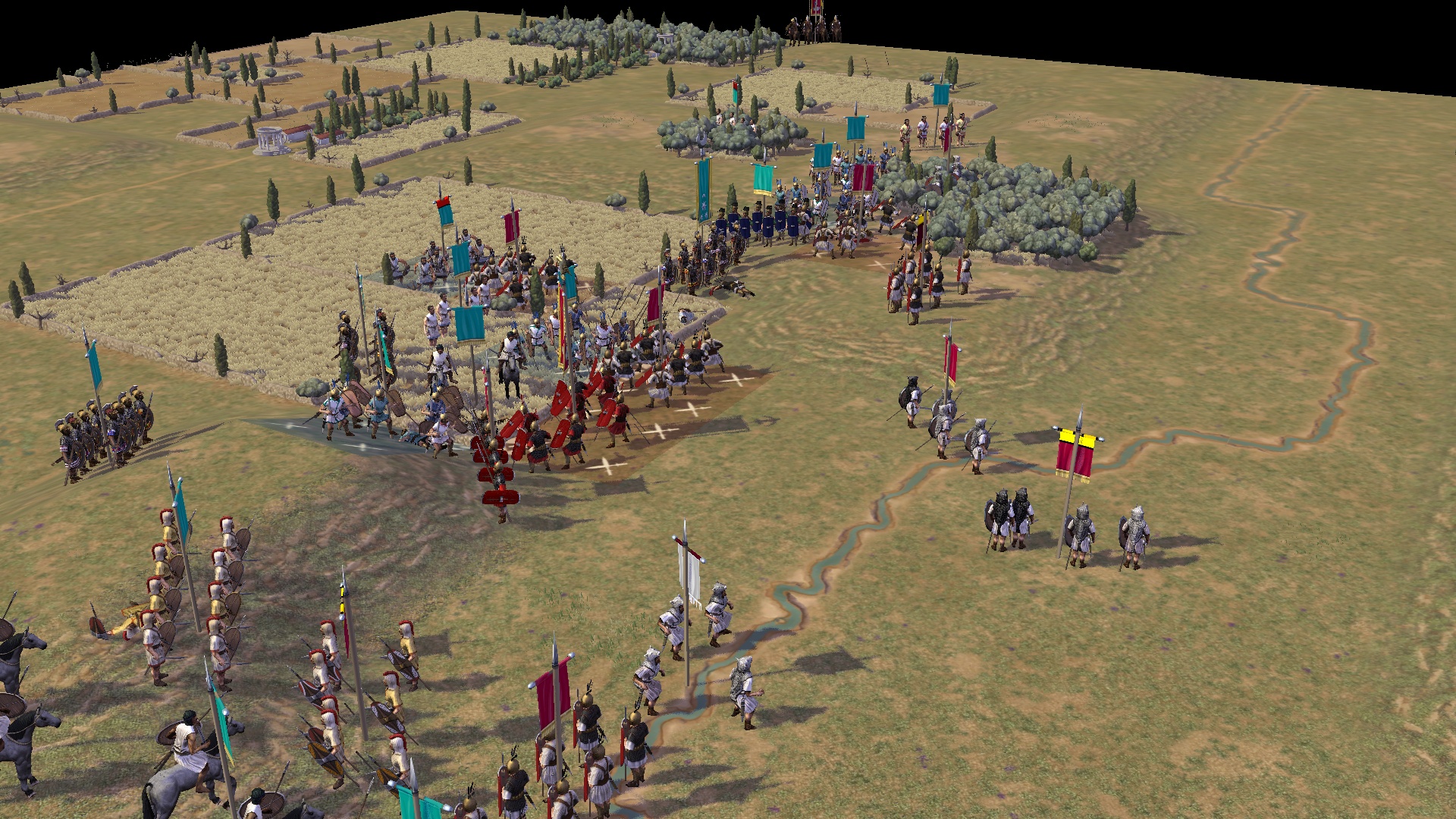
The logic of combat
Field of Glory II's combat can look like a wall of numbers, but underneath it runs on a clear and consistent logic, and once you see it the whole game opens up. Three ideas do most of the work. First, every clash resolves in two stages — an impact phase when units charge into contact, then a melee phase that continues for as long as they stay locked together — and different troops excel in different phases. Second, the real target of all this fighting is not the enemy's soldiers but their cohesion: their morale and order, which break long before they run out of men. Third, the odds of any clash are set by points of advantage, a tally of weapons, troop types, terrain and position that the game works out and shows you up front. Grasp these three and you stop guessing and start fighting deliberately, picking the clashes you can win and avoiding the ones you can't.
Everything that follows expands on those ideas. The aim is to make the system legible, so that the numbers the interface shows you become decisions you understand rather than dice you hope on.
The game always displays your combat odds before you commit. Treat those odds as the output of everything in this guide — impact versus melee, points of advantage, flanking and quality all feed into them. Learning what moves the numbers is how you learn to win.
Impact and melee
Every time two units fight, combat unfolds in two distinct phases, and knowing which one favours you is half the battle. The impact phase happens first, the moment of the charge and initial collision. This is where shock matters most: impact weapons such as javelins, light spears, cavalry lances and the Roman pilum apply here, and troops built around the charge — impact foot like Gallic warbands, lancers, chariots — are at their most dangerous. A unit strong at impact wants to be the one charging, hitting hard in that first violent clash. Then, for as long as the two units remain in contact, every subsequent round is melee, the grinding close combat where sustained weapons and staying power decide things. Some troops that hit like a hammer at impact are only average in the melee that follows, while steady, well-drilled infantry are built to win the long grind.
The practical upshot is that you should fight in the phase that suits your troops. With impact troops, seek the charge and try to break the enemy in that first clash before the melee evens things out; if your strength is melee staying power, weather the impact and let the prolonged fight grind the enemy down. Charging is not always right, either — charging a unit that is strong on impact with one that is not can lose you the fight before the melee even begins.
Check what weapons and troop type the enemy has before charging. Charging an impact-strong unit (offensive spearmen, other impact foot, lancers) with troops that are weak at impact hands them the advantage in the very first clash. Sometimes it is better to receive a charge than to make one.
Cohesion: the real target
The single most important concept in Field of Glory II combat is cohesion, because it, not casualties, decides battles. Cohesion represents a unit's morale and good order, and it exists in steps — commonly steady, then disrupted, then fragmented, then broken. A unit drops a level of cohesion when it loses a round of combat, takes a damaging volley of missiles, is charged in a bad matchup, enters terrain that disorders it, or is struck in the flank or rear, and it can also waver when friendly units rout nearby. Crucially, each drop also weakens the unit's fighting ability, so cohesion loss snowballs: a disrupted unit fights worse, making it more likely to lose the next round and drop again. When a unit finally breaks, it routs and flees the field, and that — not killing every soldier — is how you remove it from the fight. Rout enough of the enemy's units and the whole army's morale collapses to defeat.
This is why thinking in terms of morale rather than body count transforms your play. You do not need to destroy a unit; you need to break its nerve, and there are far faster ways to do that than a fair fight — pile on disadvantages until its cohesion cracks. Hit it with missiles, catch it in rough terrain, gang up with two units, and above all take it in the flank.
| Cohesion level | What it means | Effect |
|---|---|---|
| Steady | Full order and morale | Fights at full effectiveness |
| Disrupted | Shaken, losing order | Noticeably weaker in combat |
| Fragmented | Close to breaking | Badly weakened, near rout |
| Broken | Morale gone | Routs and flees the field |
Points of advantage, flanking and quality
The odds of each clash come from points of advantage — POA — which the game tallies from everything relevant: the weapon and troop-type matchup, the terrain each unit stands in, formation and support, whether anyone is hitting a flank, and more. A favourable matchup, higher ground, or a supporting unit behind your line all push the POA your way; standing in rough terrain with heavy foot, or facing a weapon that counters yours, pushes it against you. You do not have to memorise the tables, because the interface converts all of it into clear win, draw and loss percentages before you commit — but knowing what drives POA lets you engineer good odds rather than accept whatever you are given. Stack advantages in your favour and even an ordinary unit will win; ignore them and a strong unit can lose.
Two factors deserve special emphasis. Flanking is the most powerful tool you have: a charge into a unit's flank or rear almost always forces an immediate cohesion drop and a heavy combat penalty, which is why a flank attack can shatter a unit that would crush you head-on, and why protecting your own flanks is non-negotiable. Unit quality is the other quiet decider — troops rated elite or superior pass their cohesion tests far more reliably than average, poor or levy units, so they hold firm under pressure that would break lesser troops. Quality is staying power: it is what lets your best units win the grinding fights and anchor your line when the morale tests come thick and fast.
Putting it together
Good combat in Field of Glory II is the deliberate stacking of advantages toward a single end: breaking the enemy's cohesion faster than they break yours. Before every clash, ask the questions this guide has laid out — does the impact or melee phase favour me, what does the POA say, can I bring a flank to bear, whose quality is higher — and let the on-screen odds confirm your read. Fight where you are strong: charge with your impact troops, grind with your steady infantry, soften targets with missiles, and save your flank charges for the moments they will break a unit outright. Avoid the fights the numbers say you will lose, and look instead for ways to change the terms — better ground, a second attacker, a strike to the rear. Do that consistently and your battles become a series of fights you have tilted in your favour before they begin. To turn this understanding into battlefield maneuver, see our tactics guide and troop types tier list; if you are new, start with the beginner guide.
Never commit to a clash without checking the odds and the situation. A unit that looks strong can still lose a fight where the terrain, weapon matchup or a flank threat has turned the points of advantage against it. Read the numbers, understand why they are what they are, and only fight when they favour you — or change the terms until they do.