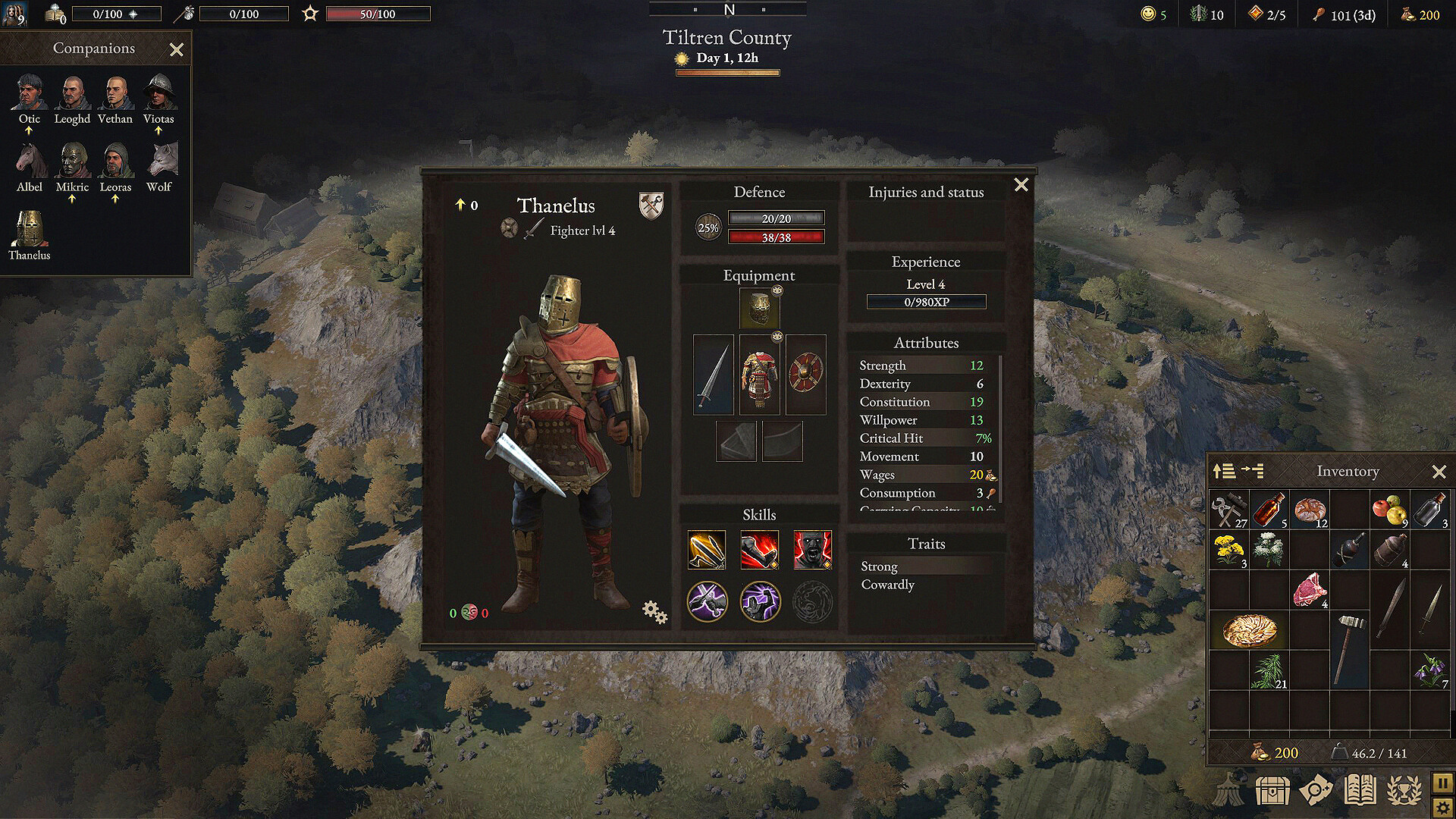
The first thing to understand: nothing scales to you
Most open-world games quietly adjust enemies to your level so that wandering is safe. Wartales does not. Every region sits at a fixed difficulty tier, and the roads between regions are open from the start. That single design decision is responsible for the majority of early wipes.
Tiltren County is the intended starting region. Stay there until your companions have several specialisation milestones behind them and your income is stable. When you do consider moving on, look at the level of the patrols in the new region before you commit to a fight you cannot leave — engagement means walking away is not free.
An open path is not an invitation. If the enemies in a neighbouring region are several levels above your warband, they will not become fairer because you tried hard. Come back later.
Wages and food decide your run
Combat is rarely what ends a first playthrough. The economy is.
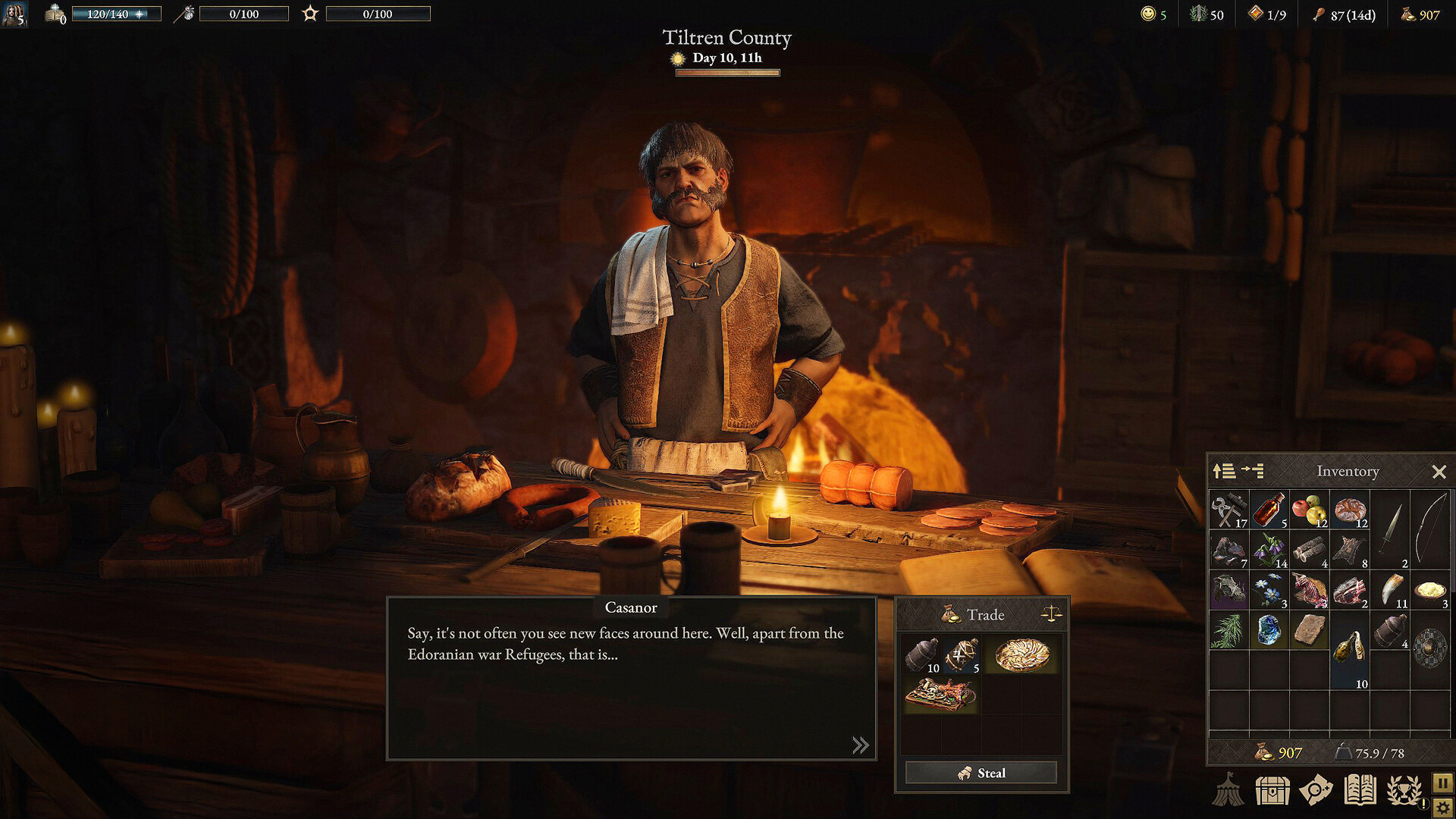
Every companion draws a wage on a timer, and that timer does not care whether your last contract paid. Every companion also eats: roughly one ration per day, plus food consumed when you rest at camp to heal injuries. Fail to pay and happiness drops until people desert. Fail to feed and morale collapses, bringing combat penalties and, eventually, the same result.
The practical lesson for a beginner is counter-intuitive: recruit slowly. A tight group of well-built companions clears contracts more reliably than a sprawling company you cannot afford. Extra bodies do not just cost wages — they cost rations, they cost rest food, and they dilute the experience your core fighters need to reach their specialisation milestones.
A few habits that keep the books balanced:
- Take clustered contracts. Two jobs in the same area cost far less food than two jobs three days apart.
- Sell rather than hoard. Loot and prisoners are income, not collectibles.
- Keep everyone employed in a profession so travel time produces something.
- Rest deliberately, not reflexively — resting costs food per person.
Combat: control engagement, then look for kills
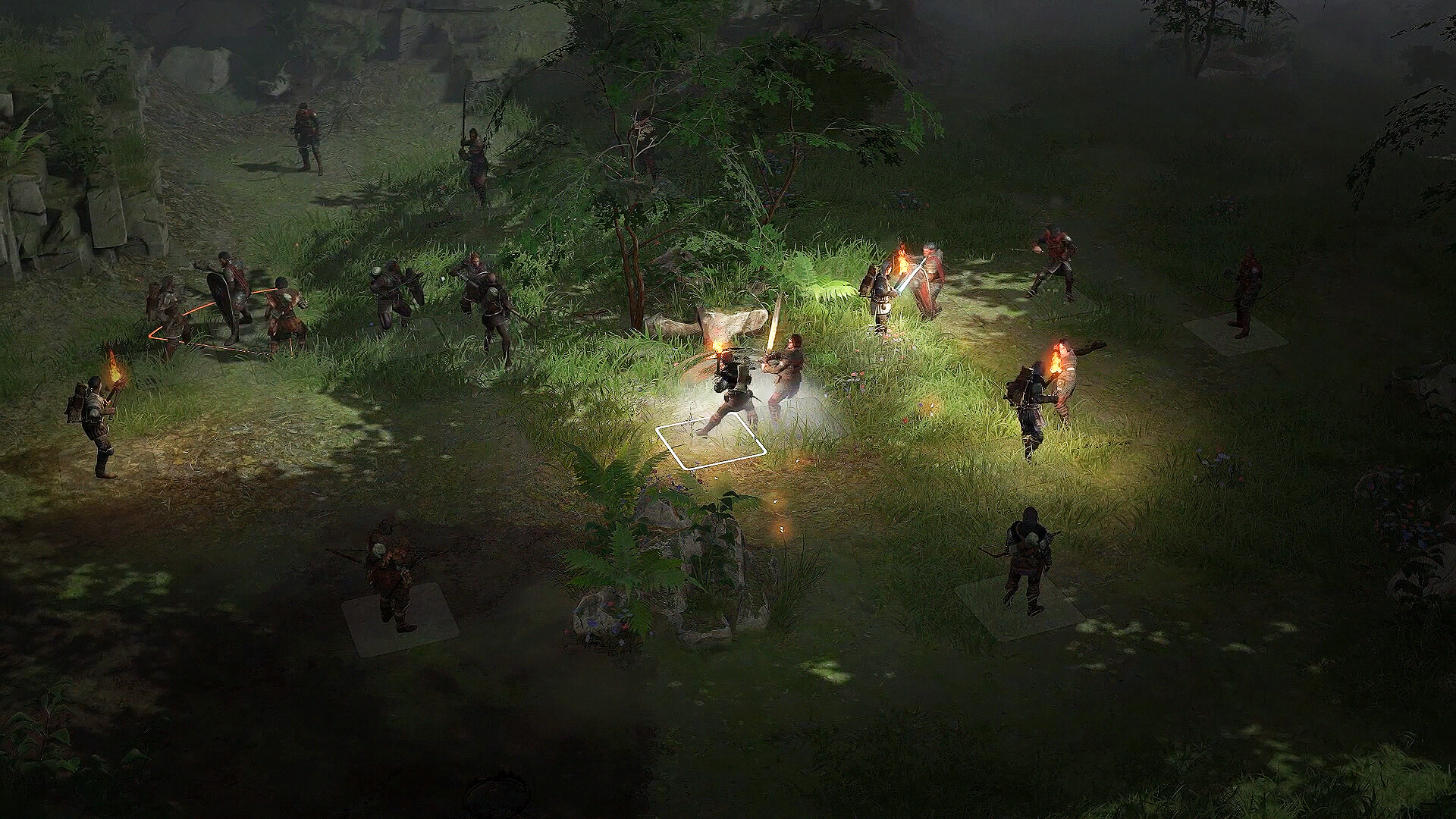
Wartales battles are turn-based and fought on the terrain where you met the enemy. Two concepts carry almost all of the early tactical weight.
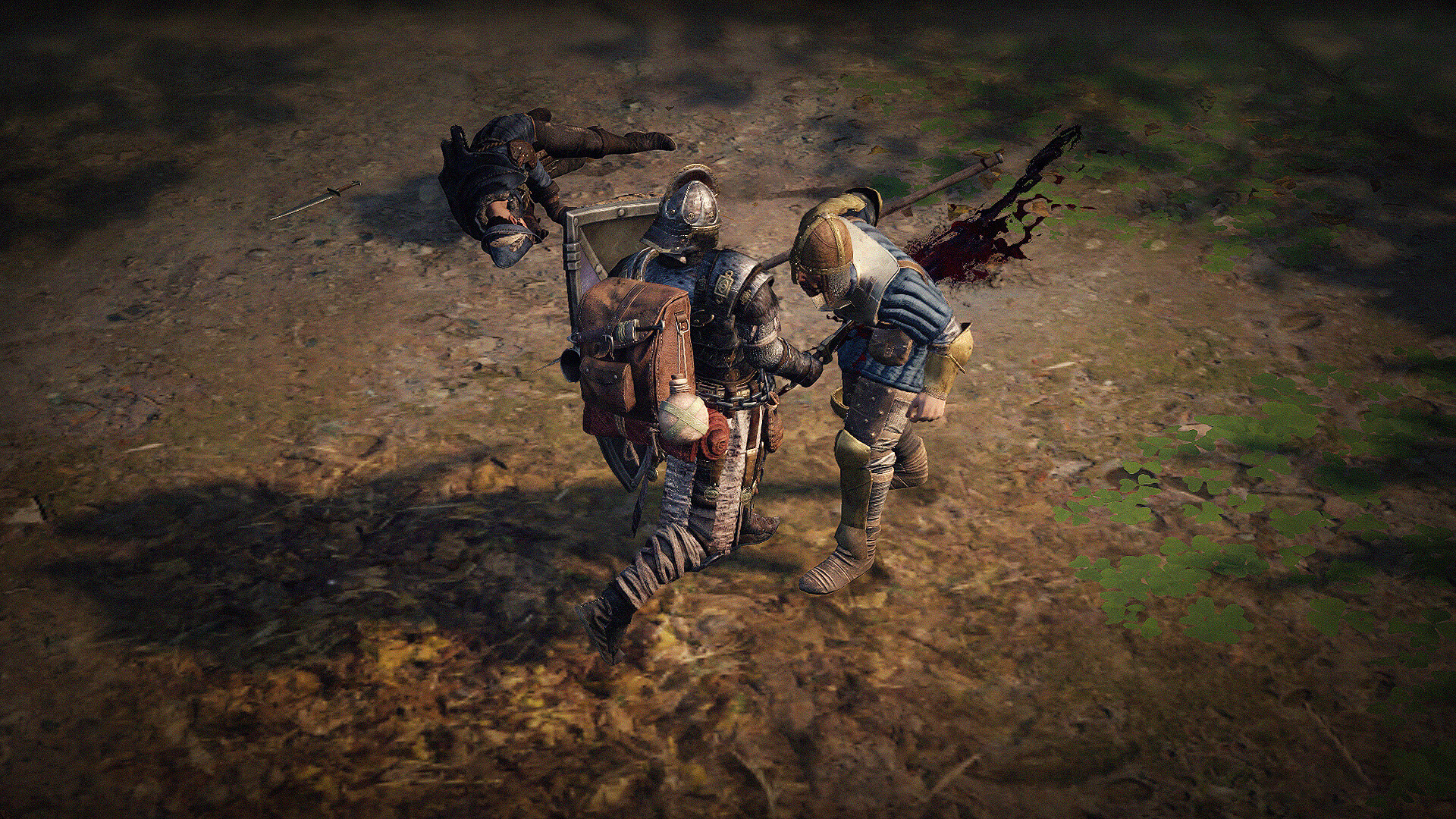
Engagement. Units in contact lock each other down. Leaving an engagement gives the enemy a free attack, which means your frontline's job is to occupy threats rather than to rack up damage. Put your sturdy companions where they will tie up the most dangerous enemies, and keep your archers and rangers clear of contact entirely.
Valour Points. This is a shared pool that funds your strongest abilities. It builds as your units attack and land kills, so it is thin at the start of a fight and healthier later. New players spend it as soon as it is available. Do not. Hold it for the turn that swings the battle: breaking a line, removing a dangerous enemy before it acts, or rescuing a companion who is one hit from going down.
A tier 3 tent grants a Valour Point at the start of each battle. Over a whole campaign that is one of the highest-value camp upgrades you can buy, because it turns your opening turn from passive into decisive.
The rest of early combat is fundamentals: fight on ground you chose, focus one target at a time so enemies actually stop acting, and retreat from a fight that is going badly rather than feeding it more companions.
Build the camp early
Camp is where your warband rests, cooks, crafts and works, and two upgrades pay for themselves faster than anything else.
The cooking pot. A tier 2 cooking pot saves four food per rest. Given how often you rest to clear injuries, that compounds into a very large amount of saved rations over a playthrough.
The tent. A tier 3 tent grants a Valour Point at the start of every battle, as above.
Beyond upgrades, camp is where professions do their work and where you assign companions to tasks. Nobody should be idle. A companion standing around at camp is a wage you are paying for nothing.
Professions: assign them and leave them alone
The professions are Blacksmith, Cook, Alchemist, Thief, Angler, Scholar, Miner and Tinkerer. They level with use, which means shuffling companions between roles wastes the progress you have already made.
For a first warband, a sensible spread is:
- Cook — directly reduces the food pressure that is your main early constraint.
- Blacksmith — repairs and improves gear so you are not constantly buying replacements.
- Miner — turns the mines you explore into a genuine income stream.
- Alchemist — becomes valuable as soon as injuries start stacking up.
Add Thief, Angler, Scholar and Tinkerer as the warband grows and you find the systems each one feeds.
Specialisation: commit, do not hedge
Companions reach specialisation milestones at levels 2, 3, 5, 8, 10 and 12, choosing one option from a small set each time. The level at which the named sub-paths open depends on the class: Swordsman, Warrior and Brute branch at level 2, while Archer, Ranger and Spearman branch at level 3.
The beginner instinct is to spread choices to cover every eventuality. Resist it. A companion built consistently toward one role — a genuine frontline anchor, a genuine damage dealer — contributes far more than one built to be adequate at everything. You can always recruit for the gap.
Your first hours, in order
-
1
Clear contracts in Tiltren
Take everything available on the tavern board and stay in the starting region. Do not follow an open road into a neighbouring region just because it is there.
-
2
Assign a profession to everyone
Cook, Blacksmith and Miner first. A companion without a profession is a wage you are paying for nothing, and professions level with use so early assignment compounds.
-
3
Upgrade the cooking pot to tier 2
It saves four food per rest. Because you rest constantly to clear injuries, this is effectively a permanent discount on your largest recurring cost.
-
4
Learn engagement before you learn damage
Put your durable companions where they lock down the most threats, and keep archers and rangers entirely out of contact. Fights are lost when your fragile units get engaged.
-
5
Upgrade the tent to tier 3
A Valour Point at the start of every battle turns your opening turn from setup into something decisive.
-
6
Only then consider the next region
Check the level of the patrols before you commit. Nothing in Wartales scales down to meet you.
A checklist for your first ten hours
- Stay in Tiltren until your income is stable and your core companions have several milestones.
- Keep the warband small. Every recruit is a wage plus a daily ration.
- Assign a profession to everyone; nobody idles at camp.
- Upgrade the cooking pot, then the tent.
- In combat: control engagement first, focus one target at a time, hold Valour Points for the decisive turn.
- Check enemy levels before entering a new region. Nothing scales to you.
Get those right and the early game stops being a survival scramble and becomes what it is meant to be — a company slowly getting good enough to choose its own contracts.
Two decisions from this guide are worth reading about before you make them. Which class to recruit is covered in the Wartales class tier list, and the camp jobs that fund all of the above are in the camp and professions guide.