
The Six Resources and What Each One Does
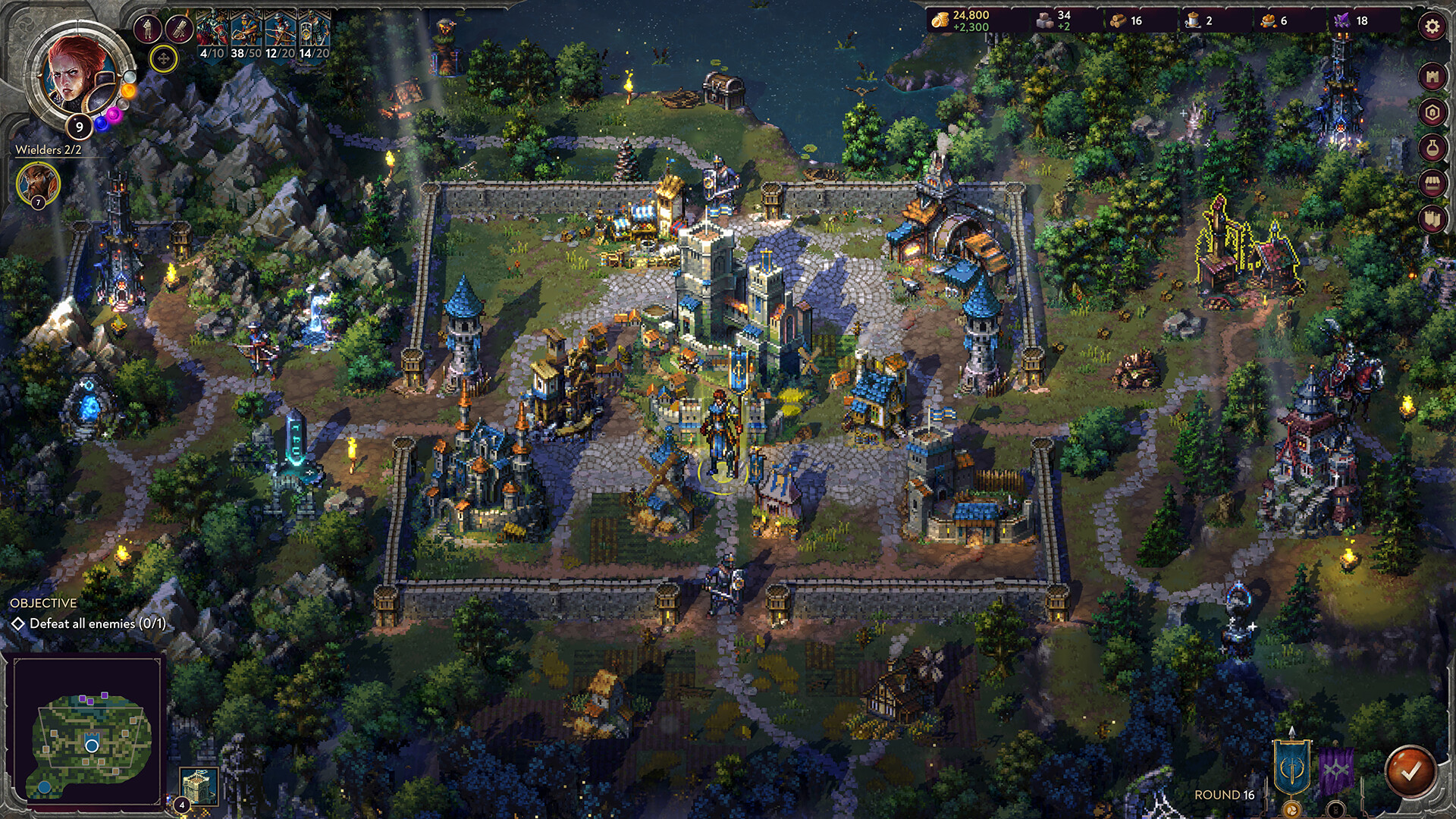
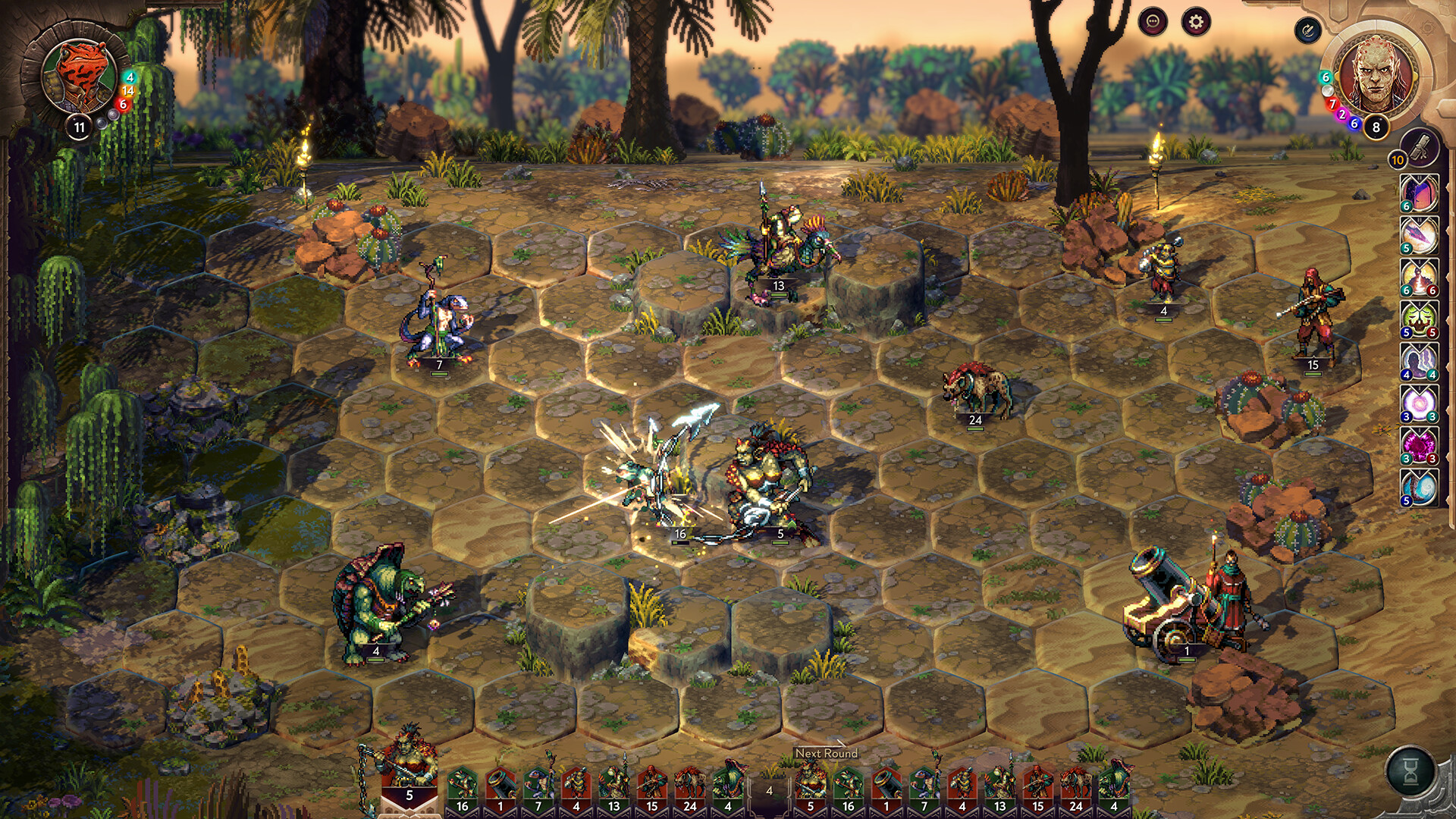
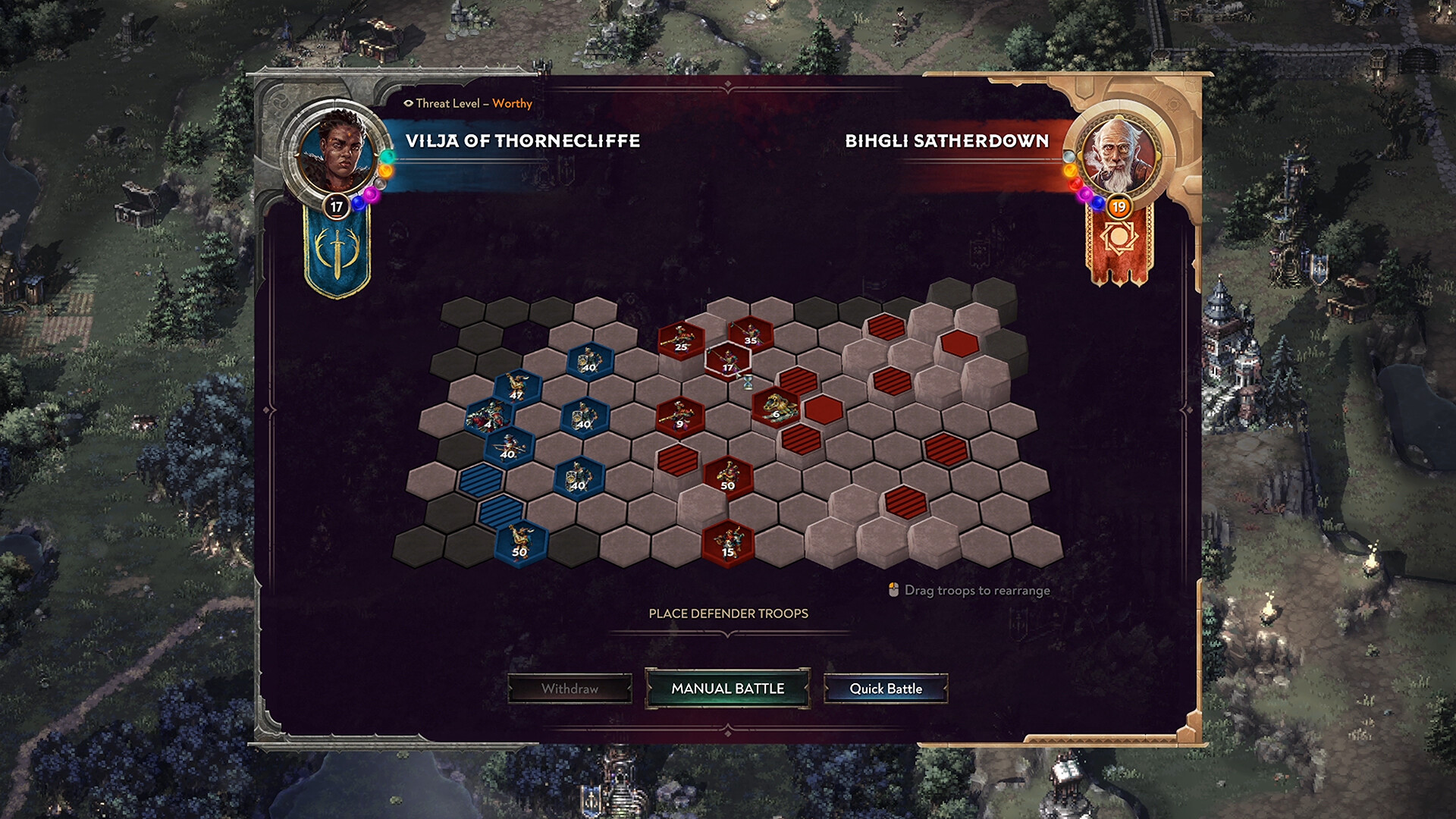
Songs of Conquest is a HoMM-style turn-based strategy game where your hero commanders, called Wielders, lead armies across an overworld map. Behind every battle sits an economy of six resources, and understanding what each one is for is the first step to a campaign that does not stall halfway through.
Three resources are common and keep your basic war machine running. Gold is the universal currency — it recruits troops and covers most transactions. Wood handles small and medium buildings, while Stone is the backbone of basic construction. The other three are rare and far more precious — Glimmerweave, Ancient Amber and Celestial Ore. These gate advanced structures, research and higher-tier units, and they are the resources most likely to hold your campaign back.
| Resource | Type | What it is for |
|---|---|---|
| Gold | Common | Universal currency — recruiting troops and most transactions |
| Wood | Common | Small and medium buildings |
| Stone | Common | Basic construction |
| Glimmerweave | Rare | Advanced structures and research — only from Groves and Economic Research |
| Ancient Amber | Rare | Gates advanced buildings, research and higher-tier units |
| Celestial Ore | Rare | Gates advanced buildings, research and higher-tier units |
A useful mental split is this — Gold, Wood and Stone determine how fast you can build and recruit right now, while the three rare resources determine the ceiling of what your faction can ever field. New players tend to obsess over Gold because the recruit screen shows it most prominently, but the rare resources are usually the real limiter.
Mines — Your Most Profitable Source
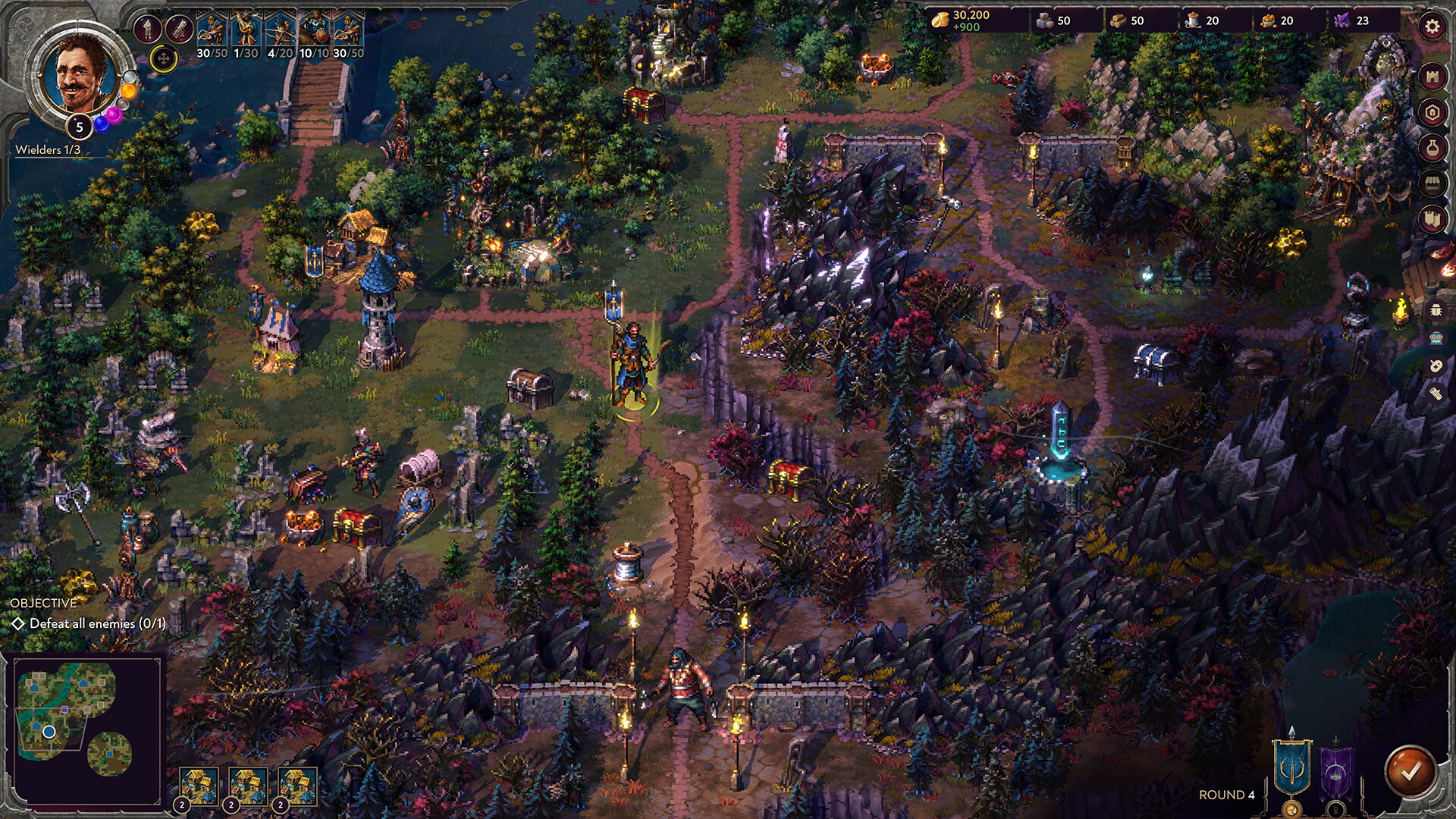
The overworld is dotted with mines, and they are the most profitable raw-material source in the game. Sawmills and quarries placed in or near your towns give you a steady trickle of Wood and Stone, but mines out on the map produce far more, including the rare materials you cannot manufacture any other way.
Because mines sit in contested territory, controlling them is rarely a one-time event. An opponent who takes a mine gains your income and denies it to you at the same time — a double swing. That is why experienced players treat mine control as an ongoing tug-of-war and budget army movement around defending and recapturing them.
When you lose a mine, work out whether recapturing it pays for the troops you would spend doing so. Often it does, because the mine keeps producing every turn you hold it — the cost is one-off, the income is recurring.
The practical takeaway is to expand early and keep expanding. A player who locks down more mines than their opponent builds an economic snowball that turns into more troops, more research and eventually a decisive army. A player who turtles around a single town and never pushes for mines simply cannot keep pace.
Town Build Sites — What to Build Early
Each town has a set of Build Sites where you place buildings. These produce resources or troops, unlock research, or provide services. Build Sites are limited, so the order in which you fill them genuinely matters — every slot spent on a troop dwelling is a slot not spent on economy.
Early on, prioritise the structures that grow your income and open your research, then layer in troop production once the economic foundation is in place. Sawmills and quarries should go up early so Wood and Stone never bottleneck your construction queue. Buildings that unlock research come next, because research is where both your economy and your army scale over the long run.
-
1
Secure Wood and Stone first
Build a sawmill and quarry early so basic construction never stalls. These two resources gate most of your other buildings.
-
2
Open your research buildings
Place the structures that unlock the research tree as soon as you can afford them, so Economic upgrades can start compounding.
-
3
Push out to nearby mines
Send a Wielder to capture the closest mines, especially any producing rare resources. Early map presence beats early troop stacking.
-
4
Add troop dwellings once funded
With income flowing and research open, start filling Build Sites with the unit dwellings that match the army you intend to field.
There is no single correct build order for every faction or map, but the principle holds — economy and research before mass recruitment. A town that can only pump out low-tier units will lose to one that took a little longer but unlocked higher tiers and bigger stacks.
Research — Military vs Economic, and Why Economic First
Research opens on the F3 screen and splits into two branches. Military research provides per-faction unit stat upgrades. Economic research provides passive resource income and, crucially, raises troop size limits. Both branches complete immediately when purchased, gated by gold plus special materials rather than by a turn timer.
That troop size limit is the detail many new players overlook. You can have all the gold and rare resources in the world, but if your size limits are low, your stacks stay small. Economic research lifts that ceiling while also boosting income, which is why it tends to pay off before Military — the benefits compound across the entire match rather than applying only when a specific unit is on the field.
| Branch | What it improves | When to prioritise |
|---|---|---|
| Economic | Passive resource income and troop size limits | Early — it compounds over the whole game |
| Military | Per-faction unit stat upgrades | When committing to a specific army composition |
Economic research also includes the only repeatable way to raise Glimmerweave income beyond map control. The relevant tiers add +1, +2 and +3 Glimmerweave per turn for roughly 2500, 5000 and 5000 gold. Since no building produces Glimmerweave, these research steps and Glimmerweave Groves on the map are your entire supply.
Military research is not a trap — it wins fights once you know what army you are building. The point is sequencing. Lock in the economic and size-limit gains that benefit every unit first, then spend on Military upgrades for the specific troops you are actually committing to.
The Rare-Resource Bottleneck
The single biggest shift in thinking for improving players is this — the real bottleneck is the rare resources, not gold. Gold flows steadily from towns and most transactions, but Glimmerweave, Ancient Amber and Celestial Ore are scarce by design and gate the structures, research and high-tier units that decide late-game battles.
Glimmerweave is the clearest example because it has no innate faction income at all. You earn +1 per turn for each Glimmerweave Grove you hold, and no building raises that figure — only Economic Research can, through the tiers noted above. If you ignore Groves, you will simply never have enough Glimmerweave for what it unlocks, no matter how much gold piles up.
Watch for the two most common economic mistakes. The first is overspending gold on recruitment while ignoring the rare resources that gate your stronger options. The second is failing to expand and recapture mines, which kills any economic snowball. Both leave you with a full purse and a stalled campaign.
Ancient Amber and Celestial Ore follow the same logic — they gate advanced buildings, research and higher-tier units, so a shortage quietly caps your power. Treat every overworld source of these three as a priority objective, and check your stockpiles before you commit gold, not after.
Putting It Together
A healthy Songs of Conquest economy is less about hoarding gold and more about controlling the map and sequencing your spending. Lock down Wood and Stone first, expand aggressively toward mines and Glimmerweave Groves, recapture anything you lose, and invest in Economic research early so income and troop size limits both climb.
If you are still finding your feet with the wider game, the Songs of Conquest beginner guide covers the fundamentals, and our Songs of Conquest review gives an honest take on whether the campaign is worth your time. Get the economy right and the battles get a great deal easier — neglect it, and even a skilled Wielder runs out of road.