Stacks, Command Slots, and Stack Size
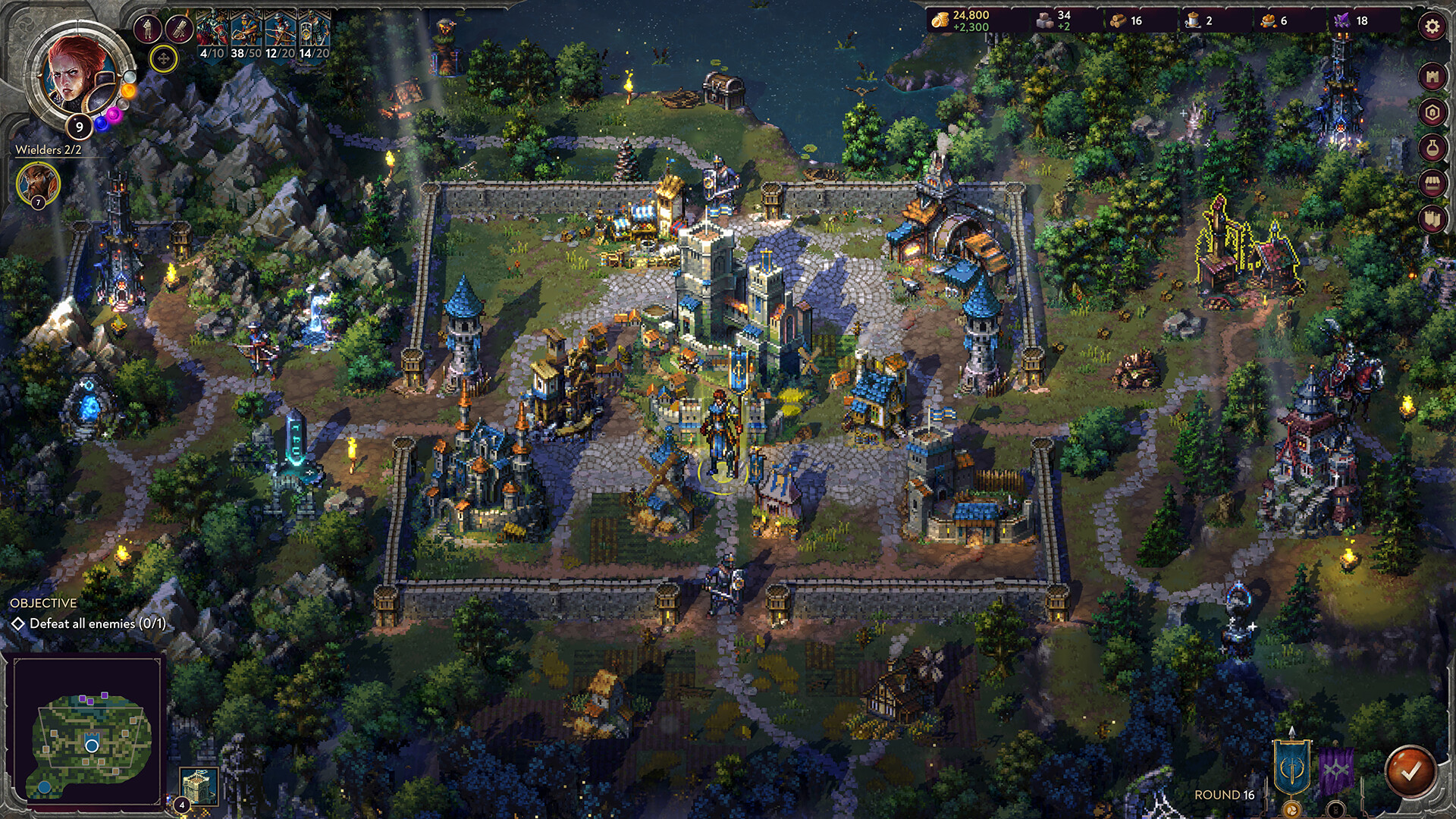
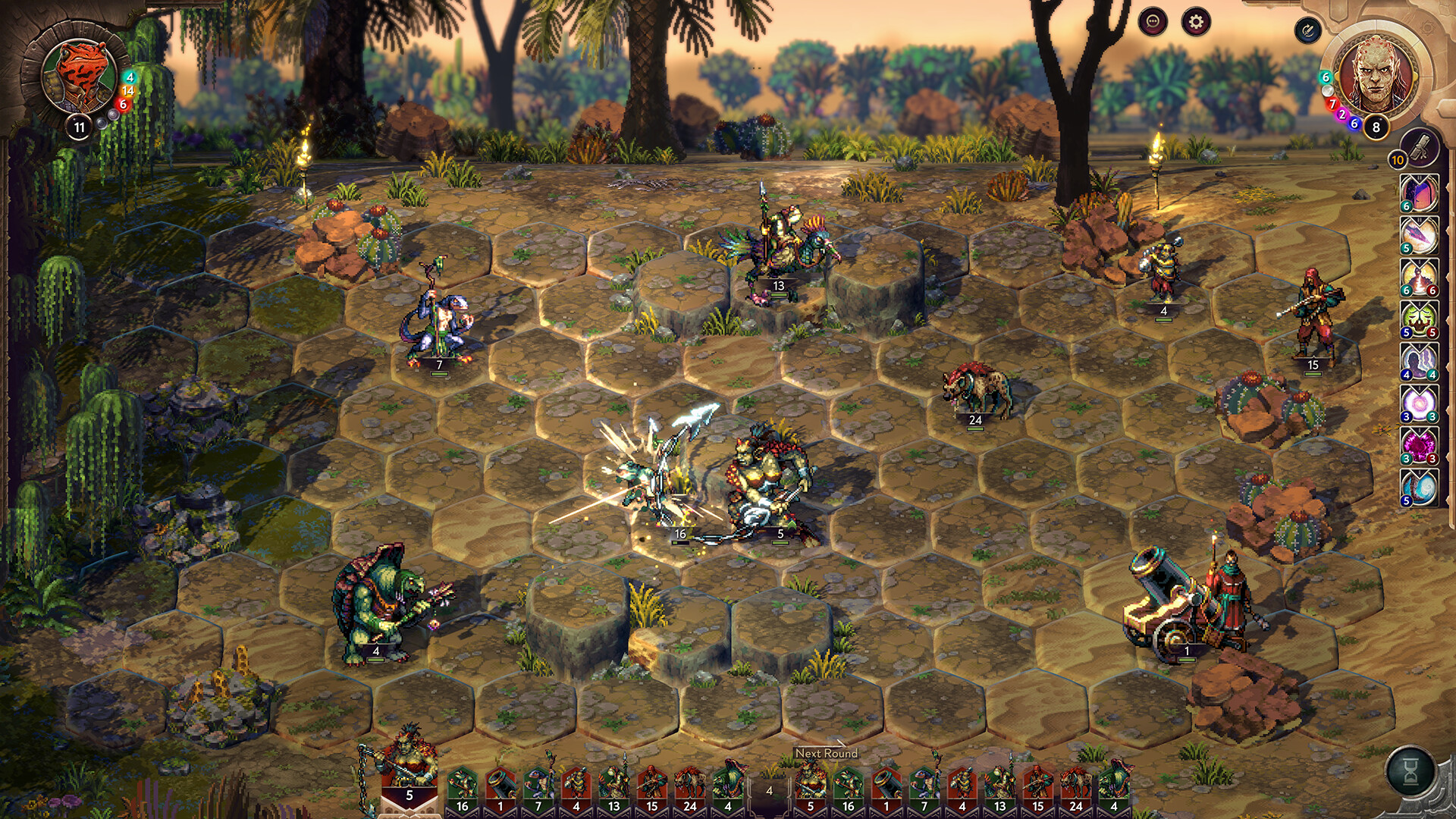
Songs of Conquest follows the familiar HoMM-style structure — a hero leads an army of unit stacks into turn-based grid battles — but the hero, called a Wielder, does not melee. Wielders cast spells and buff the army from the sidelines, so their value lives entirely in what your troops and your magic can do together.
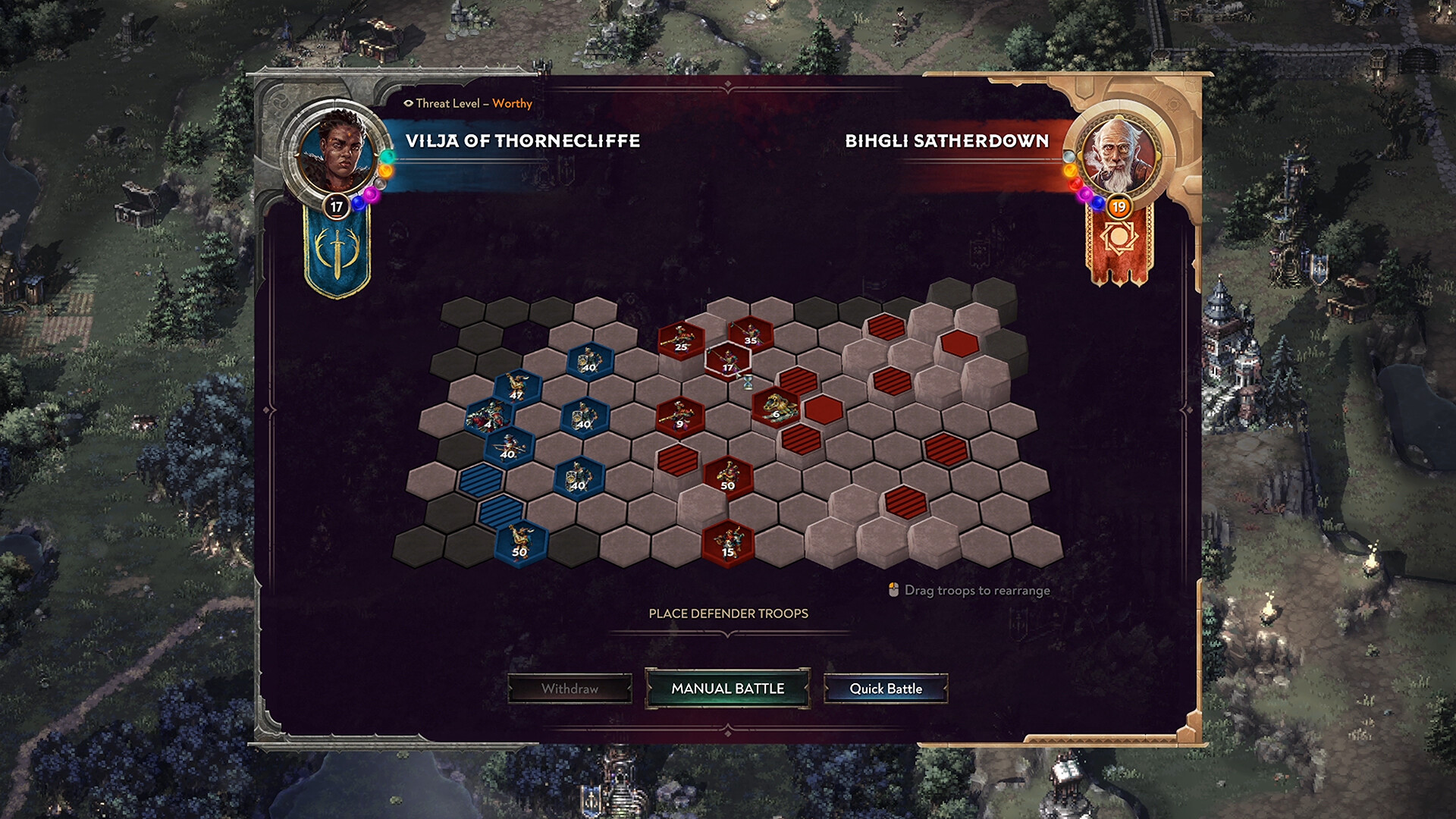
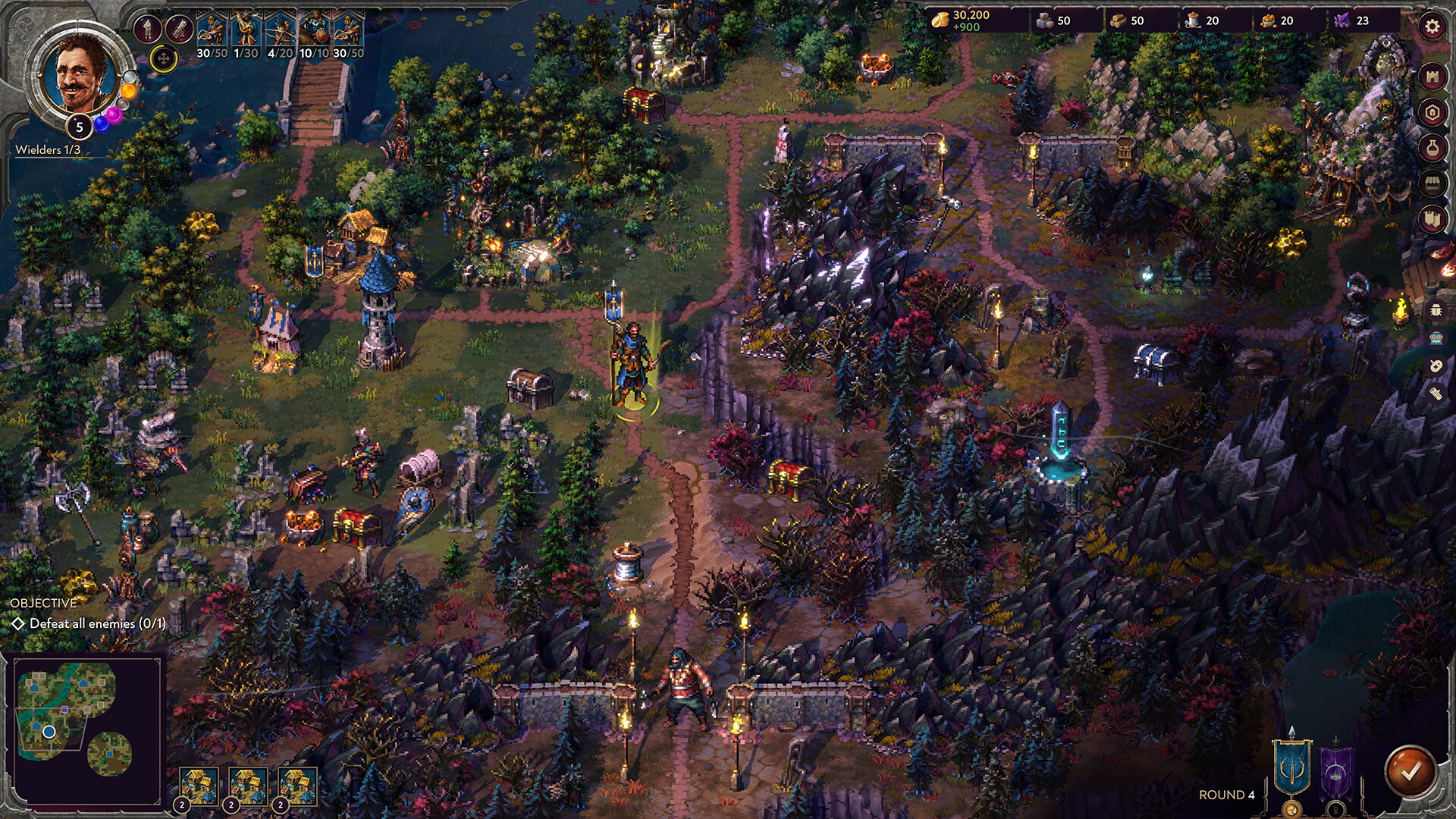
Your army is organized into stacks, and the core rule is simple: one unit type per stack. Ten Spearmen sit in one stack; you cannot mix Spearmen and Archers in the same slot. How many stacks you can bring is set by your command slots. You start with a small number and gain more from level-ups — adding a command slot is one of the three choices a Wielder is offered each time it levels. The other choices typically improve skills, so every level is a real decision between fielding more variety and deepening what you already have.
Separately, economic Research raises troop size limits, meaning each stack can hold more units of its type. So your army grows along two independent axes — more stacks (command slots) and bigger stacks (size limits). Early on you will feel cramped on both.
Command slots control how many kinds of unit you bring; size limits control how many of each. A wide army with many small stacks generates a broad mix of essence types; a narrow army with a few large stacks floods one or two types. Neither is better in the abstract — it depends on the spells you plan to cast.
If you are new to the game's flow, the beginner guide covers the map, economy, and turn loop before you commit to a composition.
The Essence Magic System
Here is the system that makes Songs of Conquest distinct. Every spell is available to your Wielder from the start — there is no spellbook to fill out or tower to build. The real limiter is Essence, a resource that exists only during a battle and resets each fight.
And the crucial part: most Essence is generated by your troops, not your hero. Each unit type produces specific essence types at the start of its turn, every combat round. Your Wielder accrues some essence per round on its own, but the bulk of your magical income is whatever your army is built to produce. On top of troops and Wielder, essence also comes from artifacts, captured map points (Beacons of Power), skills — the Order, Chaos, Destruction, Creation, and Arcane Magic skills, plus the "Attuned" Power — and from Research.
There is no cap on how many spells you cast per round beyond the Essence you can pay for. If you generate enough, you can chain several spells in a single round; if your generators die, your casting stalls. That single rule is why army composition and your spell plan are the same decision.
Because troops generate the essence, a beautiful spell plan collapses the moment the units feeding it are killed. Treat your essence generators as priority assets — losing the one stack that produces your Chaos can shut off your damage spells for the rest of the fight.
The Five Essence Types and Combination Spells
There are five essence types, and each tends to power a different style of magic. Spells consume one type, and combination spells require two types together — which rewards armies that deliberately produce a pairing.
| Essence type | Tends to power | Build implication |
|---|---|---|
| Order | Disciplined, control-leaning and protective magic | Pairs with steady, defensive armies |
| Chaos | Disruption and aggressive, unpredictable effects | Suits offensive, tempo-seeking compositions |
| Destruction | Direct damage and burst | Build to flood it if you want spell-driven kills |
| Creation | Healing, summoning, and sustain | Rewards attrition and long-fight plans |
| Arcana | Versatile, often higher-cost magic | Flexible glue between schools |
The exact spell lists vary, and you should read what your faction's units actually output rather than assume — but the principle holds. If you want to lean on combination spells, you must field units that together produce both required essence types in enough volume to afford them. A purely single-type army will rarely have the second essence on hand when a combination spell would matter most.
When you inspect a unit, note which essence types it generates and how much. Build your stack list so the sum of essence per round comfortably covers the spells you most want to cast on turns 1–3 — that is when battles are usually decided.
Building an Army to Fuel Your Spell Plan
The practical loop is: decide the spells you want, then assemble units whose essence output pays for them. Work backwards from the win condition rather than forwards from "which units are strongest."
-
1
Pick your core spells
Choose the two or three spells you intend to lean on, and note their essence costs and types.
-
2
Read unit essence output
Identify which of your faction's units generate those essence types, and roughly how much per round.
-
3
Fill stacks to cover the cost
Add enough of those units that your per-round generation exceeds the cost of your core spells, with margin for losses.
-
4
Add a frontline and protection
Round out the army with durable units that shield the fragile essence generators from being reached early.
A common mistake is building the "best fight on paper" army and then discovering your favorite spells are unaffordable because nothing in the lineup produces the right essence. The reverse mistake is over-investing in essence generators that are too weak to survive, so the essence never arrives. The sweet spot is an army that both wins the melee exchange and produces a comfortable surplus of your key essence each round.
Wielder Skills, Powers, and Artifacts
Your Wielder amplifies the system in three ways. First, skills — a Wielder can hold up to ten — include the magic schools (Order, Chaos, Destruction, Creation, Arcane Magic), and a magic skill boosts both essence generation and spell power for its school. Investing a skill in the school you are already feeding with troops compounds the effect.
Second, at levels 8, 16, and 24 a Wielder unlocks stronger Powers. These are the high-impact upgrades, and the "Attuned" Power specifically adds to essence accrual. Plan your level-up choices around reaching the Power you want rather than spreading thin.
Third, artifacts — weapons, armor, and talismans — carry stat and essence bonuses. They scale in rarity from grey/green to blue, then purple, then orange, with bigger bonuses at higher tiers. An artifact that grants the essence type you are short on can quietly unlock a spell you otherwise could not afford.
Think of skills, Powers, and artifacts as multipliers on a base that your troops provide. They are powerful, but they reward a coherent plan — three sources all pushing the same essence type is far stronger than one of each scattered across schools.
Faction Notes and Protecting Your Generators
Each faction's army identity changes how you feed essence and how you protect the generators. For a fuller breakdown of strengths and matchups, see the factions guide.
- Arleon is ranged-heavy and defensive — well suited to holding a line while back-row casters generate essence safely.
- Barya is aggressive melee plus gunpowder and artillery — it wants to end fights fast, which favors a Destruction-heavy spell plan funded by front-loaded essence.
- Rana fields fast beasts and magic, with Beast-tag synergy — research bonuses apply to all Beast units, so leaning into beasts compounds nicely across the whole army.
- Barony of Loth units rise as Risen undead when they die, turning casualties into an attrition engine — its math tolerates losing generators in a way other factions cannot.
Whatever the faction, the same battlefield discipline applies. Position the fragile units that produce your key essence behind a durable frontline, keep ranged generators out of charge range, and remember that on the grid, ranged-versus-melee positioning decides who lives long enough to keep the essence flowing. The army that protects its generators casts more spells, and in this game, casting more of the right spells is usually how the fight is won.
In my view, the most reliable way to improve is to stop thinking of "army" and "magic" as separate screens. Once you build every stack with the question "what essence does this add, and which spell does that pay for," the system clicks — and the faction quirks above stop being trivia and start being the levers you actually pull.