What to Expect
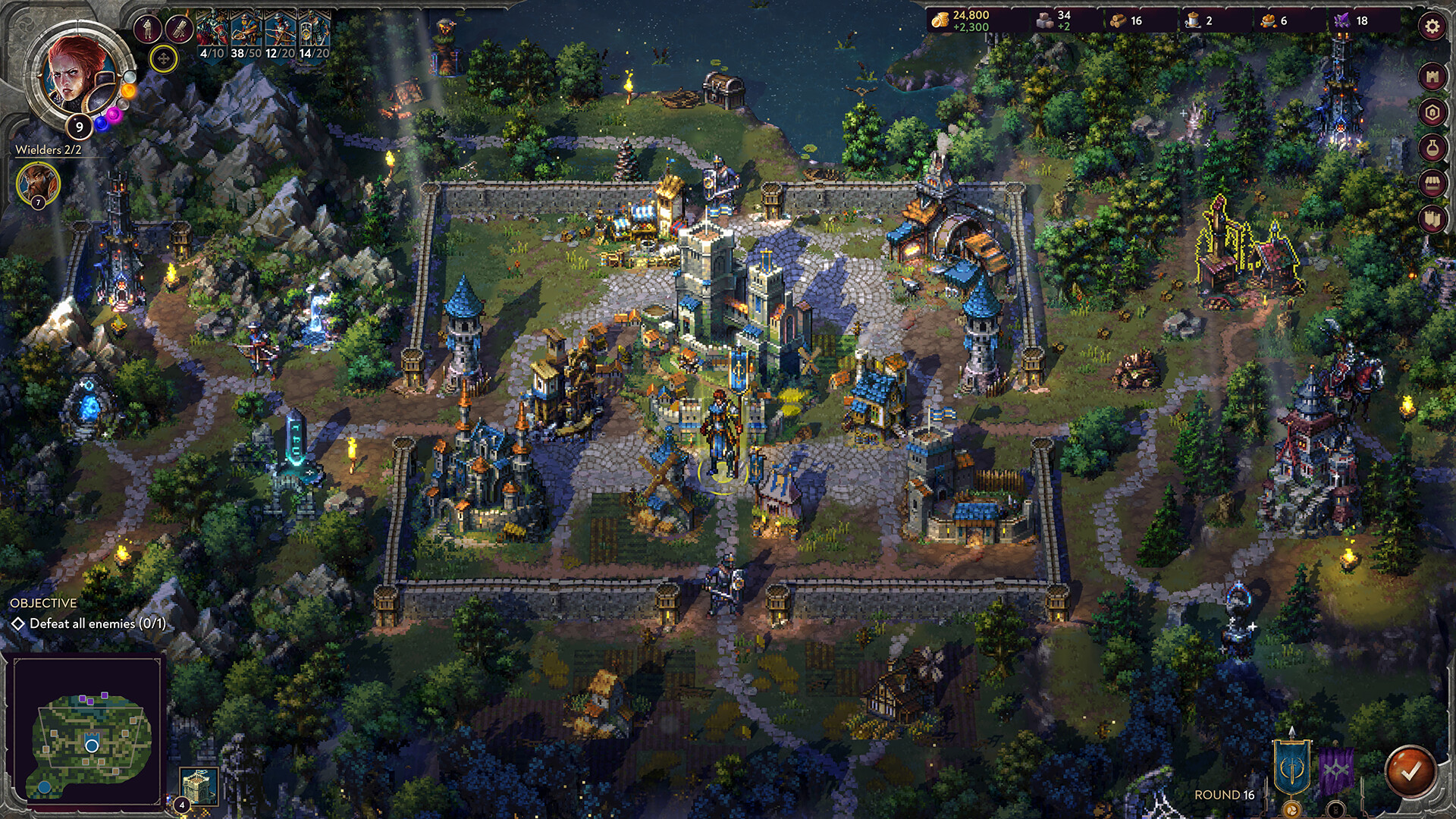
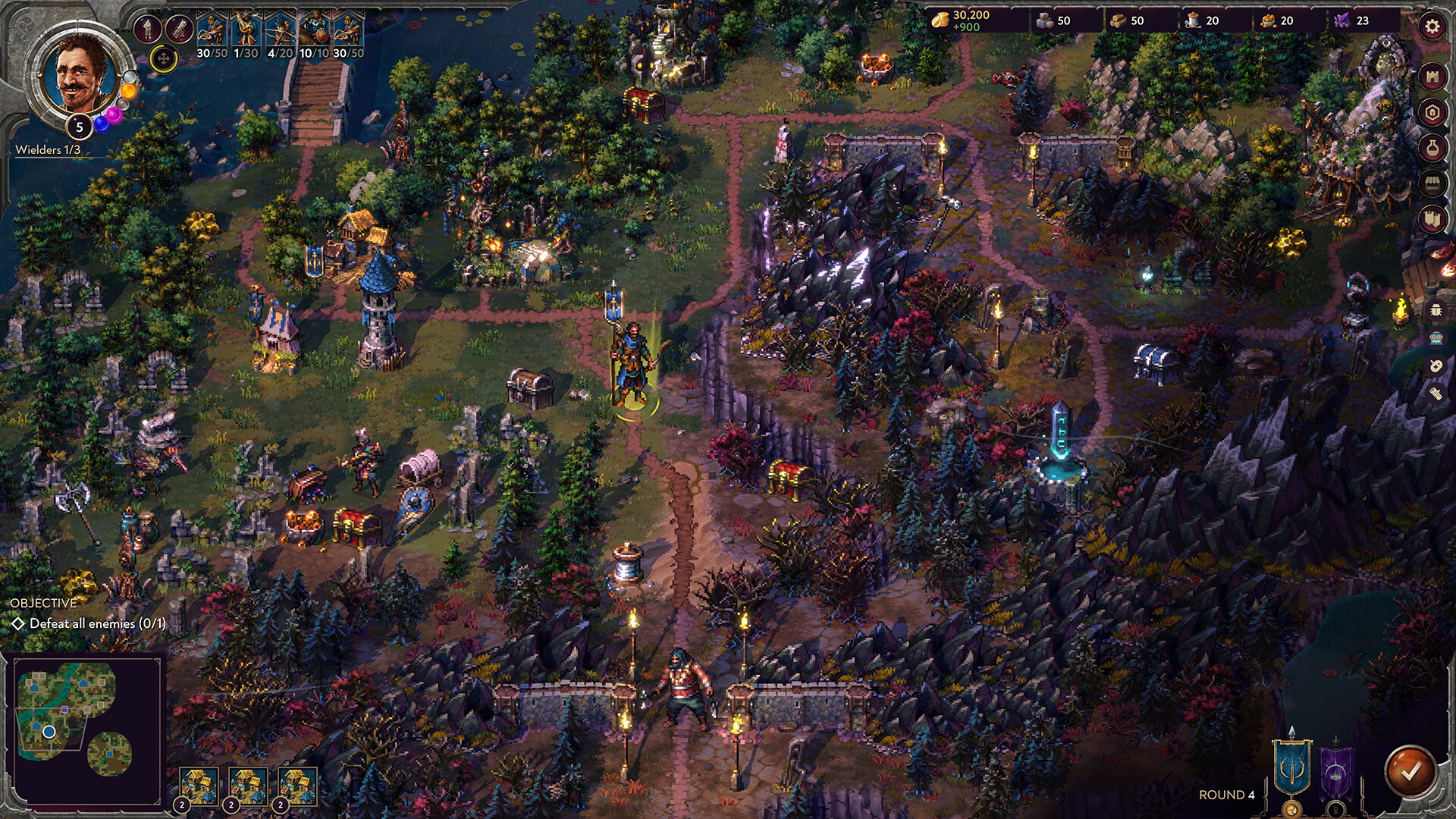
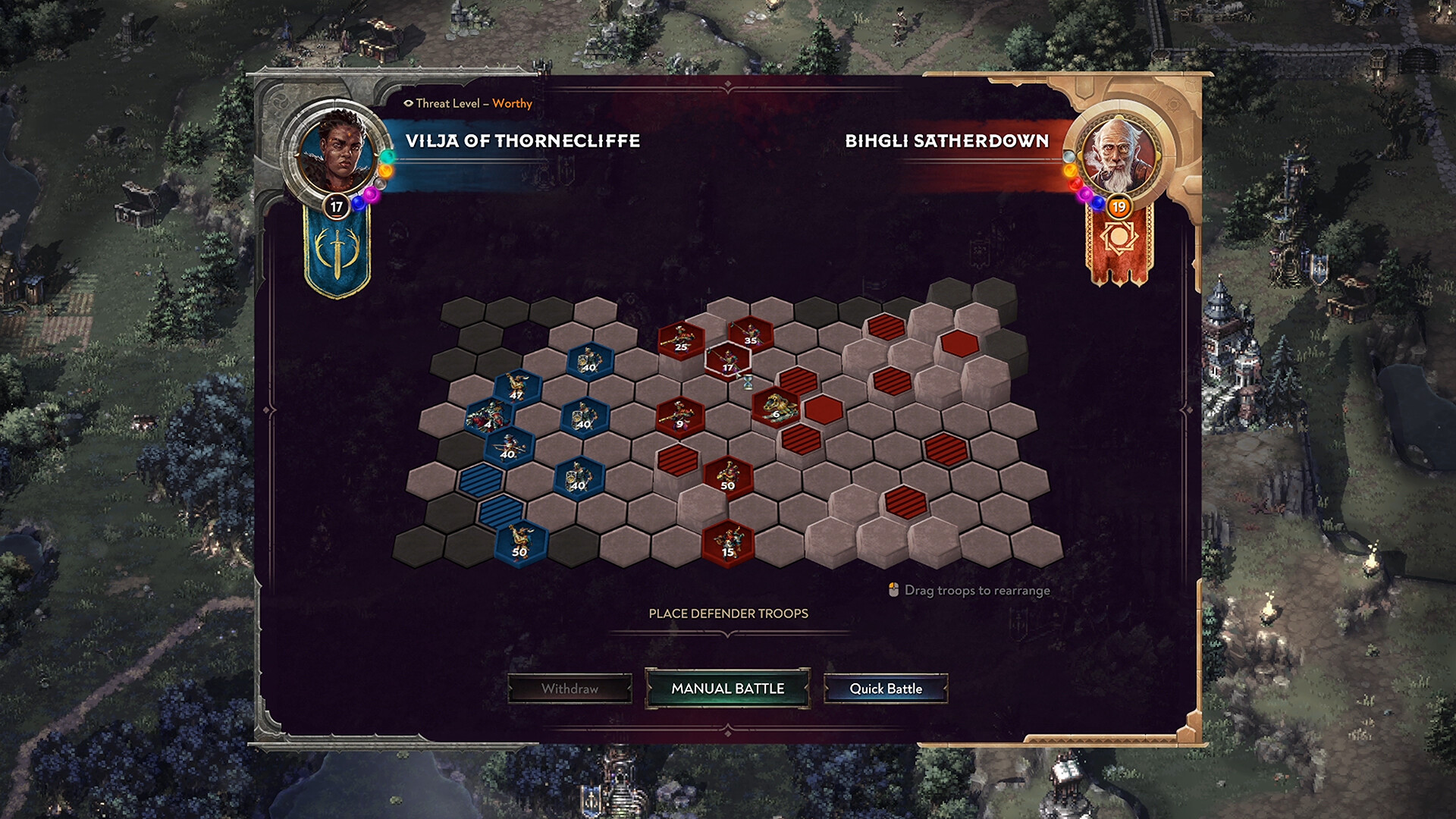
Songs of Conquest is a turn-based strategy game in the Heroes of Might and Magic mold. You move hero commanders — called Wielders — across an overworld map, build up your towns, gather resources, and resolve fights as tactical battles on a grid. If you have played a 4X or a classic HoMM title, the rhythm will feel familiar: explore, expand, build an army, and win the fights that matter.
The one thing to internalize early is the role of your Wielder. A Wielder leads troops and casts spells, but does not step into the melee. They are a force multiplier, not a frontline fighter. Your stacks of units do the actual fighting; the Wielder shapes the battle with magic and buffs from the back.
The difficulty in Songs of Conquest is front-loaded. The opening turns of a map — when your army is small and your economy is thin — are the hardest part. Once you have captured a few mines and your stacks have grown, the game opens up. Do not be discouraged by a rough start.
As you fight and gain experience, your Wielder levels up. On each level-up you choose one of three options: improve an existing skill, learn a new skill, or unlock another command slot (which lets you lead an additional troop stack). A Wielder can hold up to 10 skills, and at levels 8, 16, and 24 you unlock stronger versions of your skills called Powers.
Pick Arleon First
There are four factions, and they are not equally beginner-friendly.
| Faction | Identity | Beginner Fit |
|---|---|---|
| Arleon | Knights and archers, defensive | Recommended — forgiving and sturdy |
| Barya | Gunpowder, aggressive | Strong offense but weak defense |
| Rana | Fast beasts plus magic | Mobile but weaker in the early game |
| Barony of Loth | Necromancy | Slow and demanding to pilot |
Start with Arleon. Its knights and archers are reliable, and the defensive lean means an early misstep is far less likely to wipe your army. Barya hits hard but folds under pressure, Rana is fragile until it gets rolling, and Barony of Loth's slow necromancy style asks more of you than a first map should. You can branch out once the core systems feel natural — the deeper trade-offs are covered in the factions guide.
The Overworld and Your Economy
Songs of Conquest runs on six resources: Gold, Wood, Stone, and three rare ones — Glimmerweave, Ancient Amber, and Celestial Ore. Gold, wood, and stone cover the bulk of your building and recruiting; the rare three gate your higher-tier upgrades and units.
The single biggest beginner trap is failing to expand. Resource mines sit out on the overworld, and capturing them is what turns a thin starting economy into a snowball. If you sit at home, you stall — and an enemy that is out grabbing mines will out-produce you within a handful of turns.
-
1
Scout outward early
Send your Wielder to explore the area around your starting town and identify nearby mines and points of interest.
-
2
Capture mines on contact
Walk onto a neutral or undefended mine to claim it. Each one adds a steady trickle of its resource every turn.
-
3
Recapture what you lose
Enemies will flip your mines. Do not ignore a lost mine — taking it back denies them income and restores yours.
-
4
Hunt the rare resources
Glimmerweave has no innate income at all. You only gain it (+1 per turn) from Glimmerweave Groves on the map, or through Economic research. Prioritize Groves when you find them.
Do not pour every gold piece into units while letting your rare-resource income sit at zero. Many of the upgrades that actually win battles cost Ancient Amber, Celestial Ore, or Glimmerweave — note that it is Celestial Ore, and there is no resource called Ambrosia. Track all six resources, not just the gold counter.
Town Building and Research Priorities
Your towns produce income, recruit units, and unlock buildings. Build steadily rather than dumping everything into one structure, and keep recruiting so your stacks stay full.
Research, opened with F3, is where a lot of your long-term power lives. It splits into two trees:
- Military — per-faction unit upgrades that make your specific roster stronger.
- Economic — passive income boosts and, crucially, higher troop size limits.
Research completes immediately the moment you can pay its cost, which is a combination of gold and materials. There is no multi-turn wait — if you can afford it, you have it.
As a beginner, lean Economic early. Raising your troop size limits lets each stack hold more units, which directly increases the punch of every army you field. Bigger stacks plus steadier income fund everything else, including the Military upgrades you will want later. Economy first, firepower second.
The Essence and Army Connection
This is the system that makes Songs of Conquest distinct, and the one new players most often miss.
Your army is built from stacks — one unit type per stack — and the number of stacks a Wielder can field is set by their command slots (more slots come from level-ups). Economic research raises troop size limits, so as the map goes on each stack can hold more units.
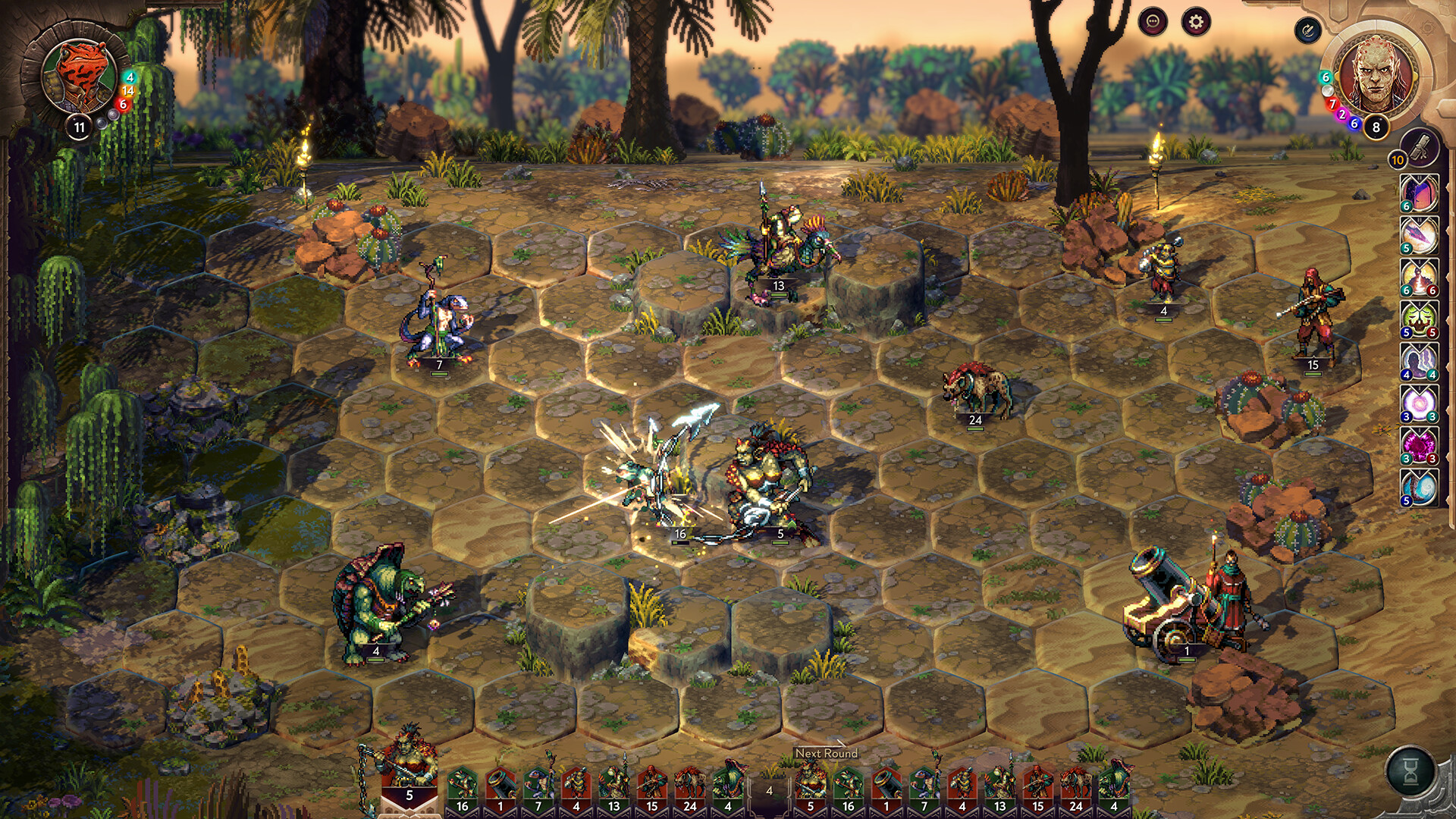
Now the key part. Every spell is available from the very start. What limits your casting is Essence — a per-battle resource. Most of your Essence is generated each round by the troops in your army, and each unit type produces specific Essence types. There is no cap on how many spells you cast per round beyond the Essence you actually have on hand.
The practical takeaway: build your army to fuel the spells you want to cast. If a powerful spell needs a particular Essence type, you need units that generate that type in your stacks. A beautiful army that produces the wrong Essence will leave your Wielder unable to cast the spells you were counting on.
Before a campaign of battles, look at which spells you lean on, check which Essence they cost, then make sure the units in your stacks generate that Essence each round. Army composition is not just about raw stats — it is your spell economy.
Early Battle Tips
Battles play out on a grid, with your stacks and your Wielder against the enemy.
- Lead with your Wielder's magic. Since they cannot melee, their value is spells and buffs. Spend Essence as it builds each round rather than hoarding it and ending the fight with a full bar.
- Position before you swing. Defensive factions like Arleon reward letting the enemy come to you, then countering with archers and braced melee.
- Keep stacks intact. A stack at full strength fights far better than two depleted ones. Focus fire to remove enemy stacks completely rather than chipping several at once.
- Watch your Essence generators. If the units that fuel your key spell die early, those spells go quiet for the rest of the fight. Protect them.
Common Beginner Mistakes
-
1
Overspending gold, ignoring rares
Gold is visible and tempting, but Glimmerweave, Ancient Amber, and Celestial Ore gate your strongest options. Spend with all six resources in mind.
-
2
Not expanding or recapturing mines
Without new and reclaimed mines there is no economic snowball. Staying home is how you fall behind for the rest of the map.
-
3
Starting with a hard faction
Barya, Rana, and Barony of Loth all demand more than a first run should. Begin with Arleon and switch once the systems are second nature.
-
4
Ignoring the Essence-army link
Picking spells without building an army that generates their Essence leaves your Wielder unable to cast when it counts. Compose your stacks around your spell plan.
For a fuller verdict on whether the game is for you, see the honest review. The difficulty is front-loaded, so give it a few maps — the moment your economy and Essence engine line up, the game becomes a great deal more comfortable.