
Valheim drops you at the Sacrificial Stones with a rag tunic, a torch and almost no explanation. Most of what makes the first hours frustrating is not difficulty. It is three hidden rules: food is your health bar, a fire and a roof are your regeneration, and death leaves your gear behind. Learn those and the Meadows become one of the calmest places in the game.
The short answer: your first hours in order
-
1
1. Hand-craft the basics
Pick up branches and loose stones. From the inventory crafting menu, make a hammer (3 wood, 2 stone), a stone axe (5 wood, 4 stone) and a club (6 wood). No workbench is needed for these.
-
2
2. Place a workbench
10 wood. It lets you build within 20 metres and stops monsters spawning inside that circle. Crafting and repairing at it needs a roof over it and 70% cover.
-
3
3. Build a tiny hut before the first night
Four walls, a roof, a door, a campfire (5 stone, 2 wood) and a bed (8 wood). Claim the bed to set your respawn point. Leave a gap in the roof for smoke.
-
4
4. Eat three different foods
Raspberries and mushrooms from the ground, boar and deer meat cooked on a cooking station (2 wood) over the fire. Three foods at once, always.
-
5
5. Gather flint, leather and resin
Flint lies on Meadows shorelines. Boars drop leather scraps, greylings drop resin. These make the flint axe, wood shield and crude bow.
-
6
6. Hunt deer for two trophies
Each deer has a 50% chance to drop a trophy. Use the bow, and sneak up from behind.
-
7
7. Find Eikthyr's altar and fight
Read the Vegvisir runestone near the altar to mark it on your map. Kill Eikthyr, hang his trophy at the Sacrificial Stones, and craft the Antler pickaxe.
-
8
8. Move into the Black Forest
Mine copper and tin, raid Burial Chambers for surtling cores, build a smelter, and make bronze.
Nothing on this list is timed. The Meadows do not get harder until you kill Eikthyr, so there is no penalty for taking an extra day to cook food, upgrade your shield or build a better house first.
Night one: shelter that actually works
Valheim's day lasts 21 minutes and the night 9. At night, standing outside away from a fire gives you Cold, which halves health regeneration and cuts stamina regeneration by a quarter, and monsters spawn more often. You do not need a castle for night one. You need a small box that passes the game's checks.
| Piece | Cost | Rule that trips beginners |
|---|---|---|
| Workbench | 10 wood | Needs a roof and 70% cover to craft and repair. Building around it does not. |
| Campfire | 5 stone, 2 wood | Goes out in rain without a roof. In a sealed room its smoke damages you. |
| Bed | 8 wood | Needs a roof, 80% cover and a fire nearby. You cannot sleep while Wet or with enemies close. |
| Cooking station | 2 wood | Must sit over a fire. Take the meat off once it is done or it burns to coal. |
Smoke is the night-one killer. An indoor campfire in a fully sealed room fills it with smoke that damages you. Leave a gap in the roof or wall above the fire. A slightly draughty hut is fine; a smoke-filled one is not.
Greylings, boars and necks fear fire and back away from it, and the torch you start with has the same effect. That is why a lit campfire next to your hut makes the first nights safe.
Food, stamina and Rested: the systems that keep you alive
Food is your health bar
You start with 25 health and 50 stamina. Each food raises both maximums, and you can have three different foods active at once. A food's bonus shrinks steadily as it digests, and you cannot eat the same food again until its icon starts flashing. You cannot starve, but walking around without food means fighting at 25 health, which a single bad hit can take away.
The fork icon tells you what a food favours: red for health, yellow for stamina, white for balanced.
| Meadows food | Health | Stamina | Where it comes from |
|---|---|---|---|
| Raspberries | 7 | 20 | Bushes in the Meadows |
| Mushroom | 15 | 15 | On the ground in forests |
| Honey | 8 | 35 | Bee nests in abandoned houses, later your own beehive |
| Grilled neck tail | 25 | 8 | Necks near water, cooked |
| Cooked boar meat | 30 | 10 | Boars, cooked |
| Cooked deer meat | 35 | 12 | Deer, cooked |
What the three-food rule means in practice (peak values, right after eating):
| Loadout | Max health | Max stamina | Use it for |
|---|---|---|---|
| Nothing eaten | 25 | 50 | Never leave like this |
| Deer + boar + mushroom | 105 | 87 | Fighting, including Eikthyr |
| Deer + mushroom + raspberries | 82 | 97 | General play and exploring |
| Honey + raspberries + mushroom | 55 | 120 | Chopping, mining and running |
Stamina pays for every swing, block, dodge, jump and sprint. If you keep running out mid-fight, the fix is usually food, not skill. For fighting, put two red foods and one yellow or white food in your slots.
Rested: a fire, a roof and 20 seconds
Sit near a fire while sheltered (under a roof with 80% cover) and you get Resting, which heavily boosts regeneration. Keep it for 20 seconds and you become Rested:
- health regeneration +50%
- stamina regeneration +100%
- skill experience +50%
Rested lasts 7 minutes plus your Comfort level. You cannot get it while Wet, so dry off by the fire first. It also does not carry over when you log out.
Comfort: what raises it early
Comfort comes from furniture within 10 metres, and only the best item in each category counts: one bed, one fire, one chair and so on. Five chairs count as one. Being sheltered near a fire adds 2 on its own. The Meadows can reach Comfort 5 (shelter, campfire, bed and a deer rug), worth 12 minutes of Rested. A chair, table and banner arrive once you reach the Black Forest.
A useful trick: a campfire built inside a dungeon entrance gives Comfort 3, so you can refresh a 10-minute Rested buff in the field for 5 stone and 2 wood.
Death and the tombstone: how not to lose everything
Dying in Valheim is normal. Losing everything because of it is not. Know the rules:
| Rule | What it means for you |
|---|---|
| Everything goes into a tombstone | Your whole inventory and the gear you wore stay where you died. A skull marks the spot on your map. |
| You respawn at your bed | With no claimed bed, you respawn at the Sacrificial Stones in the middle of the world. |
| 5% of your skill levels are lost | On the default death penalty, each skill drops by 5% of its level. For 10 minutes afterwards, further deaths cost no more skill. |
| Tombstones never expire | Dying again on the way back does not destroy the first tombstone. You just have two to collect. |
| Corpse run on pickup | Emptying the tombstone grants 50 seconds of -75% run and jump stamina, physical damage resistance, 5 health per second and extra carry weight. |
-
1
Do not rush back naked
The thing that kills you twice is going straight back with no food and no weapon. Eat three foods first, even just berries and mushrooms.
-
2
Keep a spare kit at home
A spare club, a crude bow, some arrows and food in a chest by your bed turn a corpse run from a gamble into a chore.
-
3
Use the Corpse run window
Once you touch the tombstone, the buff gives you 50 seconds to run out of danger. Leave, then deal with what killed you.
If you die with an empty inventory, no tombstone appears, so you also get no Corpse run buff. That rarely matters early, but it is why players who drop all their items before a risky fight lose the buff.
Early dangers ranked by how often they kill new players
Building basics that matter early
You do not need a beautiful base yet. You need one that works.
- Roof first. Exposed or uncovered wood slowly rots in rain down to half its durability. A roof keeps the structure, the fire and the bed working.
- Watch the support colours. With the hammer equipped, pieces show blue (on the ground), then green to red as they get less stable. A red piece cannot hold anything more.
- Repairs are free. Repairing gear at the workbench and building pieces with the hammer costs no materials, only stamina.
- Upgrade the workbench early. A chopping block (10 wood, 10 flint) raises it to level 2, which unlocks leather armor from deer hide. A tanning rack (10 wood, 15 flint, 20 leather scraps, 5 deer hide) raises it to level 3.
Birch and oak trees, the source of finewood for better bows and the portal, need a bronze axe. A stone or flint axe only cuts beech, fir and pine. That is one more reason the Black Forest is the next step, and why a portal has to wait.
The building guide covers structural support and Comfort in depth, and the base and food guide covers raid defence and farming.
Eikthyr: what to bring and what he does
Eikthyr is summoned with two deer trophies on his altar in the Meadows. He has 500 health and three attacks:
| Attack | What it does | How to handle it |
|---|---|---|
| Antler swipe | Close-range melee, about every 5 seconds | Block it with the wood shield, or stay out of reach |
| Charge | A 20-metre lightning beam that fans out ahead of him | Dodge sideways or block |
| Stomp | A 10-metre lightning area around him | Stay away when he is close; it has a long cooldown |
Bring the crude bow with plenty of arrows, the wood shield, and the "fighting" food loadout above. He cannot be staggered, so parrying does not open him up the way it does normal enemies. Shoot him when he pauses, block or dodge what comes back, and refresh your food if the fight drags on. Building a small shelter with a bed near the altar first means a death costs you a short walk, not a trek across the map.
He drops three Hard antlers and his trophy. One antler makes the Antler pickaxe (10 wood, 1 Hard antler), which mines the copper and tin of the Black Forest. Hang the trophy on the Sacrificial Stones to unlock his Forsaken Power: 60% less stamina for running, jumping and swimming for 5 minutes, with a 20-minute cooldown. It is ideal for long trips.
For the full boss chain after him, see the boss and biome progression guide.
Beginner mistakes worth avoiding
- Eating one food at a time. Three different foods are the difference between 50-odd health and over 100.
- Leaving home without Rested. Twenty seconds by the fire is the cheapest buff in the game.
- Sealing a campfire indoors. Leave a smoke gap.
- Running back to a tombstone empty-handed. Eat, grab spare gear, then go.
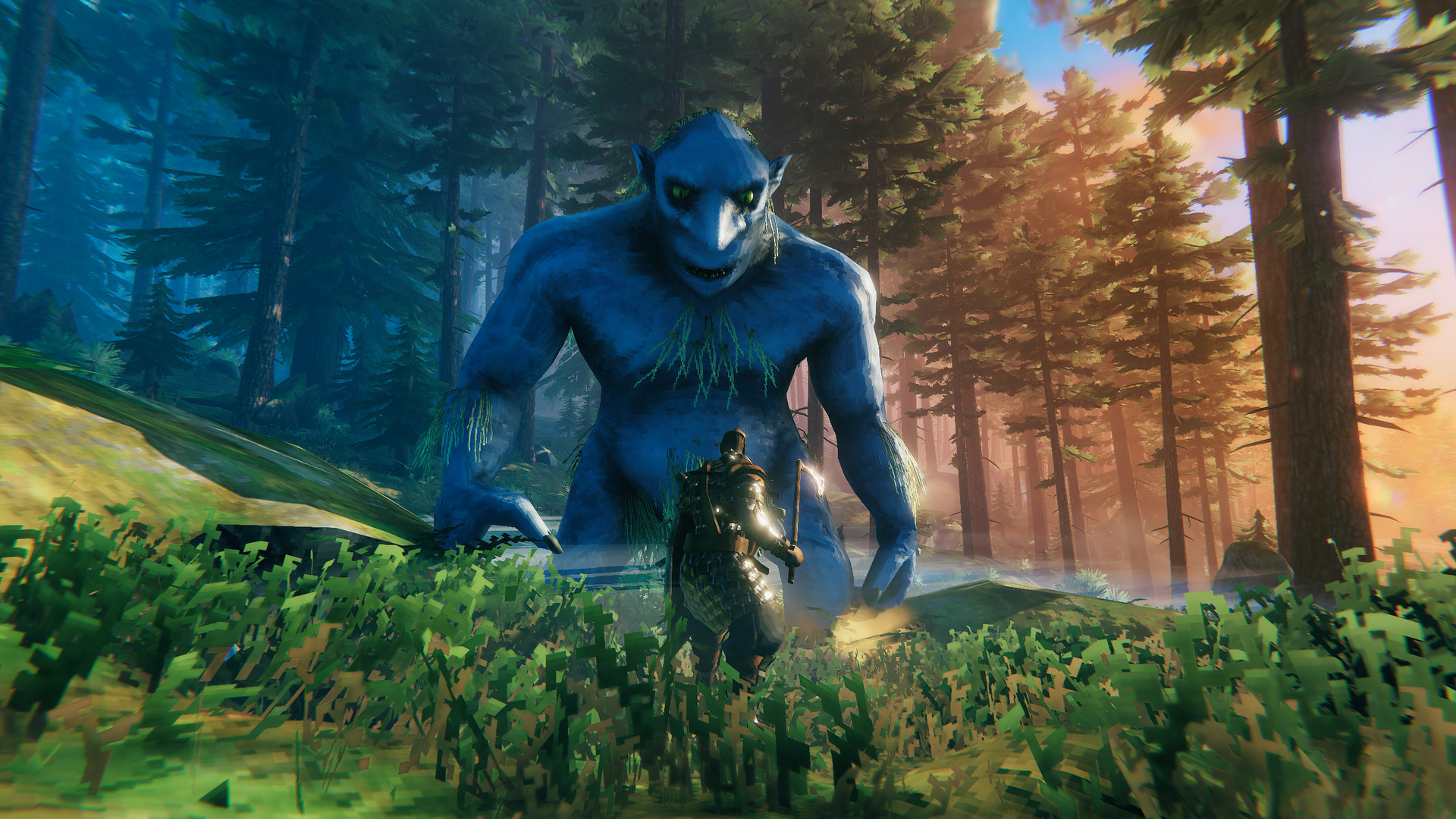
- Clubbing a troll. Trolls resist blunt and are weak to pierce. Use arrows or a spear, or avoid them until you have bronze.
- Hauling ore toward a portal. Ores and metals cannot pass through portals, so plan a base near the copper or a boat route.
- Crafting every weapon. Pick one melee weapon and the bow and upgrade them. The weapons and armor guide explains what to craft at each stage.
If you are still deciding whether the game is for you, our honest Valheim review covers what the early hours do and do not show.
★Honest Take: the game rewards preparation, not reflexes
Valheim's early game feels harsh mostly because it hides its rules. Once you know that food is your health bar, a fire and a roof are your regeneration, and a tombstone is a recoverable setback rather than a loss, the Meadows turn into a gentle, even relaxing, place to learn. The downside is real: the game will let you waste an evening on a smoke-filled hut or a naked corpse run before it teaches you anything. The upside is that almost every early death has a clear cause, and the fix is nearly always "prepare better" rather than "play faster." That pattern holds all the way to the last boss.